 Marcelo Oliveira
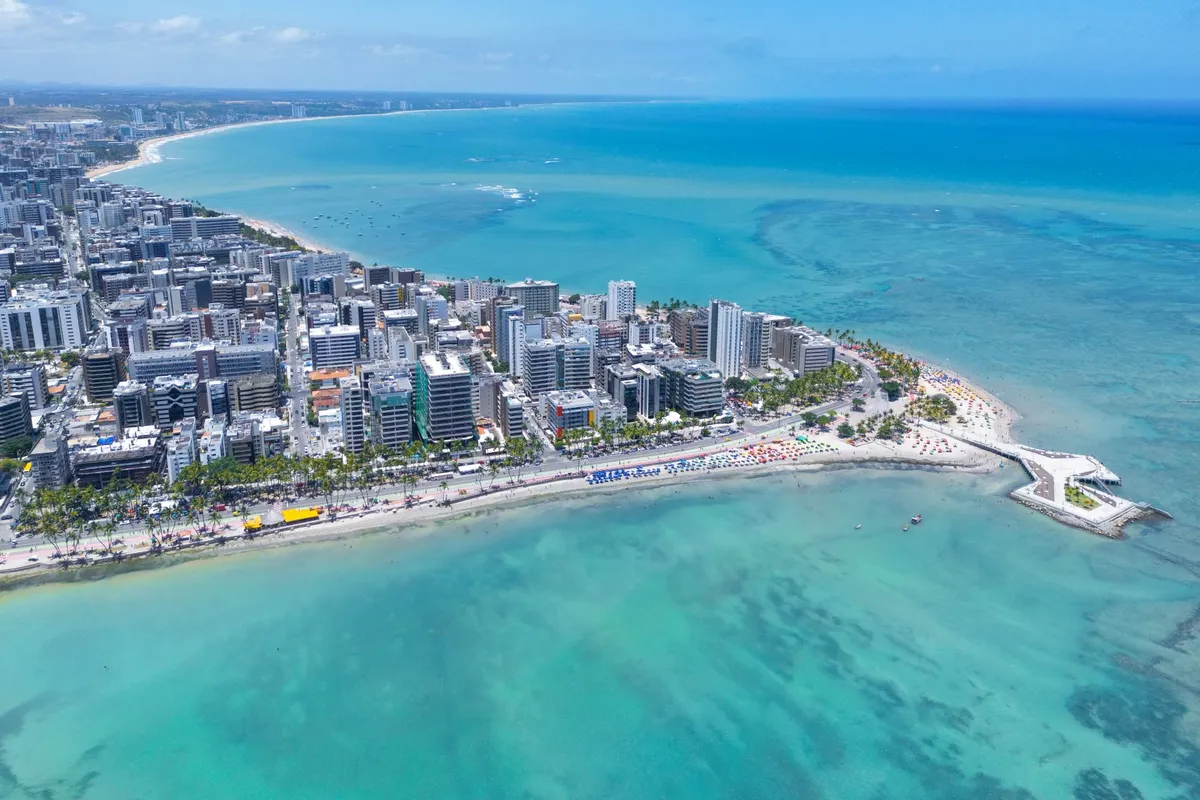
So you’ve decided to go to Maceió, but you’re still not sure which beaches to put on your itinerary or if it’s worth setting aside a full day for Praia do Gunga and Praia do Francês. The capital of Alagoas boasts pool-like waters, a continuous stretch of sand along its urban coastline, and, less than an hour’s drive away, cliffs and coconut groves that look like they belong in another state.
Hotels in Maceiófree cancellation options onlySee hotels ›Booking.com partner (advertising): we may earn a commission at no extra cost to you.
The best beaches in Maceió are Pajuçara and Ponta Verde along the urban shoreline, plus Praia do Francês (in Marechal Deodoro, 25 km away) and Praia do Gunga (in Roteiro, 40 km away) as day trips — the latter featuring a 360° viewpoint that charges R$ 5 per person. You can visit Francês and Gunga on the same route, since they’re on the same road south of the city.
Getting to Maceió
Zumbi dos Palmares Airport (MCZ) is about 20 km from the city center and receives direct flights from São Paulo, Rio de Janeiro, Brasília, Recife, and Salvador, among other capitals. Check available flights on the official Zumbi dos Palmares Airport website. From arrival to the Pajuçara or Ponta Verde waterfront, the taxi or rideshare trip takes 25 to 35 minutes, depending on traffic.
For those already in the city who want to visit Praia do Francês or Praia do Gunga, access is via AL-101 Sul, a well-signposted, divided highway. A rental car or a booked transfer are the most practical options, as regular public transportation doesn’t cover this stretch of coast well.
Best time to visit and how long to stay
Maceió has warm weather year-round, but the months from September to January bring less rain and calmer seas for the natural pools at Pajuçara. From April to July, rainfall increases, which also slightly lowers accommodation prices.
To explore the urban coastline and take at least one trip to the southern beaches (Francês and Gunga), set aside 4 to 5 days. If you want to include Maragogi or the São Francisco River canyons, add another 2 days to your itinerary.
The best beaches in Maceió
The city combines easily accessible urban beaches with stretches of wilder coastline just a few kilometers away — the right choice depends on how much travel time you’re willing to spend.
Praia de Pajuçara
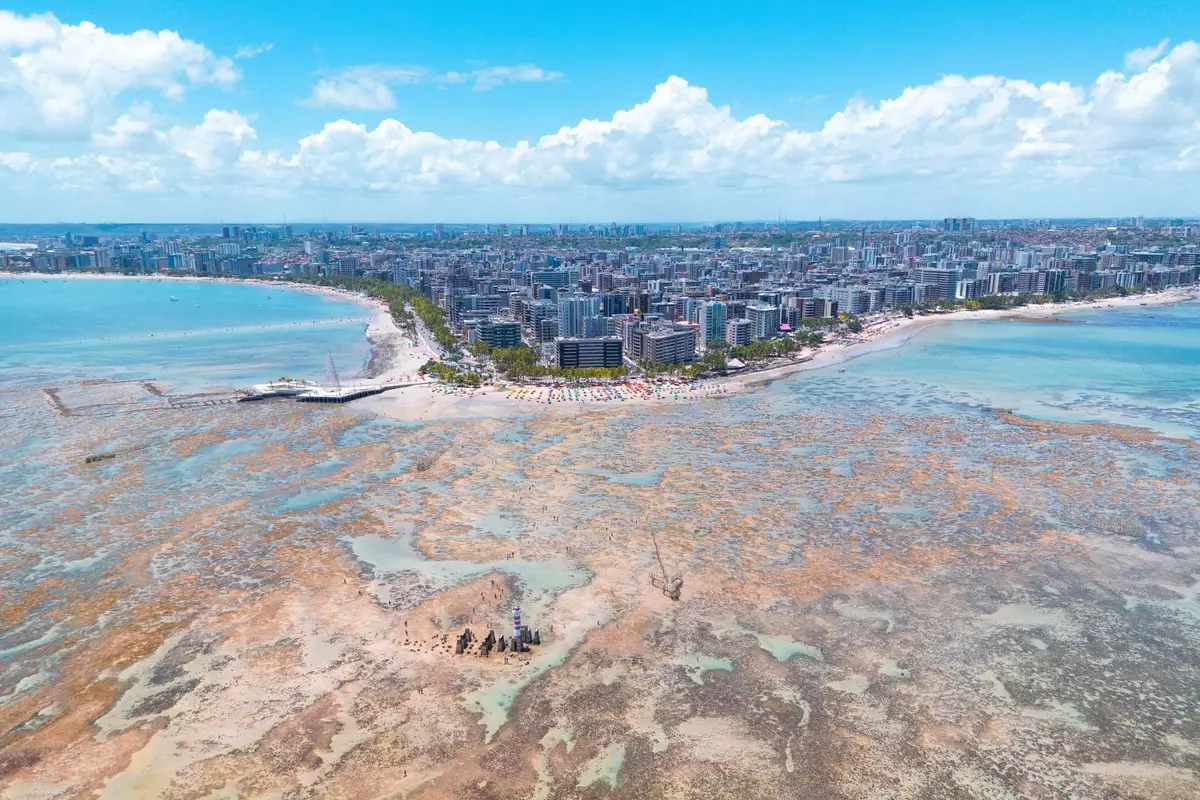
It’s the most central beach and the gateway to the natural pools that form at low tide, about 15 minutes by jangada (traditional raft) departing from the shore. The raft ride is usually sold at the beach’s own kiosks, with departures based on the day’s tide table. Once in the water, you can swim among schools of colorful fish and admire the transparency that earned the region its “Brazilian Caribbean” fame — even without scuba gear, a simple snorkel reveals plenty of marine life in the shallow reefs.
Praia de Ponta Verde
Neighboring Pajuçara, it features a wide boardwalk, stalls with live music at night, and calmer water for swimming during the day — it’s the favorite for those seeking amenities without leaving the urban circuit. This stretch also concentrates a good share of the city’s mid-range and upscale hotels, making it easy to sort out lodging and beach in the same walk.
Praia do Francês, in Marechal Deodoro
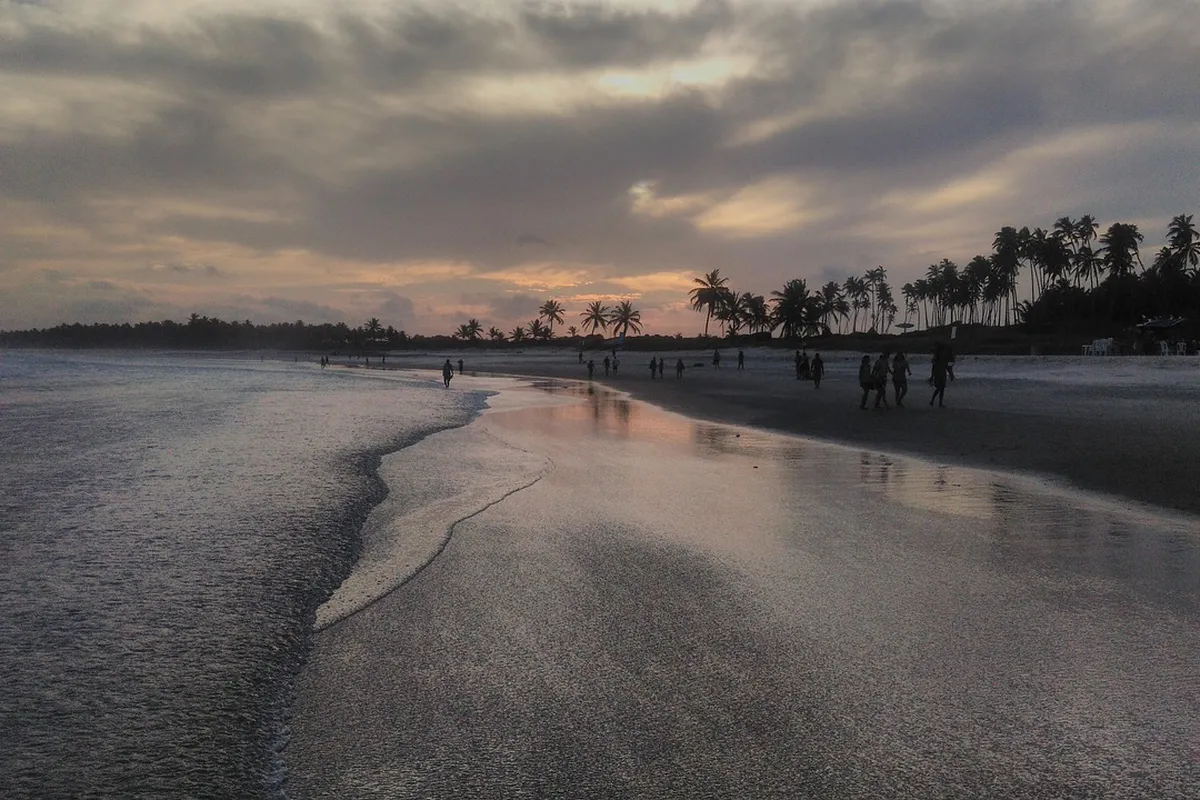
Praia do Francês is in the municipality of Marechal Deodoro, about 25 km south of Maceió — roughly 35 minutes by car on the AL-101 Sul. A coral reef protects much of the stretch, and at low tide the water becomes shallow and still like a pool, ideal for those traveling with kids. Around it, there are trails through coconut groves and the historic center of Marechal Deodoro, with colonial-era churches and the work of local lacemakers, who craft filé embroidery, recognized as intangible cultural heritage of Alagoas.
Praia do Gunga and its viewpoint
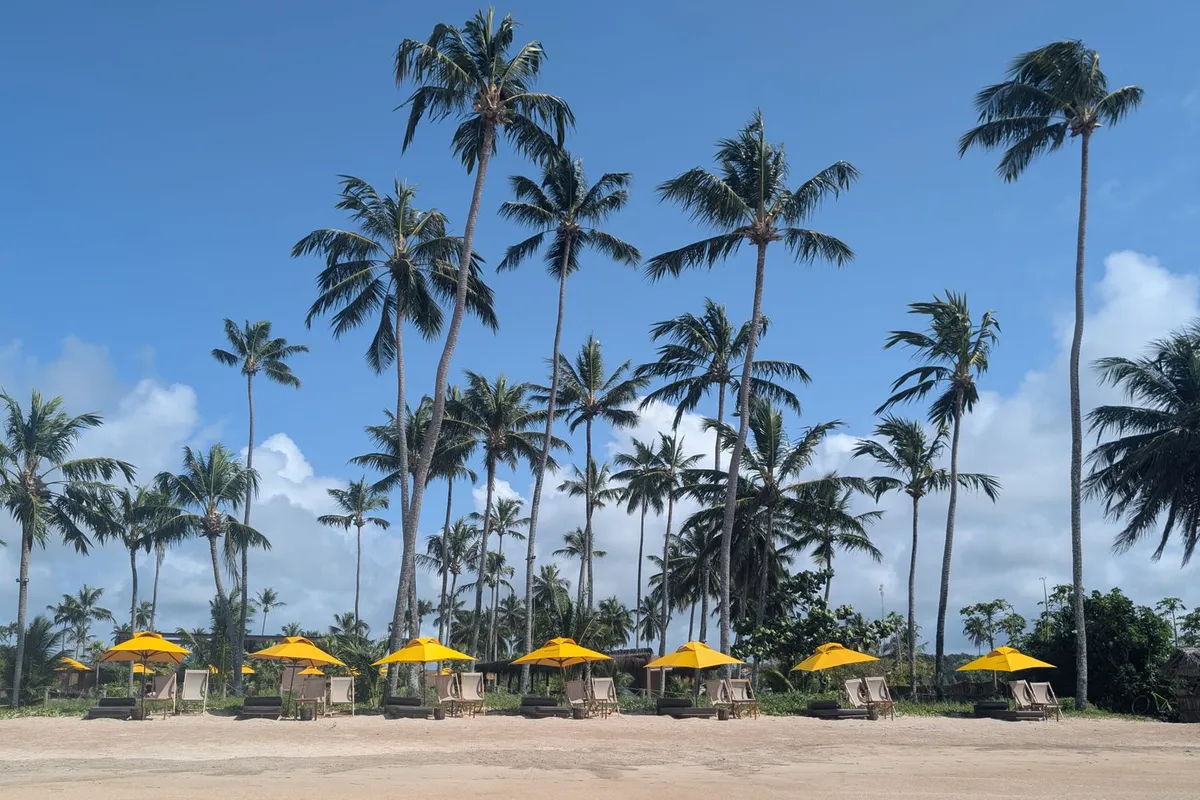
Praia do Gunga is in the municipality of Roteiro, about 40 km and 40 minutes from Maceió on the same divided highway. The highlight is the meeting of the sea and Lagoa do Roteiro, letting beachgoers choose between fresh and salt water at the same stop, surrounded by cliffs and a vast coconut grove.
Mirante do Gunga sits on the grounds of a restaurant on the cliff’s edge and is reached by a staircase. As of July 2026, entry costs R$ 5 per person (children up to 7 go free) and parking runs R$ 20 per day for passenger cars — 2026 prices, subject to change, so confirm on-site. From the top, the 360° view shows the coconut grove, the lagoon, and the sea all at once, and it’s from there that the region’s most shared photos are taken.
What to combine in your itinerary
Since Praia do Francês and Praia do Gunga are in the same direction from Maceió, you can visit both in a single day: stop first in Marechal Deodoro in the morning, have lunch there, and then head to Roteiro in the afternoon to climb to the viewpoint before it closes, at 5 PM.
If you’d rather not drive, you can
book the van tour to Barra de São Miguel, Praia do Francês, and Praia do Gunga,
with departure from Maceió and stops at all three spots in one day.
 Partner · Civitatissee all activities in Maceió ›
- Gunga Beach Boat TripRating 9.6 · 11 reviews on Civitatisfrom€11.84per personSee ›
- Paripueira Day TripRating 8 · 1 reviews on Civitatisfrom€17per personSee ›
- Ipioca Beach Day TripRating 9 · 2 reviews on Civitatisfrom€17per personSee ›
- São Miguel dos Milagres Day Tripfrom€27per personSee ›
Civitatis prices on 28/09/2026, from, per person. They may change. Want to compare? Activities in Maceió on GetYourGuide ›
If you have more time, you can add Maragogi, Japaratinga, or São Miguel dos Milagres to your itinerary, about 125 km north of Maceió, famous for the natural pools of Galés — but that requires a separate day, as it’s in the opposite direction from Francês and Gunga.
Where to eat
Along the Ponta Verde waterfront, beach bars like Lopana and Kanoa bring live music and seafood menus to the night. In Pajuçara, the beach kiosks serve fried fish and sururu stew during the day, at prices more affordable than the sit-down restaurants. At Praia do Francês and Gunga, the offerings are simpler — kiosks on the sand and the restaurant at the viewpoint itself, which serves lunch with a view for those who make the climb.
It’s worth setting aside one evening to try Alagoan cuisine away from the beach, in the Jaraguá neighborhood, where traditional restaurants serve sururu de capote and freshwater fish from the São Francisco River — a stop that rounds out the beach itinerary with a taste of local gastronomy.
Where to Stay
Pajuçara and Ponta Verde concentrate most of the hotels and inns, all within a short walk of the beach and restaurants. If you prefer more peace and quiet, consider staying in Jatiúca, a neighboring neighborhood with a good selection of resorts and less buzz than the central waterfront. Staying near Praia do Francês only makes sense if you’re planning to spend more than a day in the southern region, since the lodging infrastructure there is much more limited than in the capital.
Where to stay in Maceió
| Hotel | Rating | |
|---|---|---|
| Best Western Premier MaceióPajuçara · On Av. Dr. Antônio Gouveia, Pajuçara seafront | 9,41.839 reviews | See prices |
| ibis Styles Maceió PajuçaraPajuçara · On Av. Dr. Antônio Gouveia, Pajuçara seafront | 8,52.893 reviews | See prices |
| ibis budget Maceió PajuçaraPajuçara · Rua Epaminondas Gracindo, in Pajuçara | 8,12.809 reviews | See prices |
| Zuza Slim SuítesPonta Verde · Rua Artur Charles Dorvillé, between Ponta Verde and Jatiúca | 8,5965 reviews | See prices |
| Rede Andrade Porto MarJatiúca · On Av. João Davino, in Jatiúca | 8,61.102 reviews | See prices |
| Expresso R1 HotelJatiúca · On Av. João Davino, in Jatiúca | 8,31.990 reviews | See prices |
| Bluemar HotelJatiúca · On Av. João Davino, in Jatiúca | 8,1464 reviews | See prices |
| Pousada Eco MaceióJatiúca · Av. Desembargador Valente de Lima, in Jatiúca | 8,8152 reviews | See prices |
| Pousada Pérola dos CoraisNorth of the seafront · North of the city seafront, near Jacarecica | 8,3469 reviews | See prices |
| Moriah Maceió Beach HotelNorth of the seafront · North coast, past Jacarecica | 8,51.377 reviews | See prices |
Booking.com rating on 30/09/2026
Practical Tips
Bring cash for the Mirante do Gunga and the smaller kiosks, which don’t always accept cards. Before booking a jangada ride to the natural pools of Pajuçara, check the tide table — at high tide, the tour may be canceled. Biodegradable sunscreen is recommended at the natural pools to protect the region’s coral.
Get to Praia do Francês and Praia do Gunga as early as possible in the morning: both spots tend to fill up with tour groups from 11am onward, especially during high season between December and February. Driving yourself also helps you skip the van lines at the viewpoint access if you head out early.
To round out your itinerary in the region, be sure to check out our guide to Praia do Gunga, with more details on the trip, as well as the natural pools of Pajuçara and Ponta Verde Beach, which cover the best time of day for each excursion. If you’re extending your trip north, you’ll find details on the natural pools in our guide to the Galés de Maragogi.
 HotelAs soon as you have datesCompare neighbourhoods and guest ratings.See hotels ↑
- ActivitiesBefore you travelBook ahead the ones with limited spots.Civitatis ›
 More activitiesTo compareTickets, day trips and tours with flexible cancellation.GetYourGuide ›
Frequently Asked Questions
What are the best beaches in Maceió?
The best beaches in Maceió are Pajuçara and Ponta Verde along the urban waterfront, plus Praia do Francês in Marechal Deodoro and Praia do Gunga in Roteiro, both less than an hour’s drive from the city and ideal for day trips.
How much does it cost to enter Mirante do Gunga?
Mirante do Gunga charges R$ 5 per person for access, with free entry for children up to 7 years old, and parking costs R$ 20 per day for passenger cars — 2026 prices, subject to change.
How long does it take to get from Maceió to Praia do Francês?
Praia do Francês is about 25 km from Maceió, in Marechal Deodoro, and the drive along AL-101 Sul takes around 35 minutes.
Can you visit Praia do Francês and Praia do Gunga on the same day?
Yes, both beaches are on the same road south of Maceió, and it’s common to combine both visits into a single outing, stopping first in Marechal Deodoro and then continuing to Roteiro for the Mirante do Gunga.
What’s the best time of year to visit the beaches of Maceió?
From September to January, there’s less rain and calmer seas, which favors the natural pools of Pajuçara and the jangada boat ride.
Conclusion
Maceió packs, within a few kilometers, structured urban beaches and stretches of coastline that feel untouched — the ideal itinerary blends both. Start along the Pajuçara and Ponta Verde waterfront, set aside a day for Praia do Francês and Praia do Gunga, and don’t miss the climb to the viewpoint before 5pm. For the next steps of your trip, keep exploring the beach guides here on VoyageVoyage.