Maragogi, Japaratinga, and São Miguel dos Milagres sit along the same stretch of Alagoas’ northern coast, separated by less than 40 km of road on the so-called northern Alagoas coast — yet they offer very different experiences. Choosing between them depends on what you want from your trip: natural pools with full infrastructure, empty beaches with charming guesthouses, or a rustic middle ground between the two.
Maragogi, Japaratinga, or São Miguel dos Milagres: in short, Maragogi has the largest natural pools on the Alagoas coast, well-established tourism infrastructure, and more organized tour options. São Miguel dos Milagres is the destination for those seeking silence, nearly deserted beaches, and boutique beachfront guesthouses. Japaratinga sits in the middle — less hyped than Maragogi, with calm-sea beaches and a pace that recalls what Maragogi was like before the tourism boom.
How to get to the northern coast of Alagoas
The nearest airport is Zumbi dos Palmares, in Maceió (MCZ). From there, Maragogi is 125 km north along the AL-101 (about 2 hours by car), Japaratinga is 110 km (1 h 45), and São Miguel dos Milagres is 100 km (1 h 30). The drive along the AL-101 is fully paved and signposted, lined with coconut palms on both sides — one of the most beautiful roads in Brazil’s Northeast.
Those coming from Recife (PE) have another option: Guararapes airport is 135 km from Maragogi via the BR-101 (about 2 hours), which makes sense for travelers combining Pernambuco and Alagoas in one itinerary. A private transfer from Maceió to Maragogi costs between R$ 350 and R$ 500 per vehicle (July/2026), and renting a car gives you more freedom to move between the three destinations.
Best time to visit and how long to stay
The dry season runs from September to March, with strong sun and rare rain — ideal for the natural pools and beaches. From April to August there’s more rain (especially June and July), but showers are usually brief and the sea stays warm year-round, between 26 °C and 29 °C. The tourism peak is between December and February; in January, the Galés de Maragogi get crowded — book your tour in advance.
To explore all three destinations at a relaxed pace, plan at least 5 days. Three nights in Maragogi or Japaratinga cover the natural pools and buggy tours; two nights in São Miguel dos Milagres are enough to soak up the slow rhythm and visit Praia do Toque and Praia do Patacho. If you only have 3 or 4 days, pick one as your base and do day trips to the others — the distances are short.
What to see in each destination
Maragogi: natural pools and infrastructure
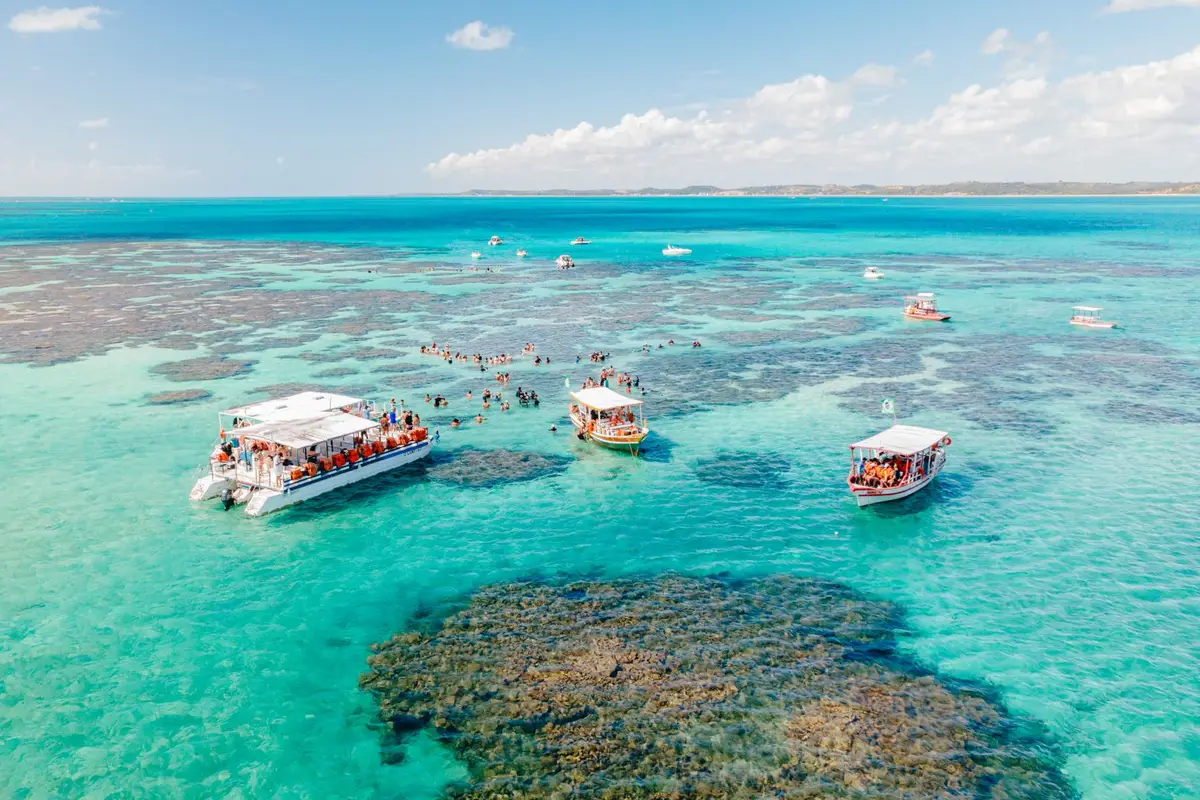
Maragogi’s main attraction is the natural pools of Galés, 6 km offshore — the coral reefs form natural aquariums with crystal-clear water at low tide. The boat or catamaran tour lasts about 3 hours and costs between R$ 100 and R$ 150 per person (July/2026). Besides Galés, the Caminho de Moisés (a sandbar that appears between two beaches at low tide) and the buggy tour along the southern beaches are other highlights.
Japaratinga: the middle ground
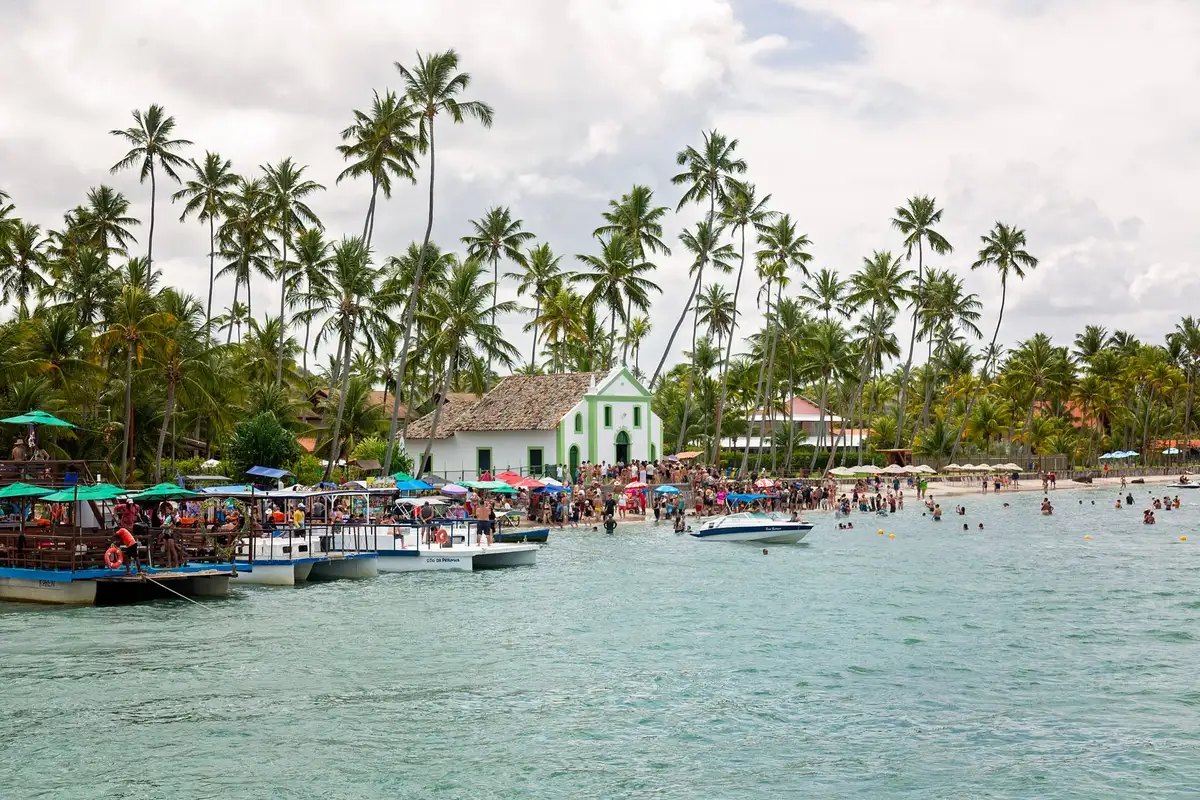
Japaratinga has 15 km of coastline with five calm-sea beaches and light sand. Praia de Japaratinga (the main one) has beach kiosks and basic amenities; Praia do Sonho Verde is more secluded. The village has good guesthouses, simple restaurants, and a pace that Maragogi has already lost. Japaratinga’s natural pools are smaller than Maragogi’s, but also beautiful and less crowded — the tour costs around R$ 80–120 per person (July/2026).
São Miguel dos Milagres: silence and charm
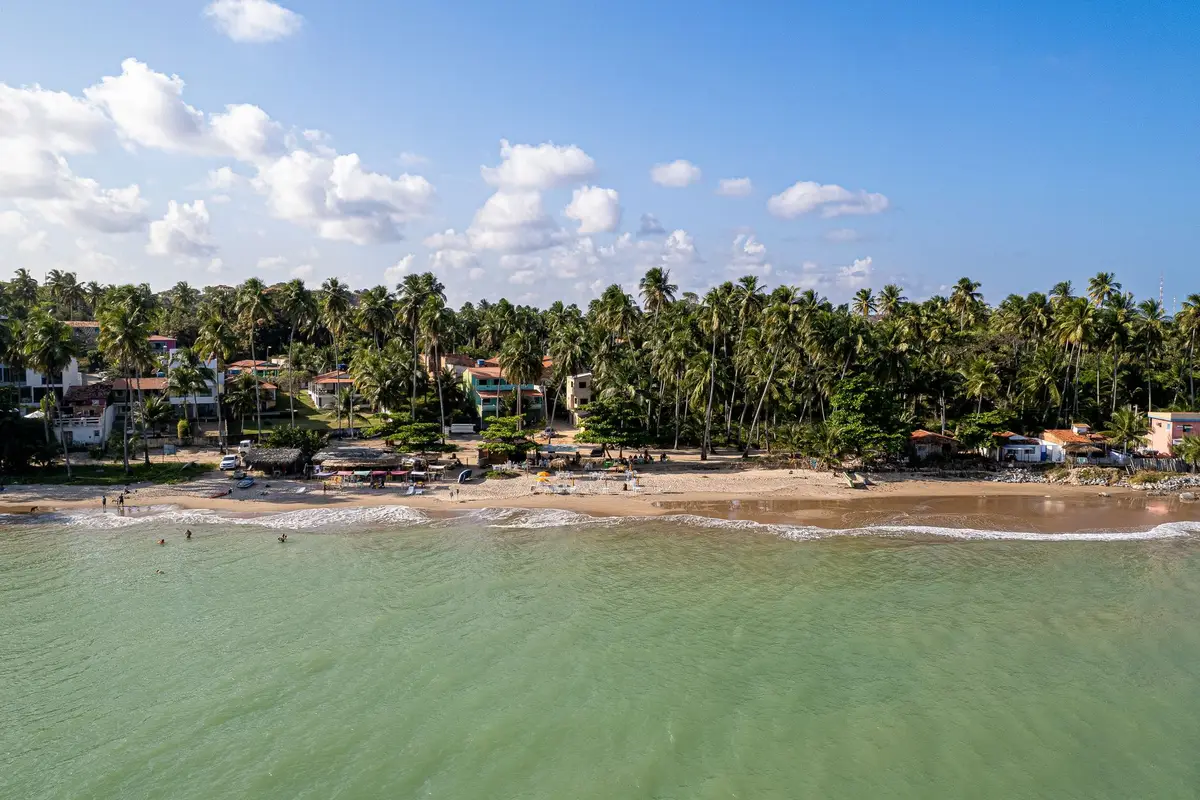
São Miguel dos Milagres is the destination for those seeking nearly deserted beaches and boutique guesthouses hidden among coconut palms. Praia do Toque and Praia do Patacho are the most famous — white sand, shallow and transparent water, no kiosks or street vendors. The natural pools here are smaller and more intimate than Maragogi’s, with motorized raft tours for R$ 80–100 per person (July/2026). Tourism is low-impact: there are no big resorts or hotel chains.
What to combine in your itinerary
The three destinations combine naturally into a route along the northern coast of Alagoas. A classic option is Maceió (2 nights) + São Miguel dos Milagres (2 nights) + Maragogi (3 nights), heading up the coast from south to north, then flying back from Maceió or continuing to Recife. Those with less time can use Japaratinga as a central base and do day trips to both sides.
For those coming from Recife, it’s worth adding Porto de Galinhas at the start or end of the itinerary — it’s 1 h 30 north of Maragogi. And from Maceió, trips to Praia do Gunga and Barra de São Miguel round out your beach days nicely before heading up to the northern coast.
Where to eat on the northern coast of Alagoas
The food scene is similar across all three destinations: fresh seafood, tapioca, grilled fish, and lobster (in season, from May to December). In Maragogi, Restaurante Bora Bora on Praia de Antunes serves grilled lobster for around R$ 120–180 (July/2026) with your toes in the sand. In São Miguel dos Milagres, guesthouses often serve elaborate meals to guests and visitors alike — the kitchen at Pousada do Toque is a regional reference.
In Japaratinga, the options are simpler but no less tasty — beach kiosks serve fried fish with farofa and vinaigrette at affordable prices (R$ 40–60 per person). One practical note: in São Miguel dos Milagres and Japaratinga, many restaurants close outside high season or only serve lunch — confirm hours before you go.
Where to stay: Maragogi, Japaratinga, or São Miguel dos Milagres
In Maragogi, Praia de Antunes and Praia de Ponta de Mangue concentrate the best accommodations — all-inclusive resorts (from R$800/night), mid-range pousadas (R$250–500), and budget options in the village (R$120–200), all references from July 2026. The infrastructure is the most complete in this stretch, with pharmacies, markets, and ATMs.
In São Miguel dos Milagres, accommodations are almost entirely high-end boutique pousadas in the R$400–1,200 per night range (July 2026) — Pousada do Toque and Pousada Marceneiro are top picks. There’s no supermarket chain or bank branch; bring cash. Japaratinga falls between the two in price and structure: solid pousadas from R$200 to R$600 per night (July 2026), with more shopping options than São Miguel but without Maragogi’s buzz.
Practical Tips
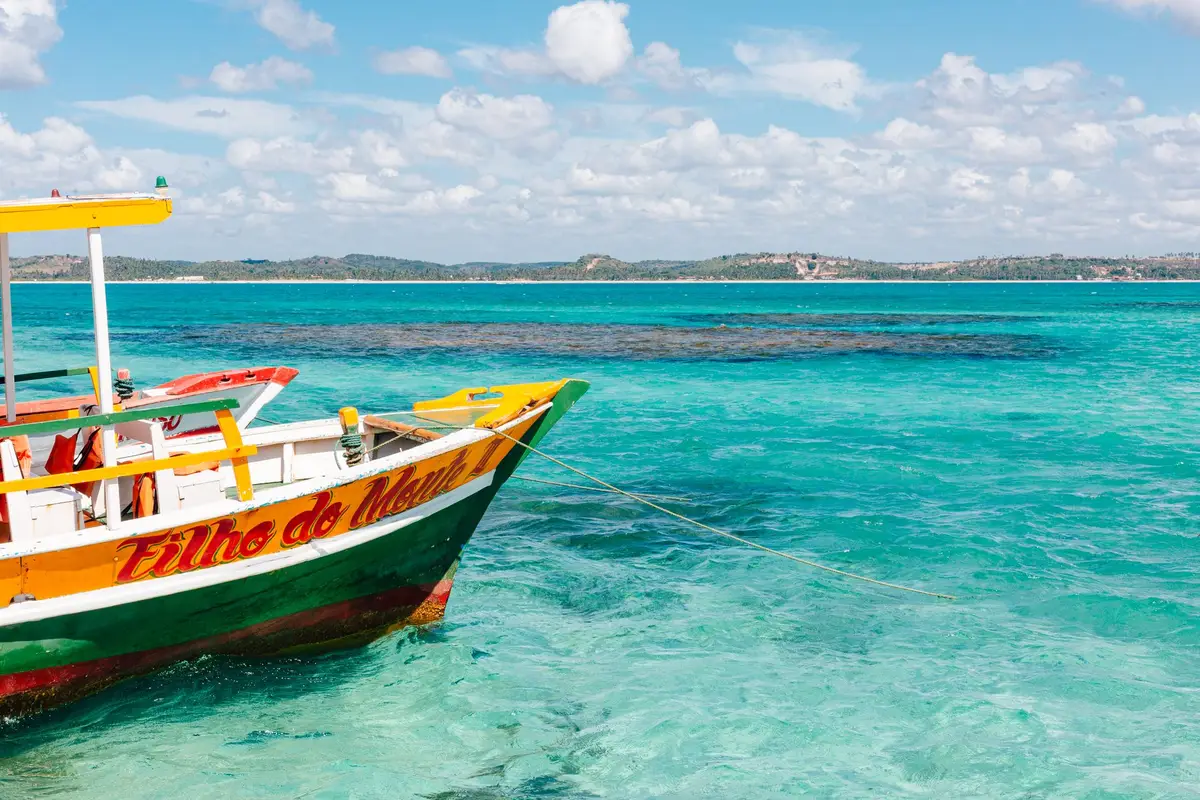
Rent a car if you plan to hop between the three destinations — public transport is scarce, and transfers between towns get pricey if you’re doing them daily. The AL-101 is in good shape, but some stretches lack shoulders: drive carefully, especially at night. All natural pool tours depend on low tide — check the tide tables before booking and prioritize morning departures, when water visibility is at its best.
Sunscreen, a hat, and water are non-negotiables — the sun on the Alagoas coast is intense year-round. Bring shoes that can get wet (flip-flops or neoprene water shoes) to walk over the reefs without cutting yourself on coral. Cell signal works reasonably well in Maragogi, but in São Miguel dos Milagres and Japaratinga it can drop outside the central areas — let anyone who needs to reach you know.
For a guided tour leaving from Maragogi, the speedboat tour to the natural pools via Civitatis includes snorkeling and free time on the reefs.
Frequently Asked Questions
Maragogi, Japaratinga, or São Miguel dos Milagres: which is more beautiful?
The beauty is similar across all three destinations on Alagoas’ northern coast — they all boast turquoise water, white sand, and coconut groves. Maragogi stands out for the Galés natural pools, the largest in the area. São Miguel dos Milagres has the most preserved and least crowded beaches, like Praia do Toque and Praia do Patacho. Japaratinga offers calm-sea beaches with fewer tourists than Maragogi.
Can you visit all three destinations on the same trip?
Yes, you can visit Maragogi, Japaratinga, and São Miguel dos Milagres on the same trip. All three sit along the same stretch of the AL-101, less than 40 km apart. With 5 to 7 days, you can split your nights between two of them and do a day trip to the third. Renting a car makes the logistics much easier.
Which destination has the best infrastructure in Alagoas?
Maragogi has the best infrastructure among the three destinations on Alagoas’ northern coast. The town offers resorts, pousadas across price ranges, restaurants, pharmacies, markets, and ATMs. Japaratinga has mid-level infrastructure. São Miguel dos Milagres is the most rustic, with no banking network or large supermarket — most accommodations are boutique pousadas.
Do you need a car to get between Maragogi and São Miguel dos Milagres?
Having a car makes getting around Maragogi, Japaratinga, and São Miguel dos Milagres much easier. Public transport between the three towns is scarce, and daily private transfers get expensive. The AL-101 connecting the destinations is paved and well-signposted, and the longest distance (Maragogi to São Miguel) is just 40 km.
What’s the best time to visit Alagoas’ northern coast?
The best time to visit Alagoas’ northern coast runs from September to March, when rainfall is lower and sunshine dominates. Natural pool tours work best during this period thanks to water visibility. From April to August there’s more rain, especially in June and July, but the sea stays warm (26 °C to 29 °C) and prices drop.
Conclusion
Maragogi for infrastructure and grand natural pools, São Miguel dos Milagres for silence and nearly private beaches, Japaratinga for those who want the balance between the two. Alagoas’ northern coast is so compact that the best answer might just be “all three” — and with less than a week, you can pull exactly that off. For more beach guides and itineraries across Northeast Brazil, explore the articles on Voyage Voyage.