 Marcelo Oliveira
Oranjestad, Aruba, is the capital of the Caribbean island and the first slice of it most travelers see, whether stepping out of Reina Beatrix Airport, 3 km away, or disembarking from a cruise ship at the port that cuts through the center. In half a day, you can stroll past the colorful Dutch-style houses, hop on the free streetcar, and grab lunch at a seaside restaurant—with time left over for the buzzing beaches just minutes away.
Hotels in Oranjestadfree cancellation options onlySee hotels ›Booking.com partner (advertising): we may earn a commission at no extra cost to you.
The city has that feel of a Dutch village transplanted to the Caribbean: low-rise buildings in shades of pink, blue, and yellow, palm-lined streets, and a rhythm that shifts from busy morning commerce to lively evening restaurants. Nothing about it asks for more than a day of your time—the rest of your trip is best saved for the beaches and island interior excursions.
Getting to Oranjestad
Reina Beatrix International Airport (AUA) sits about 3 km from Oranjestad’s center—a taxi ride into town takes 10 to 15 minutes. Cruise passengers disembark right at the Port of Aruba, right next to the historic center, with no transport needed to reach the colorful houses.
Around town, the Aruba Street Car connects the port’s passenger terminal to the center in 6 stops, and the ride is free—it runs daily from 10 a.m. to 5 p.m. Staying in the Palm Beach or Eagle Beach area? Taxis and local buses (the Arubus line) reach the center in 15 to 20 minutes.
The official Aruba tourism website lists the streetcar’s current schedule and any route changes, handy for those arriving outside cruise season.
Best time to visit and how long to stay
April through June and the stretch from September to early November offer the best balance of weather and price in Aruba—still with near-guaranteed sunshine, but with cheaper hotels and fewer crowds. December through March is the island’s high season, when Americans escape the winter chill and lodging prices climb.
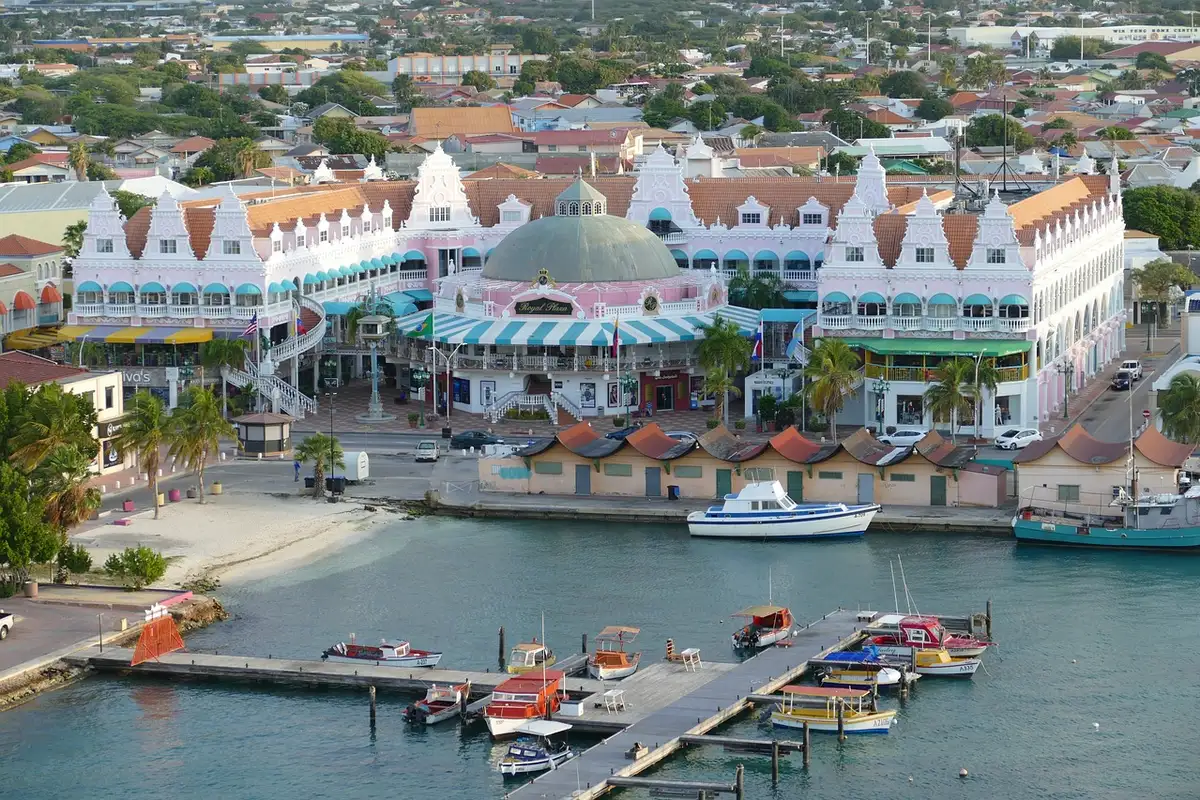
Oranjestad itself calls for half a day to a full day—enough time to wander the historic center, hop on the streetcar, and hit the duty-free shops. Travelers spending more time on the island usually save this day for the middle of their stay, between beach time and 4×4 excursions inland.
Things to see in Oranjestad
The historic center holds everything worth visiting on foot, at a relaxed pace, with photo stops on every corner.
Colorful houses of the historic center
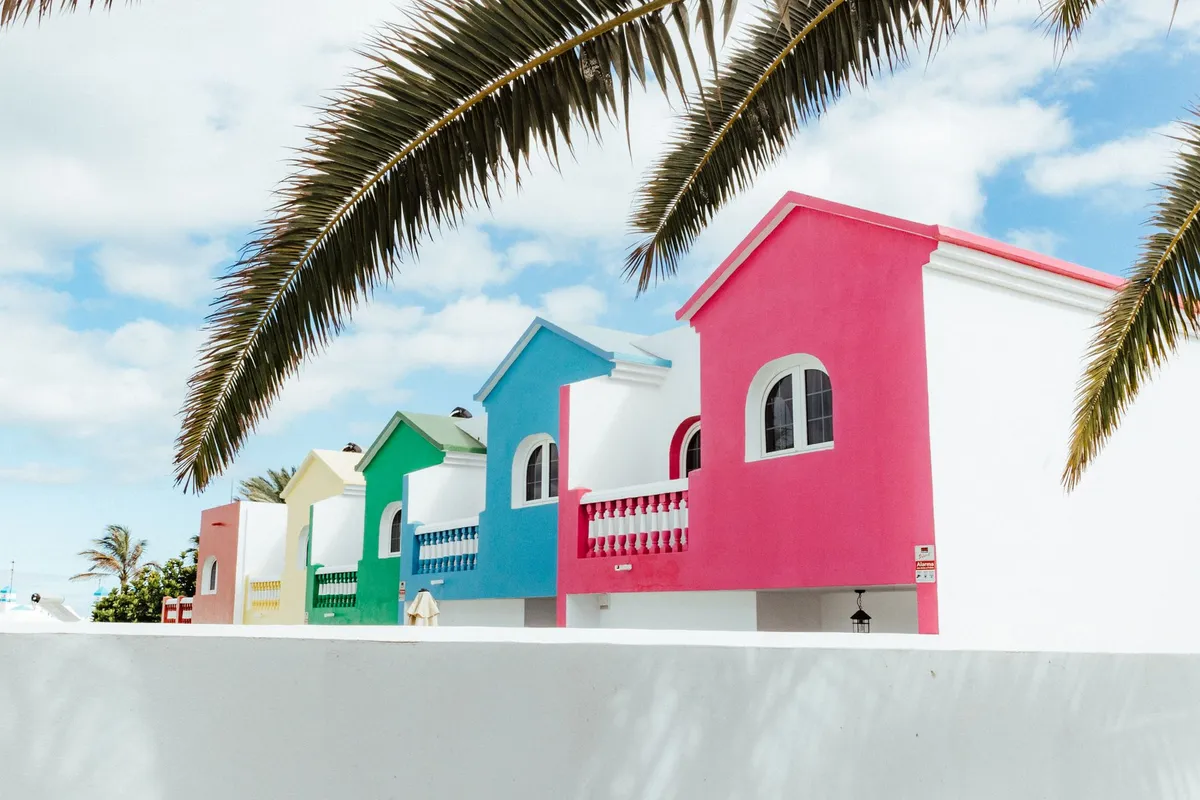
It’s the city’s postcard image: a cluster of low-rise mansions in pink, blue, yellow, and green, with Dutch colonial architecture. Many now house restaurants and international brand stores, but the facades remain unchanged—worth wandering without a set route, especially in the late afternoon when the light favors photos.
Main Street (Kleistraat)
The main shopping street of Oranjestad, crossed by streetcar tracks and lined with palm trees. It holds everything from neighborhood shops to larger boutiques selling clothes, perfumes, and accessories—much of it duty-free, with no import tax.
Main Street’s vibe shifts noticeably by the hour: in the morning, it’s easier to move around and haggle at the smaller shops; in the afternoon, when cruise passengers pour ashore, the sidewalks fill up and lines grow at the perfume and jewelry stores. Arriving before 10 a.m. helps dodge that peak, especially on days with more than one ship docked.
Fort Zoutman and the Aruba Historical Museum
The island’s oldest fort, built in 1798, now operates as a museum with pieces from Aruba’s colonial and indigenous history—the Wikipedia page on Fort Zoutman details the expansions it received through the 19th century. A quick visit fits in 30 to 40 minutes and sits just steps from the commercial center.
What to pair with your visit
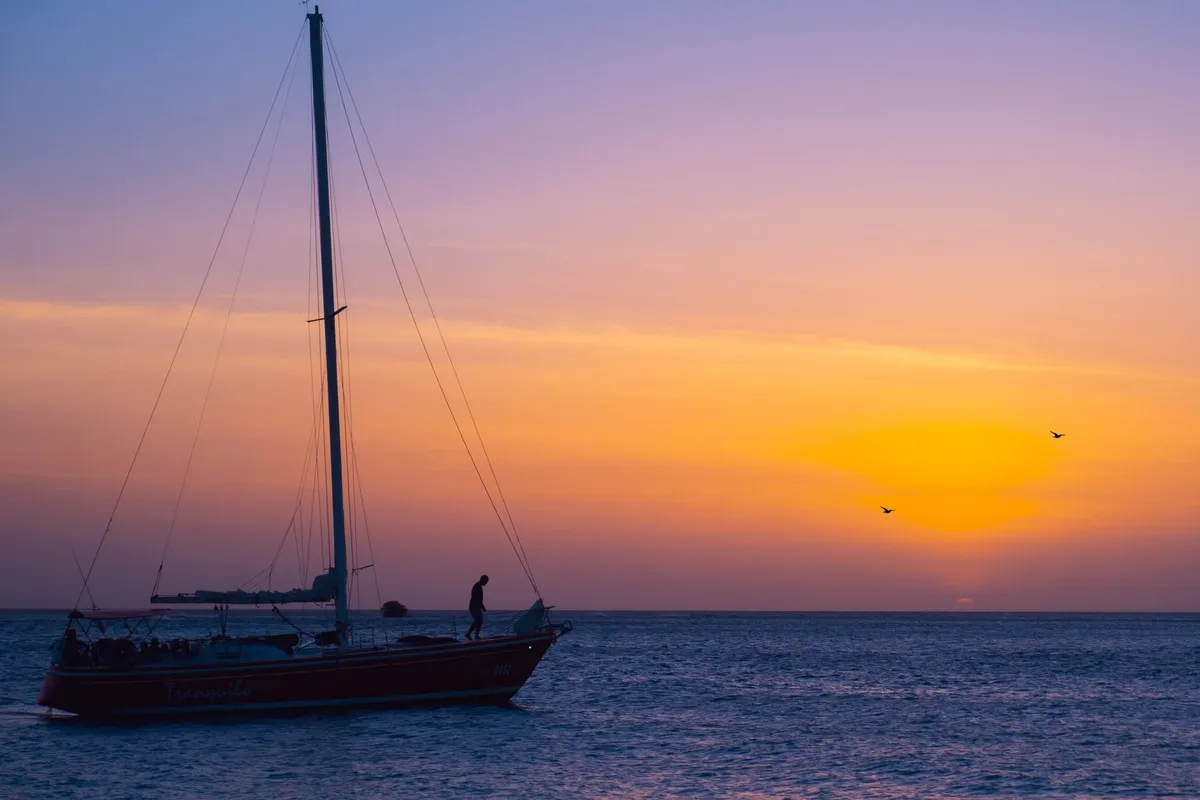
Want to see Oranjestad from the water? Cap off the day with a sunset catamaran cruise that departs from the city itself and sails along the island’s west coast into the sunset.
 Partner · Civitatissee all activities in Oranjestad ›
- Aruba Boat Ride & Snorkelling ExcursionRating 8.2 · 42 reviews on Civitatisfrom€65.86per personSee ›
- Aruba Sunset CruiseRating 9.3 · 30 reviews on Civitatisfrom€74.64per personSee ›
- Aruba Buggy TourRating 6 · 4 reviews on Civitatisfrom€210.79per personSee ›
- South Aruba Guided TourRating 7.9 · 41 reviews on Civitatisfrom€50.06per personSee ›
Civitatis prices on 28/09/2026, from, per person. They may change. Want to compare? Activities in Oranjestad on GetYourGuide ›
Prefer to stay on land? A 4×4 tour through the island’s arid interior pairs perfectly with a morning in Oranjestad—booking the Aruba 4×4 tour secures your spot in advance, since groups tend to fill up during high season.
Where to eat in Oranjestad
The colorful houses of the center hold the city’s biggest concentration of restaurants, with options ranging from fresh fish to Dutch-Caribbean cuisine. The area by the port, with tables facing the sea, tends to be liveliest in the late afternoon, once the cruise ships have departed and the air cools.
Worth reserving a table with a sunset view if your visit falls on a day with a docked cruise ship—the buzz at portside restaurants picks up noticeably while the ship is in town.
Still deciding between Caribbean destinations before booking your trip? You might enjoy understanding the difference between the Bahamas and the Caribbean, since Aruba, though Caribbean, sits outside the hurricane belt that affects much of the region.
Where to stay in Oranjestad
Staying in Oranjestad, rather than resort areas like Palm Beach, usually comes out cheaper—three-star hotels in good locations start around R$ 700 per double room in low season (July 2026 rates). Local taxes and fees add between 15% and 20% to the nightly rate, so be sure to check the total before booking.
To compare with another buzzing Caribbean beach destination, it’s worth checking out how the choice between Cancún’s beaches and its Hotel Zone works — another spot where the area you stay in significantly changes your costs and daily routine.
It’s a trade-off of convenience: staying downtown, beaches like Eagle Beach and Palm Beach are a 10–15 minute taxi or bus ride away, rather than right at your doorstep like at the beachfront resorts.
Where to stay in Oranjestad
| Hotel | Rating | |
|---|---|---|
| Hotel RH Boutique ArubaOranjestad · Caya Maguey 10 | 9,0224 reviews | See prices |
| Wonders Boutique HotelOranjestad · Emma Straat 63 | 9,4506 reviews | See prices |
| Victoria City HotelOranjestad · Caya G.F. Betico Croes # 126 | 8,6714 reviews | See prices |
| Aloe B&BSeroe Blanco · Seroe Blanco 56L | 9,7152 reviews | See prices |
| Aruba Bliss CondosOranjestad · Rudolf Arendsstraat 23 | 9,3181 reviews | See prices |
| Aruba Surfside MarinaSurfside · LG Smith Boulevard 7 | 9,5299 reviews | See prices |
| Renaissance Wind Creek Aruba ResortOranjestad · L.G. Smith Boulevard 82 | 8,9952 reviews | See prices |
| A1 Apartments ArubaOranjestad · Pagaaistraat 5 | 8,7376 reviews | See prices |
Booking.com rating on 30/09/2026
Practical Tips
Brazilian travelers don’t need a visa to visit Aruba for tourism — just a valid passport and the ED Card (Embarkation/Disembarkation Card) registration, completed online before your trip. The official currency is the Aruban florin, but the US dollar is accepted in most shops in Oranjestad.
Oranjestad’s climate is dry for most of the year, with little rain even outside the low season, and constant breezes that keep the heat in check — so bring sunscreen and a hat even for a day of urban strolling downtown. International cards are accepted at most establishments, but keeping some cash on hand helps at smaller shops and for taxis.
Aruba sits outside the traditional Caribbean hurricane belt, making it a relatively stable destination weather-wise throughout the year — another reason tourism stays steady even outside the December-to-March high season. That also means the sea tends to be calm year-round, great both for swimming and for the boat tours that depart from Oranjestad.
The free streetcar runs from 10 AM to 5 PM — outside those hours, the historic center is easy to explore on foot, since the distances between the main sights are short.
If your trip includes other Caribbean islands, this 4-day San Andrés itinerary shows how to plan equally turquoise-blue waters without packing your schedule too tight.
To compare another Dutch-influenced Caribbean capital, also check out the guide to Willemstad, Curaçao, with a walking route through the historic center and tips for using the city as your base.
 HotelAs soon as you have datesCompare neighbourhoods and guest ratings.See hotels ↑
- ActivitiesBefore you travelBook ahead the ones with limited spots.Civitatis ›
 More activitiesTo compareTickets, day trips and tours with flexible cancellation.GetYourGuide ›
Frequently Asked Questions
What to do in Oranjestad in one day?
A day in Oranjestad is enough for a stroll past the colorful houses of the historic center, a ride on the free streetcar, duty-free shopping on Main Street, and a visit to Fort Zoutman. It wraps up nicely with dinner at a waterfront restaurant or a sunset catamaran cruise.
What is Oranjestad?
Oranjestad is the capital of Aruba, a Caribbean island that’s part of the Kingdom of the Netherlands. It’s home to the island’s main port, the airport just minutes away, and a historic center with Dutch colonial architecture.
Where are Aruba’s colorful houses?
The most photographed colorful houses are in Oranjestad’s historic center, along Main Street (Kleistraat) and the streets near the port, where restaurants and shops now operate.
Is Aruba expensive or cheap?
Aruba ranks among the most expensive destinations in the Caribbean for lodging, especially in resort areas like Palm Beach. Staying in Oranjestad and booking your hotel in advance helps bring down the nightly rate.
What’s the best month to visit Aruba?
April through June and the period from September to early November offer the best balance of favorable weather and lower prices. December through March is high season, with more crowds and pricier rates.
Conclusion
Oranjestad only asks for a day, but it’s the right gateway to understanding the rest of Aruba — from the colorful houses to the sea that already glimmers turquoise at the city’s edges. For more itineraries and tips on Caribbean destinations like this one, you’ll find them right here on Voyage Voyage.