 Marcelo Oliveira
Eagle Beach, on Aruba’s west coast, is a stretch of more than 3 km of white sand facing low-rise hotels, just minutes from Oranjestad. The calm sea explains why it works just as well for a few hours between outings as for a full day: the sand is public, but chairs, shade, and restrooms vary depending on the section and the hotel in front of it.
Hotels in Oranjestadfree cancellation options onlySee hotels ›Booking.com partner (advertising): we may earn a commission at no extra cost to you.
Where Eagle Beach Is and How to Get There
The beach sits north of Oranjestad, in an area known as the Low-Rise Hotels zone. If you’re staying downtown or in the Palm Beach area, you can get there by car, taxi, or bus; Aruba’s official tourism page mentions parking and shaded areas right on the sand. Don’t treat Eagle Beach parking as an extension of the paid spots in downtown Oranjestad, though: they’re different zones, and local signage should take precedence.
If you’re driving, it’s worth picking your stretch of sand first and only then looking for a spot on nearby streets or lots. That way you avoid crossing the beach loaded down with chairs, water, and gear. If you’re taking a taxi, agree on the pickup point before you get out. If you’re taking the bus, confirm with the driver which stop is closest to your hotel or chosen access point, because the beach is long and the name Eagle Beach is used for several entrances.
What the Beach Facilities Are Like
The beach’s layout is more open than that of coves with heavy commercial development. The Aruba Tourism Authority mentions “shaded areas, some cabanas and beach huts,” plus water sports like jet skiing, banana boat rides, and parasailing. That doesn’t mean every bit of shade, every chair, or every restroom is public and free: nearby resorts may run their own services for guests, and vendors or rental companies have their own terms. Bring a towel, water, sunscreen, a card, and a backup shade option if you’re not staying there.
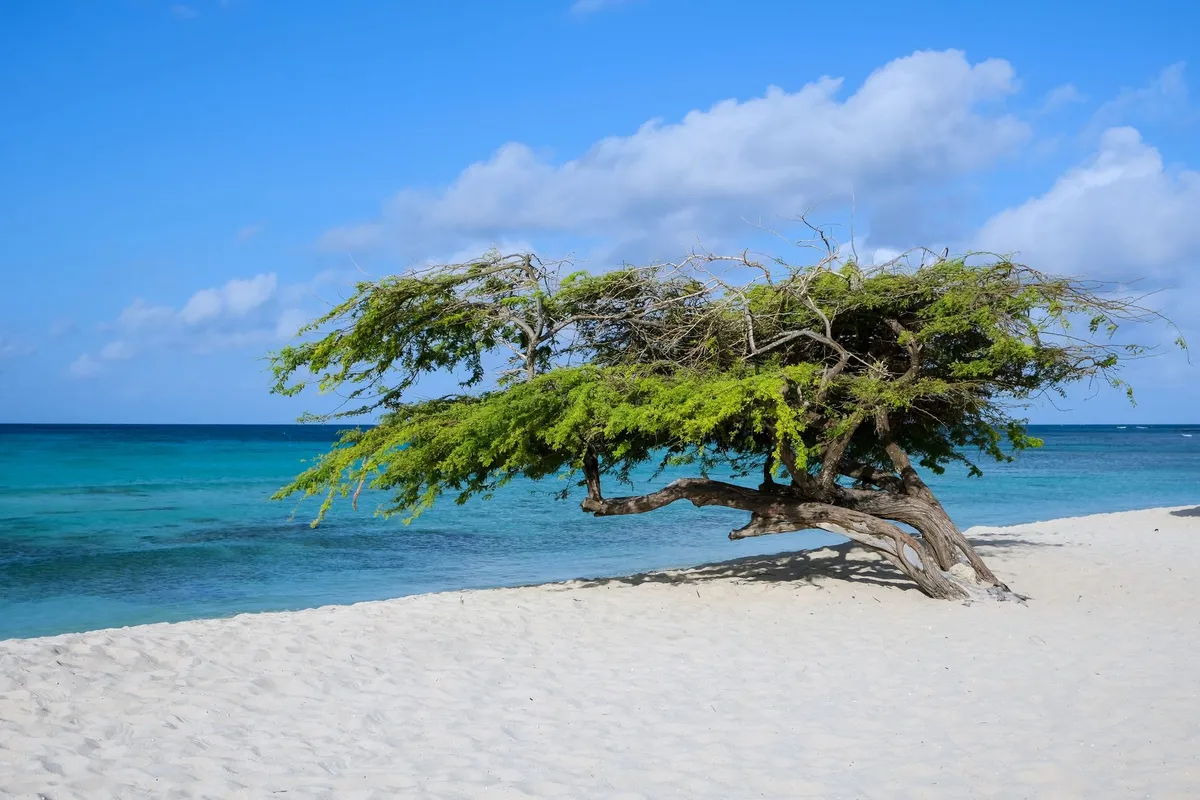
The wide sand gives you room to walk without being crammed into the first row by the water. The best spot depends less on a “secret” location and more on what you want to do. For swimming, look for an access point with a clear view of the water before you set up camp; for photos, the fofoti trees are the classic reference; for long stays, favor a stretch near a restaurant or hotel where you plan to buy something. The beach doesn’t require you to spend money to enjoy it.
An Outing That Departs Near Eagle Beach
Taking a break from the sand for a few hours is easy on this coast. The catamaran snorkel tour departs from Palm Beach, just minutes away, with a stop at the SS Antilla shipwreck, sunk in 1940, and at Boca Catalina bay.
Which Time of Day Makes the Most Sense
In the morning, the light is softer and the heat is usually more manageable for walking on the sand. At midday, the lack of natural shade weighs more heavily than on city beaches with continuous kiosks. In the late afternoon, the scenery becomes more photogenic and the water is still the main draw; plan your return trip in advance if you don’t have a car. Wind and sea conditions vary, so the decision to get in the water should be based on that day’s conditions, not just old photos.
The fofoti trees deserve a practical note. Aruba’s code of conduct asks visitors not to hang hammocks, bags, or other objects on them. They’re natural landmarks, not beach furniture. Your photo works better when the tree stays clear and the sand remains unobstructed.
What to Bring So You Don’t Depend on Private Facilities
The difference between a relaxing visit and a string of rushed purchases usually comes down to your beach bag. Water, a towel, a sarong or compact chair, sunglasses, and an extra layer of sunscreen reduce your reliance on hotel services. Shoes that can get wet make it easier to walk between sand and pavement; a bag for your own trash helps keep the beach free of plastic. If you plan to stay until late, pack a change of dry clothes for the trip back.
Aruba’s tourism website highlights the beach’s width, parking, and shaded areas. These features are useful, but they shouldn’t be read as a guarantee that a chair, palapa, or parking spot will be available at any given time. Wind, crowds, and local event schedules change the experience. The best use of your time is to arrive self-sufficient and treat the amenities as a bonus.
Eagle Beach is a turtle nesting area
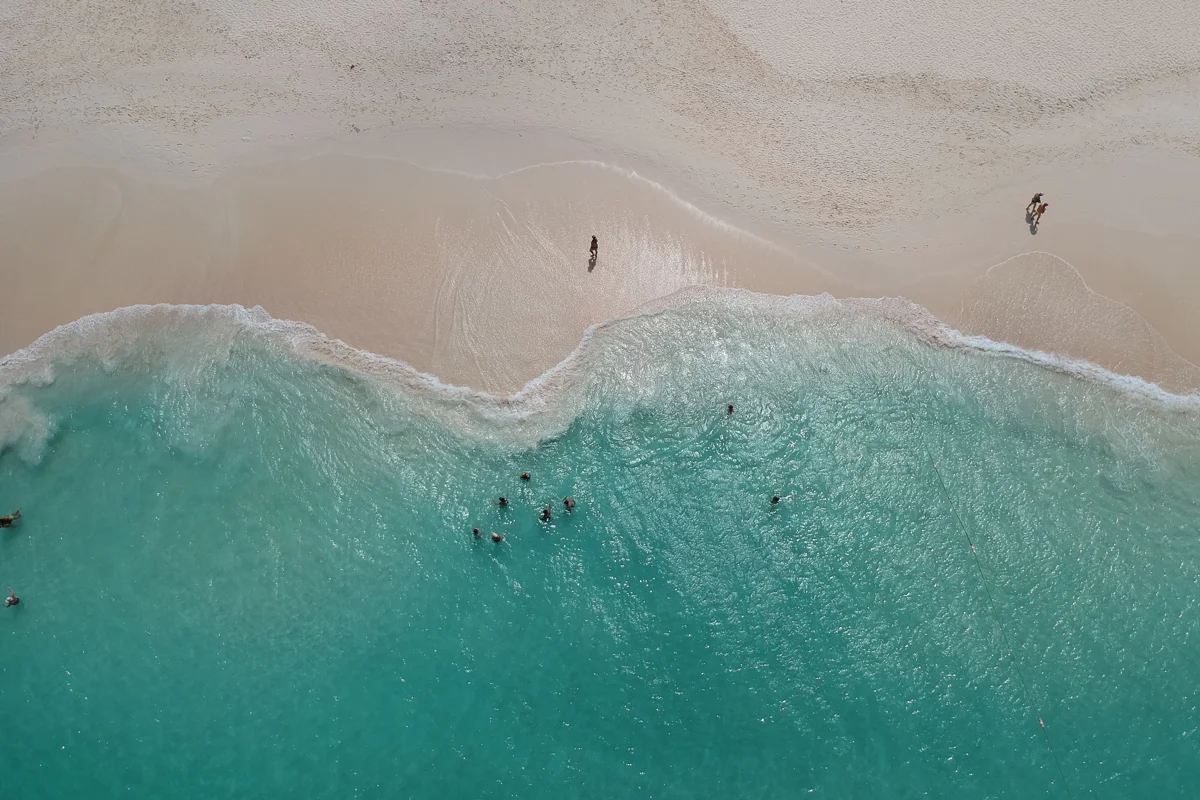
Aruba’s territorial waters are home to four species of sea turtles that come ashore to nest between March and December, according to the government’s Department of Nature and Environment — and Eagle Beach is among the beaches they use. If you spot a marked nest, a turtle, or hatchlings, don’t get close to film, don’t touch, and don’t use lights on the sand at night: the agency asks for no artificial light near the water, because turtles are sensitive to it. Official guidance also asks visitors to level any holes dug in the white sand for recreation and to carry all trash out with them.
This care isn’t a decorative detail: artificial light and obstacles alter the animals’ path between sea and sand. A responsible visit keeps distance, reduces noise, and leaves the spot flat before you go. Government guidance is clear about keeping your distance and never touching or feeding the turtles under any circumstances.
When to swap Eagle Beach for another stretch of the island
This beach is especially well suited when your priority is room to spread out a towel, take a swim, and enjoy a stretch of time without a packed schedule. If you’re after a string of bars, water sports booked right off the boardwalk, or nightlife just behind the sand, you may prefer Palm Beach. If you want a more secluded beach, with a roadside stop and rocky scenery nearby, consider another side of the island. There’s no universal choice: Aruba’s geography lets you use each beach for a distinct purpose.
That comparison is more useful than any ranking. Eagle Beach handles a morning of rest or a late afternoon, but it doesn’t replace parks, diving, or the historic center. When planning your week, set aside a day for the beach without the pressure of squeezing in five attractions, and save the road trips for another time. That way, a shift in clouds or wind won’t throw off your whole itinerary.
What to pair with Eagle Beach in Aruba
The natural pairing is with downtown Oranjestad at another point in the same day: beach first, then architecture, shops, and restaurants — or the reverse if your flight or cruise sets the schedule. When planning a broader Caribbean trip, compare Aruba’s pace with that of Willemstad, in Curaçao, and with the context laid out in Bahamas vs. Caribbean. For the practical side of the trip, it also helps to review the first international trip guide and your international SIM card options. Eagle Beach doesn’t call for a rigid itinerary: it calls for free time, sun protection, and attention to the rules that keep the beach usable for everyone.
How to plan a beach day without wasting time
A streamlined sequence works better than trying to turn Eagle Beach into a quick stop on a tour. Sort out round-trip transportation, arrive with the basics, and decide whether lunch will be near the sand or in Oranjestad. If you’re only visiting for a day, you can set aside the beach for the morning and save downtown for the late afternoon. If you’re staying in the area, use the same logic in reverse: a tour of the island first, a swim after.
The distance between the water and the avenue also explains why Eagle Beach is more comfortable when you travel light. A heavy cart, a big cooler, and gear that can’t get wet make short walks across the sand a hassle. Check sea conditions when you arrive, respect the signage, and keep documents and electronics protected. These precautions don’t replace local recommendations in case of strong wind or changing weather, but they cut down on simple mishaps.
The beach’s strong point is that it doesn’t require spending money or following a fixed itinerary. It fits between a flight and a tour, but it can also fill an entire day when the goal is simply to stay near the sea. The limit is environmental: the same sand that hosts towels and games is used by turtles during part of the year. Heading back with your trash, leveling holes, and leaving the fofoti undisturbed keeps the experience possible for the next visit.
 HotelAs soon as you have datesCompare neighbourhoods and guest ratings.Booking ›
 ActivitiesBefore you travelBook ahead the ones with limited spots.Civitatis ›
 More activitiesTo compareTickets, day trips and tours with flexible cancellation.GetYourGuide ›
Frequently asked questions about Eagle Beach
Is Eagle Beach public?
Yes. You can access the beach without staying at the surrounding resorts; chairs, cabanas, and other services may have their own rules or fees.
Is there parking?
Aruba’s official tourism page mentions parking near the beach alongside the shaded areas. Keep an eye on signs and conditions on site.
Can I hang a hammock on the fofoti trees?
No. Aruba’s code of conduct asks that no objects or hammocks be used on the trees, which are natural landmarks of Eagle Beach.