Historic hillsides and Carnival are the key to understanding Olinda, but they call for a walking itinerary with well-chosen breaks. In one day, you can connect Carmo, Quatro Cantos, Amparo, Alto da Sé, and São Bento without turning the visit into a race; during Carnival, the same area changes scale and requires arriving early, packing light, and agreeing on an exit route.
| Item | Practical decision |
|---|---|
| Location | Historic Center, starting from Praça do Carmo |
| Transport | Get to Carmo and explore the core on foot |
| Duration | 4 to 6 hours outside the festivities; a full day during Carnival |
| Hours | São Bento opens 9am–11:45am and 2pm–5pm (Aug/2026) |
| Safety | Keep your phone and documents under your clothes on crowded days |
| Accessibility | Uneven pavement and steep climbs: plan short routes |
Is it worth visiting the hillsides outside Carnival?
Yes, if you want to observe the historic houses, the artist studios, and the churches with time to go inside and take photos. Olinda’s Historic Center has been on the World Heritage List since 1982, a recognition explained by the Ministry of Tourism. Outside the festivities, start early and treat each hillside as a stop, not a shortcut.
It’s a great choice for those who’ve already put together an urban itinerary between Recife and Olinda and want to trade the rush of a day trip for a neighborhood that reveals itself around every corner. On weekdays, the museums help set the pace of the walk; on Sundays, check opening times before heading up.
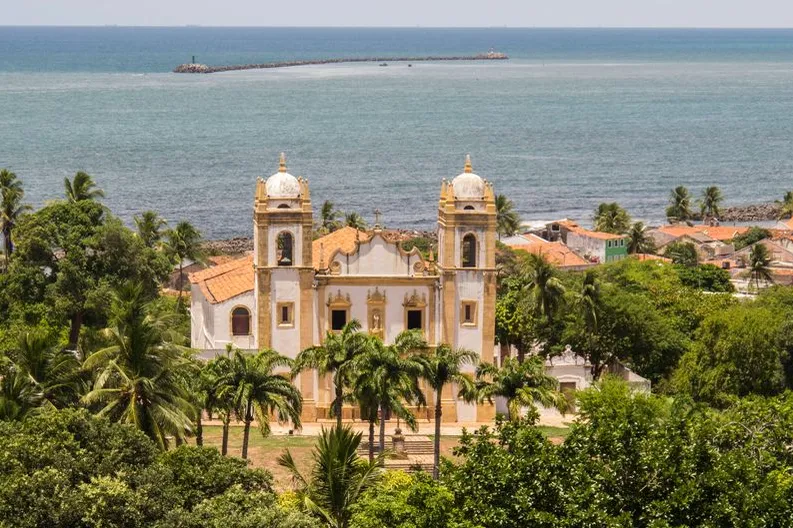
What to see in Olinda’s Historic Center in one day?
Follow a route from the bottom up: Praça do Carmo, Rua de São Bento, Quatro Cantos, Rua do Amparo, Misericórdia, and Alto da Sé. The Mosteiro de São Bento opens every day in two periods, from 9am to 11:45am and from 2pm to 5pm, according to the official church guide; use this window to set your order.
Don’t try to go into everything. Pick one church, one museum, and one viewpoint; the time between them is part of the experience. In the morning, head up to the Sé and leave the shopping streets for the descent. After lunch, come back through Amparo and the São Bento area. Useful number: three indoor stops already fill a five-hour itinerary, not counting travel time.
| Stretch | What it offers | How to decide |
|---|---|---|
| Carmo and São Bento | Church, historic houses, and a flatter start | Start here if you arrive by public transport |
| Quatro Cantos and Amparo | Studios, facades, and narrow streets | Set aside time to stop, not just pass through |
| Alto da Sé | View and monumental surroundings | Go before the strongest heat |
The common mistake is to follow only the most photographed spot and ignore the opening hours of the doors. A visit to Christ the Redeemer also shows why timing and flow change an experience: in Olinda, the difference is that the pavement, the incline, and the alleys make improvisation more tiring.
How much does it cost to visit Olinda?
Walking the streets is free; for a paid and lean version, budget R$ 8 per adult for the three museums listed by the city: MAC R$ 5, Museu do Mamulengo R$ 2, and Museu Regional R$ 1 (Aug/2026). Prices and hours are on the municipal monuments guide.
In practice, the cultural core costs R$ 8 in confirmed entry fees (Aug/2026), plus transport to Carmo and water/snacks. Don’t add a generic bus fare: it depends on your origin and the line; check with the operator before you leave. Those who only do the walk, one church, and the view can spend R$ 0 on entry fees, but need to bring money for food and the return trip.
Simple math: R$ 5 + R$ 2 + R$ 1 = R$ 8 (Aug/2026). It’s more useful than promising an “average budget” that mixes accommodation, food, and transport from different cities.
How to get around without a car?
The car-free strategy is to get to Praça do Carmo and focus your visit on the Historic Center. The tourist information desk at the square reports service Monday to Saturday, from 8:30am to 5:30pm, in the announcement from the Olinda City Hall; use it for up-to-date guidance, not as a guarantee of a tour or fare.
A private car becomes extra responsibility in an area of narrow streets. Combine the metro in Recife with a bus to Carmo and explore the core on foot, with sturdy shoes. If you prefer historical context without figuring out every point on your own, the Recife and Olinda tour from Civitatis is a verified alternative; check the duration, meeting point, and price on the activity page before booking.
Which hours require attention?
Museums and churches don’t follow a single schedule. The Mosteiro de São Bento has a break between 11:45am and 2pm; the Museu Regional is open Tuesday to Friday, 9am–5pm, and Saturday and Sunday, 1pm–5pm, according to the monuments guide. Organize your climb in the morning and leave a buffer for closed doors.
The catch is arriving at Alto da Sé in the middle of the day and finding out your indoor stop is on break. Save the official contacts of your chosen attractions; mass, holidays, event setup, and maintenance can change visiting hours. To plan the next day, also check out the other urban stops in Recife.

Is Olinda’s Carnival free?
The public schedule may include free stages and street parades, but don’t treat that as a free pass for the whole trip. In 2026, the city announced free performances in Varadouro and Rio Doce between February 14 and 17, according to the official schedule. Accommodation, drinks, transportation, and private parties remain separate expenses.
Arriving late and trying to “find” a bloco is the worst bet for a first visit. The streets have heavy foot traffic, the routes change, and the crowd can split your group in seconds. Set a meeting point away from the squeeze, carry minimal ID, a small power bank, and some cash set aside. Exit tip: agree in advance on where the group will end the night.
Quick questions about Olinda
When should you visit Olinda to see the hillsides with fewer crowds?
Outside Carnival, weekday mornings make it easier to walk around and get into museums. The MAC is open Tuesday through Sunday, from 9 a.m. to 5 p.m., according to the Olinda city government; try to arrive around 9 a.m. to start your circuit before the heat sets in.
What should you bring for Olinda’s Carnival?
Bring water, sunscreen, a light rain jacket, essential ID, and a fanny pack or money belt worn under your clothes. Olinda’s Carnival happens on hillsides and in crowds, so closed-toe or very secure footwear helps more than an outfit that’s hard to walk in.
Are Olinda’s hillsides suitable for people with reduced mobility?
Olinda’s hillsides have slopes, stones, and uneven sidewalks, which makes the historic core challenging. Plan two or three nearby stops and use transportation to get to your chosen spots, rather than trying a long circuit all at once.
Is it better to stay in Olinda or Recife during Carnival?
Staying in Olinda cuts down on travel time but usually requires booking ahead; staying in Recife gives you more options and calls for a round-trip plan. Choose Olinda if being close to the party is your priority, and Recife if you want to switch between neighborhoods and schedules.
A trip that works at your own pace
Olinda rewards those who pick a few stops and accept that the hillside is part of the itinerary. Outside Carnival, use the museums and churches as anchors; during the festivities, prioritize hydration, a meeting point, and an exit plan. The layout is simple: Carmo as your base, a purposeful climb, and a leisurely descent.