Marco Zero do Recife is the kind of place many people photograph in two minutes and leave without understanding why it anchors so much of the historic center itinerary. The square by the water marks the most symbolic point of Recife Antigo, opens up to views of the Parque das Esculturas de Brennand, and works as a natural starting point for walking along Avenida Rio Branco, Rua do Bom Jesus, and the surrounding area.
Marco Zero is worth a visit if you want to start Recife Antigo at its most photogenic and easiest-to-fit-in spot. The stop is quick, but it pays off much more when you take the chance to continue on foot through the historic neighborhood or pair it with a guided tour of Recife and Olinda.
What it is and why it’s worth it
Marco Zero sits in Praça Rio Branco, in the Recife neighborhood, and is the point from which local road distances are officially measured. In practical tourist terms, it plays an even simpler role: it’s where Recife Antigo presents itself most openly, with a wide boardwalk, views of the meeting of the waters, and immediate access to the historic streets around it.
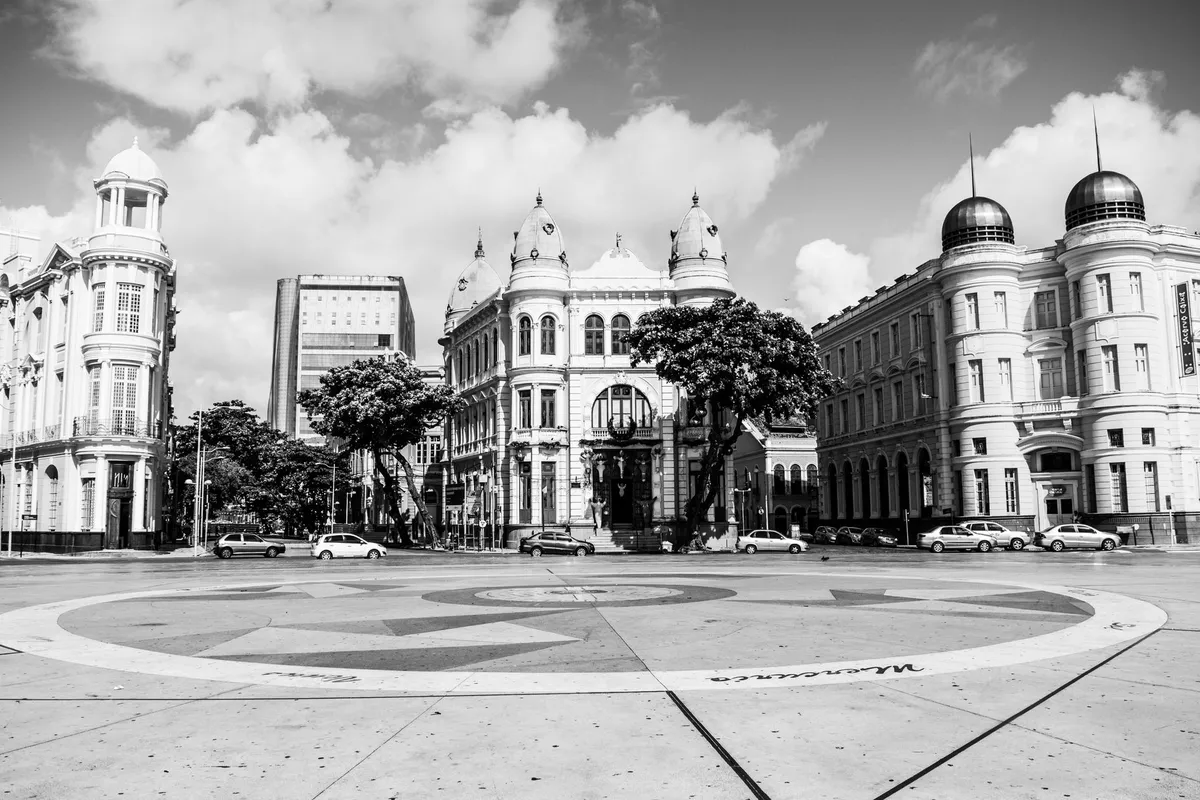
What makes the visit worthwhile isn’t a single monument but the whole package. You see the large compass rose designed by Cícero Dias on the ground, spot the estuary and the Parque das Esculturas Francisco Brennand across the water, and within a few steps you’re already in some of the most pleasant areas to walk in the center. It’s a better place to start your tour than to rush through at the end.
If the plan is just to snap a photo, the stop can feel too quick. But if you use the square as your orientation point, Marco Zero makes sense as the heart of Recife Antigo, not just a backdrop.
Best time to visit and what to see in the square
The best times to visit are usually early morning and late afternoon. The light is nicer for photos, the heat is less intense, and the square gains more visual depth, with the design on the ground, the surrounding buildings, and the water in the background showing more contrast.
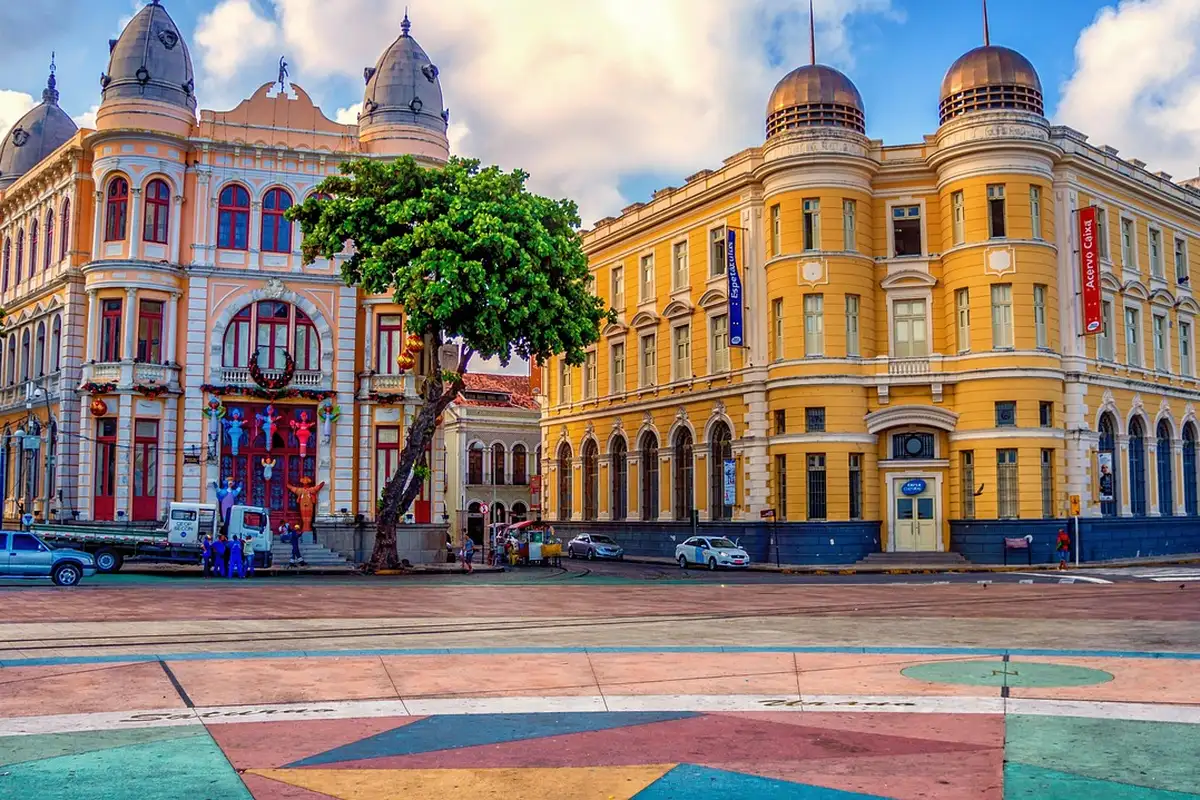
In the middle of the square, notice the work inspired by Eu vi o mundo e ele começava no Recife, by Cícero Dias. Many people walk past without realizing that the large compass rose installed in 1999 is as much a part of the place’s visual identity as the name Marco Zero. It’s what usually appears in the most recognizable photos of Recife.
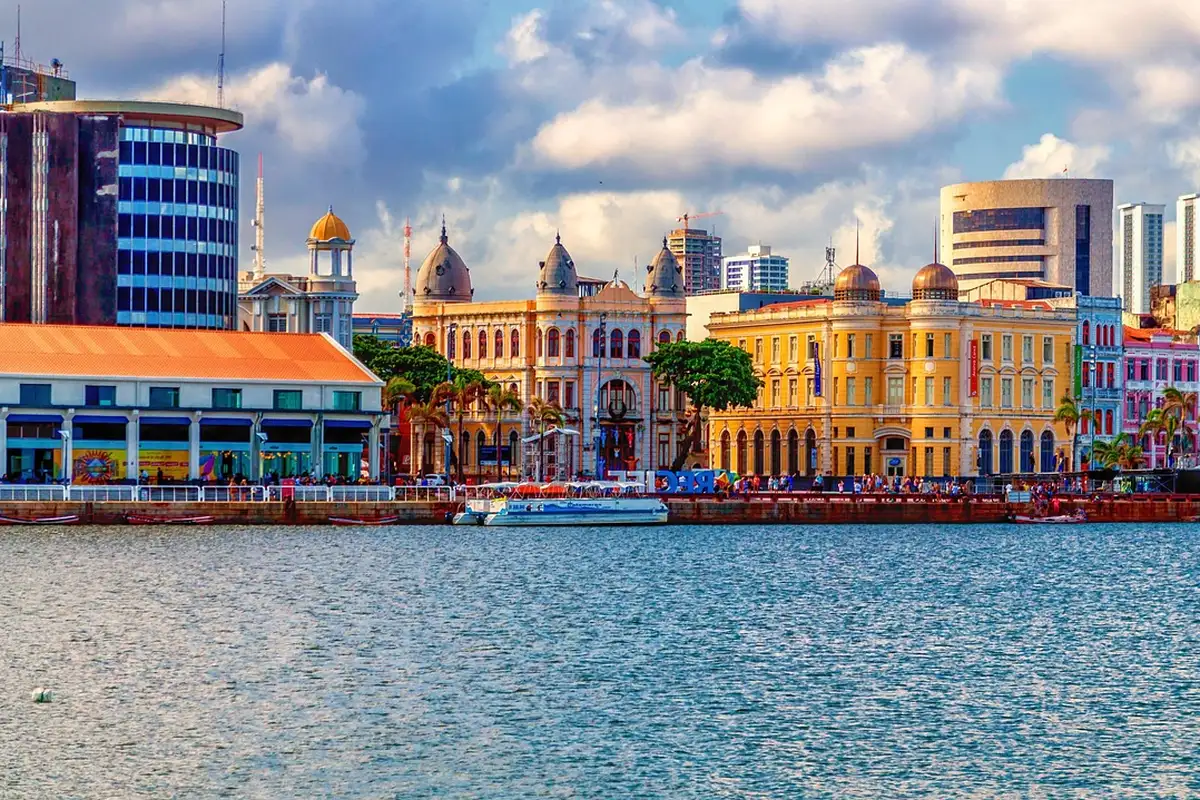
It’s also worth turning your gaze away from the square. On one side, Recife Antigo invites you to walk; on the other, the estuary draws your eyes to the Parque das Esculturas. If you’re putting together a compact urban tour, this framing already reveals the logic of the entire area.
History and fun facts about Marco Zero
Marco Zero do Recife sits in Praça Rio Branco, a public space that took on this symbolic role on January 31, 1938, when the landmark was installed by the Automóvel Clube de Pernambuco. It’s from here that official local distance measurements begin, which explains the name that eventually overshadowed the square’s own.
The area underwent major remodeling in 1999, when the square received the large design by Cícero Dias and gained the configuration most recognized today. That redesign helped turn the spot into a stage for concerts, gatherings, and public celebrations, while also cementing the square as Recife’s postcard image.
Another key detail is the geographic position: Marco Zero is in the Recife neighborhood, the city’s oldest core, near the port and the historic network that connects bridges, old commercial streets, and cultural venues. That’s why it works so well as a starting point for understanding the city.
How to get there and what to do nearby
The most practical access is straight into the Recife neighborhood, already in Recife Antigo. Those arriving by car or ride-hailing app usually get dropped off near Praça Rio Branco and continue on foot. From there, it makes sense to walk along Avenida Rio Branco, head into Rua do Bom Jesus, look for the Paço do Frevo, or simply keep admiring the historic facades around you.
If you want a more structured tour, it’s worth booking the Recife and Olinda tour, which turns Marco Zero into a starting point for a clearer panorama of the city and keeps Recife Antigo from feeling disconnected in your itinerary.
For a quick itinerary, the most efficient sequence is usually Marco Zero, a walk through Recife Antigo, and, if there’s time, a broader slice of the city using the guides already published on what to do and where to stay in Recife and what to do in Recife beyond the beaches. That way, you avoid visiting the square as an isolated, context-free stop.
Frequently asked questions
Is Marco Zero do Recife worth visiting?
It’s worth it, especially as the starting point for exploring Recife Antigo. The square offers great photo ops, views of the estuary, and easy access to the neighborhood’s historic streets.
How long does a visit to Marco Zero take?
If you’re just stopping for photos, 15 to 20 minutes is enough. If you take a walk around the area, the visit can stretch much longer, especially if you follow Avenida Rio Branco and Rua do Bom Jesus.
What’s near Marco Zero?
Right nearby you’ll find Recife Antigo, Avenida Rio Branco, Rua do Bom Jesus, Paço do Frevo, and views of the Parque das Esculturas Francisco Brennand.
What’s the best time to visit?
Early morning and late afternoon are usually the best times, with less heat and more pleasant light for photos and walking.
Conclusion
Marco Zero works less as a monument to admire from afar and more as a place to open up your mental map of Recife Antigo. At Voyage Voyage, it’s the stop that gives direction to your walk: you take in the landscape, choose where to go next, and avoid turning the historic center into a random sequence of streets.
For a broader itinerary, it’s worth pairing this stop with the Recife guides already published on the site, and with the Recife tourism portal, when you want to check schedules and active cultural spaces.