What to do in Miami depends less on checking off attractions and more on picking a good home base: Miami Beach is great for the beach and strolls; Downtown and Brickell make museums, restaurants, and transit easier. In four days, you can combine South Beach, Wynwood, a shopping area, and a bay cruise without needing to rent a car every day.
Miami rewards a neighborhood-by-neighborhood itinerary. Stay in Miami Beach if the beach is your priority, or in Downtown/Brickell if you want connections and less reliance on a car. A car is useful for outlets and the Everglades, but it becomes a cost and pricey parking when your day is just South Beach, Wynwood, or Downtown.
How many days to stay in Miami
Four nights is a balanced amount for a first trip. On day one, walk around South Beach and Ocean Drive; on day two, explore Wynwood and the Design District; on day three, use Downtown, Brickell, and a boat tour; on day four, choose shopping, Key Biscayne, or the Everglades. With three nights, cut one of these outings instead of trying to cram everything in.
Getting an early start helps in Miami Beach and at museums, because the heat and traffic build up during the day. Don’t plan an outlet shopping morning and a South Beach sunset without calculating the return trip: the distance seems small, but the bridges and avenues get congested. For those who just want beach and restaurants, five days might be too many; to include national parks or day trips, six days are more comfortable.
Before planning a long trip through the United States, compare the pace with our guides to New York in five days and Orlando: itinerary, costs, and parks. The logic is similar: group neighboring areas on the same day and leave some slack for rain, long shopping trips, or a restaurant worth booking.
What to do in Miami beyond the beach
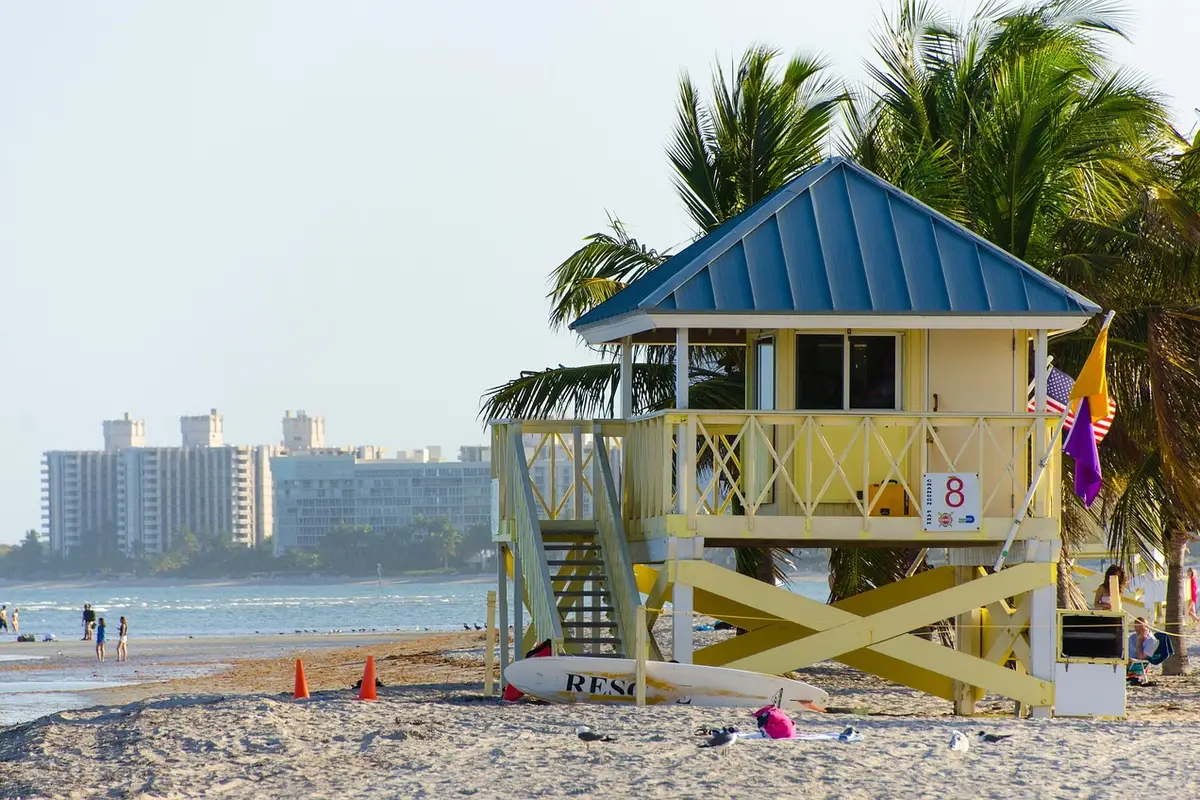
South Beach is the natural first stop: walk along the sand, admire the Art Deco architecture on Ocean Drive, and continue to Española Way or Lincoln Road. The charm is in combining beach and neighborhood, not just snapping a photo on the avenue. If you want calmer waters and a nearby park, Crandon Park on Key Biscayne is an alternative that requires some planning to get to.
Wynwood is packed with murals, galleries, cafés, and shops; it’s more interesting during the day or early evening. The Design District is nearby and works for architecture, window shopping, and restaurants. Downtown brings together Bayside, Bayfront Park, museums, and access to the Metromover, the free elevated transit that serves Downtown, Brickell, and Omni. The Miami-Dade Transit page has updated schedules and stations.

To see the city from the water, choose a Miami boat tour and check the departure port, duration, and whether the route passes celebrity homes or the open bay. It’s not a must-do, but it fills an afternoon and shows the scale of the islands, marinas, and Brickell towers.
Little Havana is worth a brief, respectful visit: walk along Calle Ocho, stop for Cuban coffee, and watch the domino games at Maximo Gómez Park. The area doesn’t need to be a full itinerary; fit it in on the way between Downtown and Coral Gables. The same goes for Coconut Grove, which works better as a relaxed afternoon than a fifteen-minute stop.
Miami Beach or Downtown: where to stay in Miami
Miami Beach is the best base if you want to wake up near the sand, walk to Ocean Drive, and have dinner without relying on a car. South Beach is livelier and pricier; Mid-Beach usually has larger hotels and a calmer pace. On the flip side, getting to Wynwood, outlets, and airports takes longer and can get expensive with ride-hailing apps.
Downtown and Brickell work for those who prioritize restaurants, events, museums, and the Metromover. Brickell has corporate hotels, high-rises, and easy access to the Metrorail line; Downtown is more practical for Bayside and for those arriving from the airport. Neither area delivers the experience of crossing the street and stepping onto the beach, so don’t choose just based on the nightly rate.
For a trip with kids, consider the actual room size and the distance to the station, not just the hotel pool. For a couple wanting nightlife, check the noise level on the block and whether there’s a resort fee. In Miami, a cheap stay far from what you want to do usually gives back the savings in rides and lost hours.
Where to shop in Miami
Miami isn’t synonymous with outlets every day. For discounted brand shopping, Sawgrass Mills is the most famous name, but it’s in Sunrise and takes nearly a full day, especially without a car. Dolphin Mall is closer to the airport and can be simpler for an afternoon; Aventura Mall combines regular stores and premium brands, but also requires a trip.
Before heading out, make a list of what you’re really looking for and confirm sizes, taxes, and return policies. Buying luggage, electronics, or cosmetics without comparing prices usually creates imaginary savings. Those staying in Miami Beach can use Lincoln Road for smaller items and avoid turning vacation into a fitting room line.

If you don’t want to drive, research outlet transfers in advance and calculate the round trip before comparing discounts. An outlet shopping trip in Miami can simplify that day, but it’s only worth it if the time and stores serve your list.
Do you need a car in Miami?
You don’t need a car in Miami if your trip stays between Miami Beach, Downtown, Brickell, Wynwood, and the Design District, using walking, public transit, and ride-hailing apps. The Metromover is free downtown; the county also runs Metrorail, buses, and local connections. The need changes when you include Sawgrass Mills, the Everglades, Key Largo, or more distant beaches.
Renting a car brings flexibility, but adds rental, insurance, gas, tolls, and parking to the equation. Many hotels charge high daily parking rates, and driving in South Beach on weekends can be more stressful than helpful. Miami-Dade’s official mobility guide lists train, bus, bike, trolley, and water taxi as options for the main corridors.
If your trip coincides with major events, check the official Miami-Dade mobility guide for service changes and transportation alternatives. Even outside of events, it’s a good reference for understanding where Metrorail, buses, and water connections make sense. Save your hotel and attraction addresses before heading out: data coverage can fail in parking garages, on the beach, or when your battery dies mid-day.
A simple routine cuts costs: walk in the early morning, use the free transit when downtown, and save the ride-hailing app for crossing the bay or coming back late. For groups of three or four, a ride can cost close to public transit when there are bags or kids; for a solo traveler, it tends to inflate the itinerary. Confirm the fare before accepting and don’t expect easy parking in South Beach.
A practical solution is to rent a car only on the days you hit outlets, the Everglades, or the Florida Keys, instead of paying for it to sit idle at the hotel.
Can you combine Miami with Orlando?
You can pair Miami with Orlando, but not as a day trip. Set aside at least four nights in Miami and four or five in Orlando if the theme parks are a priority. There are flights, buses, and Brightline, the rail line connecting Miami and Orlando; the choice depends on your hotel, your luggage, and how much you want to drive once you arrive.
Don’t try to save Miami for “resting after the parks” if that cuts your stay down to a single night. The cities have different rhythms, costs, and distances. Make the connection mid-trip only if your hotels and tickets allow it; often it’s simpler to fly into one and out of the other on a multi-city ticket.
The widget below shows a validated activity in downtown Miami. It’s handy for fitting Downtown into your itinerary, especially if you’ve decided to stay in Brickell or near the airport.
Use the second widget to explore other activities at the destination without opening multiple pages. Only book when the time slot fits the neighborhood you’re visiting that day.
Frequently Asked Questions
How many days are ideal in Miami?
Four nights are ideal in Miami to combine the beach, Wynwood, Downtown, a bay cruise, and shopping without crossing the city every day. With three nights, pick fewer neighborhoods and save the outlet mall or the Everglades for another trip.
Is it better to stay in Miami Beach or Downtown?
Miami Beach is better if you want the beach, walks, and restaurants near your hotel. Downtown or Brickell are better for museums, urban life, Metrorail, and Metromover; the choice depends on what fills most of your itinerary.
Where to go shopping in Miami?
Sawgrass Mills is known for outlets, Dolphin Mall is near the airport, and Aventura Mall mixes mainstream and premium stores. Choose based on what you’re buying and how far you’re willing to travel, since heading out to the outlets eats up nearly a full day.
Do you need a car in Miami?
You don’t need a car for Miami Beach, Downtown, Brickell, and Wynwood if you use walking, ride-hailing apps, and public transit. A car is more useful for Sawgrass Mills, the Everglades, the Florida Keys, and farther-flung beaches.
Can you combine Miami and Orlando?
Miami and Orlando work in the same trip with at least four nights in Miami and four or five in Orlando. Don’t treat the connection as a day trip: these are cities with their own itineraries and travel times.
If your next U.S. stop is farther north, the same neighborhood-based itinerary logic applies in Chicago, where the Loop holds a big share of the attractions.
Conclusion
Miami feels better when your itinerary has a clear home base and doesn’t try to beat the traffic. Choose your hotel neighborhood based on your travel style, give shopping a full day if it matters to you, and treat the car as a tool for specific outings. At Voyage Voyage, practical planning always beats a long list of stops.