Things to do in Arraial d’Ajuda combine cliff-lined beaches like Pitinga and Mucugê, the Recife de Fora Marine Park for snorkeling, and one of the liveliest nightlife scenes on the Costa do Descobrimento, on Rua do Mucugê. Two days cover the essentials; with 4 days, you can add the Eco Park and enjoy the beach parties at a relaxed pace.
Arraial d’Ajuda is home to seven main beaches, including Mucugê, Pitinga, and Parracho, plus a historic center at the top of the village with the 16th-century Igreja de Nossa Senhora d’Ajuda — access is by ferry from Porto Seguro, a trip of about 15 minutes.
How to get to Arraial d’Ajuda
Getting to Arraial d’Ajuda almost always goes through Porto Seguro. Those arriving by plane land at Porto Seguro Airport (BPS) and take a taxi or ride-hailing app to the Tourist Terminal, where the ferry crosses the Buranhém River — a trip of about 15 minutes, with frequent departures throughout the day, according to the schedules published on the official Arraial d’Ajuda tourism portal.
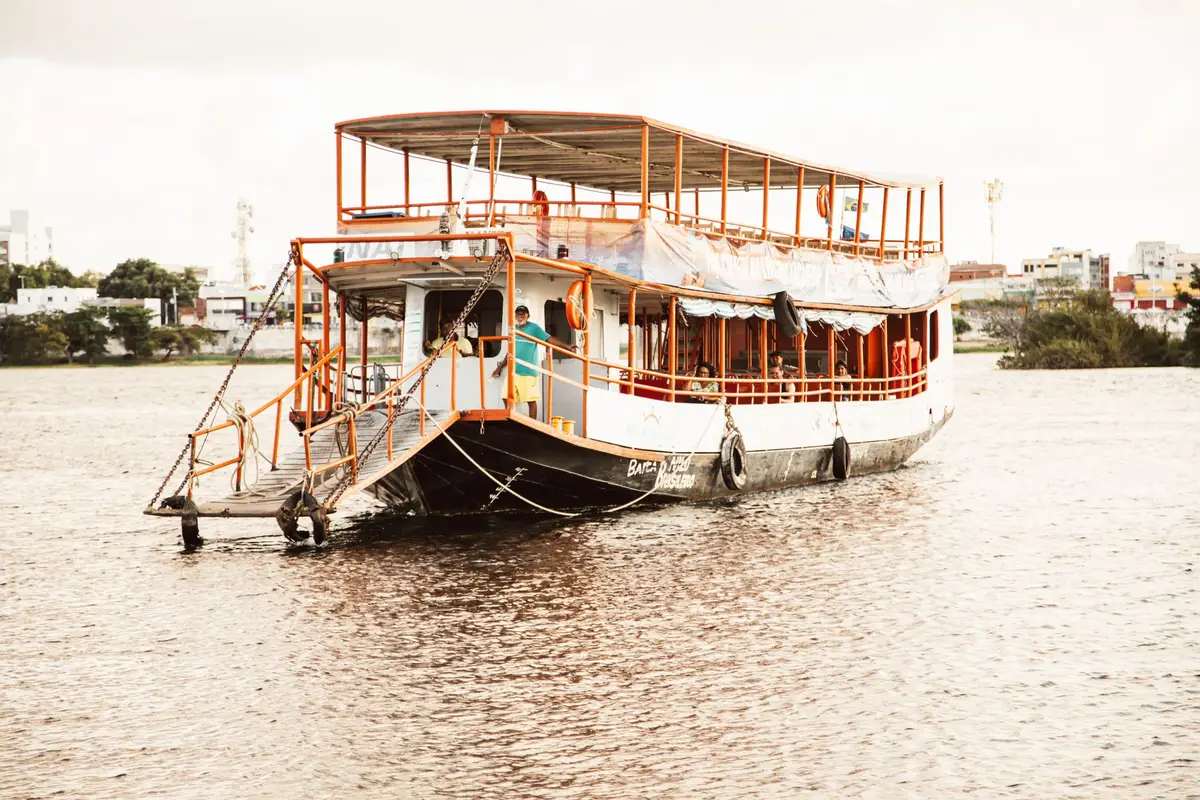
After the crossing, the center of Arraial is a few minutes away by van or local bus, heading up the hill that leads to the village. Those who prefer to avoid the ferry line during high season can book a direct transfer from the airport, which includes the crossing without the wait for public transport.
Best time to visit and how long to stay
Arraial d’Ajuda can be visited year-round. Unlike other regions in the Northeast, there’s no heavily concentrated rainy period or a completely dry season here — it’s common to have sunny days interspersed with light rain at any time of the year.
December through February is high season, with significantly higher prices for lodging and tours, busier beaches, and parties almost every night. Those who prefer a calmer pace and better prices will find great value between May and August, with still-warm days and the nightlife running normally, just with fewer people.
The ideal is to dedicate 2 to 4 days to the destination: with 2 days, you can see the main beaches and Rua do Mucugê; with 4 days, there’s time to include the Eco Park and enjoy the nightlife more leisurely, without having to turn in early for the next day’s tour.
Things to do in Arraial d’Ajuda: beaches and tours
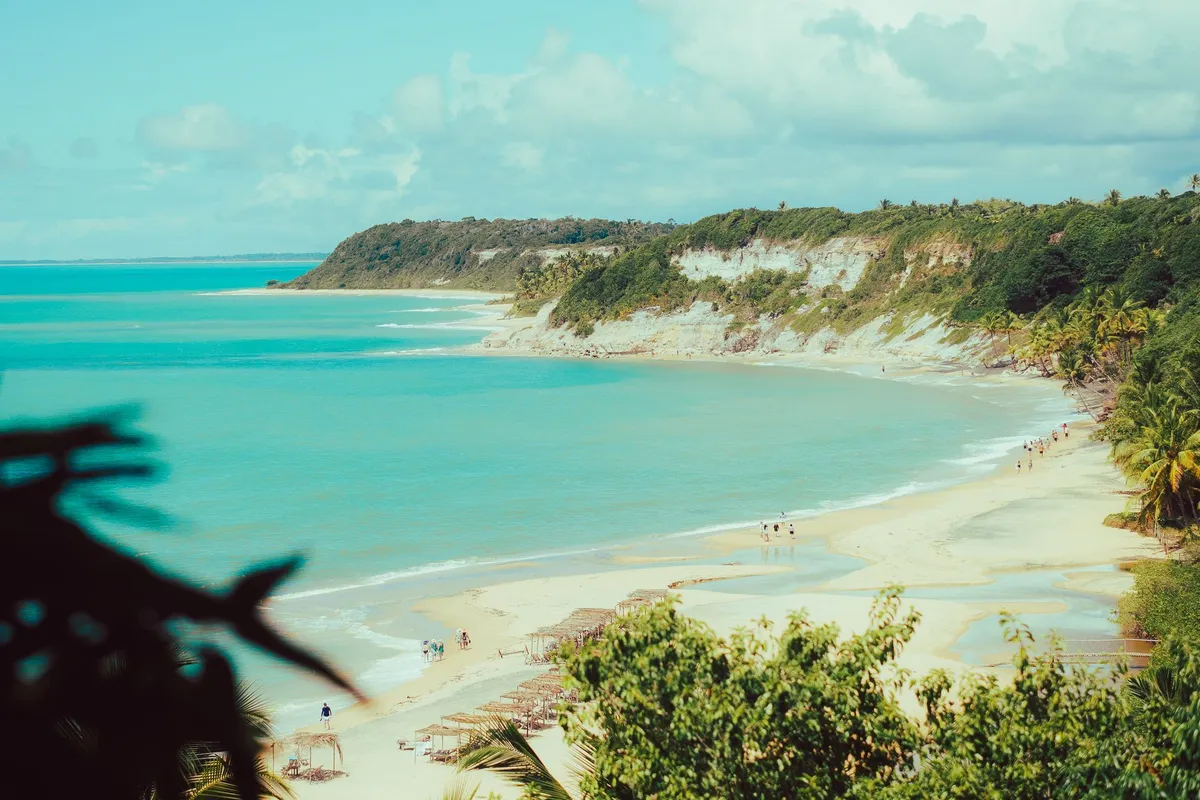
Arraial d’Ajuda’s seven beaches range from busy stretches to nearly deserted areas surrounded by cliffs. Praia do Mucugê is the most central and crowded; Praia de Pitinga, one of the most beautiful in the region, features reddish cliffs and preserved vegetation around it.
Praia do Mucugê and Praia do Parracho
Praia do Mucugê is a short walk from the center and tends to get crowded in high season, with beach kiosks and easy access to bars and restaurants. Praia do Parracho, on the other hand, stands out for its natural pools formed at low tide, great for snorkeling without needing a boat — a setting similar to the natural pools of Maragogi, also on the northeastern coast.
Praia de Pitinga
Considered one of the most beautiful beaches in the region, Pitinga has cliffs that frame the stretch of sand and a sea with slightly stronger waves than the more sheltered beaches. It’s a great choice for those seeking a wilder setting, without the heavy structure of kiosks found at Mucugê.
Recife de Fora Marine Park
A boat trip to a coral reef about 6 km (3.7 miles) offshore, with natural pools ideal for snorkeling. It’s one of the most sought-after tours in Arraial d’Ajuda and usually includes equipment and a guide during the trip. You can book the Recife de Fora Marine Park excursion departing from Porto Seguro.
Historic center and Arraial d’Ajuda Eco Park
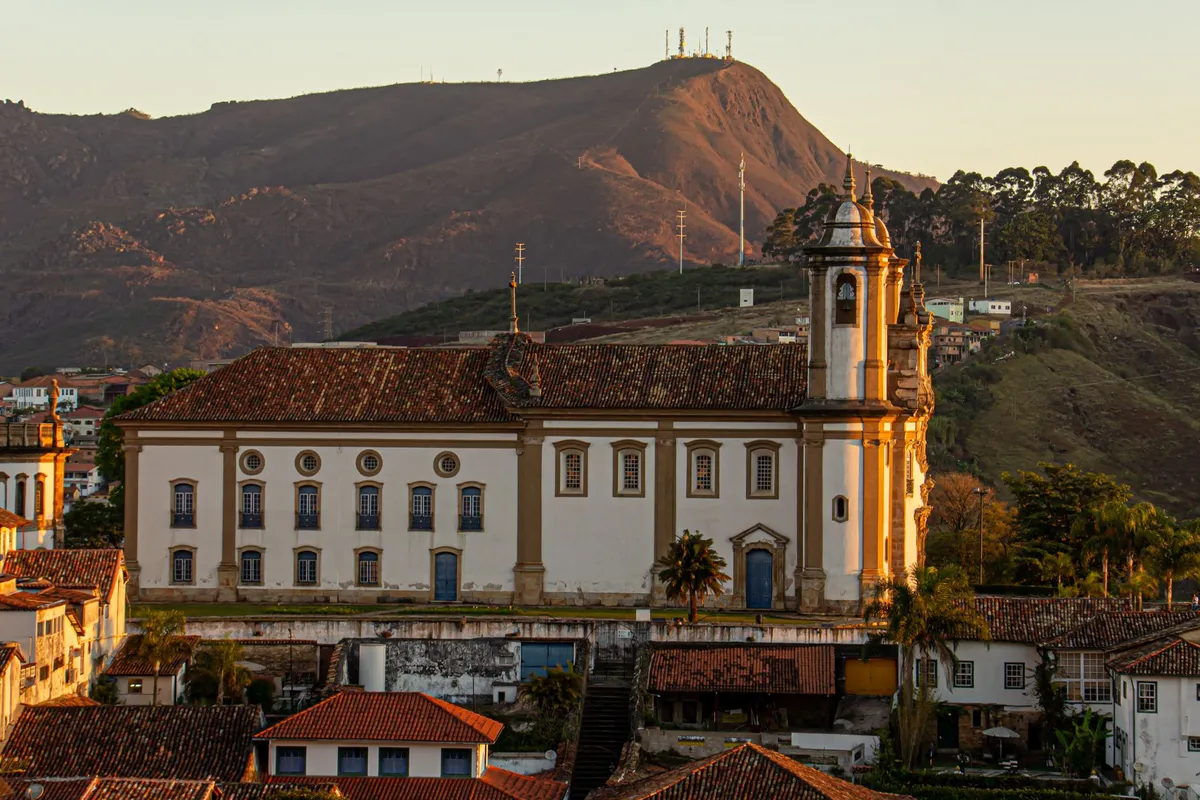
The historic center, at the top of the village, is home to the 16th-century Igreja de Nossa Senhora d’Ajuda, old houses, and a viewpoint overlooking the meeting of the Buranhém River with the sea. Unlike Trancoso, where everything is centered around the Quadrado, in Arraial the options are spread across Rua Mucugê, Rua Broadway, and Largo da Ajuda. The Eco Park, with its zip line and rail sled, is the right choice for those traveling with kids or looking for an adventure activity away from the beach.
The church, built during the colonial period, houses an image of Nossa Senhora d’Ajuda that, according to local tradition, was supposedly found by fishermen on the nearby beach — the origin of the village’s name, as recorded in the Wikipedia entry on Arraial d’Ajuda. The viewpoint next to it is one of the most popular spots at sunset, with an open view of the river meeting the sea and the boats making the crossing between Arraial and Porto Seguro.
What to combine with Arraial d’Ajuda
Arraial d’Ajuda is part of the same region as Trancoso and Porto Seguro, all less than an hour apart. Those with more days often split their stay between the three destinations, enjoying Trancoso’s Quadrado and Porto Seguro’s historic center in addition to Arraial’s beaches.
More remote beaches like Praia do Espelho and Caraíva, to the south, require dirt roads and are usually visited on a day trip rather than by rental car, as access is harder without a 4×4.
For those wanting to learn about the region’s indigenous culture, the Reserva Pataxó da Jaqueira is a few minutes from Porto Seguro and welcomes visitors with cultural performances and guided trails led by community members themselves. It’s a half-day activity often combined with a tour to Coroa Vermelha, where the Portuguese had their first contact with Brazil’s indigenous peoples.
Where to eat in Arraial d’Ajuda
Rua do Mucugê concentrates the village’s best bars and restaurants, with live music in various styles, from forró to reggae. Seafood and moqueca appear on most menus, with great value for money outside high season.
Restaurants with sea-facing terraces tend to charge more for the view, especially at sunset. An alternative is to dine earlier at these spots to catch the sunset and then head to the more affordable bars on Rua Broadway, which also have a solid live music scene without the waterfront prices.
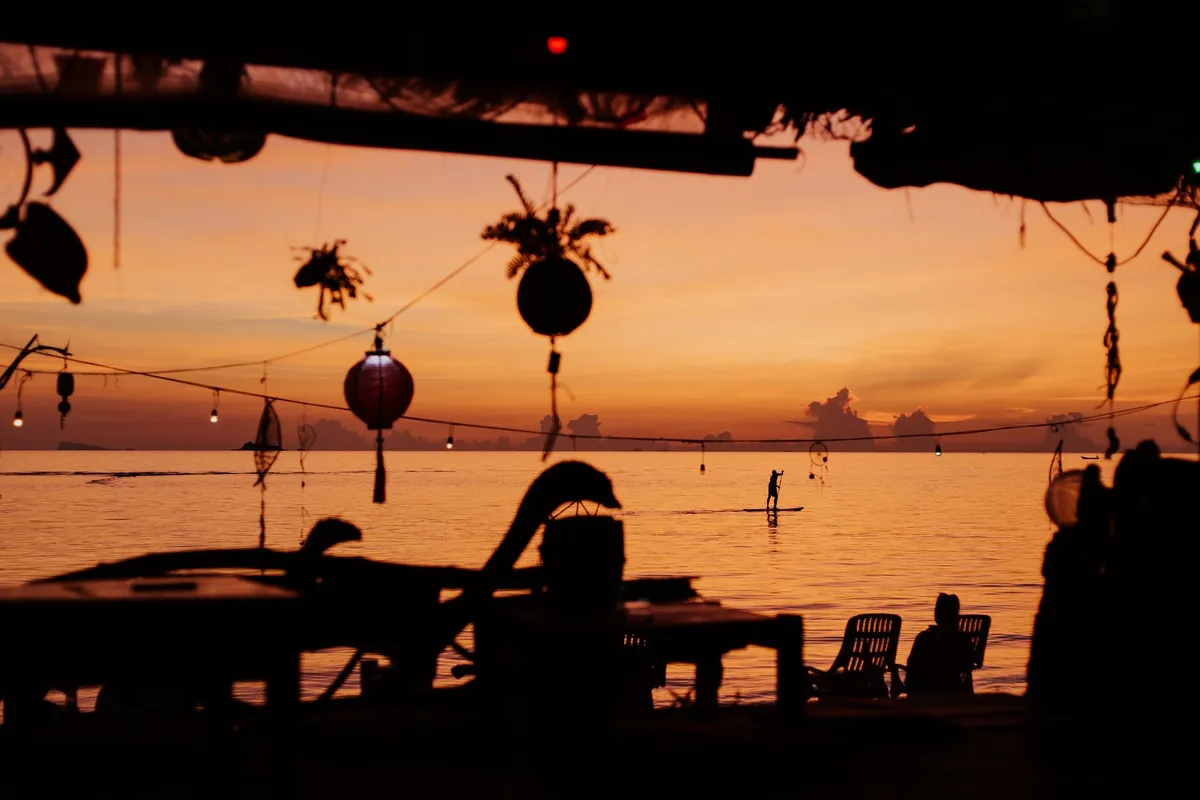
In the summer and on long holiday weekends, the parties at Praia do Parracho and the moonlit beach gatherings (luaus) draw thousands of tourists — if you prefer a quieter vibe, you should avoid these periods or book accommodation away from the center of the action.
Where to Stay in Arraial d’Ajuda
The village center, near Rua do Mucugê, is the most convenient area if you want to walk to bars, restaurants, and the main beach. Guesthouses in this area tend to be livelier at night, which is great for night owls but might bother those who prefer peace and quiet.
For a more relaxing stay, consider lodging near Praia de Pitinga or further from Largo da Ajuda, where you’ll still have quick beach access but less noise after 10 PM. Booking ahead is essential in December, January, and around New Year’s Eve, when prices in the area climb considerably.
Practical Tips
The ferry from Porto Seguro to Arraial d’Ajuda has long lines in December, January, and on extended holidays — arrive with plenty of time or book a transfer that includes the crossing.
Bring cash for small purchases: not all beach kiosks and street vendors accept cards. On the more remote beaches, like Pitinga, the bathroom and shower facilities are more basic than at Mucugê.
Within the village, most getting around is done on foot or by rented buggy, since the historic center’s streets are narrow and car traffic is limited in some stretches. For the more distant beaches, like Pitinga, a buggy or moto-taxi are usually the fastest options outside peak hours.
Frequently Asked Questions
How do I get to Arraial d’Ajuda from Porto Seguro?
You take a ferry across the Buranhém River from Porto Seguro’s Tourist Terminal, with a crossing of about 15 minutes and frequent departures throughout the day. After the ferry, vans and local buses take you to the center of Arraial.
How many days are ideal for Arraial d’Ajuda?
2 to 4 days. With 2 days, you can see the main beaches and Rua do Mucugê; with 4 days, you’ll have time to include Eco Park and enjoy the nightlife at a more relaxed pace.
What’s the best beach in Arraial d’Ajuda?
Praia de Pitinga is considered one of the most beautiful, with cliffs and preserved vegetation. Praia do Mucugê is the most central and lively, with easy access to bars and restaurants.
Is Arraial d’Ajuda better than Trancoso?
They’re different destinations, not necessarily one better than the other: Arraial d’Ajuda has a more vibrant nightlife with options spread throughout the village, while Trancoso concentrates everything in the Quadrado, with a quieter, more sophisticated vibe.
Conclusion
Arraial d’Ajuda delivers cliff-lined beaches, snorkeling at the Recife de Fora Marine Park, and a nightlife scene that fuels whole nights on Rua do Mucugê. To keep your itinerary going along the Costa do Descobrimento, also check out the Maragogi 4-day itinerary and the Aracaju guide here on voyage.
To extend your planning, also check out the Trancoso guide.