 Marcelo Oliveira
To figure out how to get to Morro de São Paulo from Salvador, you’ve got two choices: the direct catamaran from the Nautical Terminal, about 2h20 at sea with tickets at R$ 172.51 (Oct 2026), or the semi-overland route (ferry to Itaparica, van to Valença, then a speedboat), which takes around 4 hours and rocks a whole lot less.
Hotels in Morro de São Paulofree cancellation options onlySee hotels ›Booking.com partner (advertising): we may earn a commission at no extra cost to you.
There’s no road to the village: Morro de São Paulo sits on Tinharé Island, in the municipality of Cairu, and every visitor arrives by boat at the pier. On arrival you pay the TUPA, a municipal fee of R$ 70 to R$ 90 per person (Jun 2026), charged separately from your ticket.
| Direct catamaran | Nautical Terminal (Salvador) → Morro pier, ~2h20; R$ 172.51 one way (Oct 2026) |
|---|---|
| Semi-overland | Ferry or speedboat to Itaparica + van to Valença + 15-min speedboat; ~4h; transfer from R$ 175 (Oct 2026) |
| Catamaran schedule | 9am and 2:30pm (low season); 9am, 10:30am and 2:30pm (high season). Return 11:30am and 3pm (Oct 2026) |
| Arrival fee | TUPA of R$ 70 to R$ 90 per person (Jun 2026), valid 30 days; children up to 5 exempt |
| From the airport | Shuttle to the Nautical Terminal or semi-overland transfer with airport pickup |
| Cars on the island | None; luggage goes on foot or with a porter |
In this article · 15 topics
- What is Morro de São Paulo and where is it?
- How to get to Morro de São Paulo from Salvador?
- Salvador–Morro de São Paulo catamaran: schedule and price
- How does the semi-overland route work?
- From Salvador airport to Morro de São Paulo
- How much does it cost to go from Salvador to Morro de São Paulo?
- Catamaran or semi-overland: which to choose?
- When’s the best time to go?
- How many days should you spend in Morro de São Paulo?
- What are the beaches of Morro de São Paulo?
- What to do beyond the beaches?
- Is Morro de São Paulo worth visiting?
- Gotchas and what nobody tells you
- Frequently asked questions
- Conclusion
What is Morro de São Paulo and where is it?
Morro de São Paulo is a fishing village turned beach destination on Tinharé Island, in the municipality of Cairu on Bahia’s southern coast, 64 km from Salvador by sea. The name comes from the 17th-century Portuguese fortress that guarded the channel entrance; the ruins and the sentry box are still standing at the top of the village.
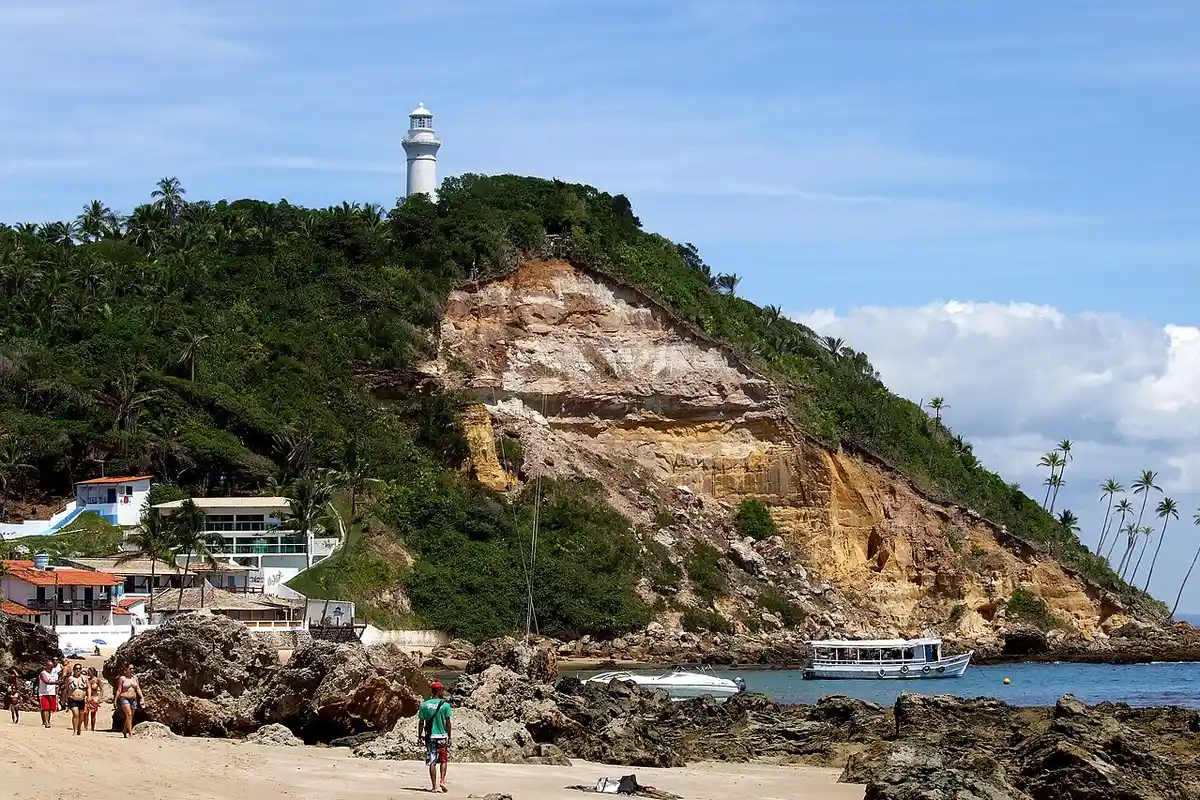
The lack of cars defines the trip: stone and sand streets, paths between beaches walked on foot, and handcarts or animal-drawn carts hauling suitcases from the pier to the inns. That isolation also explains why lodging and food cost more than in coastal towns with a road.
If you’re planning to ring in the New Year on the island, you’ll find free fireworks and paid parties in the New Year’s Eve in Morro de São Paulo guide; the crossing described below is the same, just with boats packed weeks in advance.
How to get to Morro de São Paulo from Salvador?
From Salvador there are two routes: the direct catamaran, faster but at the mercy of rough seas, and the semi-overland route, which trades part of the sea for road and arrives in about 4 hours. Both end at the same Morro pier, where you pay the TUPA.
| Option | Price | Time | Best for |
|---|---|---|---|
| Direct catamaran | R$ 172.51 one way (Oct 2026) | ~2h20 | those who don’t get seasick and want to arrive early |
| Semi-overland with transfer | from R$ 175 (Oct 2026) | ~4h15 | those prone to seasickness or coming straight from the airport |
| Semi-overland DIY | ferry R$ 7.20 to R$ 9.50 + van + speedboat (Oct 2026) | 4h to 5h | backpackers traveling light |
There’s no bridge or car ferry to the island. If you’re driving in from another state, you leave your vehicle in Valença (Bom Jardim pier) or at a parking lot in Salvador and continue by boat.
Salvador–Morro de São Paulo catamaran: schedule and price
The catamaran leaves from the Terminal Náutico da Bahia in the Comércio neighborhood and takes about 2h20 to reach the Morro pier. One way costs R$ 172.51 (R$ 157.34 fare + R$ 13.80 boarding fee + R$ 1.37 TPP), and the return is R$ 158.71, with no boarding fee (Oct 2026), according to Biotur’s schedule and fare table.
The operators are Biotur and Ilha Bela, with counters right in the terminal and online sales. In low season the schedule has two departures from Salvador, at 9am and 2:30pm, and two from Morro, at 11:30am and 3pm (Oct 2026). On holidays and in summer, a 10:30am departure from Salvador and a 1:30pm from Morro are added, as happened in late December 2025, when boats left packed.
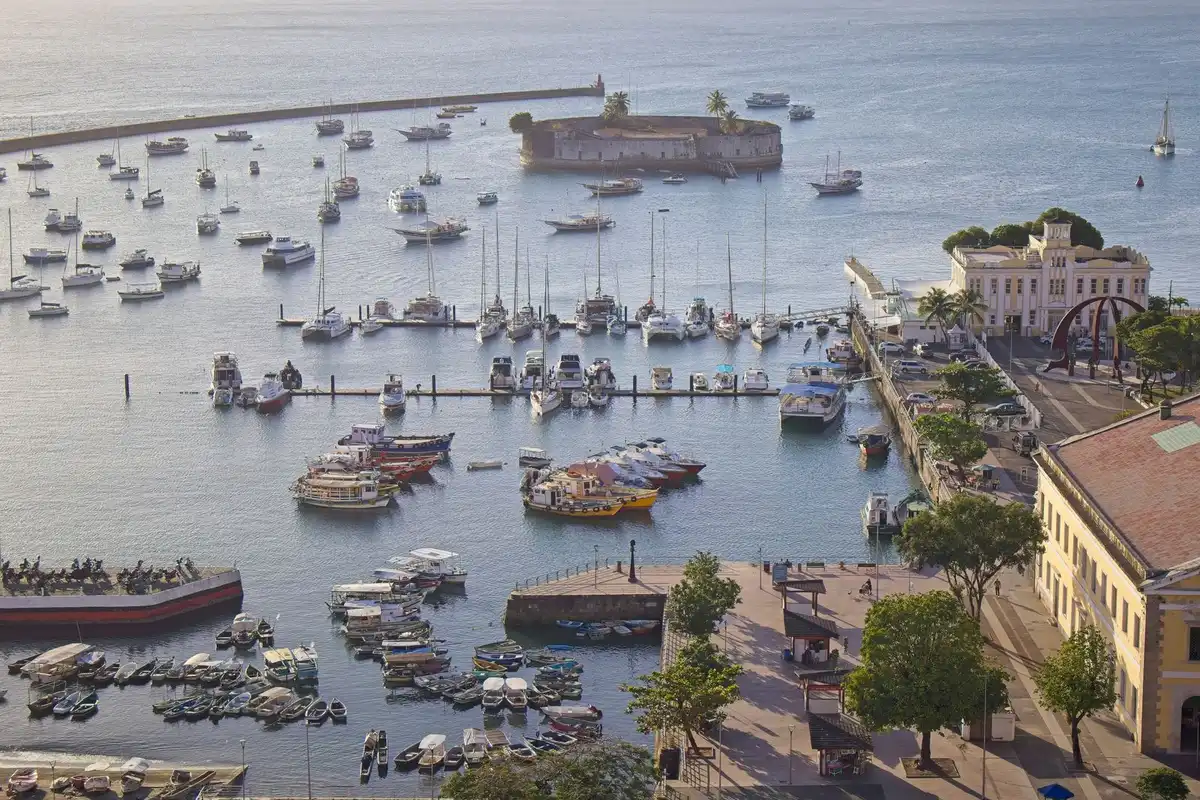
The open-sea stretch after leaving the bay is where it gets rocky: if you’re prone to seasickness, eat light, sit in the middle of the boat, and take medication before boarding. In rough seas, the operator itself may cancel the departure or switch your trip to the semi-overland route. Rebooking costs R$ 15 per ticket, up to 24 hours in advance (Oct 2026).
If you arrive in Salvador at night and catch the 9am catamaran, you’ll sleep better near the terminal: the hotels in Comércio and the Historic Center are just minutes from boarding. To enjoy the city beforehand, check out what to do in Salvador.
How does the semi-overland route to Morro de São Paulo work?
The semi-overland route combines three legs: a boat from Salvador to Itaparica Island (ferry to Bom Despacho, about 1 hour, or speedboat to Mar Grande, about 40 minutes), a minibus or van of 1h40 to 2 hours to the Bom Jardim pier in Valença, and a speedboat of about 15 minutes to the Morro pier.
The easiest way is a ready-made transfer that picks you up at your hotel or the airport and handles all the connections. The Civitatis Salvador–Morro semi-overland transfer costs from R$ 175 per person (Oct 2026), takes about 4h15, and doesn’t include the R$ 10 pier fee on the way back; returns leave Morro at 6am, 10am, 12:30pm and 3:30pm.
Doing it yourself is cheaper and more work: the Salvador–Bom Despacho ferry costs R$ 7.20 on weekdays and R$ 9.50 on weekends (Oct 2026), departing hourly between 5am and 11:30pm, per Internacional Travessias fares. On the other side, vans and buses head to Valença; the van and final speedboat prices change with the season, so confirm at the pier.
From Salvador airport to Morro de São Paulo
From the airport there are two practical options: a shuttle to the Nautical Terminal to catch the catamaran, or the semi-overland transfer with pickup at arrivals. Since the last catamaran leaves at 2:30pm, a flight landing in the afternoon almost always means sleeping in Salvador or taking the semi-overland route.
For the first case, Kiwitaxi offers a private transfer from the airport to downtown Salvador, with a fixed price at booking and a driver tracking your flight. On the way back, Biotur itself recommends leaving at least 6 hours between leaving Morro and your flight time (Oct 2026). Other airport routes are in the airports and transfers guide, including the Salvador–Praia do Forte transfer.
How much does it cost to go from Salvador to Morro de São Paulo?
A round trip by catamaran plus the TUPA comes to about R$ 400 to R$ 420 per adult (Oct 2026): R$ 172.51 one way, R$ 158.71 back, and R$ 70 to R$ 90 for the island fee. The semi-overland transfer starts at R$ 175 each way, plus the TUPA and the R$ 10 pier fee.
| Item | Catamaran | Semi-overland with transfer |
|---|---|---|
| One way | R$ 172.51 (Oct 2026) | from R$ 175 (Oct 2026) |
| Return | R$ 158.71 (Oct 2026) | from R$ 175 (Oct 2026) |
| TUPA (once, 30 days) | R$ 70 to R$ 90 (Jun 2026) | R$ 70 to R$ 90 (Jun 2026) |
| Pier fee | not applicable | R$ 10 in Valença (Dec 2025) |
| Porter to the inn | arrange in advance | arrange in advance |
The TUPA had been R$ 70 since December 2025, and Cairu’s city government postponed the increase to R$ 90 until August 1, 2026, according to A Tarde’s report on the TUPA (Jun 2026). It’s paid on arrival or online, valid for 30 days, and exempts children up to 5. In Valença, the R$ 10 pier fee has been in effect since January 2026 and exempts people over 60 and children under 5.
Catamaran or semi-overland: which to choose?
Choose the catamaran if you’re in Salvador, don’t get seasick, and want to arrive before lunch; choose the semi-overland route if you have a history of seasickness, are traveling with a small child, or leave straight from the airport in the afternoon. The price per leg is nearly the same; what changes is time versus comfort at sea.
In high season and at New Year’s, both sell out: book ahead and avoid the last departure of the day, because a rough-sea cancellation leaves you with no alternative until the next morning.
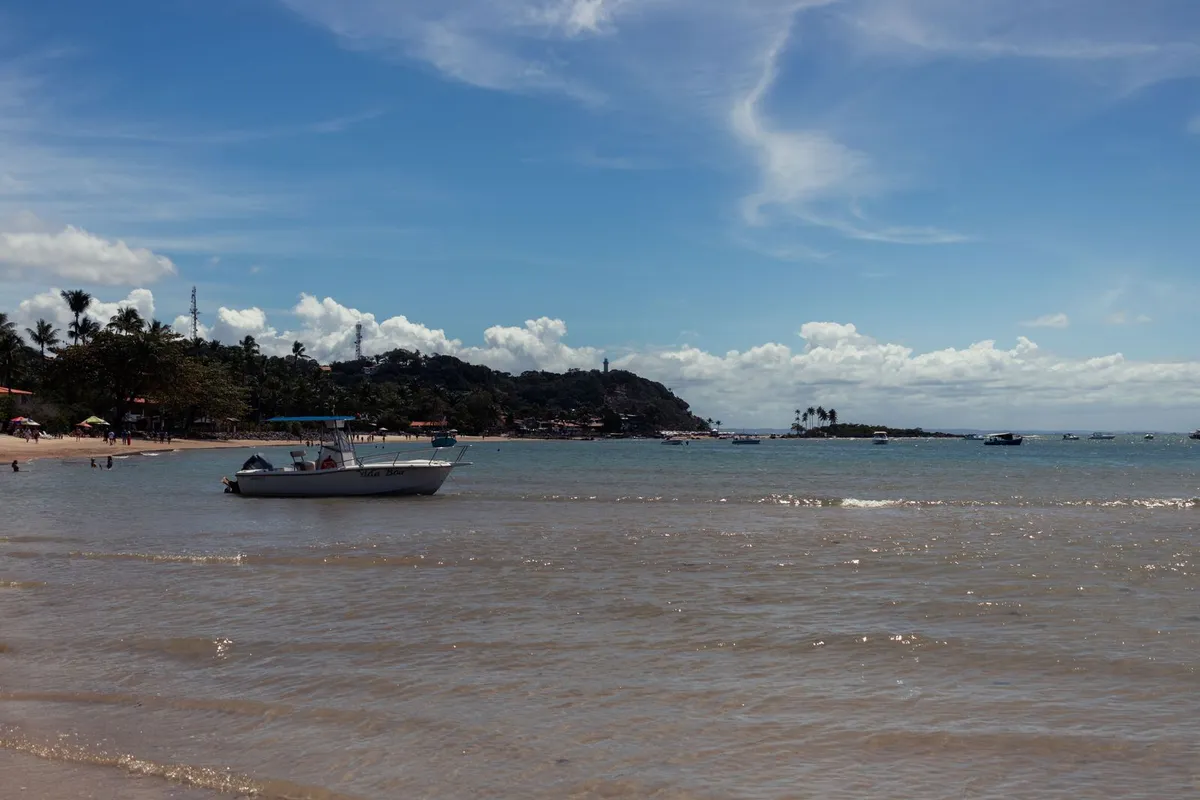
If you’re combining Morro with neighboring Boipeba, the speedboat between the two leaves from Terceira Praia; the New Year’s Eve in Boipeba guide explains the connection.
When’s the best time to go to Morro de São Paulo?
The best time, for those who want sun and calm seas on the crossing, runs from September to March; December to March and July are high season, with pricier lodging and crowded beaches. Between April and June it rains more on the Bahian coast and rough seas cancel catamarans more often.
Outside the holidays, from August to November, prices drop and the beaches empty out. Whatever the month, check the sea forecast the day before your crossing.
How many days should you spend in Morro de São Paulo?
The recommended minimum is 4 days: two for the numbered beaches, one for the boat trip around the island, and one to relax. A full week is worth it, given the island’s slow pace and the nearly 5 hours between the outbound and return catamaran trips.
Build in a buffer for the journey: tides and rough seas delay boats, so don’t book a flight the same day as your crossing without the 6-hour cushion the operator recommends.
What are the beaches of Morro de São Paulo?
There are five numbered beaches, from Primeira to Quinta, plus Gamboa. Primeira sits next to the village and has choppier water; Segunda is where the beach bars, restaurants, and nightlife concentrate; Terceira, with calm waters, is the departure point for boat tours.
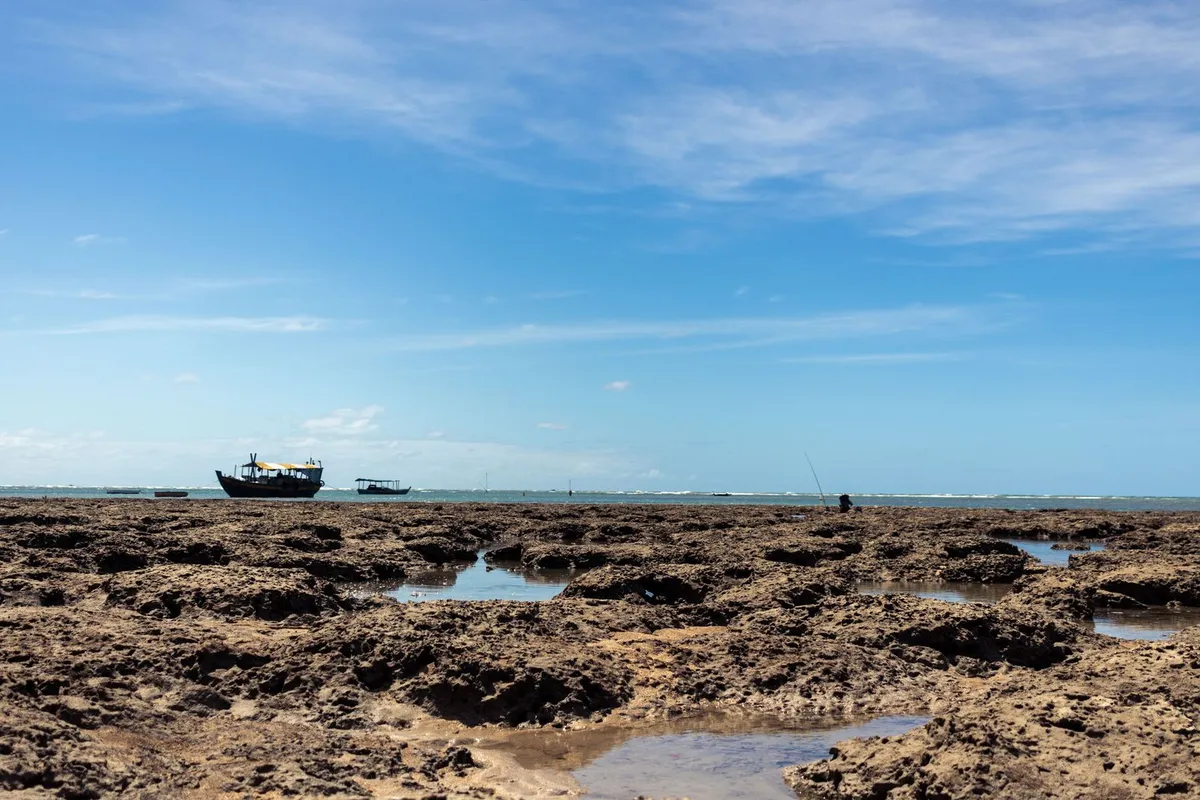
Quarta Praia is the longest and forms natural pools at low tide, a favorite with families; Quinta is the most secluded. Gamboa is about a 1-hour walk from the center, or a few minutes by boat. If you want to stay near the pier and the nightlife, book between Primeira and Segunda; if you’re after peace and quiet, go for Quarta: compare inns in Morro de São Paulo by beach.
Where to stay in Morro de São Paulo
| Hotel | Rating | |
|---|---|---|
| Pousada Ilha da SaudadePrimeira Praia · 50 m from the beach, per the Booking search | 9,22.367 reviews | See prices |
| Tapirandú PousadaSegunda Praia · Seafront on Segunda Praia | 8,6394 reviews | See prices |
| Villa dos Graffitis PousadaSegunda Praia · Close to Segunda Praia | 9,6572 reviews | See prices |
| Hotel CaitáPrimeira Praia · Close to Primeira Praia | 8,5340 reviews | See prices |
| Village Paraíso TropicalTerceira Praia · Seafront on Terceira Praia | 9,51.064 reviews | See prices |
| Pousada Bahia InnTerceira Praia · Loteamento São Pedro, Terceira Praia | 9,0461 reviews | See prices |
| Pousada Farol do MorroPrimeira Praia · Location on Primeira Praia | 8,6594 reviews | See prices |
| Pousada AroeiraRua da Prainha · Rua da Prainha, 50 m from the beach in the search | 9,6205 reviews | See prices |
| Morro Beach HotelTerceira Praia · Right on Terceira Praia | 8,3349 reviews | See prices |
| Pousada Via BrasilPrimeira Praia · Primeira Praia, near Segunda | 9,0279 reviews | See prices |
Booking.com rating on 30/09/2026
What to do in Morro de São Paulo beyond the beaches?
The most traditional outing is the full-day boat trip around the island, which circles Tinharé, stops at the natural pools of Garapuá, and often reaches Boipeba. In high season spots fill up fast, so book ahead.
Other options include a discovery dive on the reefs, a speedboat tour through the Cairu archipelago, and a 4×4 trip to Garapuá. In the late afternoon, the climb to the Fortress and lighthouse rewards you with a sunset seen from above; at night, Segunda Praia brings together bars and live music.
 Partner · Civitatissee all activities in Morro de São Paulo ›
- Transfer to Salvador de BahiaRating 8.5 · 47 reviews on Civitatisfrom€29.61per personSee ›
- Cairu Archipelago + Boipeba Island Speedboat TourRating 7.6 · 22 reviews on Civitatisfrom€59.23per personSee ›
- Boipeba: Moreré, Bainema, & Cueira Beaches Day Tripfrom€93.07per personSee ›
- Garapua Beach TripRating 8 · 4 reviews on Civitatisfrom€33.84per personSee ›
Civitatis prices on 28/09/2026, from, per person. They may change.
Is Morro de São Paulo worth visiting?
It’s worth it for anyone who loves clear water, a slow pace, and doesn’t mind walking instead of driving. It works for couples and friends, who enjoy Segunda Praia’s nightlife, and for families, who prefer Quarta and Quinta, in a vibe close to Trancoso.
It’s less worthwhile for those with mobility issues, given the stone-and-sand slopes, and for anyone after a budget destination: with boat-only access, lodging and food cost more than in towns with a road.
Gotchas and what nobody tells you
The TUPA isn’t included in your ticket: it’s R$ 70 to R$ 90 per person (Jun 2026) in the arrival line, so have a card ready or pay online beforehand. From the pier to your inn, porters with carts charge separately; agree on the price before handing over your bag, because the climb up the village is steep.
Boat schedules change with tides and season: confirm your day’s schedule directly with the operator, and avoid the last afternoon departure. Bring cash for tips and small expenses, since ATMs are scarce in the village.
 HotelAs soon as you have datesCompare neighbourhoods and guest ratings.See hotels ↑
- ActivitiesBefore you travelBook ahead the ones with limited spots.Civitatis ›
Frequently asked questions
Where can I buy the catamaran ticket to Morro de São Paulo?
The catamaran ticket to Morro de São Paulo is sold at the Biotur and Ilha Bela counters in the Terminal Náutico da Bahia, in Comércio, and online. In high season and at New Year’s, buy days in advance, because departures sell out.
How long does the semi-overland route take to Morro de São Paulo?
The semi-overland route takes about 4 hours from Salvador to Morro de São Paulo: boat to Itaparica, a van of 1h40 to 2 hours to Valença, and a 15-minute speedboat to the pier. The Civitatis transfer lists 4h15 of duration.
Can you drive to Morro de São Paulo?
No. Morro de São Paulo is on an island with no road and no cars. If you’re traveling by car, you leave your vehicle in Valença, at the Bom Jardim pier, or in Salvador, and complete the trip by speedboat or catamaran.
How much is the entry fee for Morro de São Paulo?
The TUPA, Morro de São Paulo’s entry fee, was R$ 70 per person, with an increase to R$ 90 scheduled for August 1, 2026 (Jun 2026). It’s valid for 30 days, is paid on arrival or online, and exempts children up to 5.
Is Morro de São Paulo an island?
Morro de São Paulo is a village on Tinharé Island, which belongs to the municipality of Cairu on Bahia’s southern coast. That’s why access is always by boat, from Salvador or from Valença.
Conclusion
If you’re in Salvador in the morning and don’t get seasick, take the 9am catamaran; if you’re coming from the airport in the afternoon or struggle at sea, book the semi-overland transfer with airport pickup. Either way, set aside the TUPA, arrive with 4 days ahead of you, and if you’re going for New Year’s, lock in your crossing along with the New Year’s Eve in Morro de São Paulo guide.