What to do in Yellowstone depends on how much time you have and the season: in three days, you can see geysers, hot springs, the canyon, and wildlife without crisscrossing the park. Yellowstone National Park is massive, has seasonal roads, and works best with a rental car, well-chosen bases, and early starts.
Duration: 3 full days is the comfortable minimum; 4 or 5 allows for hikes and buffer time for weather.
Base: inside the park to cut down on driving; West Yellowstone, Gardiner, and Canyon Village are the most practical options.
Transportation: rental car. There’s no internal public transit network connecting the main sights.
Best time to go: late May to June or September, balancing open roads and lighter summer crowds.
Reservations: buy your pass and book lodging early; check road conditions and alerts before you head out.
What to do in Yellowstone on your first trip
Prioritize four areas: Old Faithful and the Upper Geyser Basin, Grand Prismatic Spring, the Grand Canyon of the Yellowstone, and Lamar Valley. This sequence covers the geothermal wonders, the canyon scenery, and bison watching, without trying to cross the entire park in a single day.
Start with the geyser area: the walk between Old Faithful and the thermal basins reveals dozens of active features along boardwalks. Then, check out Grand Prismatic Spring from the Fairy Falls Trail overlook or the lower boardwalk; the first gives you a panoramic view of the color bands, while the second shows the steam and the sheer scale of the place.
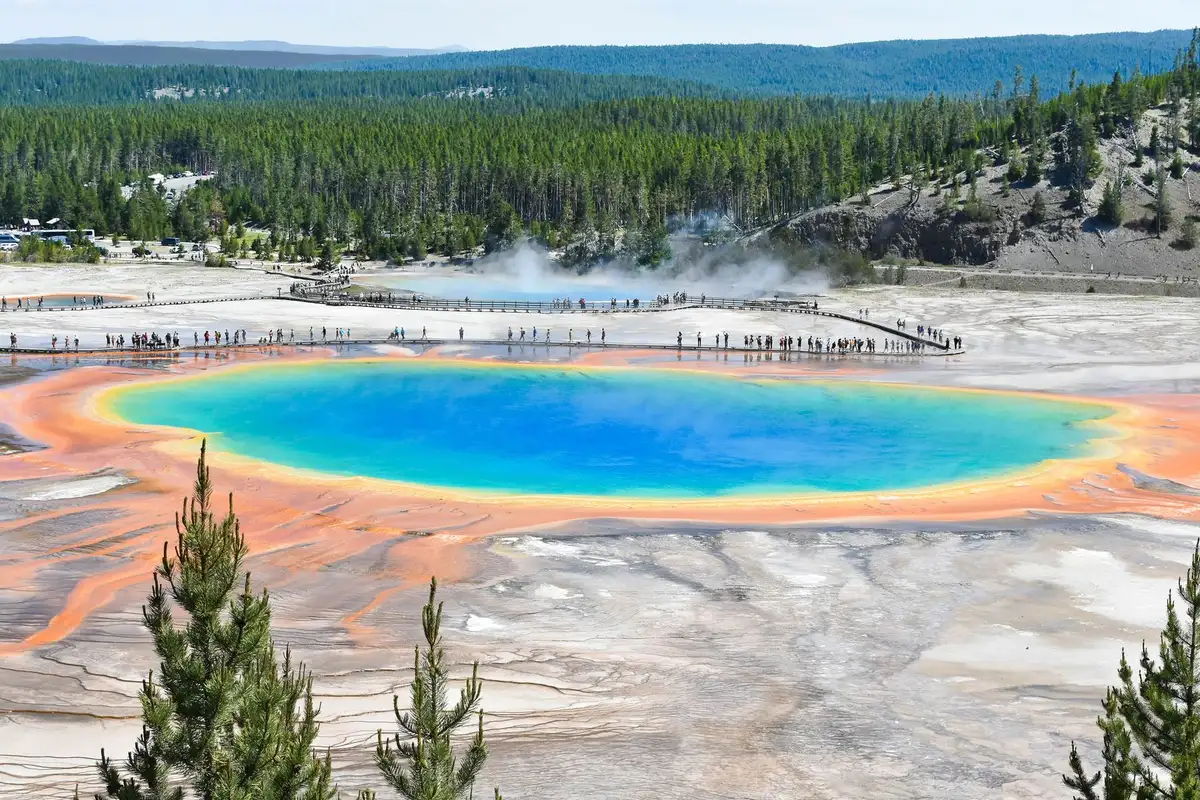
Set aside another block of time for the Grand Canyon of the Yellowstone: Artist Point is the most direct stop, and the North Rim trail offers different views of Lower Falls. Save Lamar Valley for early or late in the day, when animals are usually easier to spot from a distance. Bring binoculars; they change the experience without turning an approach into a risk.
How many days to plan for
Three full days work well for an organized first visit, as long as you sleep near the areas you’re exploring. With two days, stick to the geothermal core and the canyon; with four or five, add Lamar Valley, Yellowstone Lake, and a short hike without sacrificing the main stops.
| Time available | Practical decision | What gets cut |
|---|---|---|
| 2 days | Old Faithful, Grand Prismatic, and the canyon | Lamar Valley or Yellowstone Lake |
| 3 days | Itinerary below, with two bases or one central base | Long hikes and detours |
| 4–5 days | Add the lake, Lamar, and a morning hike | Nothing essential |
Don’t plan your route by straight-line distance. Roads wind around lakes and thermal basins, animals can block the way, and drive times stretch out in the summer. Check the National Park Service road page the night before and each morning of your trip.
Yellowstone National Park: 3-day itinerary
The most efficient itinerary splits the park by region: day 1 for the Upper Geyser Basin and Grand Prismatic, day 2 for the canyon and Hayden Valley, and day 3 for Lamar Valley or Yellowstone Lake. This cuts down on backtracking, keeps good light for landscapes, and lets you absorb small delays without derailing the plan.
Day 1: Geysers and hot springs
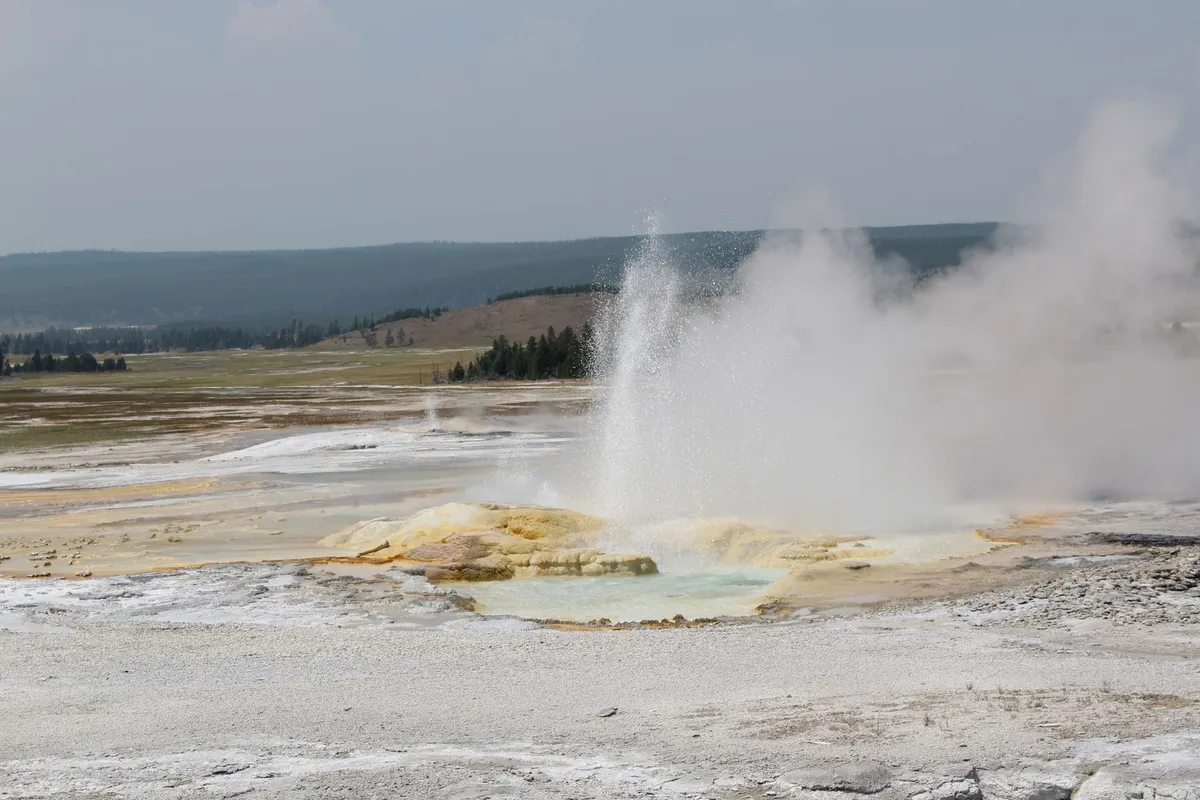
Get to Old Faithful early, walk the Upper Geyser Basin, and have a relaxed lunch before heading to Midway Geyser Basin. Finish at Grand Prismatic. If there’s heavy steam, try coming back when temperatures are higher or use the Fairy Falls Trail overlook, which often offers a wider view.
Day 2: Canyon, waterfalls, and Hayden Valley
Head to the Grand Canyon of the Yellowstone before the crowds, alternating between Artist Point and the North Rim overlooks depending on the weather. Drive down toward Hayden Valley in the late afternoon: the road connects the canyon to the southern part of the park and is a great area for spotting animals from your car, always without blocking traffic.
Day 3: Lamar Valley or Yellowstone Lake
Choose Lamar Valley if wildlife is your focus and you can get out early; choose Yellowstone Lake if you want a more laid-back day and are staying in the south. Both options require a long drive: treat them as a full-day destination, not a quick stop between attractions.
When to visit Yellowstone
For a balance of open roads, running services, and shorter lines, aim for late May, June, or September. July and August bring the most services, but also traffic and packed parking lots; in winter, visiting requires specific planning, as many roads close to regular vehicles.
The deciding factor is operational, not photographic: check the official road status for what’s open on your dates. Spring can bring snow and access changes; in the fall, some facilities shut down before the end of the month. Get to popular attractions before 8 a.m. or visit in the late afternoon.
How to get there and which entrance to choose
The best gateway depends on your route: the West Entrance works well for those staying in West Yellowstone and starting with the geysers; the North Entrance, via Gardiner, favors Mammoth and Lamar Valley. The South and East Entrances suit those combining Yellowstone with Grand Teton or Cody, but they don’t shorten all internal drives.
For most travelers, flying into Bozeman, Jackson Hole, Idaho Falls, or Salt Lake City and picking up a car is more practical than relying on buses. Before booking, compare your first and last days on a map: switching bases might cost an extra night, but it can save hours of driving.
For context on a broader U.S. trip, the guide to San Francisco without a car and the California first-timer itinerary help you separate an urban circuit from a national park leg.
Passes, reservations, and budget
You don’t need to reserve a vehicle to enter Yellowstone, but you do need an entrance pass and should book lodging well in advance. As of August 1, 2026, the private vehicle pass costs $35 and is valid for seven days; double-check the price before paying, as fees can change.
The National Park Service states that there’s no vehicle reservation to enter: just bring a valid pass and arrive early. The private vehicle pass is $35 for seven days (August 2026), per the official fee schedule.
Your total budget will vary more based on your car and your bed than on your ticket. As a planning range, set aside $35 for entry (August 2026), gas for getting around the park, lodging, and food; add in insurance and any nights spent outside the park. Don’t count on finding gas stations, cell service, or restaurants near every stop.
Where to Stay
Staying inside the park is your best bet if you want to start early and cut down on driving, but spots are limited; West Yellowstone is the most versatile base outside the park for the geysers, while Gardiner works better for the North Entrance and Lamar Valley. Choose your base based on the region you’ll be exploring on day one, not just the lowest price.
The park’s lodging options have varying availability and require booking well in advance during peak seasons. West Yellowstone offers more restaurants and services; Canyon Village shortens your day at the canyon; Gardiner gives you direct access to the North Entrance. When booking, consider staying two nights at the same base unless switching hotels saves you at least two hours of driving.
Wildlife, Boardwalks, and Mistakes That Derail Your Itinerary
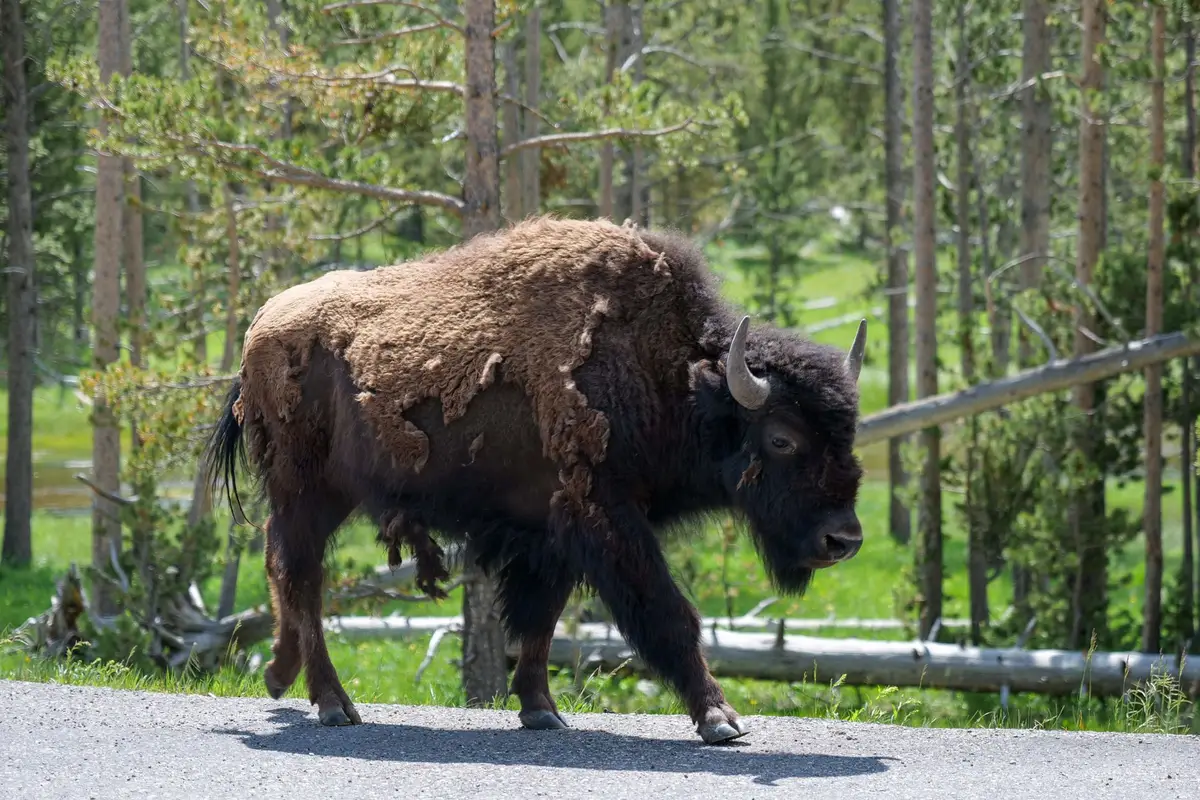
Yellowstone isn’t a zoo or a fenced-in theme park. Stay on the boardwalks in thermal areas, keep your car off the road, and don’t turn a wildlife traffic jam into a close encounter. The park service requires 100 yards of distance from bears and wolves and 25 yards from all other animals.
Don’t walk across thermal crusts, and don’t stop in the middle of the road to take photos. Bring water, a waterproof jacket, snacks, and a downloaded map. The cold-weather, layered planning that works for an Alaska trip is also a solid reference for Yellowstone’s chilly mornings and evenings.
An Extra Off the Main Loop
If you have an extra afternoon in Gardiner, rafting on the Yellowstone River is a fun adventure that gets you away from the main geothermal sights. Save this activity for an extra day: it’s not a substitute for Old Faithful, Grand Prismatic, or the canyon on a short first visit.
Frequently Asked Questions About Yellowstone
Is it possible to visit Yellowstone without a car?
It’s possible only with organized tours and a very limited itinerary; to see geysers, the canyon, valleys, and the lake in the same trip, a rental car is the practical choice. There’s no regular internal public transportation connecting all the attractions, and taxis won’t solve the long distances between regions.
What precautions should I take when watching wildlife in Yellowstone?
Always observe from the road or designated areas, without feeding, chasing, or cornering animals. Keep at least 100 yards from bears and wolves, and 25 yards from bison and other animals, per park rules; binoculars and a long lens are safer than getting closer.
What’s the best entrance to Yellowstone?
The West Entrance is the simplest choice if you’re prioritizing Old Faithful and Grand Prismatic, since West Yellowstone has great amenities. The North Entrance, in Gardiner, is better for Mammoth and Lamar Valley. The best option is the one that matches your first night’s lodging and avoids backtracking on the same road.
Yellowstone Without the Rush: The Decision That Improves Your Trip
The best Yellowstone itinerary isn’t a checklist of every attraction: it’s a plan that groups nearby regions, leaves room for weather and wildlife, and protects your mornings for the most crowded spots. Book three days, choose your base based on your entrance, and check road conditions and official alerts before you head out.