Torres del Paine without a car is totally doable—and for many travelers, even preferable. Chile’s most famous national park in Patagonia runs on a network of buses, shuttles, and catamarans that connect the entrances, refugios, and trailheads without needing a steering wheel or a 4×4. The secret lies in Puerto Natales: this small town, 112 km from the park, is the hub where all transport departs, and planning your route from there eliminates the need to rent a car.
The logistics can seem intimidating at first—limited schedules, routes that depend on connections, catamarans that get canceled in high winds—but those who plan ahead discover the system is more reliable than it looks. This guide shows you exactly how to get there, move around inside the park, and put together a 3-to-5-day itinerary using only public transport.
Getting to Puerto Natales and the park
Puerto Natales is the gateway to Torres del Paine and the starting point for all car-free logistics. The town has its own airport (PNT), but with limited flights—most travelers arrive via Punta Arenas (PUQ), which receives daily flights from Santiago on LATAM and Sky Airline.
From Punta Arenas to Puerto Natales, buses from Buses Fernández and Bus Sur make the trip in 3 hours for around CLP 8,000 to CLP 12,000 (~USD 8 to 12). Frequent departures throughout the day. A private transfer costs from CLP 60,000, but it’s only worth it if you arrive at a time when no buses are running.
From Puerto Natales to the park, buses from Buses Gomez and Juan Ojeda leave from the bus terminal with two departures a day in high season: at 7 a.m. and 2:30 p.m. The ride to the Laguna Amarga entrance takes about 2 hours; to Pudeto, 3 hours. Tickets cost roughly CLP 10,000 to CLP 15,000 per leg (~USD 10 to 16). In the low season (May to September), service is reduced or suspended—check before you travel.
Best time to visit and how many days to set aside
High season runs from October to April, peaking between December and February—longer days (up to 17 hours of daylight), temperatures between 41 °F and 64 °F, and all transport running. October and November bring fewer crowds and wildflowers; March and April offer autumn colors and slightly less brutal winds. From May to September the park stays open, but many transport services stop and temperatures can drop to 14 °F.
For Torres del Paine without a car, set aside at least 3 full days in the park—5 if you want to do the full W Trek. Add 1 day for arrival and 1 for departure in Puerto Natales. In total, plan for 5 to 7 days in the region.
Getting around the park: buses, shuttles, and catamarans
Inside Torres del Paine there’s no public transport in the traditional sense, but three services connect the main sectors and make it possible to explore the entire park without a car.
Laguna Amarga → Hotel Las Torres Shuttle — operated by Hotel Las Torres, this shuttle connects the main entrance to the trailhead for the Base Torres hike. Departures are synchronized with the arrival of buses from Puerto Natales. Cost: around CLP 5,000 per leg.
Pudeto → Paine Grande Catamaran — the crossing of Lake Pehoé takes 30 minutes and links the north sector (Pudeto) to the west sector (Paine Grande), the starting point for the trail to Grey Glacier. According to the park’s official website, it runs 2 to 3 times a day in high season, for about CLP 25,000 round trip. It can be canceled in high winds—always keep 1 buffer day in your itinerary.
Buses between sectors — the same buses that come from Puerto Natales make internal stops (Laguna Amarga, Pudeto, CONAF Administration), letting you switch sectors without returning to town. Schedules are fixed and limited, so plan each transfer with extra time.
Things to do in Torres del Paine without a car
Without a car, the park is explored on foot—and that’s actually how it was designed. The main trails start from points accessible by public transport, and most visitors do the W Trek or sections of it.
Base Torres Trail — the park’s most iconic hike: 11 miles (round trip), 7 to 9 hours, with an elevation gain of 2,600 feet. It starts at Hotel Las Torres (accessible by shuttle) and ends at the viewpoint with the three granite towers reflected in the glacial lake. Leave before 8 a.m. to get back with daylight.
W Trek — a 4-to-5-day trek passing through Paine Grande, Valle del Francés, and Base Torres. Overnights in refugios or campsites (reservation required). The W is done entirely without a car: bus to Pudeto, catamaran to Paine Grande, then the trail heads east to Las Torres, where the shuttle takes you back to Laguna Amarga for the return bus.
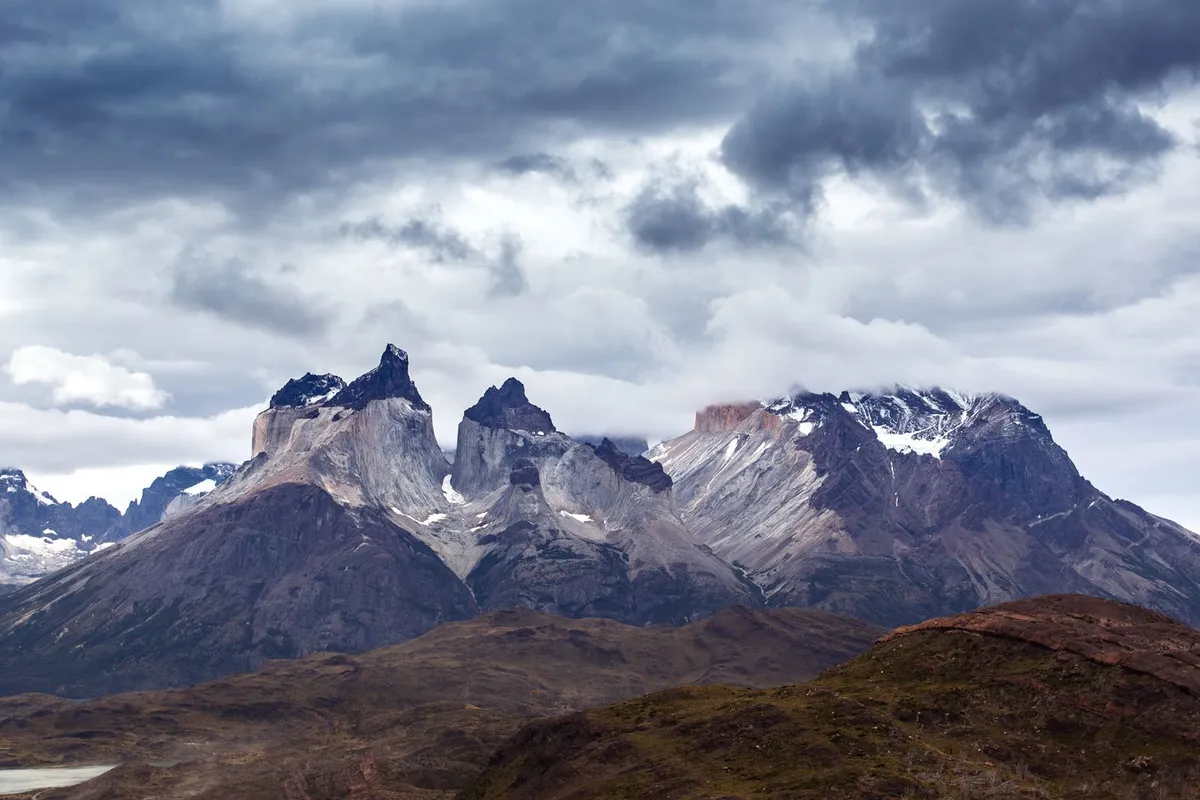
Cuernos Viewpoint — for those who don’t want to do the full W, the hike from Paine Grande to the viewpoint in Valle del Francés (7.5 miles round trip, 5–6 hours) is the most spectacular section, with views of the Cuernos del Paine and Lake Nordenskjöld.
Grey Glacier — from Paine Grande, the trail to the Grey Glacier viewpoint is 13.5 miles (round trip) and takes 7 to 8 hours. Icebergs float in the lake, and on clear days the glacier’s blue wall is breathtaking. There’s also a boat tour on the lake to see the ice up close (book in Puerto Natales, from CLP 90,000).
Where to eat inside and outside the park
Inside the park, options are limited to the restaurants at the refugios (Paine Grande, Los Cuernos, Grey, Las Torres) and the communal kitchens at the campsites. Meals at the refugios cost between CLP 15,000 and CLP 25,000—pricey, but unavoidable for multi-day trekkers. The alternative is to bring dehydrated food and use the camp stoves at the campsites (campfires are prohibited).
In Puerto Natales, Calle Arturo Prat is packed with restaurants serving Patagonian lamb (the regional dish), centolla (king crab), and local craft beer. The restaurant Afrigonia blends African and Patagonian flavors with dishes in the CLP 12,000 to CLP 18,000 range. To save money, the Unimarc and Líder supermarkets are well-stocked for putting together trail snacks.
Where to stay: refugios, campsites, and Puerto Natales
Those doing the W Trek sleep inside the park, at the refugios managed by Vertice Patagonia and Fantastico Sur. Book at least 3 months in advance during high season—the refugios sell out fast, and without a confirmed reservation, CONAF can deny you entry to the park. Refugio rates with half board: from CLP 80,000. Campsites: CLP 10,000 to CLP 20,000 (without gear, tent and sleeping bag rental adds another CLP 25,000).
For those who prefer day hikes, Puerto Natales is the most practical base. Hostels in the CLP 15,000 to CLP 25,000 per night range are just a few blocks from the bus terminal. We Are Patagonia and Erratic Rock are two of the highest-rated among backpackers, with free daily park logistics briefings at 3 PM.
Practical Tips for Going Without a Car
Park entrance — the entrance fee for foreigners is CLP 38,000 in high season and CLP 18,000 in low season (rates as of Jul/2026, check the CONAF website). Payment at the gate in Chilean pesos or by card.
Visa — Brazilians don’t need a visa for Chile (stays up to 90 days). Passport must be valid for at least 6 months.
Layers — the weather changes in minutes in Patagonia. Bring a thermal base layer, a fleece mid-layer, and a waterproof outer layer with a hood. We’ve covered it all in our guide on how to dress for Patagonia.
Bus schedules — always double-check the day before at the terminal or with your accommodation. Schedules can change without notice, especially at the start and end of the season.
Buffer day — the catamaran from Pudeto gets canceled when winds exceed 80 km/h (common in Patagonia). Always build in 1 extra day to absorb weather-related hiccups.

No car vs. with car — renting a car in Punta Arenas starts at CLP 45,000/day plus fuel (~CLP 15,000/day). Over 5 days, that’s CLP 300,000. By bus, the Puerto Natales–park leg runs ~CLP 30,000 (round trip) plus shuttle and catamaran (~CLP 30,000). Total without a car: around CLP 60,000 — a fifth of the price. The downside is rigid schedules, but for trekkers spending the day on the trail, the car would just sit in the parking lot anyway.
If you want to pair the trip with the Argentine side of Patagonia, check out our guide on going beyond the Perito Moreno viewpoint in Los Glaciares — you can connect the two by bus via El Calafate.
Frequently Asked Questions
Is it possible to visit Torres del Paine without a car?
Torres del Paine is perfectly accessible without a car. Daily buses leave Puerto Natales for the park entrances (Laguna Amarga and Pudeto), and inside the park, shuttles and catamarans connect the sectors. Most trekkers complete the entire W circuit using only public transport.
How much does transport from Puerto Natales to Torres del Paine cost?
The bus from Puerto Natales to Torres del Paine costs between CLP 10,000 and CLP 15,000 per leg (~USD 10 to 16), with Buses Gomez or Juan Ojeda. The internal shuttle from Laguna Amarga to Hotel Las Torres runs about CLP 5,000, and the Pudeto–Paine Grande catamaran costs roughly CLP 25,000 round trip.
How many days do you need for Torres del Paine without a car?
For Torres del Paine without a car, the recommended minimum is 3 full days in the park — enough for the Base Torres trail and Valle del Francés. Those wanting to complete the full W circuit need 4 to 5 days of trekking. Add 1 to 2 days in Puerto Natales for logistics, totaling 5 to 7 days in the region.
Do you need to book refugios in advance at Torres del Paine?
The refugios and campsites at Torres del Paine require advance reservations, and CONAF can deny park entry without a confirmed booking. In high season (December to February), book at least 3 months ahead on the Vertice Patagonia or Fantastico Sur websites — the best spots sell out fast.
What’s the best time to visit Torres del Paine?
The best time to visit Torres del Paine is from October to April, peaking between December and February, when days have up to 17 hours of daylight and all transport runs normally. March and April offer fewer crowds and autumn colors, but some services start reducing frequency.
Conclusion
Torres del Paine without a car isn’t plan B — it’s the lightest, cheapest, and most fitting way to experience a park made to be explored on foot. With buses, shuttles, and catamarans, you reach every major trail, sleep in refugios among the mountains, and spend a fraction of what you would on a rental car. Plan the schedules, book your refugios early, and leave a spare day for the Patagonian wind. The rest is just walking. For more tips on the region, check out our first-timer’s guide to Torres del Paine here on Voyage Voyage.
For an urban trip with the same car-free logic, read Montevideo and Colonia del Sacramento without a car.