 Marcelo Oliveira
Moai, how to visit each site on Easter Island requires splitting the sites by route, buying the Rapa Nui National Park ticket and hiring a certified guide. The 12 authorized stops don’t fit into a single day. Set aside at least two full days: one for Rano Raraku, Tongariki and Anakena; another for Orongo, Vinapu, Akivi and Puna Pau.
Hotels in Hanga Roafree cancellation options onlySee hotels ›Booking.com partner (advertising): we may earn a commission at no extra cost to you.
| Duration | 2 days minimum; 3 days with breathing room |
|---|---|
| Base | Hanga Roa |
| Getting around | tour, guide with car or coordinated rental |
| Entrance | mandatory for every visitor |
| Guide | certified by Ma’u Henua |
| Critical rule | Rano Raraku and Orongo: one entry only |
How to visit the main moai
The park officially states that it manages 12 authorized sites. Group them by geography: south and east coast on one day, southwest and inland on another, and Hanga Roa in the late afternoon. This split cuts down on driving and protects your timed-entry visits.
Don’t treat each ahu as a standalone attraction. The sequence explains how the moai were produced, transported, toppled and restored. Rano Raraku shows you the quarry; Tongariki, the largest restored platform; Anakena connects archaeology and beach; Tahai works as an introductory read close to the village.
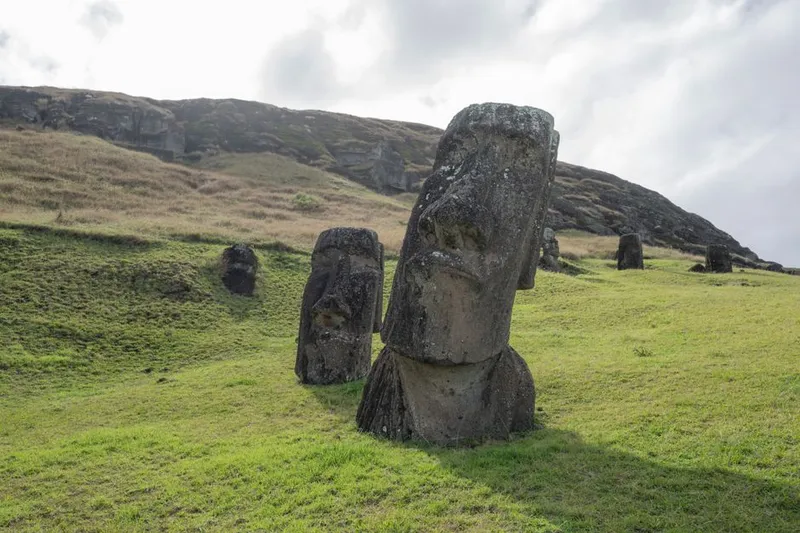
South and east route: Vaihu, Akahanga, Rano Raraku and Tongariki
Save the longest day for the south coast. Start at Vaihu and Akahanga, move on to Rano Raraku, continue to Ahu Tongariki and finish at Te Pito Kura or Anakena. Your guide adjusts the order based on ticket, weather and crowds.
Rano Raraku deserves more time because the moai remain in different stages of carving and transport. Don’t rush to “see them all”: study the quarry faces and stick only to the open trails. At Tongariki, respect the marked area and avoid blocking other visitors’ shots.
Save Rano Raraku for a time when you’re not rushed: the ticket allows only one visit. If the weather is bad, talk to your guide before validating your entry.
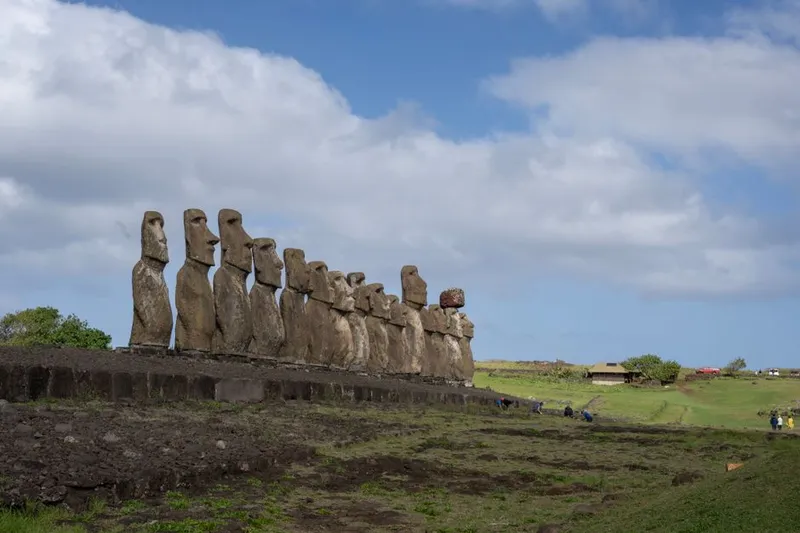
Moai near Hanga Roa
Tahai is the easiest choice to reach on foot from Hanga Roa and works beautifully at sunset. Hanga Kio’e sits further north; the Padre Sebastián Englert Anthropological Museum helps you interpret artifacts and techniques before the long routes.
These spots don’t replace the big sites, but they ease the schedule. Walk only in authorized areas and bring a flashlight to head back after sunset. The village concentrates restaurants, tour operators, rental agencies and the ticket office; that’s why it’s the most practical base.
Mandatory guide and visiting rules
The park’s official website requires an individual ticket and a guide certified by Ma’u Henua for park entry. The rule protects fragile sites. Hire your guide before booking a car, because some professionals already include transport and set the sequence.
According to the official FAQ, Orongo and Rano Raraku allow only one visit per ticket; the other authorized sites can be revisited, always following current rules and with a guide. Touching or climbing moai, leaving the trails, using drones, lighting fires or shooting commercial photography without authorization is prohibited.
The most serious real mistake is entering a closed area to take a photo. Beyond the risk of fines and expulsion, one step off the trail can damage archaeological heritage. Only photograph from the marked path, even when someone else crosses the barrier.
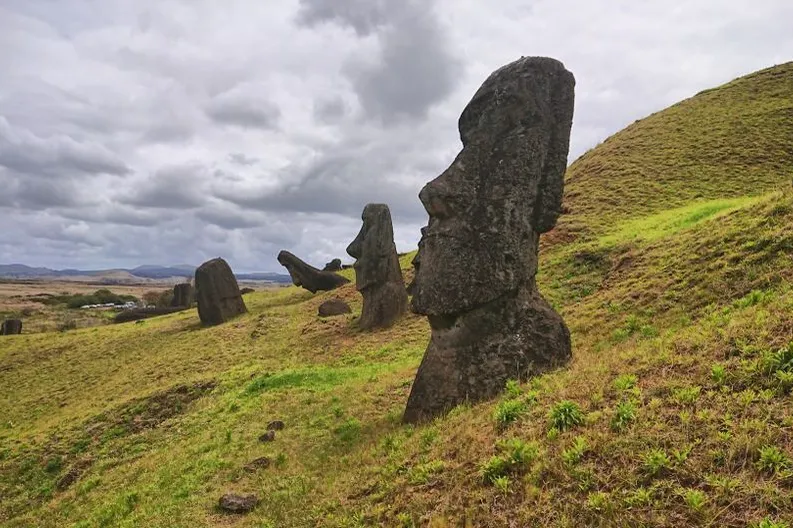
West route: Orongo, Vinapu, Akivi and Puna Pau
Orongo sits on the rim of the Rano Kau volcano and explains the birdman cult; Vinapu stands out for its stone fitting; Ahu Akivi brings together seven moai facing the ocean; Puna Pau preserves the quarry of the pukao, the reddish cylinders placed on top of some statues.
Split this route if you want to hike into the crater or visit authorized caves. The wind at Rano Kau can be strong. Bring water, sun protection, a light rain jacket and closed shoes. Don’t leave loose objects near the edges.
The real total cost
As of August 2026, a prudent budget for two days of sites runs between US$ 180 and US$ 350 per adult: park ticket, guide or tours, transport, water and meals outside your lodging. The amount changes with private service, language and group size; confirm ticket and guide through official channels.
Add up each component before comparing quotes. A shared tour usually lowers the cost; a private guide gives you control over pace; a rental car on its own doesn’t remove the mandatory guide requirement. Ask whether the price includes hotel pickup, lunch, entrance fees and return.
There’s a Civitatis-validated tour on Easter Island that covers Rano Raraku, Tongariki and Anakena.
 See activities in Hanga Roa on GetYourGuide ›
Keep your ticket saved on your phone and also bring an offline copy.
What nobody tells you
- Showing up without a guide can waste the day even with a ticket in hand.
- Validating Rano Raraku in heavy rain burns your one-time visit.
- Planning sunrise and sunset on the same day creates excessive driving.
- Waiting to buy water and snacks at the sites raises costs and uncertainty.
- Following an old map can lead you to a closed access point.
The useful bit of curiosity is that many moai weren’t made where they stand today: the Rano Raraku quarry keeps statues at various stages and helps you understand the process. Use that insight to order your itinerary, not as an invitation to leave the trail.
How many days and how to get there
Two days cover the main axes; three allow for the museum, revisiting authorized sites and weather buffer. To enter Rapa Nui, tourists must complete an official form, have a return ticket and certified lodging, plus respect the current length-of-stay limit.
Organize flights and nights using the culture and history collection, compare with the Patagonia itinerary for a bigger trip and check out the South America attractions.
 HotelAs soon as you have datesCompare neighbourhoods and guest ratings.Booking ›
- More activitiesTo compareTickets, day trips and tours with flexible cancellation.GetYourGuide ›
Frequently asked questions
Does the same ticket work for all sites?
The ticket gives access to the 12 authorized sites, following guide requirements and rules. Orongo and Rano Raraku allow only one visit.
How many times can I enter Rano Raraku?
Once per ticket. Weigh weather, timing and your physical condition with your guide before validating your entry.
Can you touch or climb the moai?
No. Touching, climbing, leaving the trails or crossing barriers violates park rules and threatens the heritage.
How many days should I set aside for the moai?
Set aside two full days as a minimum. Three days give you buffer for weather, the museum and a better-paced visit.
Can you visit without a car?
Yes, with a tour or guide that includes transport. Walking works for the sites near Hanga Roa, not the long routes.
See the moai without breaking the rules
Split the island by routes, protect your one-time visits and confirm your guide before heading out. Voyage Voyage helps turn distance into concrete decisions.