 Marcelo Oliveira
Serra do Rio do Rastro is the road with 284 hairpin turns that climbs roughly 1,460 meters in altitude up the wall of the Serra Geral, between the southern coast of Santa Catarina and the highland plateau where Urubici sits. It’s considered one of the most beautiful roads in the world by international publications, and it’s also the only mountain highway in Brazil fully lit at night. The route links Lauro Müller, at the base, to Bom Jardim da Serra, at the top — and it’s a must-stop for anyone traveling between the Santa Catarina coast and towns like Urubici and São Joaquim.
Hotels in Bom Jardim da Serrafree cancellation options onlySee hotels ›Booking.com partner (advertising): we may earn a commission at no extra cost to you.
Serra do Rio do Rastro has 284 hairpin turns and climbs about 1,460 meters in altitude along a winding stretch carved into the rocky wall of the Serra Geral, connecting Lauro Muller (SC) to Bom Jardim da Serra (SC). Access is free, with no toll, and the best time for photos is late afternoon or early morning, when the fog tends to sit lower.
| Price | Free, no toll (Aug/2026) |
|---|---|
| Turns / elevation gain | 284 hairpin turns, ~1,460 m of altitude on the windiest stretch |
| Length | The winding stretch is concentrated in just a few kilometers of climbing — confirm the exact mileage on the official SC-438/reserve website before riding it by motorcycle or bike |
| Hours | Open 24h; lit at night (Aug/2026) |
| Crossing time | 20-40 min without stopping; 1h30-2h with stops at the viewpoint and for photos |
| How to get there | Your own car, motorcycle or a van/tour departing from Urubici, São Joaquim or the southern Santa Catarina coast |
| Municipalities | Lauro Muller (base) and Bom Jardim da Serra (top), Santa Catarina |
How to get to Serra do Rio do Rastro
Serra do Rio do Rastro is on the SC-438, between Lauro Muller and Bom Jardim da Serra, in southern Santa Catarina. If you’re coming from the coast (BR-101, the Criciúma or Tubarão area), you climb the mountain toward the plateau; if you’re coming from Urubici, São Joaquim or Lages, you descend toward the coast. There’s no regular public transport to the winding stretch — access is by car, motorcycle or on tours booked in the region.
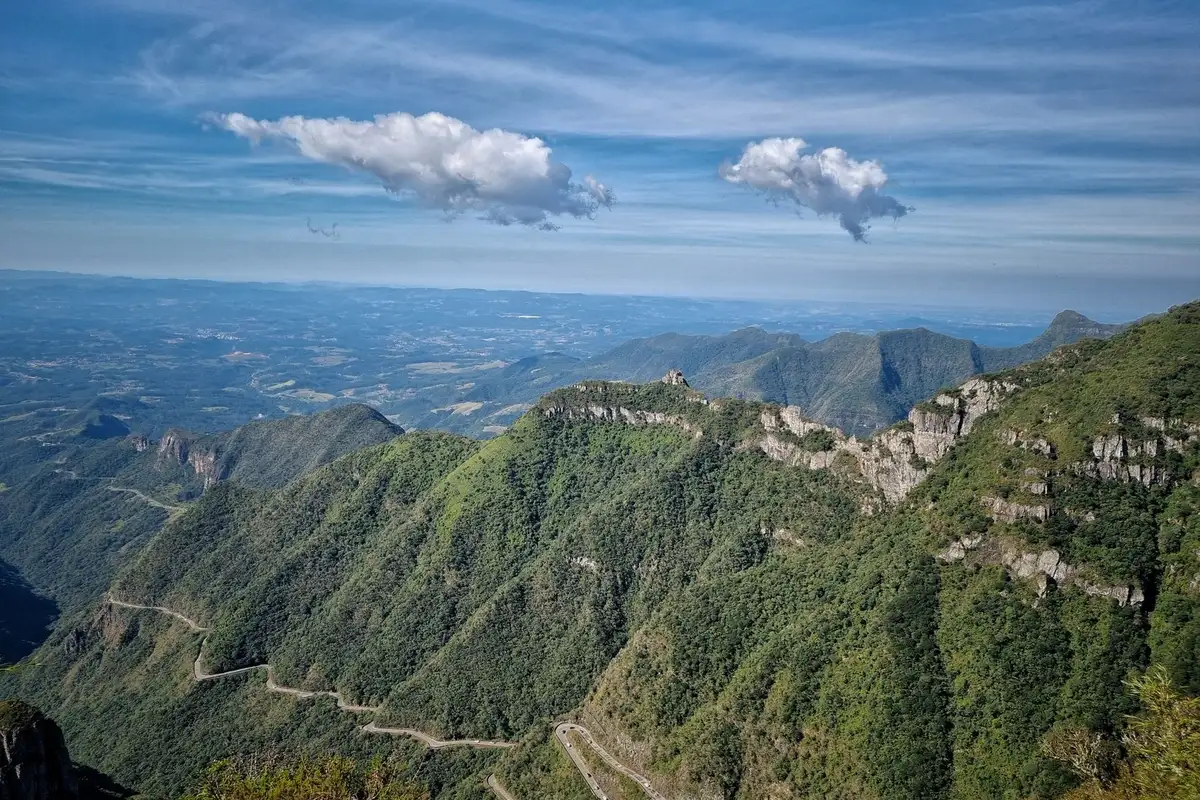
Starting from Urubici, the most common route passes through Bom Jardim da Serra before descending the wall — about 1h30 to 2h of driving, depending on traffic and stops along the way through the Urubici highland plateau. Starting from the coast (Criciúma, Tubarão or Florianópolis), the climb begins in Lauro Muller and access is more direct via the BR-101 to the SC-438.
Best time to go and how long to allow
The best time to visit Serra do Rio do Rastro is between spring and fall, when the risk of thick fog and ice on the road is lower; in winter (June to August) the mountain can wake up to dense fog, frost or, in colder years, signs of frost/snow, which reduces visibility and demands extra attention behind the wheel. Allow at least half a day — 2 to 3 hours counting the drive there, photo stops at the viewpoint and the drive back, or more if you stop for lunch in Bom Jardim da Serra or Lauro Muller.
If you’re staying in Urubici, you can do Serra do Rio do Rastro as a half-day round trip, combining it with other stops in the Serra Catarinense on the same itinerary.
What to see: the turns, the viewpoint and the scenery
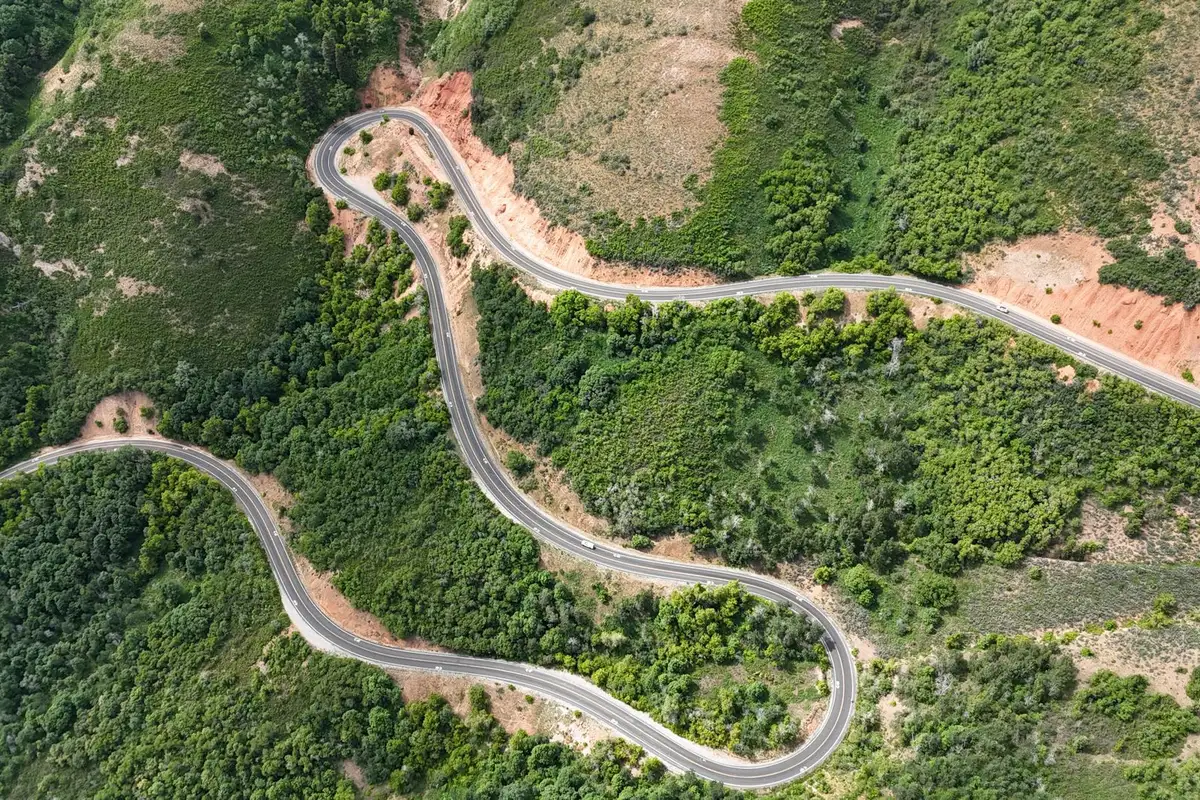
The main attraction is the road itself: the 284 hairpin turns seen from above, from the viewpoint at the top of the wall, form a winding pattern that stands out against the green of the Atlantic Forest and the steep terrain of the Serra Geral. On clear days, you can see the southern Santa Catarina coast in the distance; on days with low fog, the viewpoint sits above the clouds, creating a sea of clouds seen from above.
How many turns and how much elevation gain
Serra do Rio do Rastro has 284 hairpin turns along a stretch that climbs about 1,460 meters in altitude, carved directly into the rocky wall of the Serra Geral — one of the steepest elevation gains among mountain roads in southern Brazil (Aug/2026). The highway was the first in Santa Catarina to be paved in concrete and is today the only mountain road in the state with full lighting along its entire length, according to a report by Brasil247 (Aug/2026), which makes the crossing safe at night too.
The exact mileage of the windiest stretch varies depending on the source — confirm the updated length on the official DEINFRA/SC website or at tourist information posts in Lauro Muller and Bom Jardim da Serra before planning timed drives, especially by motorcycle or bicycle.
Is it better to drive up or down the mountain?
There’s no technically “better” direction — driving up or down Serra do Rio do Rastro depends on your itinerary and the light you want for photos. If you’re coming from the coast and heading up toward Urubici or São Joaquim, you get the morning light hitting the wall; if you’re descending from the plateau to the coast in the late afternoon, you’ll usually catch the sunset opening up over the sea in the distance.
| Direction | Advantage | Best for |
|---|---|---|
| Going up (coast → plateau) | Front-on view of the turns as they approach | Morning photos, those heading to Urubici/São Joaquim |
| Going down (plateau → coast) | Open view of the valley and, on clear days, of the coast | Late afternoon, those returning to the BR-101 |
Is it dangerous? Safety tips for the climb and descent
Serra do Rio do Rastro isn’t a dangerous road when driven with attention, but it demands real care: back-to-back hairpin turns, a narrow shoulder in some spots and, in winter, the risk of dense fog and a wet or icy road. The Santa Catarina Highway Military Police has specifically warned about the risks of ice on the road and cell phone use behind the wheel during winter in the mountains.
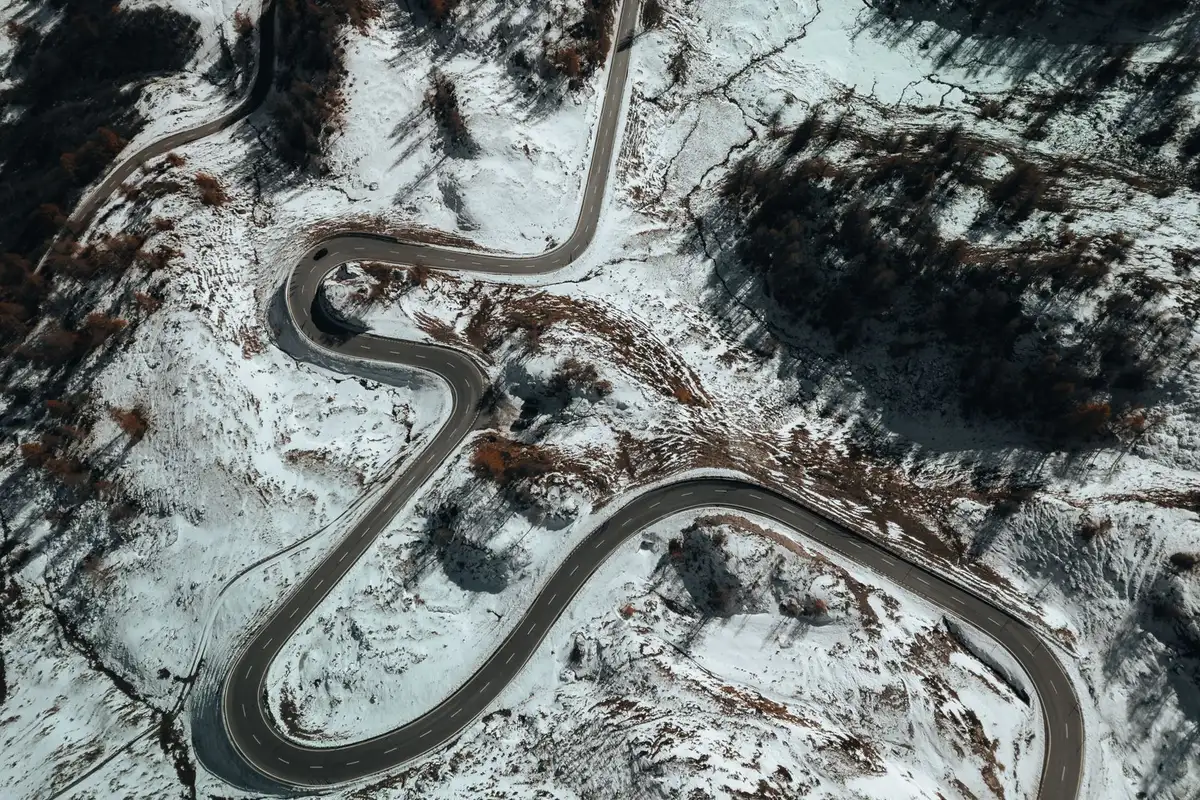
Use a low gear (1st or 2nd) both on the way up and on the way down so you don’t overload the brakes, keep your distance from the car ahead on the hairpin turns, avoid overtaking and, on days of thick fog, turn on your hazard lights and slow down considerably. Motorcycles and bicycles should be extra careful with wet asphalt, which is common even outside winter due to the altitude.
What to combine on the same trip
Serra do Rio do Rastro usually ends up on the same itinerary as anyone visiting the Serra Catarinense from Urubici — generally combined with other scenic roads in the region, such as Serra do Corvo Branco, and with highlights like Pedra Furada and Morro da Igreja, on the same travel axis between the highland plateau and the southern coast.
To plan the full itinerary for the region, with lodging, weather and other Urubici attractions, see the complete guide to Urubici, SC.
Where to eat along the way
Restaurant options are concentrated at the two ends of the mountain: in Bom Jardim da Serra, at the top, and in Lauro Muller, at the base, there are small roadside restaurants and snack bars with typical highland dishes, such as polenta, cheeses and pinhão during harvest season (between April and July). On the winding stretch itself there are no establishments — bring water and a snack if you plan to spend more time taking photos at the viewpoint.
Where to stay: base on the coast or in the mountains
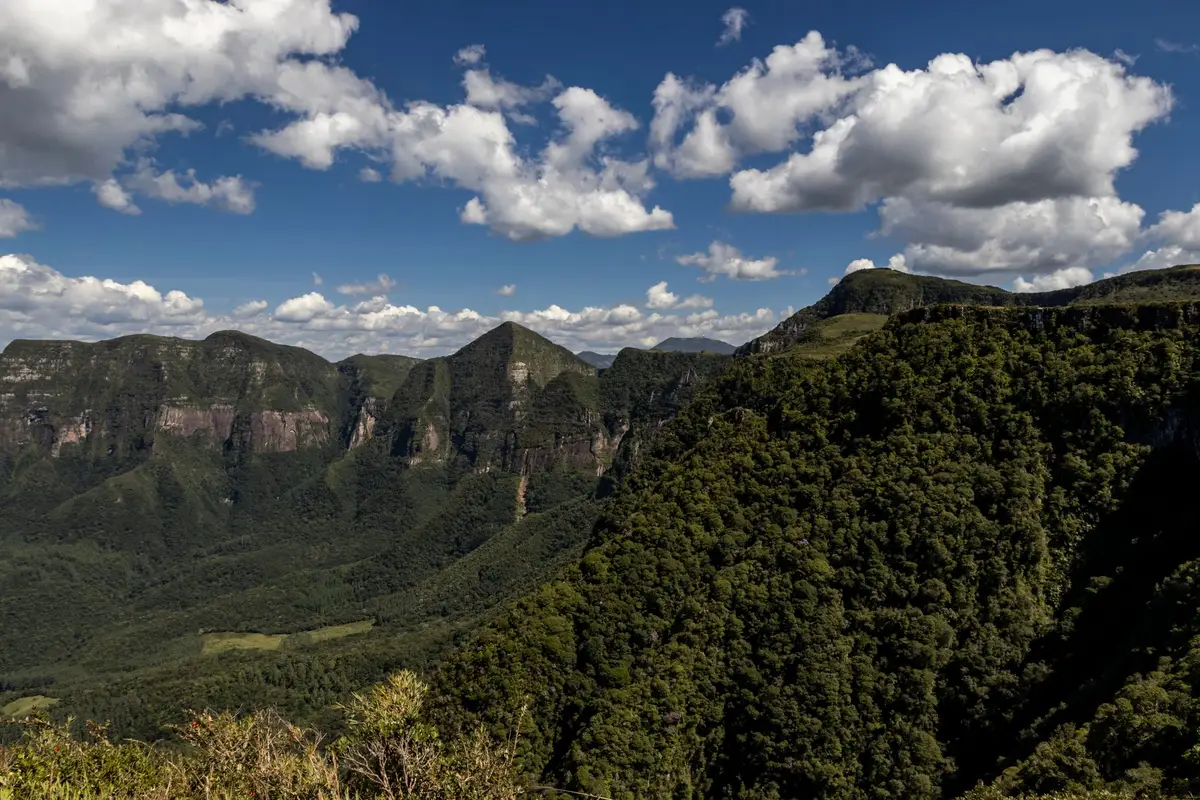
Most visitors don’t stay on Serra do Rio do Rastro itself, but use nearby towns as a base: Urubici and São Joaquim, on the plateau, have plenty of inns geared toward mountain tourism and serve as a starting point for those who want to explore several mountain roads in the region in a few days; on the coast, towns like Criciúma and Tubarão work as a base for those passing through on the BR-101.
Where to stay in Bom Jardim da Serra
| Hotel | Rating | |
|---|---|---|
| Jardim das PedrasBom Jardim da Serra · With a restaurant, bar and children's playground | 9,7135 reviews | See prices |
| Recanto da MajuBom Jardim da Serra · On Rua Adélia do Amaral e Souza, with balconies facing the mountains | 9,8534 reviews | See prices |
| Recanto Entre RiosSC-390 · On the SC-390 highway, km 389, with balconies and a hot tub | 9,8107 reviews | See prices |
| Pousada Rural Encanto do RiachoRio Porteira · On the SC-390, km 380, in Rio Porteira; the rooms have balconies overlooking the river | 9,4132 reviews | See prices |
| Pousada Villa SerranaCity centre · On Avenida Henrique Velho Cordova, in the city centre | 9,0411 reviews | See prices |
| Paraíso Dos CânionsSanta Bárbara · In the village of Santa Bárbara, with mountain views | 9,5222 reviews | See prices |
| Pousada Morro GrandeRio Porteira · In the village of Rio Porteira, next to the SC-390 highway | 9,5102 reviews | See prices |
| Pousada Serra & JardimBom Jardim da Serra · On Rua Boaventura Augusto Machado, with rooms facing the mountains | 9,1337 reviews | See prices |
Booking.com rating on 30/09/2026
Practical tips for the crossing
Get to the viewpoint before 9am or after 4pm to avoid the busiest hours and still catch good light for photos — midday usually means more cars parked on the shoulder and harsher light on the wall.
The real cost of crossing the mountain: the crossing itself is free, with no toll (Aug/2026). Your main expense is fuel for the route and, if you stop to eat in Bom Jardim da Serra or Lauro Muller, R$ 30 to R$ 60 per person at simple roadside restaurants — there’s no access fee for the viewpoint or the highway itself.
What nobody tells you before you go:
- Cell signal drops for much of the route — download the offline route map before you head up.
- There’s no gas station in the middle of the mountain; fill up in Lauro Muller or Bom Jardim da Serra before continuing your trip.
- On high-season weekends, the viewpoint shoulder fills up fast — arriving early saves you from fighting for a spot.
- Fog can roll in within minutes even on days that started clear — if that happens, slow down and use your hazard lights instead of stopping in the middle of the road.
- The stretch is a busy route for cyclists and motorcyclists on weekends; keep extra distance on the hairpin turns.
 HotelAs soon as you have datesCompare neighbourhoods and guest ratings.See hotels ↑
 ActivitiesBefore you travelBook ahead the ones with limited spots.Civitatis ›
Frequently asked questions
How many km is Serra do Rio do Rastro?
Serra do Rio do Rastro packs its 284 hairpin turns into a winding stretch of just a few kilometers of climbing, carved into the wall of the Serra Geral. The exact mileage varies depending on the source and the reference point used — confirm the updated length with local traffic authorities or tourist information posts before planning timed drives.
Does Serra do Rio do Rastro have a toll?
No. Crossing Serra do Rio do Rastro is free, with no toll charge (Aug/2026). Access to the viewpoint at the top also has no entry fee.
Where is the Serra do Rio do Rastro viewpoint?
The viewpoint is at the top of the wall, on the Bom Jardim da Serra side, with a view of the road’s 284 turns and the valley below. It’s the most sought-after spot for photos of the stretch.
Can you visit Serra do Rio do Rastro from Urubici?
Yes. From Urubici, Serra do Rio do Rastro is about 1h30 to 2h away by car, passing through Bom Jardim da Serra, and can be done as a half-day round trip combined with other attractions in the Urubici highland region.
Is the road lit at night?
Yes. Serra do Rio do Rastro is the only mountain road in Santa Catarina fully lit along its entire length, which makes crossing at night safer than on other mountain roads in the region (Aug/2026).
Conclusion
In just a few kilometers, Serra do Rio do Rastro delivers the summary of what makes the Serra Catarinense one of the most spectacular stretches of road in Brazil: hairpin turns, steep elevation gain and a viewpoint worth the stop even for those just passing through between the coast and the plateau. To plan the full itinerary for the region — lodging, other mountain roads and waterfalls — check out the complete guide to Urubici, SC on Voyage Voyage.