 Marcelo Oliveira
Paris with kids works best when the itinerary respects your family’s rhythm: one main attraction per half-day, an outdoor break, and travel kept within the same neighborhood. For a first visit, three days make a balanced base; you hit the postcard sights, fit in a museum without turning the trip into an endurance test, and can still swap a plan for a park or a boat ride.
Hotels in Parisfree cancellation options onlySee hotels ›Booking.com partner (advertising): we may earn a commission at no extra cost to you.

The best version of Paris with kids
A three-day itinerary is the best base for Paris with kids because it lets you visit one core area per day, repeat a park, or take a break without sacrificing every attraction. The city’s own tourism board presents a three-day family itinerary with museums, green spaces, and attractions spread across different zones.
Use the first day for the center and the Seine, the second for a garden paired with science or a short museum, and the third to choose between the Eiffel Tower, the monumental west side, a river cruise, or a theme park. With four or five days, don’t just add more monuments: turn one day into buffer time for rest, shopping, rain, or a Disneyland Paris day trip.
The itinerary below doesn’t try to replace general Paris planning. It starts from a more specific question: how can a family see great places without dragging tired kids from one end of the city to the other? For the rest of your trip, the general 5-day Paris itinerary works as a complement.
Where to stay in Paris
| Hotel | Rating | |
|---|---|---|
| Westside Arc de Triomphe HotelÉtoile and Champs-Élysées · 800 m from the Arc de Triomphe | 8,6936 reviews | See prices |
| Hôtel KepplerÉtoile and Champs-Élysées · 450 m from the Arc de Triomphe | 9,3811 reviews | See prices |
| Hôtel Elysées RégenciaÉtoile and Champs-Élysées · 600 m from the Arc de Triomphe | 8,71.583 reviews | See prices |
| Le Tsuba HotelÉtoile and Champs-Élysées · 450 m from the Arc de Triomphe | 9,01.210 reviews | See prices |
| Hôtel Etoile MaillotÉtoile and Champs-Élysées · 800 m from the Arc de Triomphe | 8,81.448 reviews | See prices |
| The Chess HotelOpéra · 200 m from the Opéra Garnier | 8,4471 reviews | See prices |
| Le Basile HôtelOpéra · 350 m from the Opéra Garnier | 9,21.376 reviews | See prices |
| Hôtel Saint-Pétersbourg Opéra & SpaOpéra · 300 m from the Opéra Garnier | 8,83.997 reviews | See prices |
| Hôtel le 209 Paris BercyBercy and Gare de Lyon · Near the Grand Bleu quay | 8,42.695 reviews | See prices |
| Novotel Paris Gare de LyonBercy and Gare de Lyon · Gare de Lyon | 8,52.985 reviews | See prices |
| Novotel Paris Centre BercyBercy and Gare de Lyon · Bercy | 8,63.646 reviews | See prices |
| Hotel de Flore - MontmartreMontmartre · Montmartre | 8,53.935 reviews | See prices |
| Hôtel BOHEM, Sacré-CœurMontmartre · Near Sacré-Cœur | 9,3502 reviews | See prices |
| Hôtel des Arts MontmartreMontmartre · Montmartre | 9,62.522 reviews | See prices |
Booking.com rating on 30/09/2026
The rule that prevents an exhausting day
The most useful rule is to limit each day to one attraction that demands focus and one activity that allows free movement. That way, the Louvre can be followed by a short walk along the Seine; a viewpoint can be paired with a garden; an indoor visit can end at a carousel, a square, or a playground.
Organize each day into three blocks: morning with your main booking, lunch nearby, and a flexible afternoon. Lunch doesn’t need to be a memorable dining experience; with kids, a predictable meal with a bathroom nearby is usually worth more than crossing two neighborhoods in search of a famous table.
Also factor in exit time, not just time inside the attraction. A 1.5-hour museum can eat up three hours once you add the line, coat check, bathroom, snack, and the walk to the next station. Leave at least one ticket-free window per day so your family isn’t punished by a nap or a mood swing.
Adjust the itinerary to your kids’ ages
For small children, parks, gardens, animals, boats, and spaces with big objects work better than a succession of silent rooms. The Jardin du Luxembourg and the Tuileries offer strolling areas and kids’ activities; the Jardin des Plantes and the Parc de la Villette expand your options when the group needs to run.
From ages 6 to 10, you can include a museum with a clear mission: find a specific work, spot animals, sketch a sculpture, or join a family guided tour. The Louvre offers family activities, allows strollers, and lends strollers or front carriers under the Pyramid, subject to availability.
With tweens and teens, the choice can revolve around one concrete question: Palais Garnier architecture, science, soccer, fashion, street art, or the view from the Eiffel Tower. The Palais Garnier has a 1-hour interactive family tour recommended for kids ages 7 to 11 and a self-guided visit lasting about 1.5 hours; check the schedule before slotting in the opera house.
 Partner · Civitatissee all activities in Paris ›
- See ›Montmartre Free Walking TourRating 9.5 · 828 reviews on Civitatis
- Seine River CruiseRating 8.4 · 14,366 reviews on Civitatisfrom€21per personSee ›
- Eiffel Tower 3rd Floor TicketsRating 8.1 · 2,758 reviews on Civitatisfrom€99per personSee ›
- Paris Hop On Hop Off Bus, Big BusRating 8.4 · 7,822 reviews on Civitatisfrom€49per personSee ›
Civitatis prices on 28/09/2026, from, per person. They may change. Want to compare? Activities in Paris on GetYourGuide ›
Day 1: Louvre, the Seine, and the center
Your first day should stay in central Paris, with one indoor attraction, an outdoor break, and a short stretch along the Seine. This concentration keeps you from starting the trip with transfers and gives your family a first read on the city without requiring everyone to already know how to use the metro.
Morning: the Louvre with a mission
Pick one small goal at the Louvre: the Mona Lisa, the Egyptian antiquities, the monumental sculptures, or a family activity. Don’t try to “see the museum”; set a 60- to 90-minute route and accept leaving before curiosity runs out. The guide to the Louvre without losing the day can help you decide your focus.
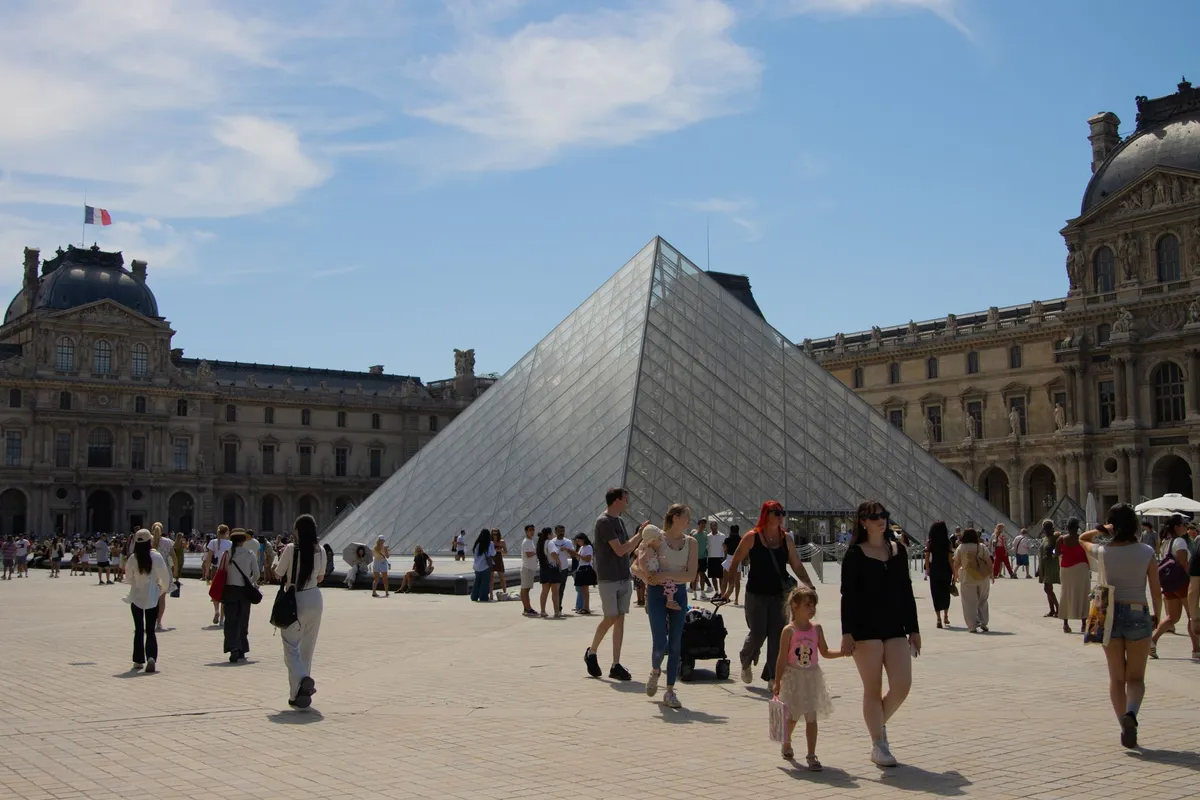
Admission is free for children according to the museum’s FAQ, but booking conditions should be checked based on the visitor category. Take a break after the visit, even if it’s just outside the Pyramid or at a nearby café.
Afternoon: the Seine and a short stop
After lunch, walk along the Louvre axis to the Seine and choose between a short loop along the riverbanks, the Île de la Cité, or a square with room to sit. If the kids are still excited, add a bookstore, ice cream, or a carousel; if not, end the day without guilt. The goal is to finish wanting more, not to complete a checklist.
Day 2: garden, play, and science
Your second day should alternate a garden with a cultural or science attraction, because open space restores energy after a focused visit. The Jardin du Luxembourg is a central choice, while the Jardin des Plantes and the Villette area work better for families willing to cross the city for a specific program.

In Luxembourg, pair the garden with one short activity and let the family set the pace. At the Tuileries, the proximity of the Louvre and Place de la Concorde makes for a day with fewer transfers. If the weather is good and the group needs to burn off more energy, the Jardin des Plantes lets you explore gardens and greenhouses; check opening hours and tickets for the enclosed areas separately.
For a science-loving family, the Cité des Sciences in La Villette is a better anchor than squeezing in yet another art museum. The area is huge and can eat up an entire half-day; keep that in mind before promising a second neighborhood on the same day. Kids’ programming and hours change, so check the official schedule.
Another option is the Parc de la Villette with one short indoor attraction. The city highlights themed areas and play spaces, which come in handy when your child doesn’t want to spend the afternoon in a quiet environment. The rule is simple: pick one activity with a predictable end time and keep the park as a buffer, not as one more obligation.
Day 3: Eiffel Tower, the west side, or a park
Day three needs to be conditional: choose the Eiffel Tower and the Seine for a classic first visit, the monumental west side for architecture and gardens, or Disneyland Paris if a theme park is the family’s main interest. Trying to do all three in one day makes for an expensive, exhausting itinerary.
Option A: Eiffel Tower and the Seine
Book the Eiffel Tower in advance and treat the climb as the centerpiece of the half-day. Then head down to a park or a Seine river cruise instead of adding another museum. This combination gives you a waiting moment, a panorama, and a seated activity — three different rhythms in the same day.

Option B: the monumental west side
The Eiffel Tower, Trocadéro, Invalides, and Palais Garnier circuit requires picking and choosing. For kids interested in architecture, the Palais Garnier offers a 1-hour family tour for the recommended 7–11 age range; for other ages, a garden and a facade may be enough. Our guide to the best floor of the Eiffel Tower helps you decide whether the climb makes sense.
Option C: Disneyland Paris
Disneyland Paris deserves a day of its own, especially because of the travel time and the lines. Don’t treat it as an “extra attraction” after the Eiffel Tower. Check our guide to Disneyland Paris tickets, itinerary, and transfers and decide based on age, favorite characters, and your family’s tolerance for a full park day.
If the goal is simply a memorable activity outside the center, a boat ride can do the trick with far less logistics. Let the group’s profile make the call: kids who need to move will want a park; kids who watch everything through the window may get more out of the Seine.
Getting around without turning the day into a marathon
Use the metro to cross the city and walk within a single neighborhood, rather than switching between metro and bus for every attraction. Before you head out, group the stops on a map and pick one arrival station and one return station; that little bit of planning cuts down on decisions when everyone’s already tired.
According to RATP, children under 4 travel free on the metro, RER, buses, and trams, as long as they don’t occupy a seat. Between 4 and under 10, certain tickets and booklets are discounted by 50%. The rules depend on the ticket you buy, so check the official child fare page before loading up on tickets.
A stroller helps, but stairs, crowded elevators, and uneven sidewalks can make a short route take much longer. For kids who can already walk, combine metro stretches with a concrete promise — “we’re going to the garden” — and take breaks before the whining starts. A taxi or rideshare can be useful at the end of the day, but it doesn’t have to be the solution for every single trip.
Bookings and budget
Book the attractions with timed entry or high demand first: the Eiffel Tower, the Louvre on a busy date, Disneyland Paris, and specific family activities. Gardens, walks along the Seine, and squares should stay as the flexible pieces of the itinerary, because they don’t depend on the same kind of ticket.
The Louvre states that entry is free for children, but that doesn’t eliminate every possible reservation or proof of booking. For a visit with a family activity, the official schedule indicates an average duration of 1h30 and its own conditions. Read the museum’s rule and don’t treat a price from another date as definitive.
Build your budget in blocks: adult tickets, transit passes, one paid activity per day, and meals. Kids may not get much out of an expensive attraction if the timing collides with hunger or nap time. A free stroll in a garden between two ticket purchases usually protects the experience better than trying to save money by cutting every single break.
Rain, strollers, and changing plans
When it rains, swap parks for a museum with kids’ activities, the Palais Garnier, the Aquarium de Paris, or a workshop — without trying to keep the outdoor itinerary intact. Paris’s tourism calendar is full of museums, shows, gardens, and cruises; use that variety to replace one block, not to cram the day with four bookings.
At the Louvre, strollers are allowed and the museum says it offers support for strollers or front-facing baby carriers under the Pyramid. Even so, bring only what you need and confirm access on the day. At other monuments, the rules may be different: a compact stroller and a carrier backpack give you more freedom, but they don’t eliminate stairs or lines.
If a child gets sick or simply gives up, protect the next block of the day and cut whatever matters least. The heart of the itinerary is a good shared memory, not the number of places you photographed. Paris will still be there the next morning.
To check the rules and the schedule before your trip, see the official pages on the three-day family itinerary, family outings in Paris, children and families at the Louvre, Louvre family activities, outdoor activities, Palais Garnier family tours, and other Paris attractions beyond the Eiffel Tower.
How to adapt without losing the thread
Go ahead and pick three anchors now — one cultural, one outdoors, and one panoramic or entertainment-focused — and keep the fourth slot as a flexible backup. This structure works for babies, school-age kids, and teens because you swap out the attraction but keep the same alternating rhythm.
For a short trip, keep the center for day one, a garden or science zone for day two, and the classic or themed pick for day three. For a longer trip, don’t turn the extra days into a copy of the first: add rest, a new neighborhood, or a day trip only when the family is asking for more.
The night before each outing, confirm opening hours, reservations, the weather forecast, and any possible transport changes. With that check and a real break in each shift, Paris becomes easier to enjoy with kids — and the itinerary still works even when the original plan changes.
 HotelAs soon as you have datesCompare neighbourhoods and guest ratings.See hotels ↑
- ActivitiesBefore you travelBook ahead the ones with limited spots.Civitatis ›
 More activitiesTo compareTickets, day trips and tours with flexible cancellation.GetYourGuide ›