 Marcelo Oliveira
The Pantanal is the world’s largest flooded plain, spread across Mato Grosso and Mato Grosso do Sul, and it holds the highest concentration of observable wildlife in South America — from jaguars to hyacinth macaws. For anyone asking how to visit the Pantanal, the short answer is: book at least 4 to 5 days, travel in the dry season (May to September), and choose between the North region (flying out of Cuiabá) or the South (flying out of Campo Grande/Corumbá), since the two sides can’t be visited on a single day trip. The rest of this guide breaks down real costs, itinerary, the right season, and the precautions nobody warns you about beforehand.
Hotels in Pantanalfree cancellation options onlySee hotels ›Booking.com partner (advertising): we may earn a commission at no extra cost to you.
The Pantanal lies between Mato Grosso and Mato Grosso do Sul, is the largest continuous wetland on the planet, and the best time to visit runs from May to September, the dry season when animals gather along riverbanks and become much easier to spot. Outside that window, between October and April, the rains flood the roads and hide the wildlife in dense vegetation.
| Best time | May to September (dry season) — best wildlife visibility (Sep/2026) |
|---|---|
| Ideal duration | Minimum 4-5 days; 3 extra days if combining with Bonito (Sep/2026) |
| Accommodation | Pantanal lodges from R$ 168-260/night; all-inclusive packages at farm-hotels (Sep/2026) |
| How to get there | Fly to Cuiabá (North) or Campo Grande (South), then drive to the lodge |
| Vaccine | Yellow fever recommended (not required for domestic travel), 10 days in advance |
| Location | Flooded plain between Mato Grosso and Mato Grosso do Sul, Brazil |
What is the Pantanal and where is it?
The Pantanal is the world’s largest continuous flooded plain, covering about 150,000 km² split between western Mato Grosso and southwestern Mato Grosso do Sul, and extending into Bolivia and Paraguay as well. The region works like a natural sponge: the Paraguay River and its tributaries overflow during the rainy season and recede in the dry season, creating a mosaic of rivers, baías (the “Pantanal lakes”) and grasslands that sustains one of the largest concentrations of terrestrial wildlife on the planet, recognized by UNESCO as a World Natural Heritage Site.
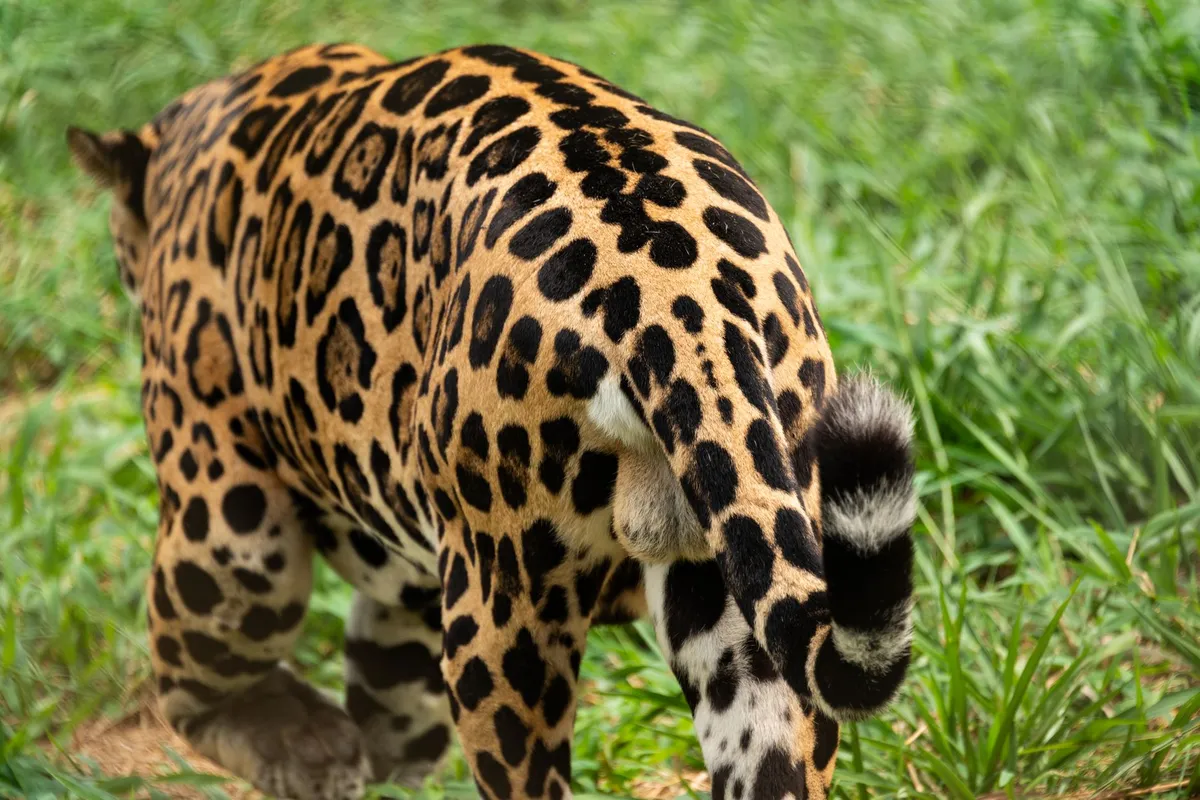
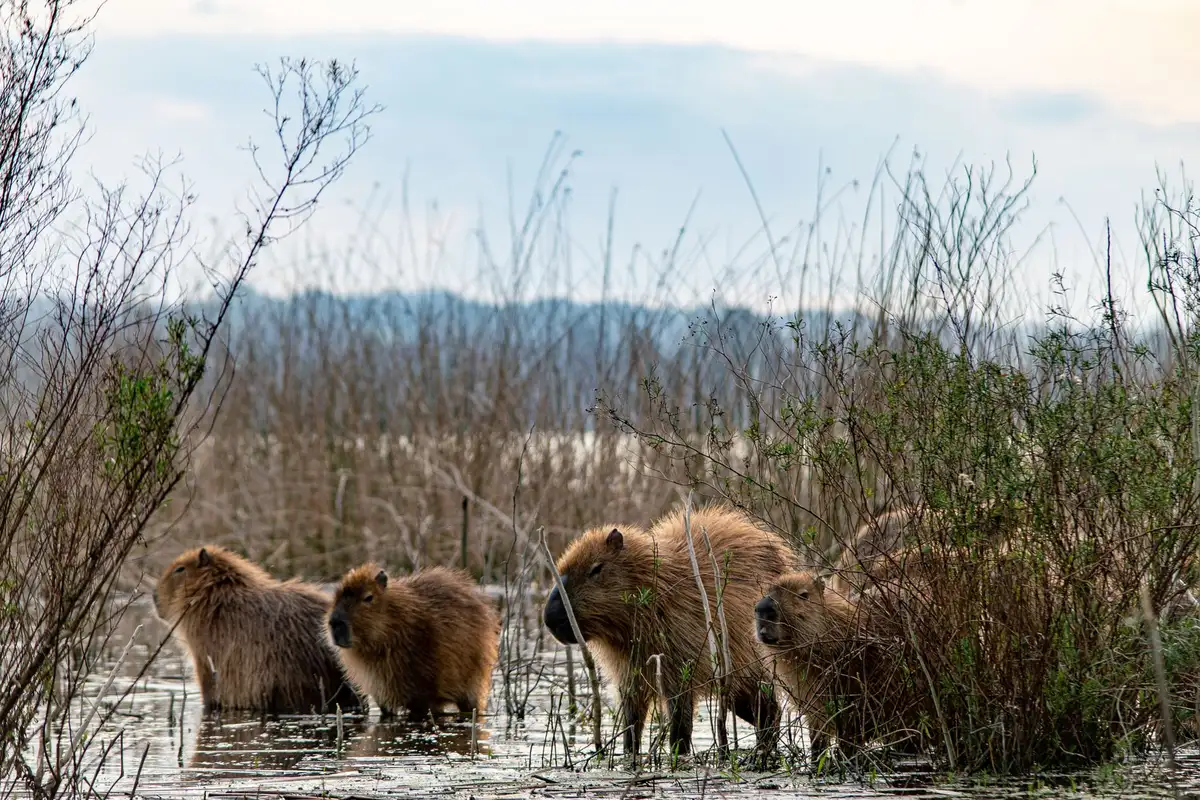
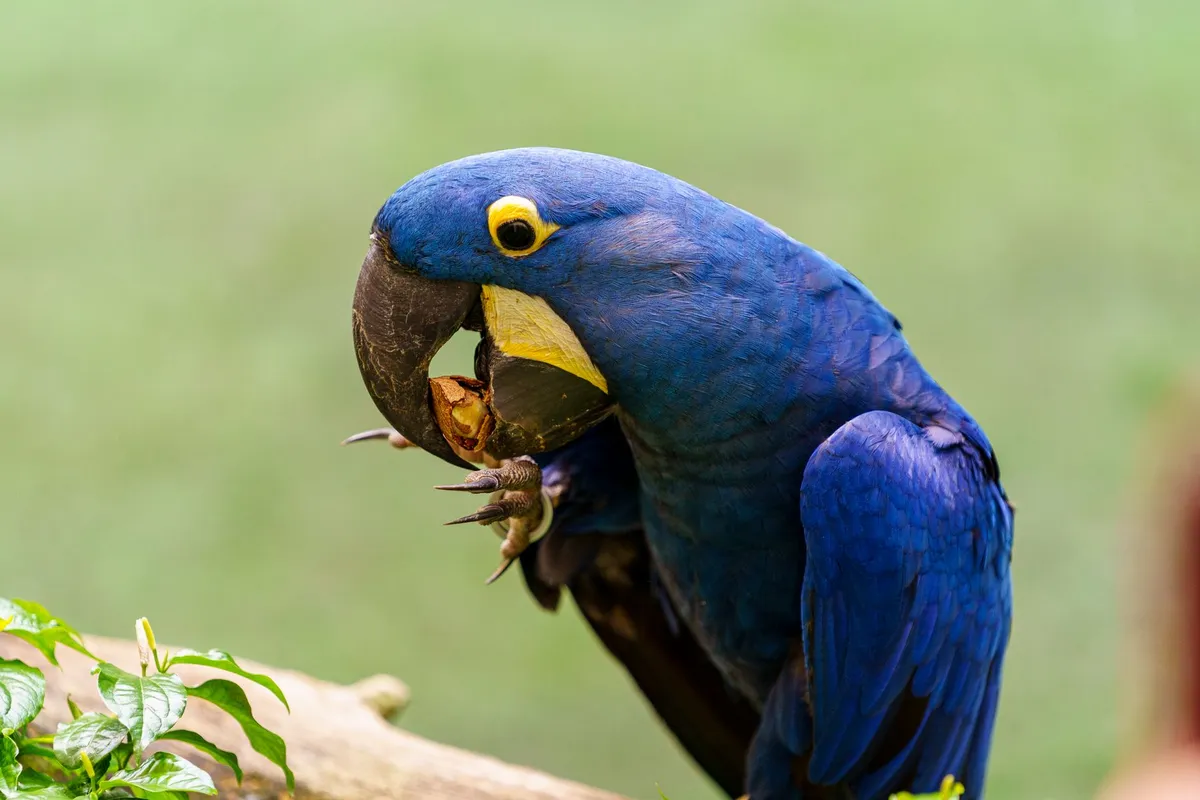
It’s different from the Amazon: instead of dense forest, the Pantanal is open, which makes animals far more visible from boats and vehicles — that’s why it’s considered one of the best places in the world to observe wild jaguars, alongside capybaras, caimans, hyacinth macaws, jabiru storks and hundreds of bird species.
What’s the difference between the North and South Pantanal?
The North Pantanal, accessed via Cuiabá and Poconé (MT), has more challenging dirt roads (like the Transpantaneira) and is the epicenter of jaguar safaris, especially around Porto Jofre. The South Pantanal, accessed via Campo Grande and Corumbá (MS), has more consolidated tourism infrastructure, is close to Bonito, and is usually the better pick for those traveling with kids or with fewer days available.
This choice changes the entire itinerary — from access roads to the ideal season — and we’ve covered it in detail, with a month-by-month comparison table, in the guide Pantanal: Choose North or South Without Getting the Season Wrong. It’s worth reading before booking your trip, because the right decision depends on what you want to see and how many days you have.
What’s the best time to visit the Pantanal?
The best time to visit the Pantanal runs from May to September, at the height of the dry season, when river levels drop and animals gather along the banks looking for water, making observation much easier. June to August is usually the peak for jaguar sightings, especially in the North Pantanal.
From October to April it rains frequently, dirt roads like the Transpantaneira become harder to drive, and vegetation grows, making wildlife harder to see — though this period has its own advantages, like greener landscapes and fewer tourists. Anyone wanting to maximize their chances of seeing a jaguar should aim for June, July or August (Sep/2026).
How many days are ideal to visit the Pantanal?
The recommended minimum is 4 to 5 days, enough for at least two boat or vehicle safaris at different times (morning and late afternoon, when animals are most active) without rushing. If you want to combine it with Bonito, in the South Pantanal, add 3 more days just for the crystal-clear river and cave ecotourism (Sep/2026).
Shorter 2-3 day itineraries exist and suit those with limited time, but they significantly reduce the chance of meaningful sightings — Pantanal wildlife doesn’t follow a schedule and requires patience. If your main goal is photographing jaguars, it’s worth stretching to 5-7 days with at least one base lodge in the Porto Jofre region.
How to get to the Pantanal?
There are no direct flights into the Pantanal itself: access is always via a gateway city followed by a road transfer. For the North Pantanal, you fly to Cuiabá (MT) and then drive or take a van for about 2-3h to Poconé, where the Transpantaneira begins, the dirt park-road that cuts through the region. For the South Pantanal, you fly to Campo Grande (MS) and then drive to Corumbá, Miranda or Aquidauana, depending on the lodge you choose.
| Route | Gateway city | Road to the lodge | Best for |
|---|---|---|---|
| North Pantanal | Cuiabá (MT) | Transpantaneira, dirt, 2-4h | Jaguar safari |
| South Pantanal | Campo Grande (MS) | Paved/dirt, 2-3h | Combining with Bonito, families |
Few lodges offer their own airport transfer — confirm this when booking, because a rental car on dirt roads demands extra care, especially after rain.
How much does a Pantanal trip cost?
In practice, a 4-day Pantanal trip costs between R$ 1,800 and R$ 4,500 per person (Sep/2026): airfare to Cuiabá or Campo Grande (R$ 700-1,500), lodging at a Pantanal lodge with full board (R$ 250-500/night, usually already including the tours) and ground transport to the farm (R$ 150-400 depending on distance). All-inclusive packages at mid- to high-end farm-hotels easily exceed R$ 6,000 for the same period.
Most Pantanal lodges work with an all-inclusive daily rate — lodging, meals and at least one safari per day — which simplifies budgeting and avoids surprise expenses. It’s worth confirming exactly what’s in the package before booking, because extra tours (night safari, sport fishing, flyover) are usually charged separately.
What to do in the Pantanal: top tours and attractions
The core program of any Pantanal trip is the wildlife-watching safari, done by boat along the rivers or in an open vehicle on the dirt roads, always in the late afternoon or early morning, when animals come out to feed. These are the tours where jaguars, capybaras, Pantanal caimans, hyacinth macaws, jabiru storks and, with luck, the giant otter appear.
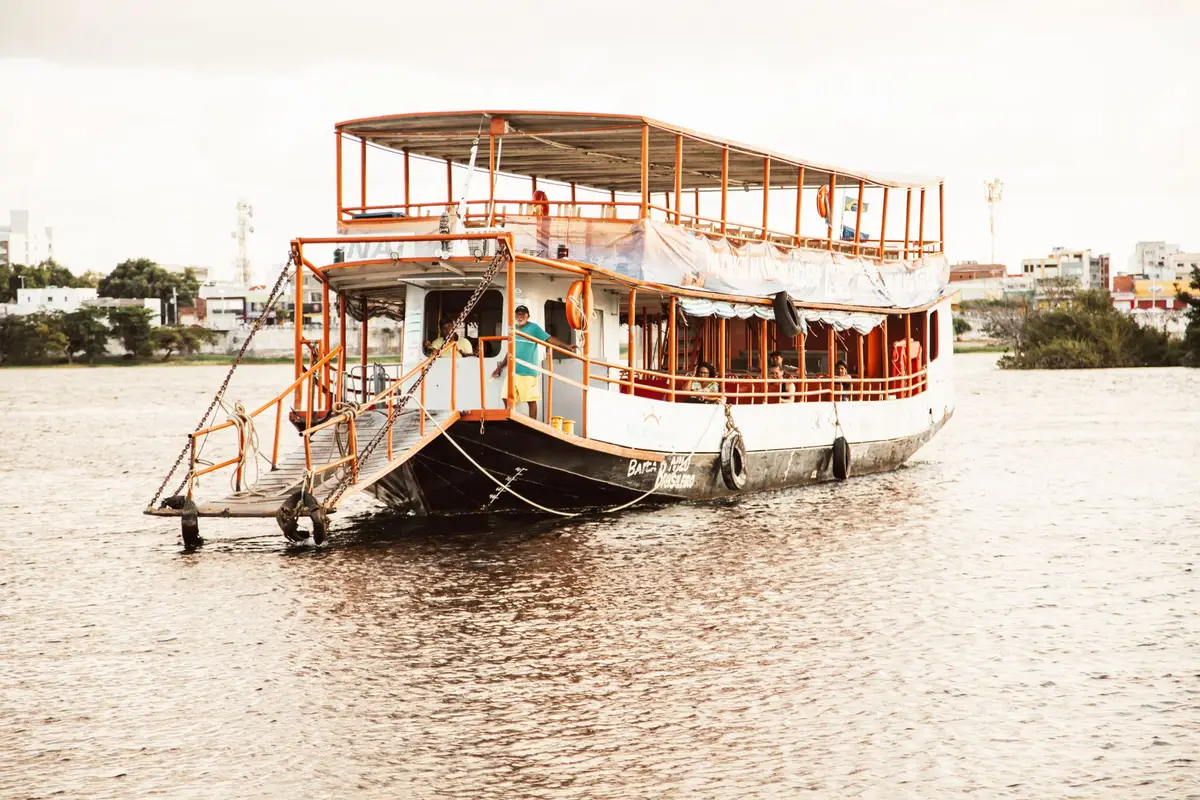
Beyond the classic safari, most lodges offer guided walking trails, night tours with flashlights (the best chance to see caimans and nocturnal mammals), sport fishing for piranha and peacock bass, and horseback rides across the fields. Those with more days can combine it with Bonito — about 3h by road from the South Pantanal — for the crystal-clear rivers and caves, an itinerary we’ve detailed in Bonito in 3, 4 or 5 Days: Itinerary, Prices and Transfers.
Is the Pantanal worth visiting? Who it’s for and who it isn’t
It’s absolutely worth it for anyone who loves nature, wildlife photography and doesn’t mind simpler accommodations than a beach resort — the Pantanal delivers a density of visible wildlife that few places in the world offer, without needing extreme luck. It’s also great for families with kids aged 6-7 and up, especially in the South Pantanal, which has easier infrastructure.
It’s less worthwhile for those seeking urban luxury comfort, those with very little time (under 3 days), or those who really struggle with heat and humidity: temperatures exceed 35°C even in the dry season, and the silence of the countryside — with no reliable Wi-Fi at most lodges — can bother anyone who depends on constant connection.
Gotchas and what nobody tells you beforehand
Traveler reports on forums like TripAdvisor repeat the same warnings: mosquitoes are a constant presence at dusk, even in the dry season, so strong repellent (with DEET or icaridin) is mandatory, not optional. Many lodges charge extra tours separately from the base package — always ask what’s included before booking. Cell signal is weak or nonexistent outside the farm headquarters, which catches some visitors by surprise. And the Transpantaneira road, especially after rain, can double your expected travel time — don’t schedule tight commitments on your arrival day.
 HotelAs soon as you have datesCompare neighbourhoods and guest ratings.Booking ›
Frequently asked questions
Do I need a vaccine to go to the Pantanal?
The yellow fever vaccine is highly recommended for anyone traveling to the Pantanal, since the region is in the disease’s risk area, but it’s not required for travel within Brazil, according to the Ministry of Health. Ideally, get it at least 10 days in advance so your body develops immunity in time for the trip (Sep/2026).
Where can you spot jaguars in the Pantanal?
The Porto Jofre region, in the North Pantanal, is the spot with the highest concentration of jaguar sightings in the world, especially during boat safaris along the Cuiabá River and its tributaries between June and September. Lodges specializing in photo safaris usually operate right in this area.
Are there lots of mosquitoes in the Pantanal? How do I protect myself?
Yes, mosquitoes are a constant presence in the Pantanal, especially at dusk and at night, even during the dry season. Repellent with DEET or icaridin, long-sleeved clothing in light colors and a mosquito net at the lodge (most already provide one) are the protections most recommended by those who’ve visited the region.
What should I pack for the Pantanal?
Bring light long-sleeved clothing in neutral colors, sunscreen, strong repellent, a hat, binoculars (essential for observing wildlife at a distance), a camera with zoom if possible, and comfortable closed-toe shoes for trails. A light jacket helps on the colder mornings of June and July.
Pantanal or Bonito: can you visit both on the same trip?
Yes, it’s a common combination for those coming from the South Pantanal: Bonito is about 3h by road from Corumbá or Miranda, which lets you link the two destinations on a 7-8 day trip. The full itinerary, with prices and transfers, is in Bonito in 3, 4 or 5 Days.
Conclusion
The Pantanal rewards those who plan ahead: choose between North and South according to the itinerary that makes the most sense, aim your trip between May and September, and book at least 4-5 days to allow real time for sightings. To nail down the finer details of season and region, the guide North or South Pantanal here on Voyage Voyage complements this itinerary with a month-by-month comparison.