Pamukkale deserves at least half a day — ideally 4 to 6 hours — because the travertine terraces and the ancient city of Hierapolis are one single visit. Showing up thinking only about the white pools usually leads to two frustrations: too little time for the ruins and the expectation of finding every basin full. The best plan combines landscape, archaeology, and a coherent route, with water, sun protection, and shoes that are easy to take off.
What Pamukkale and Hierapolis are
Pamukkale is the white slope formed by the precipitation of calcium carbonate carried by thermal waters; Hierapolis is the ancient city built on the plateau just above it. They are not distant attractions or two separate outings. The whole site, recognized by Unesco as both natural and cultural heritage, is crossed in the same journey and is usually accessed through the same archaeological complex.
The Turkish name means “cotton castle,” a description that makes sense when the light hits those white layers. The look, however, doesn’t come from snow. Mineral-rich water flows down the slope, cools, and leaves deposits that pile up into steps, channels, and basins. That process is still active and helps explain why circulation is controlled.
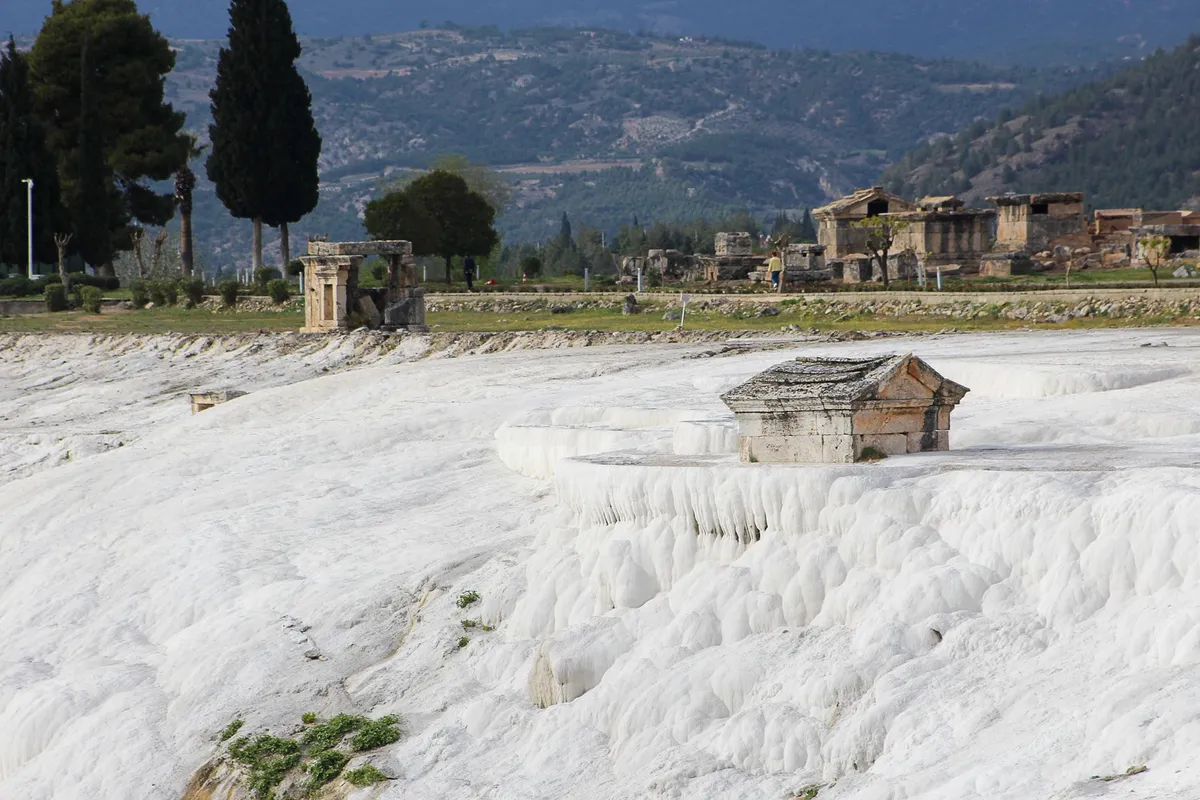
The visit gets more interesting once you notice the relationship between geology and human settlement. The thermal springs drew residents, pilgrims, and people seeking cures since antiquity. Hierapolis grew around that water, leaving behind a theater, baths, monumental streets, temples, and an extensive necropolis.
How much time to set aside
Set aside 4 to 6 hours to see the travertines, walk through the main core of Hierapolis, and take breaks without turning the visit into a race. A 2- to 3-hour route only works for a quick pass with hard choices; add the museum, the full necropolis, or a thermal bath and you can easily fill almost the whole day.
The most balanced split is 60 to 90 minutes on the white slope, about 2 to 3 hours at the ruins, and some buffer for getting around, water, photos, and rest. The estimate of 4 to 6 hours for the main complex also protects you from the mistake of underestimating distances under a strong sun.
If you only have half a day, cut the outlying stops before cutting the theater or the walk across the travertines. With a full day, you can include the necropolis at a relaxed pace and decide on the spot whether the extra thermal pool is worth it. Your priority should follow your interest: landscape, archaeology, or swimming.
How to get there and which entrance to choose
Denizli is the main gateway by bus, train, and airport; from there, local road transport reaches Pamukkale in about 25 minutes, depending on your starting point and traffic. If you’re putting together a bigger Turkey itinerary, it’s worth weighing the long overland connection against spending a night in the area, rather than squeezing everything between long transfers.
Entering from the village puts you at the base of the slope and requires the barefoot climb up the permitted section. It’s the most intuitive option if you want to start with the landscape. The upper entrances cut the initial climb and make it easier to start with Hierapolis, but they may require a taxi, car, or tour. The local Hierapolis guide helps you picture how far the site stretches; families, travelers with reduced mobility, and visitors in the peak of summer should weigh the terrain more heavily than the perfect photo.
If you’re coming from the coast, you can link Pamukkale to an Antalya itinerary; a trip focused on archaeology, meanwhile, finds continuity in the Bodrum and Turkish Riviera circuit. Three days in Cappadocia fits well into a national itinerary, though the connection is far too long to treat the two destinations as a day trip.
A route to see the travertines and the ruins
A good order starts with the area most sensitive to heat and crowds, moves through the archaeological heart, and leaves some margin for the return. If you enter from the village early, climb up through the travertines, head to the theater and the monumental street, reach the museum, and decide whether you still have energy for the necropolis. From the upper entrance, reverse the flow and finish by walking down the white slope.
4-hour plan
Spend the first hour at the travertines, then walk to the theater, pass by the Plutonium and the central area, and save the final minutes for the return. This plan demands a steady pace and doesn’t allow for a long swimming stop.
6-hour plan
Include Frontinus Street, part of the necropolis, and the museum, with breaks in the shade whenever available. If the heat gets intense, alternate open areas with indoor ones instead of sticking to a fixed sequence. The visit improves when the schedule accepts small changes.
Your route should avoid retracing long stretches. Before you start, confirm where your transport will pick you up: exiting through a different entrance can save you some walking, but it only works if your driver or tour is on the same page.
Travertine rules and what to expect from the pools
On the permitted sections of the travertine, you must take off your shoes and walk barefoot; access outside the marked routes remains restricted. The Turkish Ministry of Culture and Tourism ties these measures to the recovery and preservation of the mineral deposits.
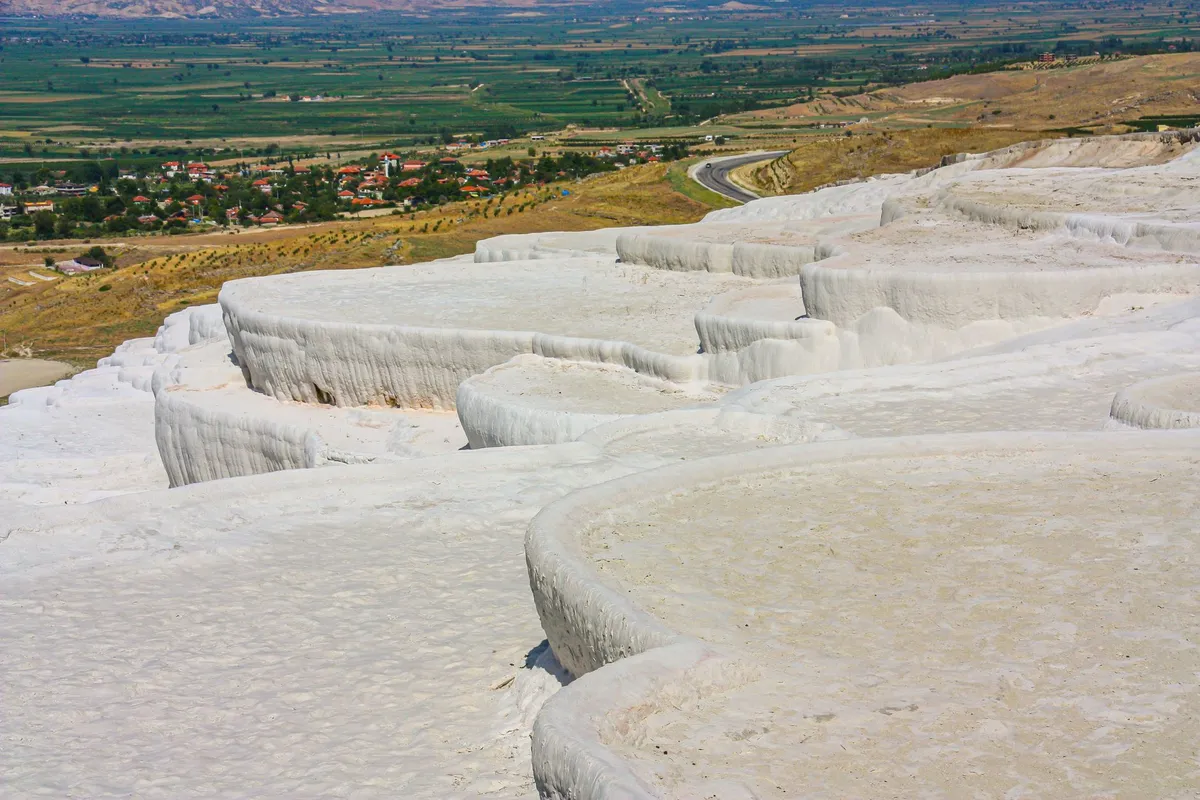
Bring a bag where wet or dusty shoes can be stored, plus a small towel. The surface alternates between rough areas, water channels, and smooth spots; walking slowly is safer. Sunscreen, a hat, and water are essential because the glare reflected off the limestone makes the exposure feel even stronger.
Not every pool is full at the same time. The flow is managed and varies with conservation, maintenance, and local conditions. That means the image you saw on social media may not match the scene on the day. The experience is still rewarding when your expectations include the mineral slope and the ancient city, not just a series of blue basins.
What to Prioritize in Hierapolis
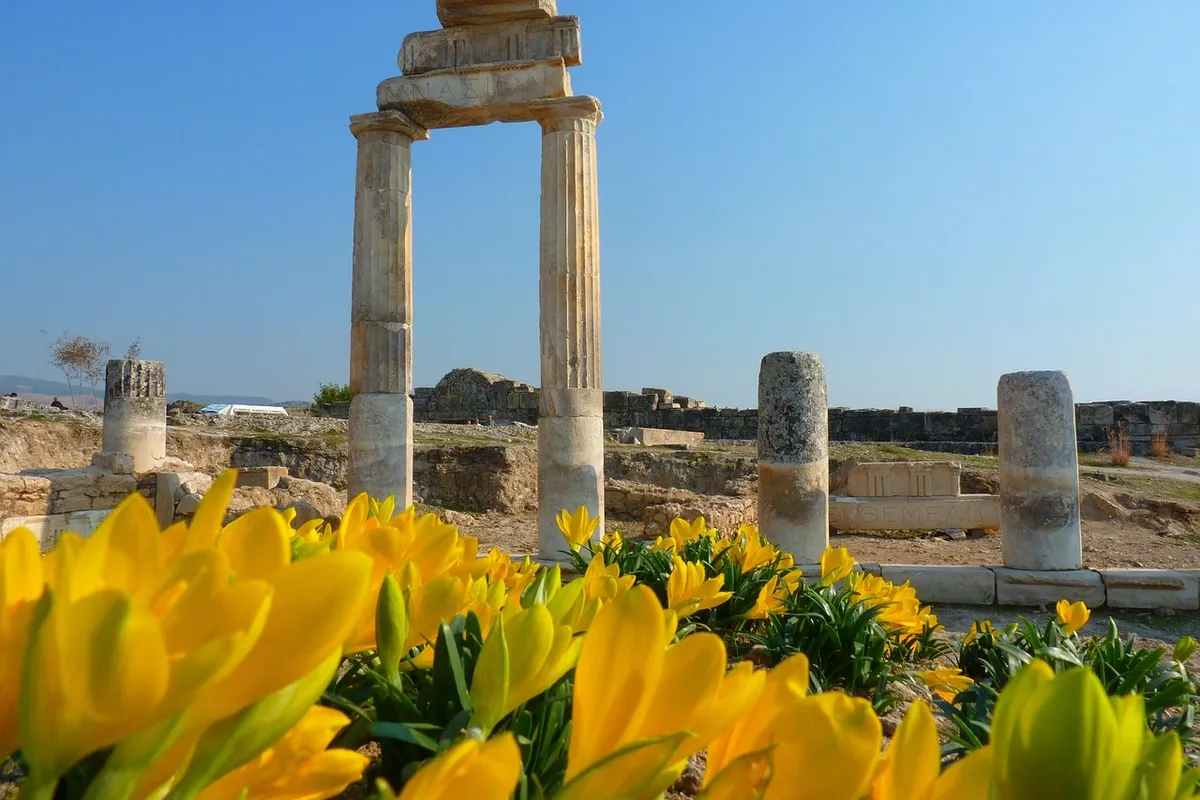
The Roman theater is Hierapolis’s clearest priority, followed by the monumental street, the Plutonium and the necropolis; together, they reveal spectacle, urban life, religion and funerary rites. Anyone who crosses the ruins just to get back to the terraces misses the scale of the ancient thermal city.
Theater and City Center
The theater requires a short climb, rewarded by the view of the stage and the tiered seating. After that, the central area connects baths, temples and streets. Watch the distances: the buildings don’t form a compact museum, and the uneven terrain slows your pace.
Necropolis and Gate of Frontinus
The necropolis stretches across a wide area and holds tombs of different types. It makes more sense for those with six hours or an interest in archaeology; on a short visit, walk to a representative section and save time for the central core. The Gate of Frontinus helps you mentally reconstruct the city’s monumental entrance.
When to Go and How to Handle the Heat
Spring and fall usually offer more comfortable temperatures; in summer, aim for opening time or the last permitted hours. Since hours, night visits and tickets can change by season, confirm the information on Turkey’s official museums portal shortly before your date.
In the middle of the day, the white slope reflects a lot of light and the ruins offer little shade. A reusable bottle, sunglasses and planned breaks change the quality of the trip more than trying to tick off every point on the map. In winter, water and wind make the barefoot section less comfortable; bring dry clothes and don’t count on a long soak.
If you only have one morning, prioritize the travertines, the theater and the center of Hierapolis. With six hours, add the necropolis and the museum. The most important decision is simple: treat Pamukkale as an integrated natural and archaeological site, confirm the current rules and allow enough time so the landscape doesn’t erase the city built around it.
Before booking transport, also check the departure point and the weather forecast. That double check avoids both the extra walk at the end and buying an aerial experience in advance for a day with unfavorable conditions.