 Marcelo Oliveira
The Sydney Opera House sits at the tip of Bennelong Point, jutting out into the waters of Sydney Harbour, Australia. It’s the country’s most recognizable symbol and one of the most photographed buildings in the world, with its sequence of white “sails” that look like seashells or boat sails, depending on who’s looking. Few people know, though, that behind the facade there are over a thousand rooms—theaters, rehearsal halls, restaurants, and a recording studio—operating year-round.
Hotels in Sydneyfree cancellation options onlySee hotels ›Booking.com partner (advertising): we may earn a commission at no extra cost to you.
How to get there
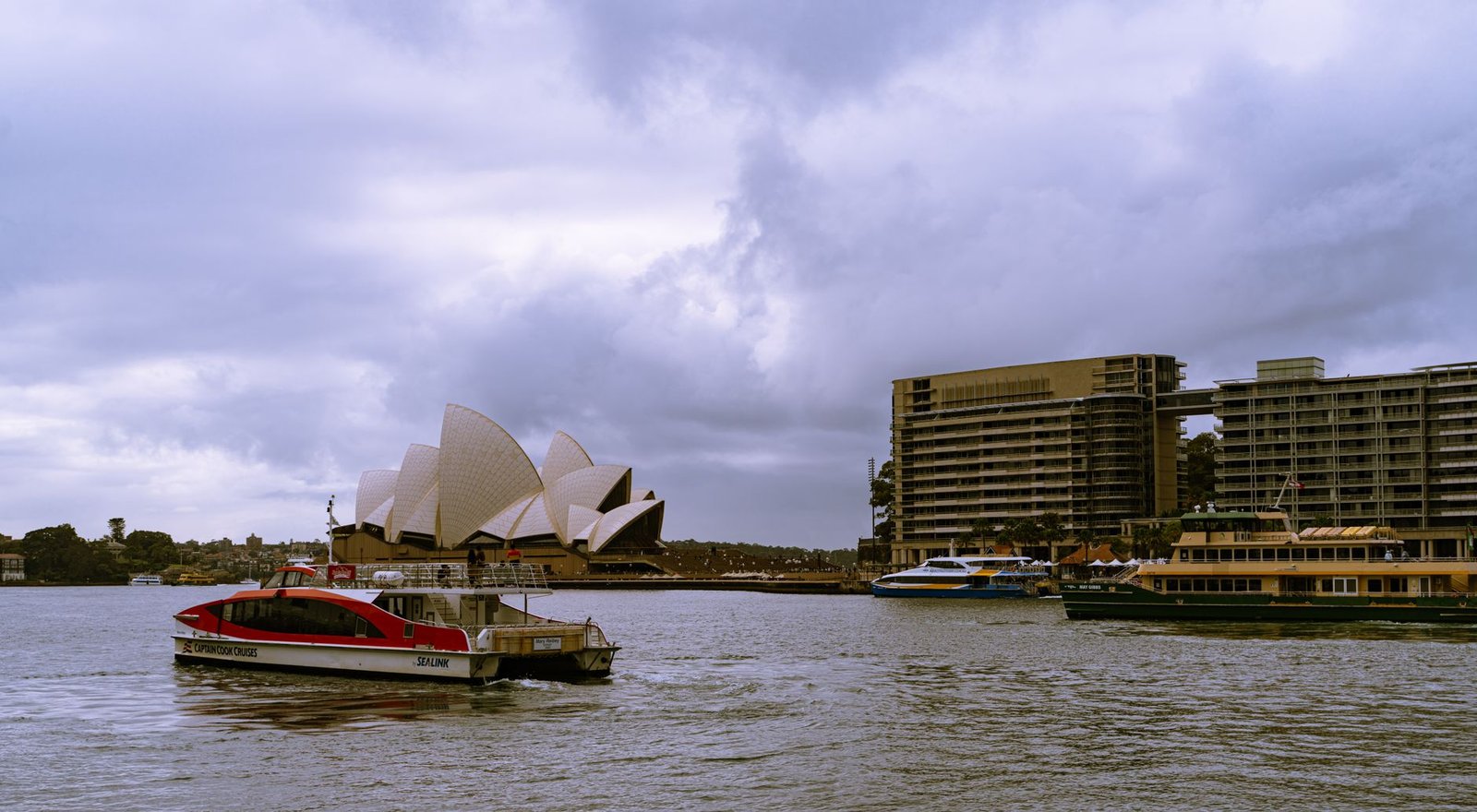
There are no direct flights from Brazil to Sydney; most routes go through Santiago, Auckland, Dubai, or an Asian hub, with total travel time between 22 and 30 hours depending on the connection. Once you’re in the city, getting to the Opera House is simple: Circular Quay train station is less than a 10-minute walk from the building, and the same station serves ferries that cross the harbor with direct views of the landmark.
If you’re staying in Sydney’s CBD (central business district), you can usually walk—the distance from the financial center to the Opera House is short, and the route passes through the Royal Botanic Gardens. Taxis and ride-hailing apps also drop you off close by on Macquarie Street.
Best time to visit and how long to allow
“Can you visit without attending a performance?” Yes—the building offers guided tours during the day, plus free access to the outdoor areas and the forecourt (the open space facing the harbor), which is open 24 hours.
The box office and visitor center are open Monday to Saturday from 9:00 AM to 8:30 PM, and Sundays from 9:00 AM to 5:00 PM (hours may change on holidays). Guided tours do not run on December 25 and 31, 2026, so check the official schedule if your trip falls near those dates. For the classic 1-hour tour, budget that time plus travel; if you want to catch an evening performance, plan for the whole afternoon, including dinner in the area beforehand.
What’s inside the Sydney Opera House
Behind the white shells everyone recognizes, the Opera House functions as a theater complex—it’s not “an opera house” in the singular sense, but a multi-venue performing arts center.
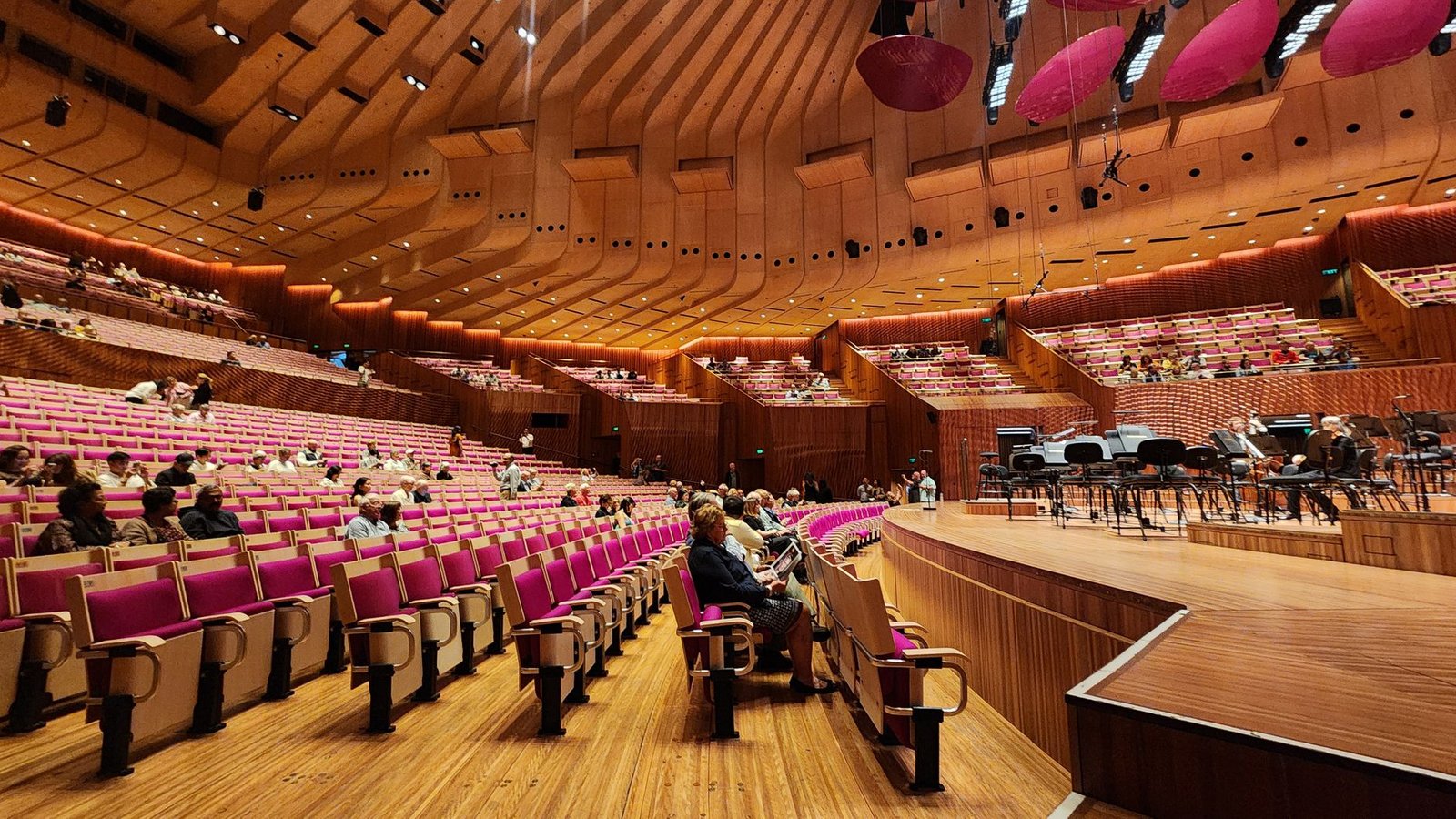
Concert Hall
The largest venue in the building, with over 2,600 seats, used mainly for symphony concerts and performances by the Sydney Symphony Orchestra. It houses one of the largest mechanical organs in the world, with more than 10,000 pipes.
Joan Sutherland Theatre
The venue dedicated to opera and ballet, named after Australian soprano Joan Sutherland. It’s where Opera Australia and The Australian Ballet hold their seasons.
Drama Theatre and Studio
Smaller spaces used for plays, contemporary dance, and experimental performances—they usually have a more alternative lineup than the two main theaters.
The standard guided tour lasts about 1 hour, covers up to 2.5 km inside the building, and includes climbing up and down roughly 300 steps—there’s no elevator or rest stops along the way, so you need to be physically up for it. For a more in-depth experience, there’s the Backstage Tour with breakfast, which gives access behind the scenes, plus private VIP tours for small groups.
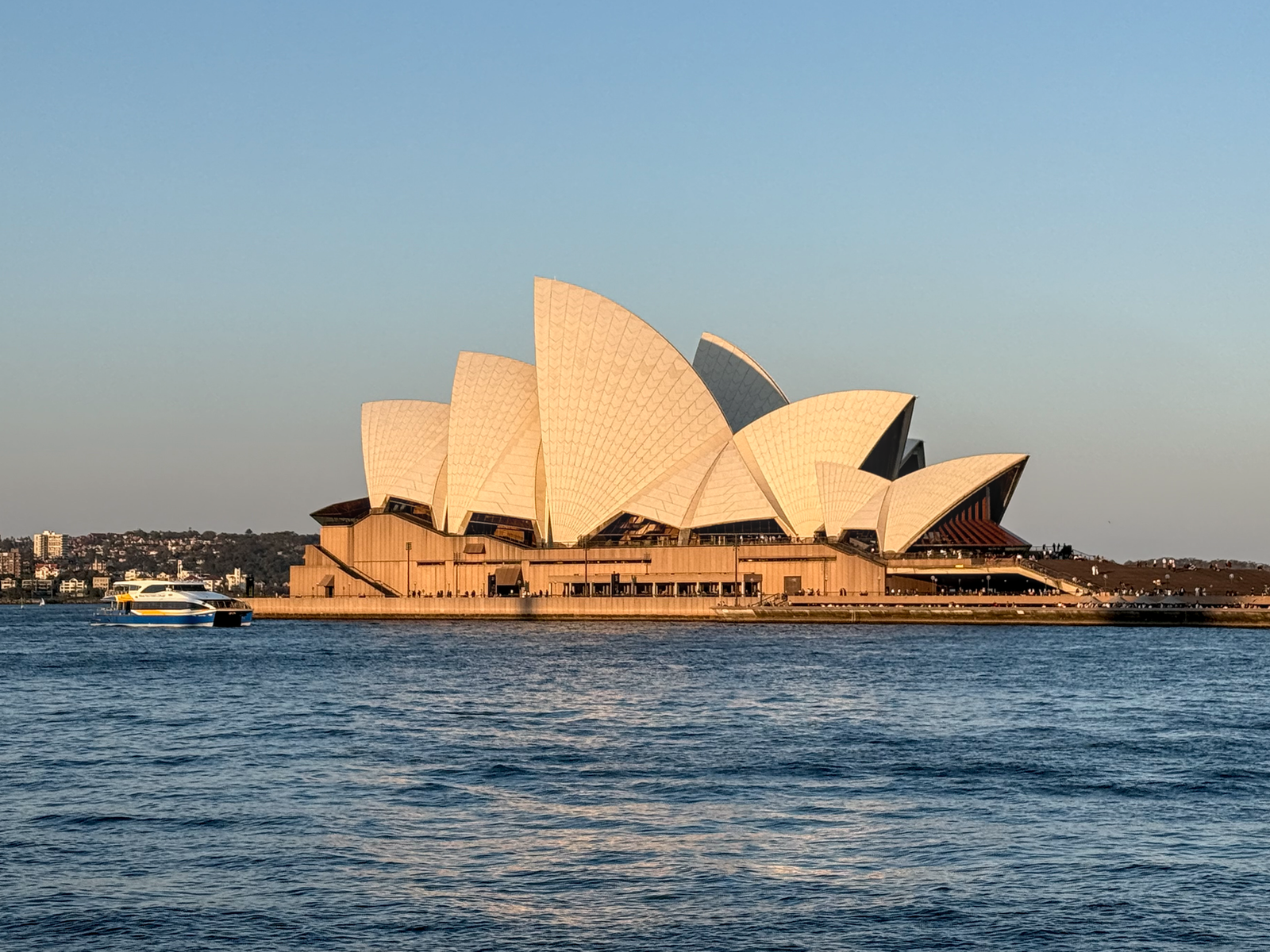
The building’s construction wasn’t smooth: Utzon’s design called for an unprecedented technique to raise the white shells, and the project blew its original budget several times throughout the 1960s. Amid disagreements with the local government over costs and deadlines, Utzon ended up resigning from the project in 1966, before completion, and never returned to Australia to see the finished work—he only received a formal reconciliation invitation from the state government decades later, near the end of his life. Even so, the final result stayed true to the original idea of the shells, now clad in over a million white and cream ceramic tiles imported from Sweden.
Preserving the building is treated as a national priority in Australia: beyond its architectural value, the Opera House is one of the few 20th-century modernist examples recognized by UNESCO that’s still in active use as a performing arts venue, not a museum. Any structural renovation requires strict approval to maintain the integrity of Utzon’s original design, which helps explain why the building has held up well through more than 50 years of heavy use.
What to pair with your visit
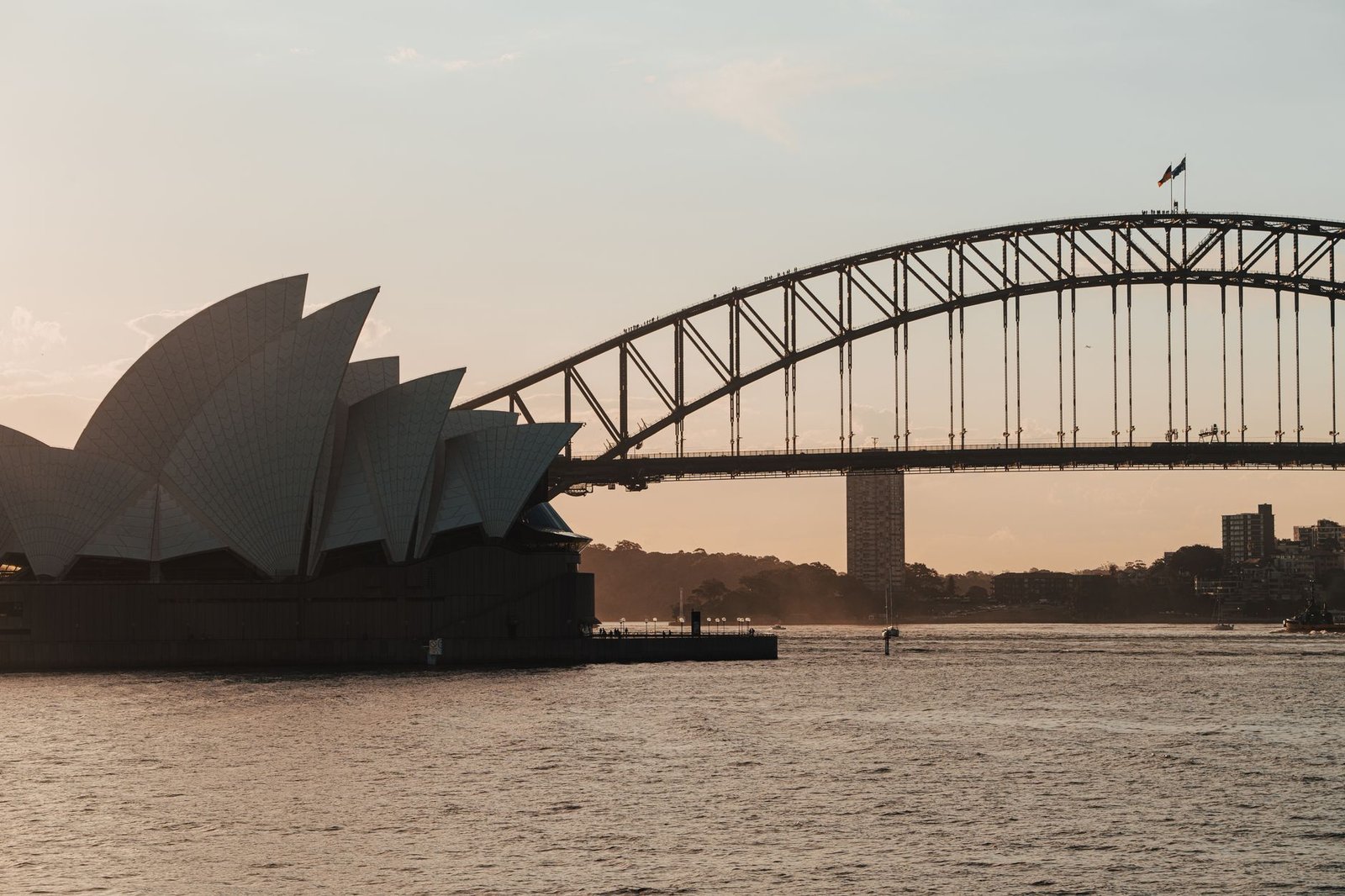
The Harbour Bridge is just a few minutes’ walk away on the other side of the cove, and together with the Opera House it forms Australia’s most photographed postcard duo. It’s worth strolling through the Royal Botanic Gardens, right behind the building, or catching a ferry from Circular Quay to neighborhoods like Manly or Watsons Bay, with Opera House views along the way. The Rocks district, with its cobblestone streets and 19th-century buildings, is also a short walk away and holds much of Sydney’s colonial history.
Where to eat
Inside the Opera House complex itself, there are restaurants with harbor views—a sure bet if you want to combine a meal with the scenery, though prices run higher than the city average. For more budget-friendly options, the Circular Quay and The Rocks area has everything from simple cafés to traditional Australian pubs. If you prefer a more open view, you can walk over to the Royal Botanic Gardens and grab something to eat while sitting facing the harbor.
Where to stay
The neighborhoods closest to the Opera House are the CBD (financial center), Circular Quay, and The Rocks—all within a short walk, with hotels in various price ranges and harbor views in many cases. If you’re after something quieter and a bit more affordable, look into staying in Surry Hills or Potts Point, neighborhoods just a few minutes by public transport from the center, with a great food scene of their own.
Where to stay in Sydney
| Hotel | Rating | |
|---|---|---|
| Capella SydneyCBD · Near Circular Quay and the Opera House; luxury | 9,7758 reviews | See prices |
| A by Adina SydneyCBD · In the CBD, near Circular Quay | 8,74.676 reviews | See prices |
| Megaboom City HotelCBD · In the CBD, on York Street | 8,23.804 reviews | See prices |
| ibis Styles Sydney CentralCBD · In the south of the CBD, near Central Station | 8,04.025 reviews | See prices |
| Vibe Hotel Sydney Darling HarbourDarling Harbour · Within walking distance of Darling Harbour and Cockle Bay | 8,43.658 reviews | See prices |
| Vibe Hotel North SydneyNorth Sydney · On the north side of the Bridge | 8,33.619 reviews | See prices |
| Rydges North SydneyNorth Sydney · On the north side of the Bridge | 8,12.945 reviews | See prices |
| Holiday Inn Express Sydney Airport by IHGMascot · Near the airport; requires getting around at night | 8,47.746 reviews | See prices |
Booking.com rating on 30/09/2026
Practical tips
Guided tour prices for 2026: adult AU$ 48, child (5–15) AU$ 28, concession (student/senior) AU$ 38, and family package (2 adults + 2 children) AU$ 124; kids up to 4 go free. The Backstage Tour with breakfast costs AU$ 199, and the private VIP tour starts at AU$ 595 for groups of up to 4. Double-check current prices on the official website before buying, since tourist attraction prices change often.
Wear comfortable shoes—the tour involves walking and stairs, with no elevator. If you want to see the inside without paying for a tour, some performances sell single tickets that grant access to the venues without the full guided package. For photos of the whole building, the other side of the harbor (the Mrs Macquarie’s Chair area) usually has fewer people than the forecourt out front.
 HotelAs soon as you have datesCompare neighbourhoods and guest ratings.See hotels ↑
 ActivitiesBefore you travelBook ahead the ones with limited spots.Civitatis ›
 More activitiesTo compareTickets, day trips and tours with flexible cancellation.GetYourGuide ›
Frequently asked questions
What’s inside the Sydney Opera House?
The building houses several performance venues, including the Concert Hall (the largest, with over 2,600 seats), the Joan Sutherland Theatre (dedicated to opera and ballet), and the Drama Theatre. There are also restaurants, shops, and event spaces.
Who designed the Sydney Opera House?
The design is by Danish architect Jørn Utzon, who won an international competition in 1957. Construction began in 1959, and the building was officially opened in October 1973. More details about the construction process and the building’s international recognition are available on the official Sydney Opera House website.
Where is the Sydney Opera House located?
It sits on Bennelong Point in Sydney, New South Wales, Australia, at the tip of a peninsula jutting into the city’s harbor. The building has been a UNESCO World Heritage Site since 2007 — you can find more context on that designation on the Sydney Opera House Wikipedia page.
What is the history of Sydney?
Sydney was founded in 1788 as a British penal colony, the first permanent European settlement in Australia. It grew through the 19th and 20th centuries to become the country’s largest city, although Australia’s administrative capital is Canberra, not Sydney. Today, the city is Australia’s main financial and cultural hub, and Sydney Harbour — with the Opera House and the Harbour Bridge — is the country’s most recognizable postcard image.
What is the most famous opera house in the world?
The Sydney Opera House, alongside Milan’s La Scala and the Paris Opera, is one of the most recognized performance venues worldwide — but in Sydney’s case, the fame comes as much from the architecture as from the programming.
Who owns the Sydney Opera House?
The building is public heritage, managed by the Sydney Opera House Trust, a body linked to the New South Wales state government — it doesn’t belong to any private individual or company.
Why is it important to preserve the Sydney Opera House?
Beyond its historical value, the Opera House is a rare example of a 20th-century modernist building that remains in active use as a performance venue, not a closed museum. Preserving Jørn Utzon’s original structure keeps alive an engineering solution that was unprecedented at the time and went on to influence theater architecture around the world.
Which country is Sydney in?
Sydney is in Australia, in the state of New South Wales. It’s the country’s most populous city, though not the national capital — that title belongs to Canberra.
What is the largest opera house in the world?
By seating capacity, the Metropolitan Opera House in New York is often cited as the world’s largest opera house, with around 3,800 seats. The Sydney Opera House’s Concert Hall, the largest venue in the Australian complex, seats just over 2,600.
Conclusion
The Sydney Opera House is worth it both for the view from outside and the guided tour inside, especially for anyone who wants to understand how Jørn Utzon’s design became a global symbol. Set aside at least half a day to walk the area, see the bridge, and still catch a show in the evening. Explore the other destination guides here on Voyage Voyage.