 Marcelo Oliveira
The Medellín Metrocable is the urban cable car system that connects the city’s hillside neighborhoods to the metro, turning a mobility problem into one of the most memorable experiences of any trip to Colombia.
Hotels in Medellínfree cancellation options onlySee hotels ›Booking.com partner (advertising): we may earn a commission at no extra cost to you.
Riding the Metrocable costs the same as a metro ticket, $3,820 to $4,400 Colombian pesos (Jan 2026), except for Line L to Parque Arví, which has a surcharge. The most useful lines for travelers are J (access to Comuna 13) and K/L (Santo Domingo to Parque Arví), and the ride works just as well as transport as it does as a viewpoint — the view of the city from up there alone justifies the trip.
| Location | System integrated with the Medellín Metro, with stations in the city’s hillside neighborhoods (San Javier, Santo Domingo, Acevedo) |
|---|---|
| Hours | Urban lines (J, K, H, M, P): 4:30am-11pm on weekdays, Sunday/holidays vary by line. Line L (Arví): Wednesday to Monday 9am-6pm, Sunday/holiday 8:30am-6pm, closed on Tuesdays (Aug 2026) — confirm on the official website |
| Price | Urban lines: Cívica fare $3,820 COP, occasional/tourist fare $4,400 COP (Jan 2026, Metro de Medellín). Line L (Arví): surcharge from $5,200 to $26,700 COP depending on category — confirm on the official website before you go |
| How to get there | Any Metro station (Lines A or B) gives access to the system; San Javier for Comuna 13, Acevedo for Santo Domingo and Parque Arví |
| Nearby places | Comuna 13 (Line J), Parque Arví (Line L), Jardín Botánico, Historic Center |
What the Metrocable is and which lines exist in Medellín
The Metrocable is the cable car system that the city of Medellín built to connect the hillside neighborhoods — hard to reach by bus or car — to the city’s metro network. It was one of the first in the world to operate as mass public transit rather than a tourist attraction, and that origin still defines how it runs today: fast, integrated with the metro ticket, packed with locals at rush hour.
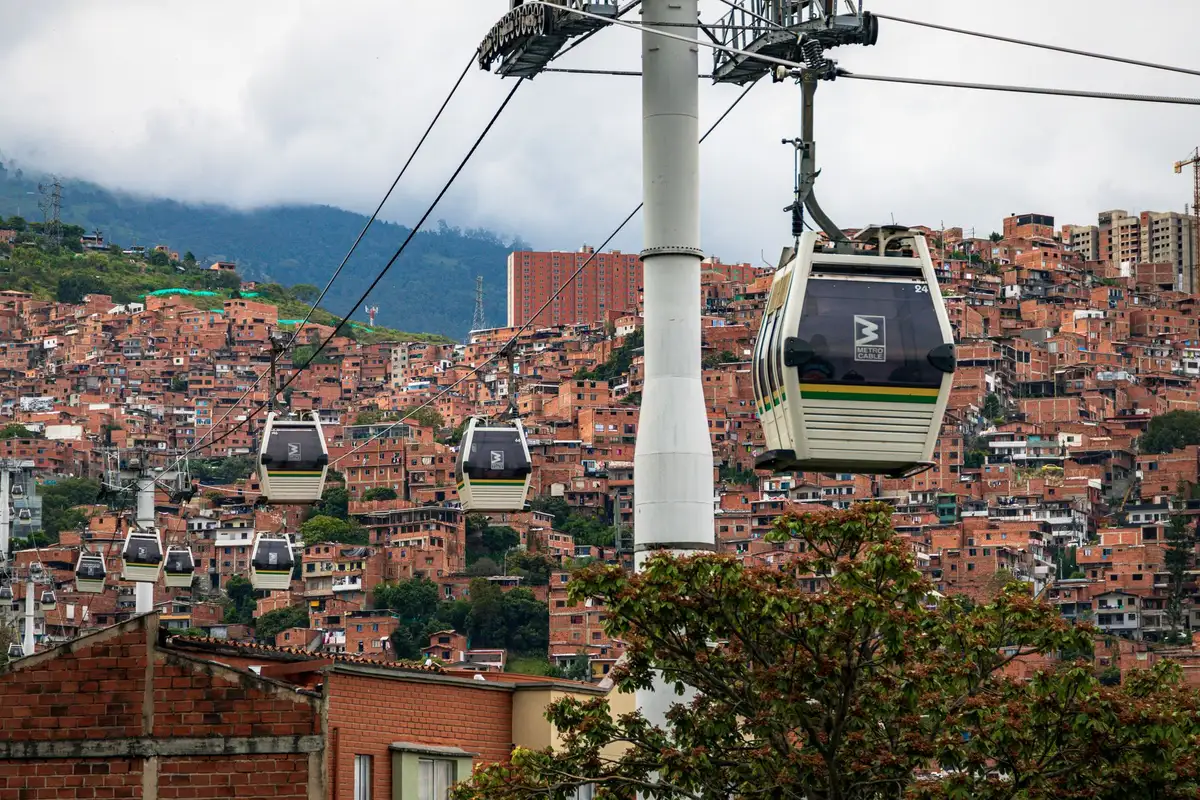
The most relevant lines for visitors are Line J (San Javier–La Aurora, access to Comuna 13), Line K (Acevedo–Santo Domingo, connecting to the northeast) and Line L (Santo Domingo–Parque Arví, the only one with a surcharge and a fully tourist-oriented purpose). There are also lines H, M and P, which connect other neighborhoods and the Tranvía de Ayacucho, but they serve more of a local daily routine than a travel itinerary.
How much it costs to ride the Metrocable in Medellín
On the urban lines (J, K, H, M, P), the Metrocable uses exactly the same fare as the metro: $3,820 Colombian pesos with the rechargeable Cívica card, or $4,400 pesos on the occasional/tourist fare without a card (data from Jan 2026, official Metro de Medellín website). There’s no extra charge for entering the cable car — the fare covers the entire trip, including transfers between metro and Metrocable, within the integration time.
The exception is Line L, which goes to Parque Arví: because it’s a tourist stretch and isn’t part of the basic transport network, it charges a separate surcharge. Available sources (Aug 2026) show different amounts depending on the passenger category — from around $5,200 pesos up to $26,700 pesos for foreigners without a Cívica card — so the safest bet is to confirm the exact price on the day at the Santo Domingo ticket office.
| Line | Route | Price | Best for |
|---|---|---|---|
| J | San Javier ↔ La Aurora | $3,820-4,400 COP (Jan 2026) | access to Comuna 13 |
| K | Acevedo ↔ Santo Domingo | $3,820-4,400 COP (Jan 2026) | viewpoint, connection to Line L |
| L | Santo Domingo ↔ Parque Arví | $5,200-26,700 COP (Aug 2026, confirm) | nature outing, late afternoon |
Real total cost: a typical outing combining a trip to Comuna 13 (Line J) and a stop at Parque Arví (Lines K+L) comes to between R$ 15 and R$ 60 per person in transport, considering the 2026 reference exchange rate — not counting food or souvenirs.
Which Metrocable line goes to Comuna 13
Line J is the one that serves Comuna 13, departing from San Javier station (the end of metro Line B) to La Aurora. In practice, though, most visitors heading to Comuna 13 don’t even take that line: the main tourist spot — the escalators and the graffiti — is in the lower part of the neighborhood, reachable on foot from San Javier station itself.
It’s worth taking Line J if you want to see the neighborhood from another angle, from above, or continue on to higher neighborhoods like La Aurora. A tour combining graffiti and the Metrocable usually includes this stretch as part of the itinerary.
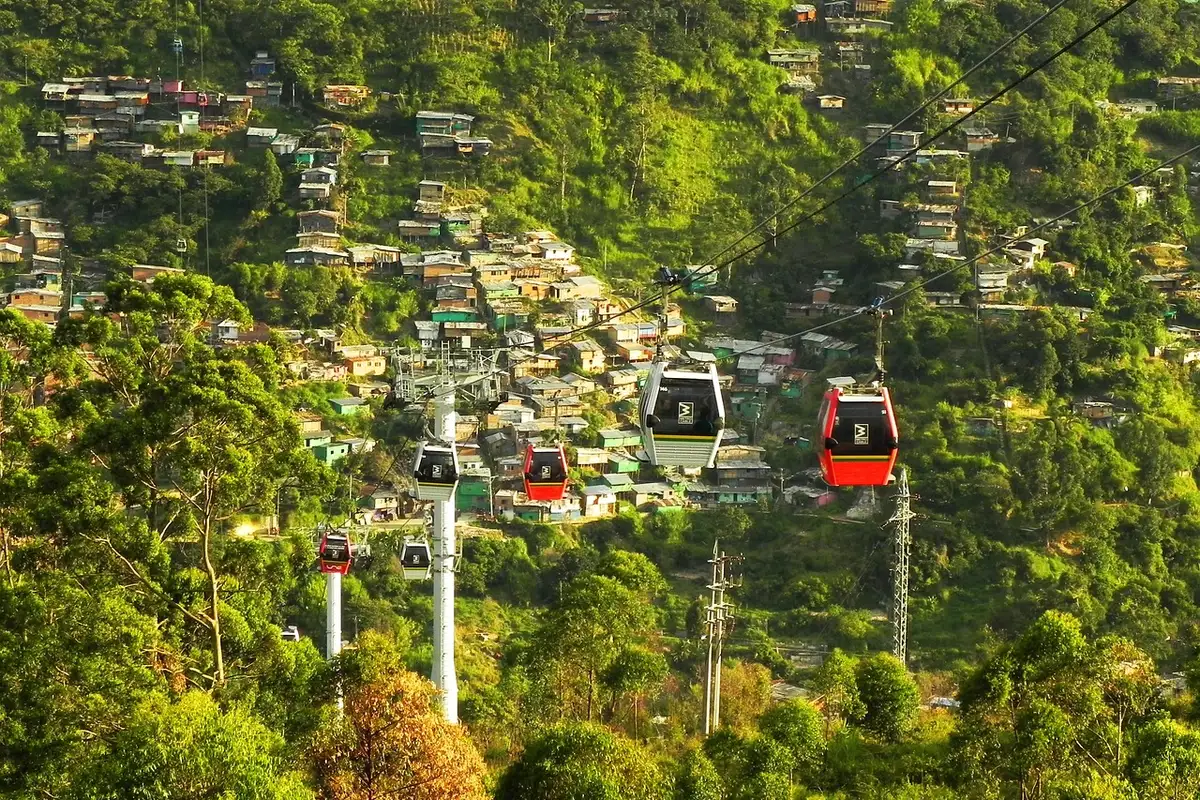
If you’d rather book a tour with transport and guide included, you can reserve in advance instead of relying on finding an operator at the station:
 Partner · Civitatissee all activities in Medellín ›
Paragliding in Medellín
Rating 9.9 · 56 reviews on Civitatis
- Guatapé Day Trip + Rumbero Boat RideRating 9.3 · 2,094 reviews on Civitatisfrom€49.32per personSee ›
- Comuna 13 & Memory House Museum TourRating 9.4 · 7 reviews on Civitatisfrom€57.66per personSee ›
- See ›Medellin Free Walking TourRating 9.5 · 184 reviews on Civitatis
- See ›Comuna 13 Free TourRating 9.1 · 11,106 reviews on Civitatis
Civitatis prices on 28/09/2026, from, per person. They may change. Want to compare? Activities in Medellín on GetYourGuide ›
How to visit Parque Arví by Metrocable
To reach Parque Arví, a nature reserve in the mountains north of Medellín, the route is to take the metro to Acevedo station, transfer to Line K to Santo Domingo and from there continue on Line L to Arví station — a journey that’s an outing in itself, with open views over the valley.
Line L runs Wednesday to Monday, from 9am to 6pm, opening at 8:30am on Sundays and holidays, and closes on Tuesdays for maintenance (data from Aug 2026, confirm before planning your day). Once you arrive at the park, there are trails, a local produce market on weekends and bike options — set aside at least half a day to make the most of it.
Is the Medellín Metrocable safe?
Yes, the Metrocable is considered a safe transport system and is used daily by hundreds of thousands of residents. There was, however, a recorded accident on Line K in 2024, when a cabin came loose from the cable and fell, resulting in a fatality — an episode widely reported in the Colombian press. After the incident, the system underwent inspections and operational adjustments before resuming normal operation.
For travelers, this doesn’t change the general recommendation: accidents of this kind are rare in a system that carries a huge volume of passengers every day. It’s worth following the basic safety guidelines of any cable car — don’t exceed the cabin’s capacity, follow staff instructions at the stations and avoid announced maintenance hours. The same common-sense precautions apply to the rest of the city — our guide with the safe Medellín itinerary details what changes in practice, neighborhood by neighborhood.
Is the Metrocable worth riding even without going to Comuna 13?
Yes — the Metrocable is worth the ride even for those who’ve already visited Comuna 13 on their own or don’t plan to go at all. The view of the city from the cabins, especially on the Acevedo–Santo Domingo stretch, shows Medellín “from the inside,” soaring over the densest, most colorful hillside neighborhoods, something no traditional viewpoint can replicate.
Combining the Metrocable with Parque Arví on the same day makes for a half-day outing that breaks away from the standard urban itinerary (Centro, El Poblado, Comuna 13) and shows a greener side of the city — worth saving for your second or third day of the trip, after you’ve gotten oriented with the metro system.
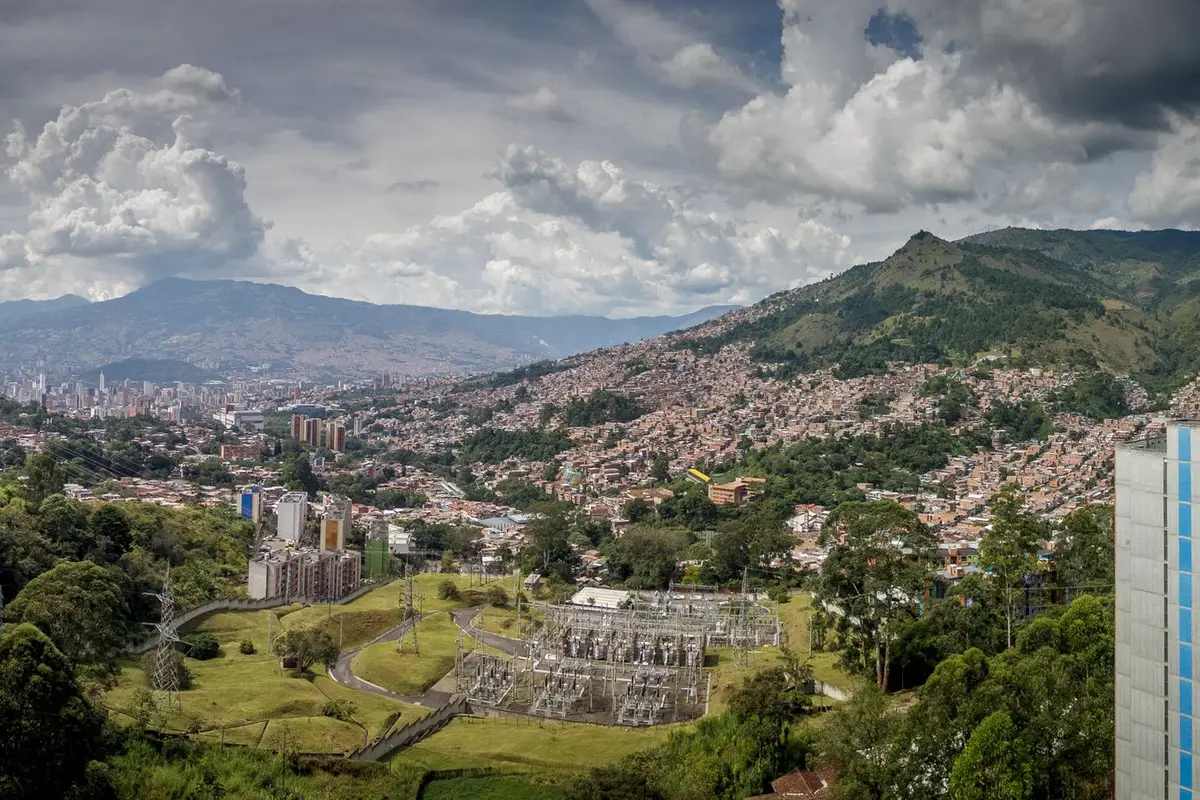
To see this higher, greener side of Medellín before deciding on your itinerary, it’s worth checking out the activities available in the region:
 HotelAs soon as you have datesCompare neighbourhoods and guest ratings.Booking ›
- ActivitiesBefore you travelBook ahead the ones with limited spots.Civitatis ›
 More activitiesTo compareTickets, day trips and tours with flexible cancellation.GetYourGuide ›
Frequently asked questions
Does the Metrocable use the same ticket as the metro?
Yes, on the urban lines (J, K, H, M, P) the Metrocable is integrated with the metro system and uses the same ticket, with no extra charge within the integration time. The exception is Line L, to Parque Arví, which has an additional fare because it’s a tourist stretch.
How long does the trip to Parque Arví take?
The metro ride to Acevedo, plus Line K to Santo Domingo and Line L to Arví, takes about 40-50 minutes in total. To enjoy the park itself, set aside at least another 2-3 hours.
Does the Metrocable close on any day of the week?
The urban lines run every day. Only Line L, to Parque Arví, closes on Tuesdays for maintenance — on other days it operates on reduced hours compared to the metro.
Can you see the Comuna 13 graffiti from the cable car?
Not directly — the most famous murals are in the lower part of the neighborhood, around the escalators, and are best seen on foot. Metrocable Line J passes over another part of Comuna 13, more useful as a panoramic view than for appreciating the art up close.
What other neighborhoods can you visit by Metrocable?
Besides Comuna 13 (Line J) and Parque Arví (Line L), the system also gives access to neighborhoods like Santo Domingo Savio and Popular, in the northeast zone, which have less tourist infrastructure but show the daily life of Medellín’s hillsides outside the most-visited circuit.
Conclusion
The Medellín Metrocable is more than a way to get to Comuna 13: it’s an experience in its own right, showing the city in a way no other form of transport can. Combine the urban stretch with an afternoon at Parque Arví and set aside time — the ride pays off more when it isn’t rushed. To plan the rest of your itinerary, also check out what to do in Medellín, with a safe itinerary including Comuna 13, and round out your trip with Guatapé in 2 days.