 Marcelo Oliveira
Manaus and the Amazon pack into one place what most travelers only ever see in a nature documentary: the Meeting of the Waters where the Rio Negro and the Solimões run side by side, the closest stretch of standing rainforest to an international airport in Brazil, and an opera house built deep in the jungle at the end of the 19th century. You can leave downtown in the morning and be inside the rainforest by the afternoon — no domestic flight, no weeks of planning.
Hotels in Manausfree cancellation options onlySee hotels ›Booking.com partner (advertising): we may earn a commission at no extra cost to you.
Manaus and the Amazon are worth it for anyone who wants real rainforest with big-city infrastructure: the Meeting of the Waters starts at R$ 20 per person (Jul/2026), and a 3-day jungle lodge package with full board starts around R$ 1,930 per person. The sweet spot is 4 to 7 days, splitting your time between the historic center and a stay inside the rainforest.
| Meeting of the Waters price | R$ 20 per person (group of 4+) or R$ 80 for a private boat up to 3 people (Jul/2026) — source |
|---|---|
| Jungle lodge package (3 nights) | from R$ 1,930 to R$ 7,320 per person, with transfers + full board + tours (Jul/2026) — source |
| Free? | There’s no way to see the Meeting of the Waters without a boat; no free option exists |
| Tour duration | 30 minutes of river cruising; a full half-day tour lasts 3-4h |
| Getting to the departure point | Porto da Ceasa, east zone; 25 min by taxi from downtown (R$ 40 round trip, Jul/2026) |
| Vaccine | Yellow fever is required, get it 10 days in advance — confirm on the official Ministry of Health website |
What is the Meeting of the Waters and where is it in Manaus?
The Meeting of the Waters is the spot where the dark, warm Rio Negro merges with the muddy, cooler Solimões without mixing for several miles downstream — the difference in temperature, speed and density between the two creates a visible line separating the colors. The phenomenon happens about 10 km from downtown Manaus, at the confluence that forms the Amazon River itself.
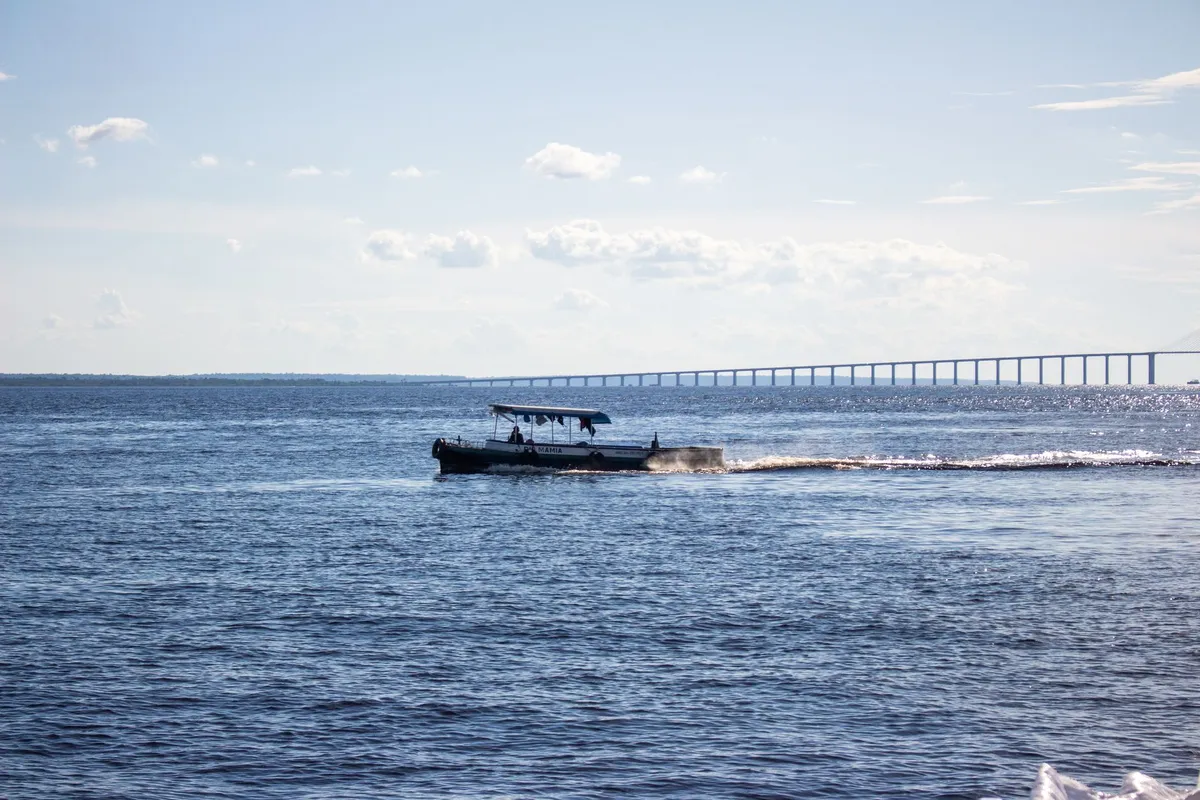
Anyone expecting a perfectly straight line is in for a surprise: in practice, the boundary between the waters ripples and shifts with the current, and the contrast becomes most obvious when the boat slows down right in the middle of the meeting point. Putting your hand in the water on both sides — one warmer, one colder — is usually the moment that wows first-timers the most.
How much does the Meeting of the Waters tour cost?
The quick tour, with no stops at other spots, starts at R$ 20 per person for groups of 4 or more, or R$ 80 to charter the whole boat for up to 3 people (Jul/2026). Full half-day tours — combining the Meeting of the Waters, pink river dolphin watching and a visit to a riverside community — run R$ 150 to R$ 180 per person, practically the same as booking just the quick leg on its own.
Booking the combined tour usually pays off more than hiring each leg separately, because the boat is already on the river and the fuel cost gets spread across the attractions. If you’d rather book ahead and in English, you can lock in your Meeting of the Waters tour before you even leave home, with a fixed price and no haggling at the port.
 Partner · Civitatissee all activities in Manaus ›
Meeting of the Waters Day Trip & Indigenous Village Visit
Rating 8.1 · 33 reviews on Civitatis
- Presidente Figueiredo Waterfalls Day TripRating 8.2 · 12 reviews on Civitatisfrom€99per personSee ›
- Amazon Jungle and Anavilhanas Islands Day TourRating 8.3 · 19 reviews on Civitatisfrom€131.74per personSee ›
- Manaus TourRating 8.6 · 14 reviews on Civitatisfrom€94.77per personSee ›
- Amazon Jungle Three Day TourRating 7 · 27 reviews on Civitatisfrom€316.19per personSee ›
Civitatis prices on 28/09/2026, from, per person. They may change.
What’s the best time to visit Manaus and the Amazon?
The Amazon around Manaus has two clearly defined seasons: high water (December to May, peaking in rainfall from January to March) and low water (June to November, with the best visibility from July to September). During high water the rivers rise and the flooded forest becomes navigable by canoe between the trees; during low water, river beaches appear and trails become easier to hike on foot.
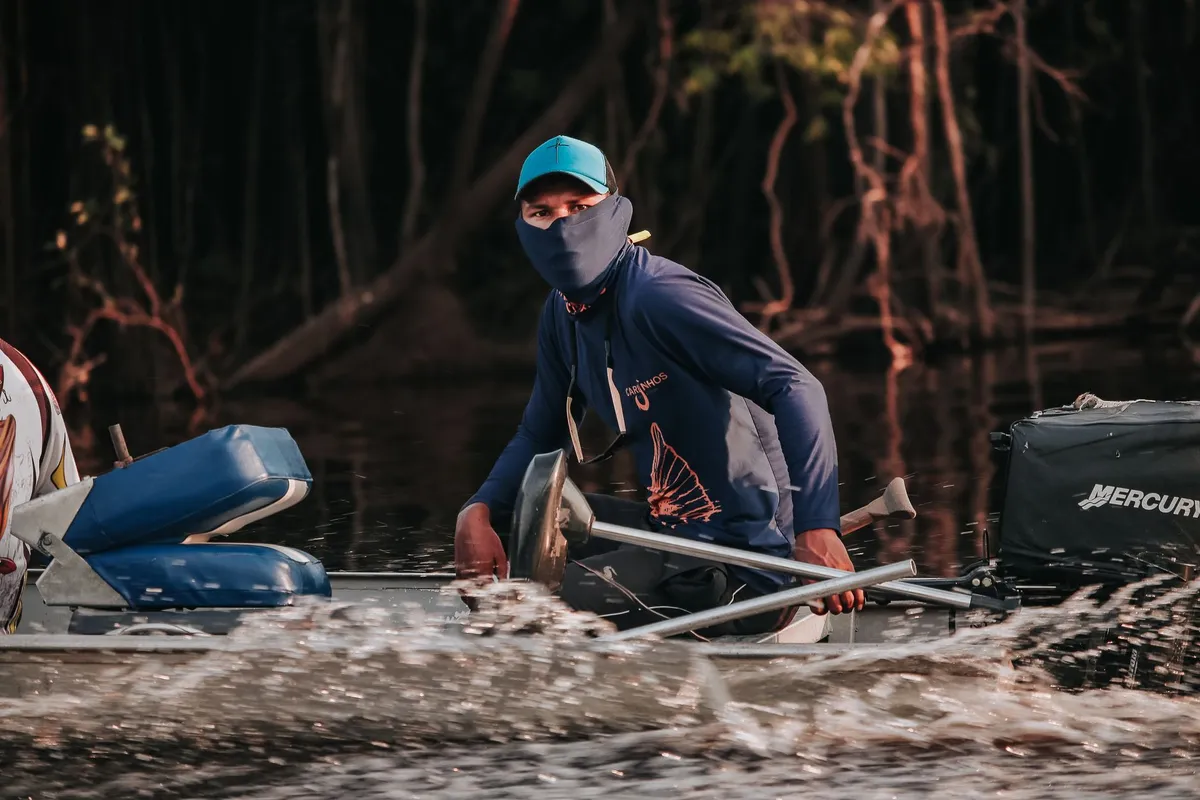
Temperatures in Manaus stay above 27°C year-round, with the mildest month (June) still hovering around 23°C at night. There’s no “bad time” to go — the choice is about which landscape you want to see: flooded forest and aquatic wildlife watching from January to March, or trails, river beaches and better photo visibility from July to September.
| Period | Rivers | Best for |
|---|---|---|
| Jan-Mar | High water, heavy rain | Flooded forest, dolphins, canoeing between trees |
| Apr-Jun | Transition | Anavilhanas Archipelago |
| Jul-Sep | Low water, dry | River beaches, trails, photos |
| Oct-Dec | Rains returning | New Year’s in Manaus, transition |
Is Manaus worth it? What to do beyond the Meeting of the Waters?
Manaus is worth it even if you only have a few days free: the city pairs rubber-boom-era heritage with direct access to standing rainforest, something rare in any other Brazilian capital. The Theatro Amazonas, inaugurated in 1896 with Carrara marble and iron imported from Europe, is the most-visited historic attraction and sits downtown, no boat required.
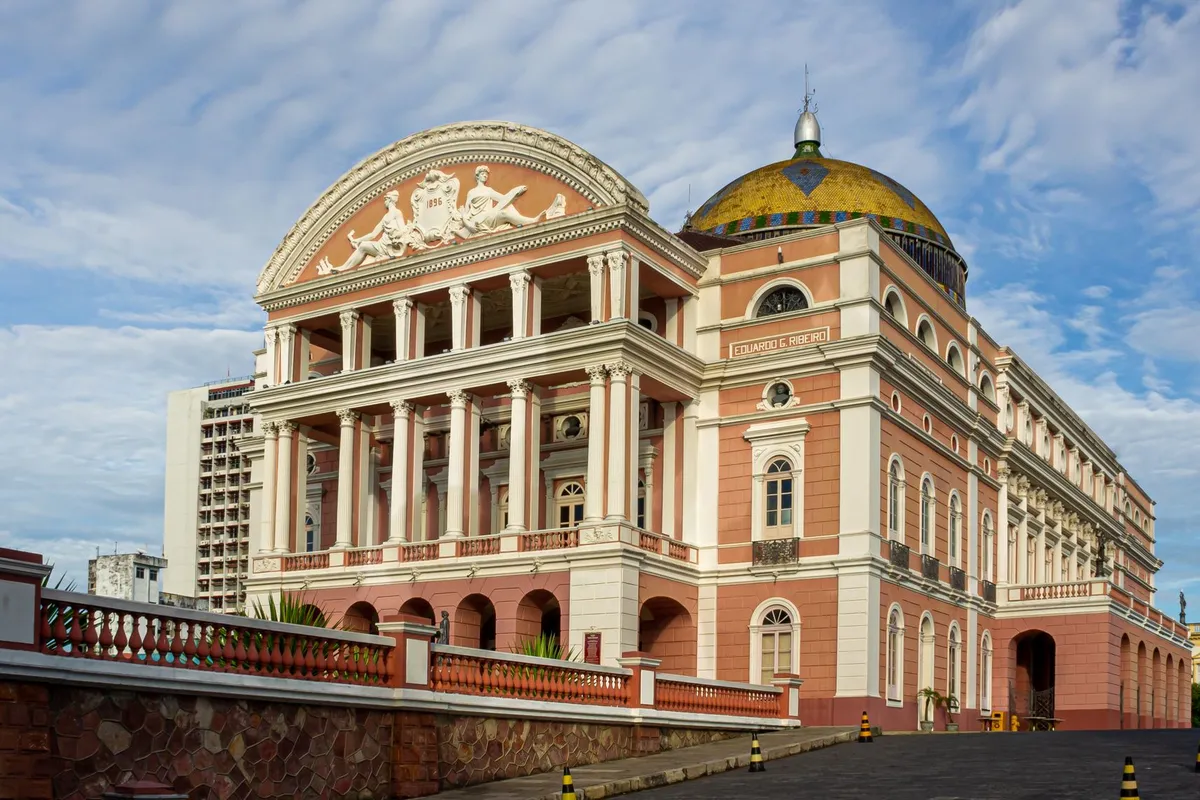
Other stops that fit a short itinerary: the Mercado Adolpho Lisboa, a replica of Paris’s Les Halles market on the banks of the Rio Negro; the Adolpho Ducke Botanical Garden, with rainforest trails inside the city limits; and the Museum of the Amazon (MUSA), with an observation tower above the forest canopy. For those who want to go beyond the city, pink river dolphin watching and a visit to a riverside or Indigenous community round out the day.
If you’d rather book everything as a single guided itinerary, without arranging separate transport for each stop, there are ready-made options for a Manaus city tour and a guided visit to the Theatro Amazonas.
How many days should you spend in Manaus to experience the Amazon?
The sweet spot is 4 to 7 days: 1 to 2 days for the historic center and the Meeting of the Waters, and the rest staying at a jungle lodge. If you only have a weekend, you can see the city’s essentials and do the Meeting of the Waters tour in 2 days, but you’ll miss out on the real rainforest — sleeping in the jungle is what separates the experience from seeing Manaus “from the outside.”
With just 2 hours free in the city you can already do the quick Meeting of the Waters tour, departing straight from Porto da Ceasa — a great option if you’re on a flight connection or have a tight work schedule in Manaus.
How does staying at a jungle lodge work?
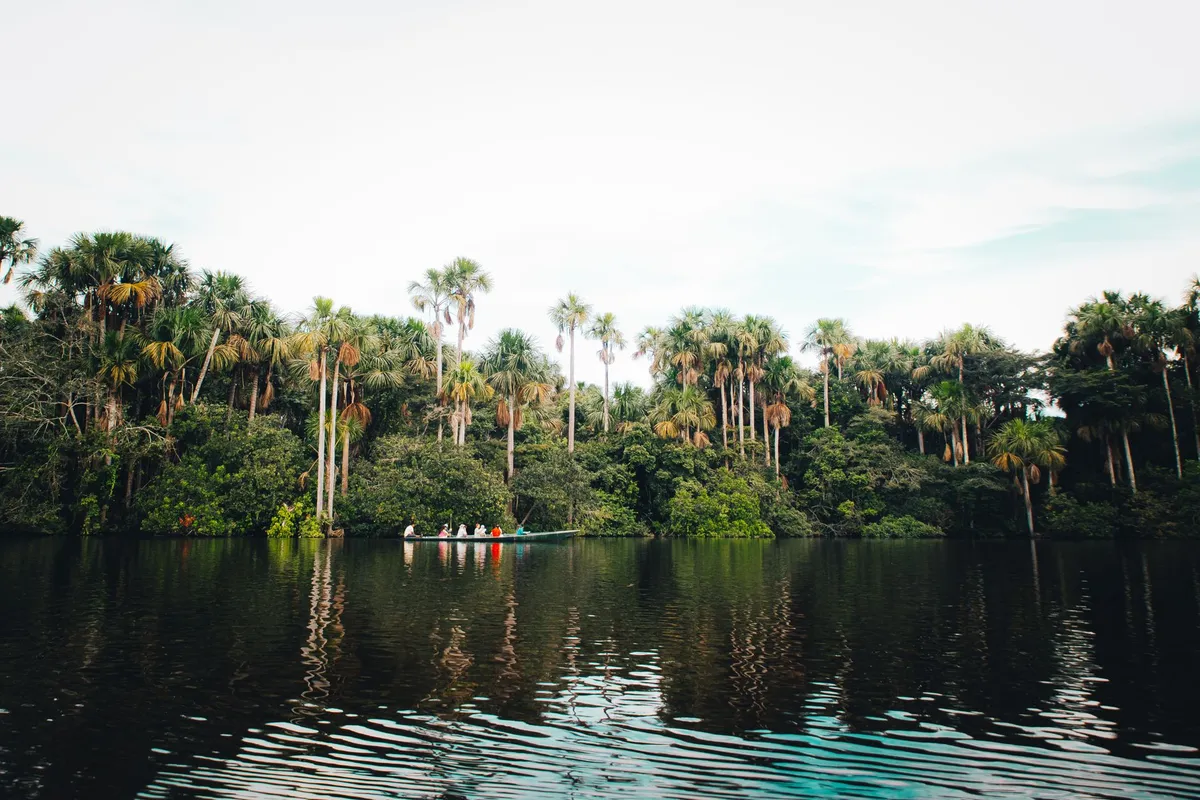
A jungle lodge is an inn inside the rainforest, usually 1-3 hours by boat from Manaus, with packages that already include transport, lodging, all meals and daily tours — you can’t just show up and book a single night like at a city hotel. Three-night packages range from R$ 1,930 (simpler options, like floating lodges) to more than R$ 7,000 per person at higher-end jungle resorts (Jul/2026).
The standard package includes round-trip transfer from Manaus to the lodge, three meals a day plus afternoon tea, and two to three daily rainforest activities — night hike, caiman spotting, piranha fishing, a visit to a riverside community. Most properties sit 1 to 3 hours away by boat and ground transfer from Manaus, and the minimum stay is usually 3 nights, sometimes up to 7.
Where to stay in Manaus
| Hotel | Rating | |
|---|---|---|
| Pousada Ponta NegraPonta Negra · Av. Coronel Teixeira, a 4 km da praia; café incluído | 7,9278 reviews | See prices |
| Flat no Tropical - Linda Vista do RioPonta Negra · Flat no complexo do Tropical, vista do Rio Negro | 8,1819 reviews | See prices |
| Hotel Villa AmazôniaCity centre · Boutique ao lado do Teatro Amazonas | 9,3532 reviews | See prices |
| Blue Tree Premium ManausAdrianópolis · Bairro de restaurantes e shoppings; café incluído | 8,31.088 reviews | See prices |
| Hotel Saint PaulCity centre · Rua Ramos Ferreira; café incluído | 8,32.066 reviews | See prices |
| ibis budget ManausChapada · Av. Djalma Batista; diária econômica | 8,44.092 reviews | See prices |
| Seringal HotelCity centre · Centro histórico, perto do Largo de São Sebastião | 8,21.700 reviews | See prices |
| Rede Andrade AmazôniaCity centre · Av. Getúlio Vargas; café incluído | 8,12.838 reviews | See prices |
| Intercity ManausAdrianópolis · Perto do Manauara Shopping; café incluído | 8,1727 reviews | See prices |
| Gran Hotel TeatroCity centre · Av. Eduardo Ribeiro, a pé do Teatro Amazonas | 8,01.649 reviews | See prices |
Booking.com rating on 09/10/2026
Do you need a vaccine to travel to Manaus?
Yes: the yellow fever vaccine is the only officially required recommendation for anyone traveling to Manaus and the Amazon region, and it should be taken at least 10 days before your trip to build effective immunity. No proof is required to enter the city, but some countries ask for an international vaccination certificate if you’re leaving Brazil afterward.
Beyond yellow fever, travel health professionals recommend hepatitis A and B (because of eating at popular markets and possible contact with water), up-to-date tetanus and diphtheria, and an influenza booster. Insect repellent with 20%+ icaridin or 30%+ DEET is a must-pack for anyone heading to trails or a jungle lodge — both protect for several hours against the region’s insects. Anyone who’s hiked rainforest trails in Brazil before, like the Tijuca Forest in Rio de Janeiro, knows the drill: dense jungle demands preparation even near urban areas.
How to get to Manaus and get around the city?
Manaus has an international airport (Eduardo Gomes) with direct flights from Brazil’s main capitals, and flying is the only practical way to reach the city — there’s no federal highway connecting Manaus to the rest of the country overland in a continuous paved stretch. Within the city, taxis and ride-hailing apps are the simplest way to reach spots like Porto da Ceasa, the departure point for most boat tours.
From downtown to Porto da Ceasa, the taxi ride takes about 25 minutes and costs around R$ 40 (round trip, Jul/2026); leaving straight from the airport, the fare climbs to nearly R$ 75 (round trip, Jul/2026). If you’re doing several tours scattered around the city on different days, renting a car might be worth considering, but if you’re heading straight to a jungle lodge, the transfer is already included in the package.
Tourist traps and what nobody tells you
Before booking any tour in Manaus, it pays to know:
- The Meeting of the Waters line isn’t straight: it ripples with the current — anyone expecting a perfect, symmetrical divide will be disappointed; the contrast is clearest when the boat pulls slightly away from the exact meeting point.
- “Full” tour for the same price as the quick one: with several operators, the half-day tour (Meeting of the Waters + dolphins + community) runs R$ 150-180 (Jul/2026), almost the same as booking just the quick leg separately — worth comparing before you grab the cheapest option.
- Jungle lodges don’t do single nights: packages are fixed, with a 3-night minimum — if you just want “one night in the rainforest,” you’ll struggle to find that at traditional properties.
- Haggling at the port is risky: prices vary a lot depending on the boatman and the season; booking with a registered operator or recognized agency keeps you from ending up without a confirmed boat on a high-demand day.
Booking tours in advance, even in the July-to-September high season, guarantees your spot at jungle lodges and keeps you from being left without a confirmed boat on the busiest days — registered operators usually offer easy cancellation and included travel insurance, unlike informal deals struck at the port.
 HotelAs soon as you have datesCompare neighbourhoods and guest ratings.See hotels ↑
- ActivitiesBefore you travelBook ahead the ones with limited spots.Civitatis ›
Frequently asked questions
Is the Meeting of the Waters the same as the Meeting of the Rivers?
Yes, the Meeting of the Waters and the Meeting of the Rivers refer to the same phenomenon: the confluence of the Rio Negro and the Solimões near Manaus, which gives rise to the Amazon River. Both names are used interchangeably by local agencies and guides.
Can you see the Meeting of the Waters without booking a tour?
There’s no way to see the Meeting of the Waters from dry land with the same visible contrast as from the river: you need to be on a vessel, whether a chartered tour boat or a ferry crossing that passes through the area — but without stopping at the exact point, the experience is far more limited.
How much does a 3-day jungle lodge package cost?
A 3-day (2-night) jungle lodge package starts at around R$ 1,930 per person at the simplest options, and can exceed R$ 5,000 at higher-end properties (Jul/2026), always including transport, meals and daily tours.
Is Manaus a dangerous city for tourists?
Manaus carries the same safety advice as any large Brazilian capital: avoid flashing valuables, use ride-hailing apps at night and stick to busy tourist areas. The historic center and the boat tour departure points are areas with a steady flow of visitors.
Do you need strong insect repellent in the Amazon?
Yes, repellent is essential for anyone heading to trails, a jungle lodge or boat tours around Manaus — formulas with icaridin above 20% or DEET above 30% are recommended, protecting for 8 to 12 hours against the forest’s common insects.
Conclusion
Manaus works as a real gateway to the Amazon: you can stroll the historic center in the morning and be inside the rainforest by the afternoon, with no extra domestic flights. It’s worth booking at least a few days in the city and a few more at a jungle lodge to feel the difference between “visiting” and “being” in the rainforest — and plan ahead for the yellow fever vaccine and the right repellent. The Amazon tops our guide to the best nature destinations in Brazil. For more itineraries in the Amazon region, check out what to do in Belém and Alter do Chão. To plan your New Year’s in the capital of Pará, see the New Year’s in Belém guide.