Interlaken works well as a base for a 3- to 4-day itinerary through the Jungfrau region, as long as you separate three different experiences: the Lauterbrunnen and Grindelwald valleys, the trip up to Jungfraujoch, and a scenic arrival or departure journey. The train to the Top of Europe is a high-mountain railway; the GoldenPass Express and the Luzern–Interlaken Express are scenic routes between towns. Mixing them up under one name leads to the wrong bookings and overloaded days.
Does Interlaken work as a base?
Interlaken is the most efficient base for anyone who wants to switch between the region’s two railway branches: connections to Lauterbrunnen and Grindelwald depart from Interlaken Ost. The town also receives the Luzern–Interlaken Express to the east and the GoldenPass axis to the west, saving you hotel changes when the goal is to combine mountains and trains.
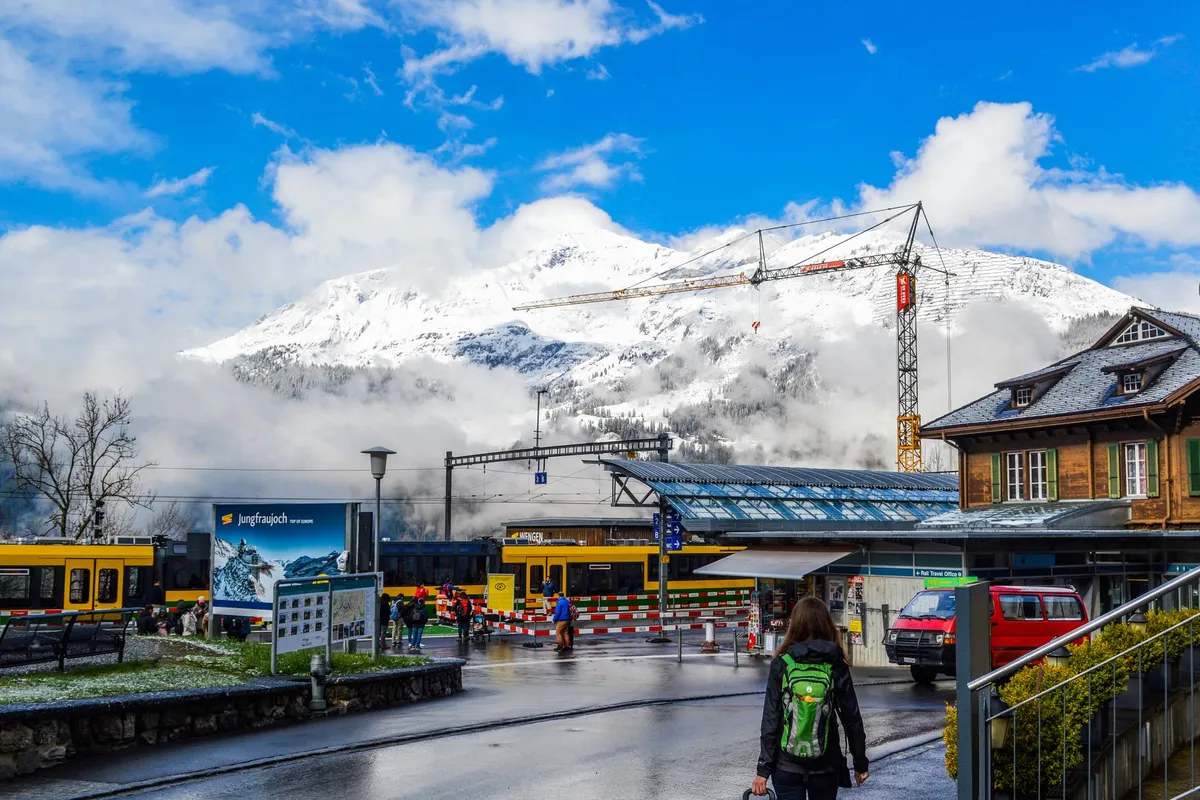
Staying near Interlaken Ost reduces friction on early departures. Interlaken West is convenient for the center and for connections toward Spiez, but it adds a short transfer on Jungfrau days. Those seeking alpine atmosphere can sleep in Wengen, Mürren, or Grindelwald; in exchange, they lose some flexibility to switch valleys based on the forecast.
The official Swiss tourism portal presents Interlaken as the gateway between Lakes Thun and Brienz and the mountains of the Bernese Oberland. That location is the real advantage: the town itself takes less time than the excursions that start from it.
How many days to set aside
Set aside 3 days for a tight itinerary and 4 days to include a weather buffer and a scenic train without squeezing the valleys. With two days, choose between Jungfraujoch and a slower exploration of Lauterbrunnen/Grindelwald; trying to do both plus a scenic express usually turns the trip into a string of platforms.
Four days let you move the high-mountain ascent to the best window of visibility. That flexibility is valuable because an expensive ticket doesn’t guarantee a view. Use the first and last days for scenic arrival or departure routes and save the middle days for the Jungfrau region.
The official timetable planner should be checked with your exact date, since connections, construction work, and seasonal operations change the travel time. Work in day blocks, not a list of independent attractions.
Four-day itinerary
A balanced itinerary spreads Interlaken, the two valleys, Jungfraujoch, and the scenic leg across four days, keeping the highest ascent movable according to the weather. The goal isn’t to follow a rigid order, but to create alternatives of equal length.
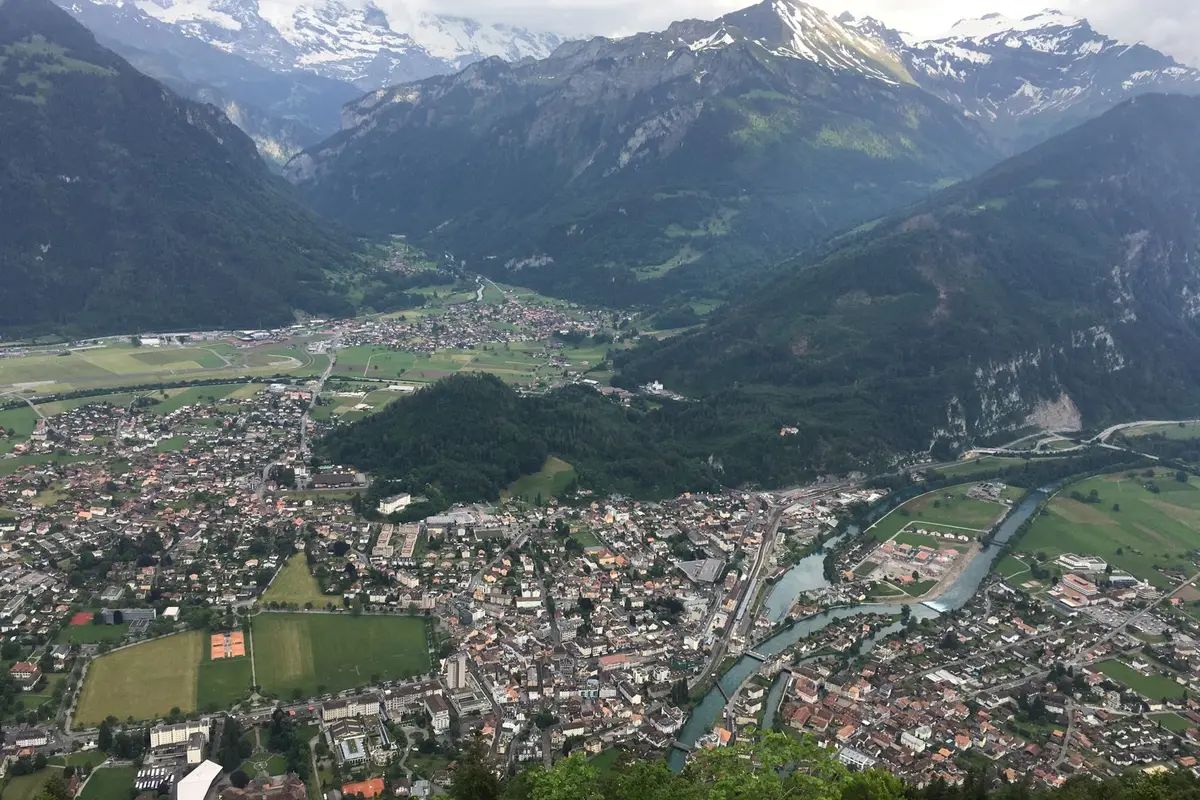
Day 1: scenic arrival and Interlaken
Arrive via Lucerne on the Luzern–Interlaken Express or via Montreux on the GoldenPass axis. Settle in and walk between the center, the Höheweg, and whichever lakeside fits your schedule. Don’t put an expensive ascent on the same day as a long transfer: delays and fatigue cut into your margin.
Day 2: Lauterbrunnen, Wengen, and the valley
Use Lauterbrunnen as a gateway to the waterfalls and head up to Wengen if the weather is clear. If you prefer a day without big altitude gains, follow the valley and add Mürren depending on operations and energy. The scenery is expansive even under low clouds, which makes this a good plan for a day of middling visibility.
Day 3: Grindelwald and Jungfraujoch
If the forecast is favorable, go early via Grindelwald Terminal and the Eiger Express. Otherwise, explore Grindelwald, First, or open trails and move Jungfraujoch to the next day. The key is not to keep an inflexible reservation just because it was in the original plan.
Day 4: high mountain or backup plan
Use the last day for Jungfraujoch if you haven’t gone up yet, or for Schynige Platte, Harder Kulm, Lake Brienz, or a scenic continuation. Check the departure time and keep your luggage stored near the station so you don’t have to return to the hotel mid-day.
How to get to Jungfraujoch
The fastest route leaves from Interlaken Ost, continues to Grindelwald Terminal, climbs on the Eiger Express to Eigergletscher, and carries on by railway to Jungfraujoch; the trip takes about 1 hour and 30 minutes each way on the best connections. The classic alternative goes through Lauterbrunnen, Wengen, and Kleine Scheidegg and can form a loop on the way back.
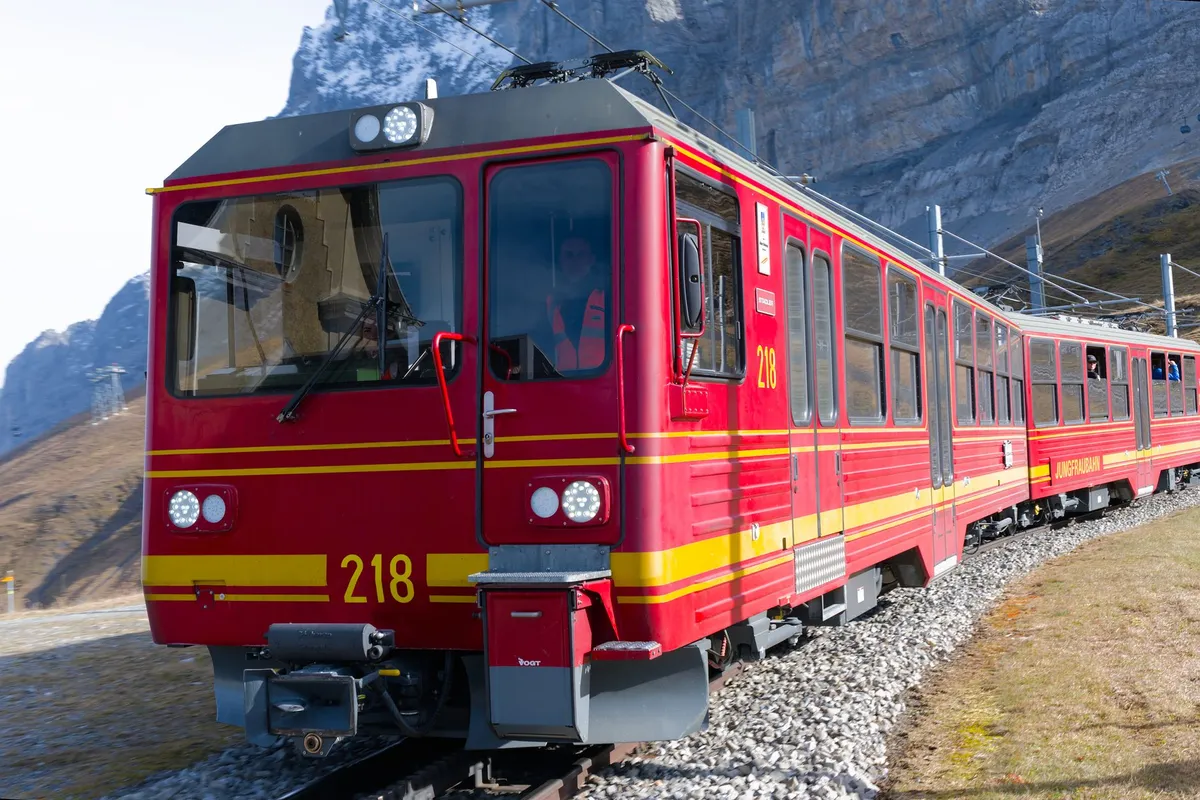
The destination sits at 3,454 meters. The altitude slows your pace and can cause headaches, dizziness, or shortness of breath; walk without rushing, stay hydrated, and don’t treat the complex like a race between viewpoints. People with heart or respiratory conditions or sensitivity to altitude should seek medical advice before the trip.
According to operator Jungfrau Railways, the ticket started at CHF 129.60 in August 2026, with variations by origin, date, and discount. That figure requires a current check before purchase; don’t use it as a fixed fare.
How to decide based on the weather
Decide on the Jungfraujoch ascent based on visibility at the top, not just the sky in Interlaken. Low clouds can leave the summit clear, and the opposite happens too. Check webcams, wind, and operational notices on the morning of your trip, keeping an alternative day in the itinerary.
The official Jungfraujoch page gathers conditions and access information. Even when operations are normal, wind and fog can limit outdoor areas. If visibility is poor across the whole altitude range, opt for a valley, museum, boat, or nearby town and reassess the next day.
Dress in layers year-round. The difference between the valley and 3,454 meters is huge, and ice areas stay cold in summer. Sunglasses and sun protection remain necessary because snow and ice reflect radiation.
Which scenic train should you choose
Choose the GoldenPass Express if your itinerary continues to Montreux, and the Luzern–Interlaken Express if it heads to Lucerne; both connect naturally to Interlaken, but they show different landscapes and directions. Neither one replaces the climb to Jungfraujoch, which serves another purpose and has its own fare system.
If your route heads south, toward Graubünden and Zermatt, it’s also worth considering the Glacier Express, the longest scenic train in Switzerland — a different travel logic altogether, with mandatory seat reservations and its own fare.
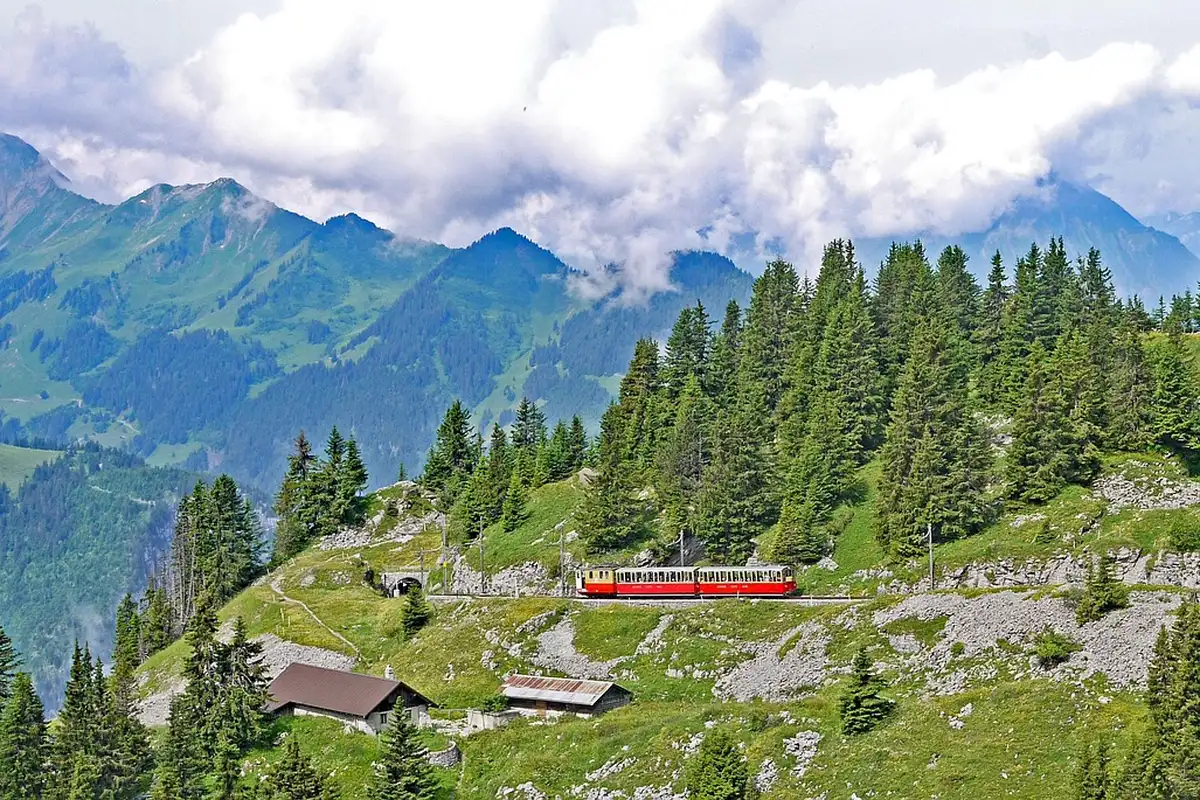
GoldenPass Express: Interlaken–Montreux
The GoldenPass Express links Interlaken and Montreux through the Bernese Oberland, Gstaad and the descent to Lake Geneva. It’s the logical choice for continuing into French-speaking Switzerland. Confirm the direct service on your date: schedules and train composition can change, and some alternatives require a transfer.
Luzern–Interlaken Express: lakes and the Brünig Pass
The Luzern–Interlaken Express runs through Brienz, Meiringen and the Brünig Pass to Lucerne. It works best as an arrival from central Switzerland or a departure toward Lucerne and Zurich. The scenery combines lakes, valleys and stretches of rack railway.
Regional mountain trains
Schynige Platte, Wengernalpbahn and Jungfraubahn offer intense panoramas on regional routes, but they aren’t intercity expresses. They work as day trips, depend more on the season and may not be fully covered by the same pass. Naming each segment avoids assuming inclusions that don’t exist.
Pass or individual tickets
A regional pass tends to pay off when you have three or more days of covered cable cars and railways; individual tickets give you more freedom when Jungfraujoch is the only expensive climb and the rest of your itinerary uses few trips. Add up each actual segment before comparing, including mandatory reservations and supplements.
Between May 1 and October 31, 2026, the seat reservation for Jungfraujoch was mandatory and cost CHF 10 per person. That price and rule are perishable; confirm on your date. A pass may offer a discount on the journey without including the reservation, so “covered” doesn’t necessarily mean zero cost.
Compare the Swiss Travel Pass, Half Fare Card, Jungfrau Travel Pass and promotional tickets using the same itinerary. Also check whether children travel free with a family card, whether lake boats are included in the coverage, and how far the national pass is valid on private railways.
When to go
From June to September there’s a wider offering of trails and seasonal railways; May and October can balance crowds and scenery, but require attention to maintenance; winter swaps hikes for snow and specific operations. Don’t choose based only on the temperature in Interlaken: what opens at each altitude defines the itinerary that’s actually possible.
In summer, book accommodation and in-demand services in advance, keeping flexibility where the change policy allows. In the shoulder season, check Schynige Platte, First and trails individually. In winter, weigh clothing, daylight and snow experience before packing too many viewpoints into the same day.
For a first trip, four days offer the best balance: one valley, Grindelwald, a movable window for Jungfraujoch and a scenic leg on arrival or departure. Choose the GoldenPass toward Montreux or the Luzern–Interlaken toward Lucerne, run the pass math with the actual segments, and let the weather decide your highest-altitude day.
The day before, review three things: the summit webcam, whether the lines are running and the validity of your reservations. That quick check protects the biggest expense of the itinerary and lets you swap the order of your days without losing the logic of the trip.