Fernando de Noronha shows up on every Brazilian dream destination list, but planning the trip raises some very real questions: how much do the fees cost, where do flights depart from, how many days are enough, and what should you prioritize in an archipelago where everything is pricier than on the mainland. This guide answers each one — and shows why the logistics, once understood, are simpler than they seem.
Noronha sits about 545 km from Recife, with direct flights from Recife and Natal (1h to 1h20). Plan for 4 to 5 days and factor in the mandatory fees: the TPA (Environmental Preservation Tax) at R$ 105.79 per day and the national park entry fee of R$ 192, based on January 2026 rates. With that sorted, the rest of the trip is just picking your beach.
How to get to Fernando de Noronha
Every route goes through Governador Carlos Wilson Airport (FEN), the island’s only airport. Direct flights depart from Recife and Natal, last between 1h and 1h20, and are operated by Azul and Gol. Travelers coming from São Paulo, Rio, Brasília, or Belo Horizonte will need a connection, almost always in Recife. Since the number of visitors is limited by environmental regulations, seat availability is scarce — book your ticket months in advance, especially for high season and holidays.
Before you board, two fees come into play. The first is the Environmental Preservation Tax (TPA), charged per day of stay: R$ 105.79 for one day, based on rates adjusted in January 2026. It’s progressive — staying 7 days costs R$ 672.85 in total — and should ideally be paid before you arrive, through the official website of the Fernando de Noronha Administration.
The second is the entry fee for the National Marine Park, managed by ICMBio: R$ 192 for Brazilians and R$ 384 for foreigners, valid for 10 consecutive days. Without this ticket, you can’t access the island’s most famous beaches, like Sancho, Baía dos Porcos, and Sueste — buy it online before your trip and skip the line at the checkpoint. Check current rates on the official websites, as both fees are adjusted annually.
Best time to visit and how long to stay
Noronha works year-round, but the sea changes its mood by season. From August to November, the inner sea is calm, rain practically disappears, and water visibility reaches 50 meters — the ideal setting for snorkeling, diving, and beach days with kids. From December to March, the swell arrives: the waves at Cacimba do Padre attract the surfing circuit, and some beaches lose their natural pools.
Between March and July, there’s more rain, and that’s exactly when prices drop. The island remains beautiful — rains are usually quick showers — and both sides of the island are accessible for scuba diving. Rule of thumb: calm seas and maximum visibility between August and November; waves and championship conditions between December and March; lowest prices between April and June.
How long? With 4 or 5 full days, you can see the main beaches, take a boat tour, and do a dive without rushing. Since the TPA is charged per day, stretching beyond a week weighs on your budget — 7 days comes to R$ 672.85 in fees alone, not counting accommodation.
What to see: beaches, trails, and diving
The attractions are split between the inner sea (facing Brazil, with calm waters) and the outer sea (open to the Atlantic, wilder). The national park ticket grants access to the most sought-after spots.
Baía do Sancho
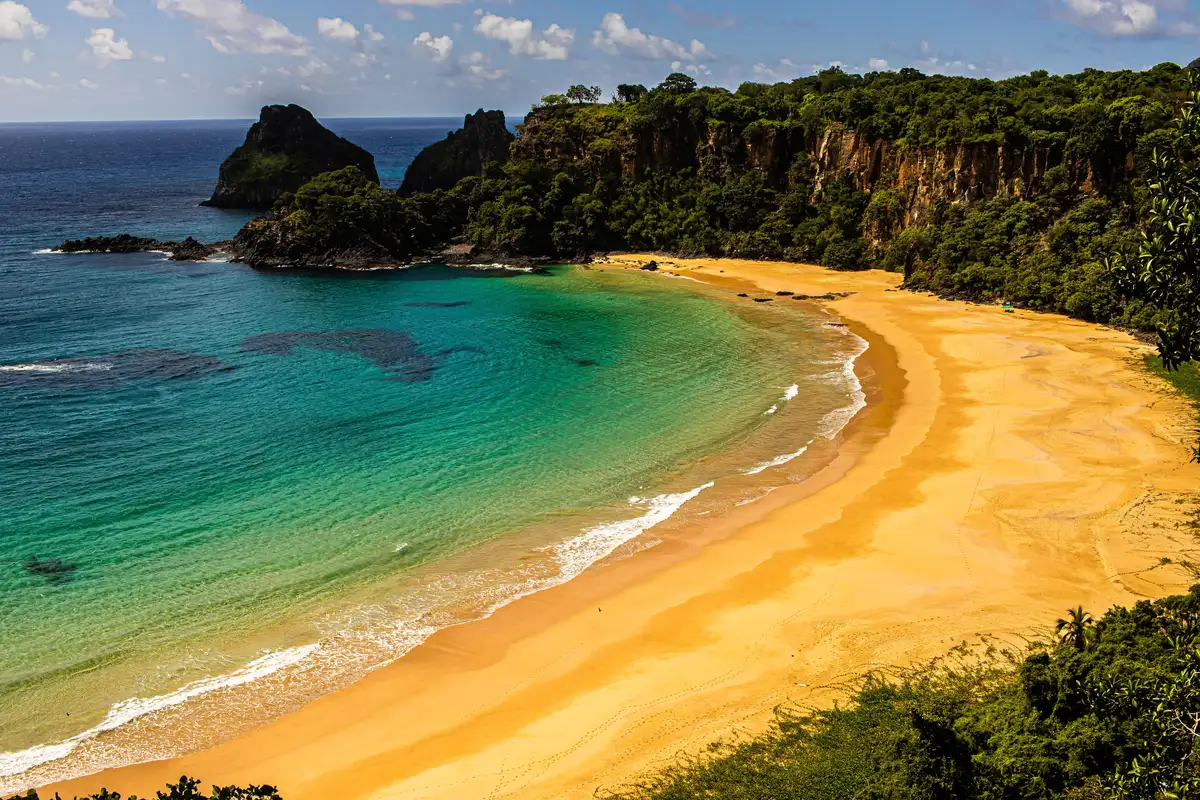
Repeatedly voted the best beach in the world in Tripadvisor’s Travellers’ Choice awards, Sancho is reached via a staircase wedged into a crevice in the cliff — go down with both hands free. Arrive before 10am: the beach is still empty, the light is better for the dolphin lookout on the way, and the tide usually favors snorkeling at the left end of the bay.
Baía dos Porcos, Cacimba do Padre, and Praia do Leão
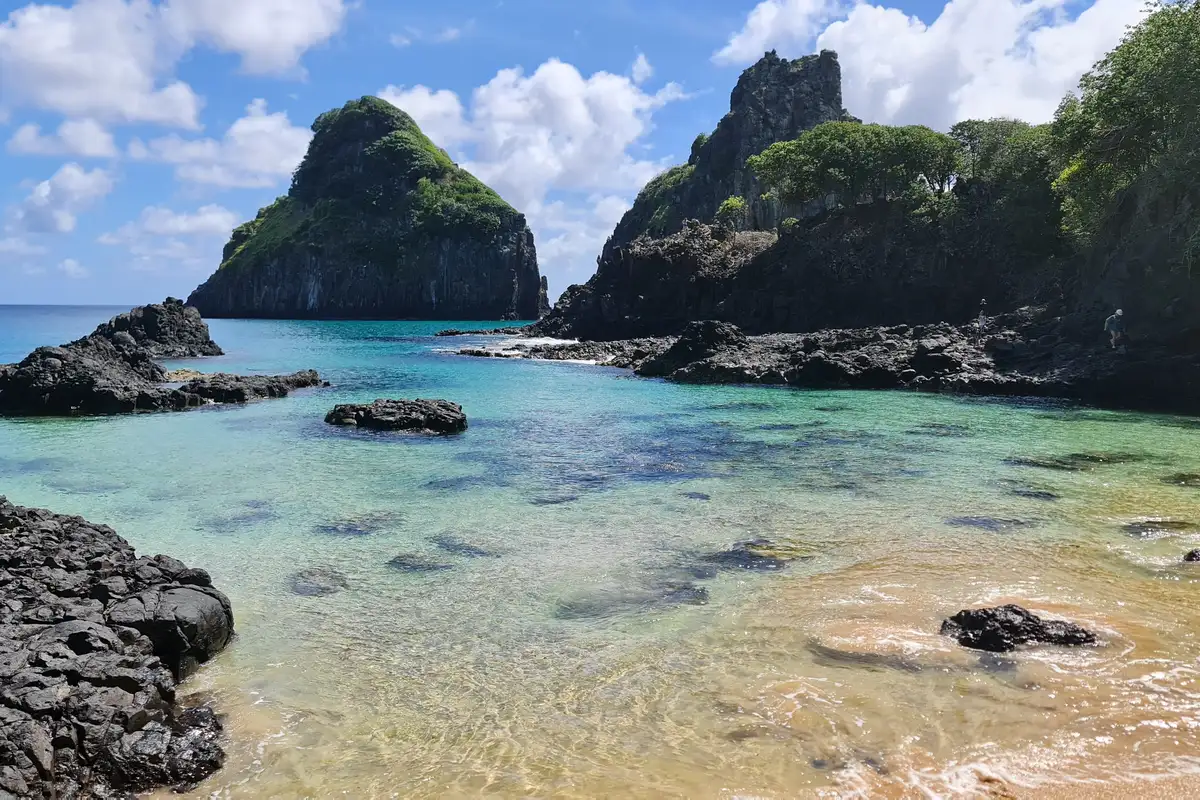
Baía dos Porcos, small and surrounded by rocks, delivers the classic photo with Morro Dois Irmãos — access is by walking from Cacimba do Padre at low tide. Cacimba itself is the beach with famous waves in the summer. Praia do Leão, on the outer sea, is the main nesting area for sea turtles: between January and June, sections may close at dusk to protect the nests.
Diving and marine life
Few places in the Atlantic deliver so much marine life in such clear water. The discovery dive, done with an instructor and no course requirement, is the island’s most sought-after experience; those who prefer to stay on the surface can see turtles, rays, and schools of fish while snorkeling at Baía do Sueste or the natural pool at Atalaia — the latter only with prior booking through ICMBio and limited group sizes. If reef dives are on your bigger plans, it’s worth comparing with our guide to the Great Barrier Reef in Australia.
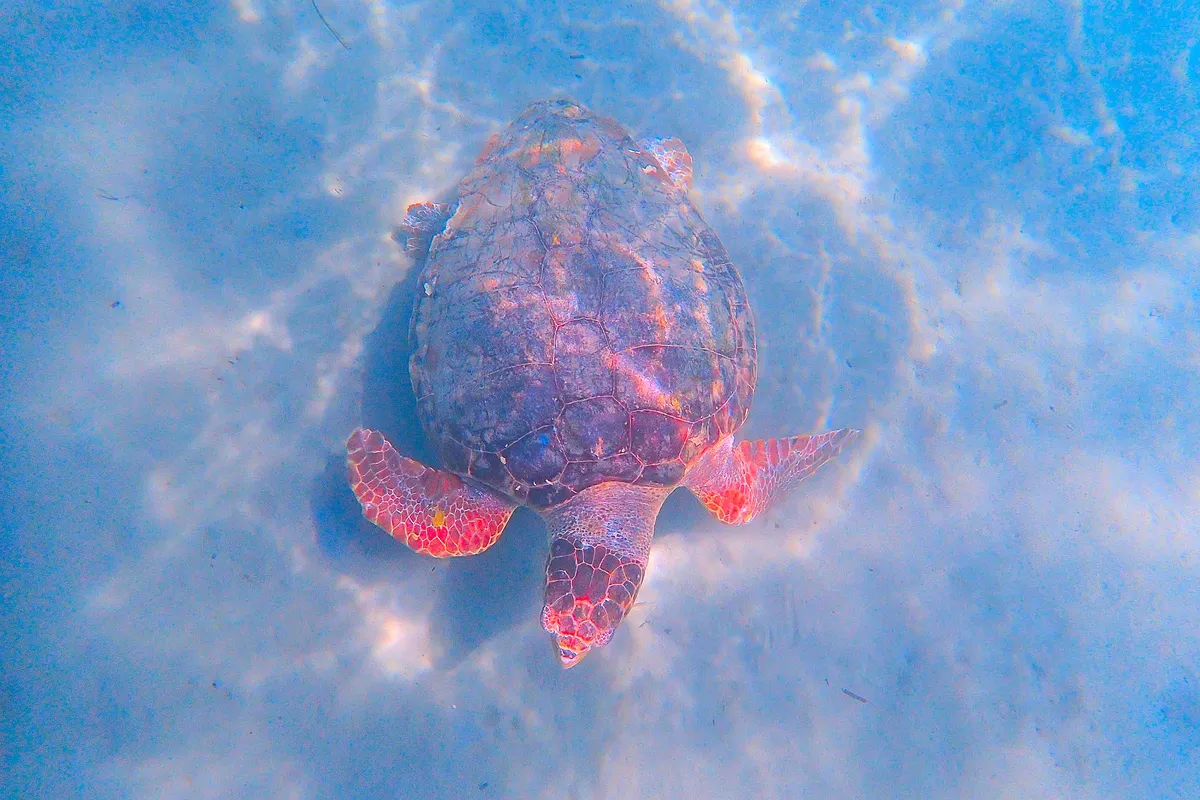
Round out your itinerary with a boat tour along the inner sea — spinner dolphins often ride the bow —, the sunset at Forte dos Remédios, and a visit to the Projeto Tamar center in Vila do Boldró, which offers free nightly talks about the local wildlife.
What to combine: Recife, Olinda, and beyond
Almost every trip to Noronha goes through Recife, and many people take advantage of the connection to spend a day or two on the mainland instead of just changing planes. Recife’s historic center and the colorful hills of Olinda can be visited together in one day — a guided tour of Recife and Olinda handles the logistics and includes the main landmarks of both cities, with a Portuguese-speaking guide.
With an extra day, the natural pools of Porto de Galinhas, about 60 km from the capital, are the most requested excursion on the southern coast — the Porto de Galinhas tour from Recife includes round-trip transportation and free time for a raft ride at low tide.
Where to eat
Eating in Noronha is pricey — almost everything arrives by plane or boat — so it pays to choose wisely where you spend. The catch of the day and seafood are the highlights: Mergulhão, next to the port, serves moquecas with views over Santo Antônio Bay; Bar do Meio, on Praia do Meio, has become the classic sunset spot with live music; and Cacimba Bistrô, in Vila dos Remédios, covers the more elaborate dinner scene.
To keep the budget in check, the daily lunch specials in Vila dos Remédios and Boldró do the trick, and many guesthouses include a hearty breakfast. Book the popular restaurants a day or two ahead during high season — the places are small and fill up fast.
Where to Stay
Accommodation on the island is all about guesthouses — from simple home stays to luxury lodges with nightly rates in the thousands of reais. Vila dos Remédios concentrates restaurants and nightlife and lets you do a lot on foot; Floresta Nova and Floresta Velha sit halfway between the beaches and cost less; the Sueste area is the quietest, ideal for those who want silence and don’t mind relying on a buggy or the bus.
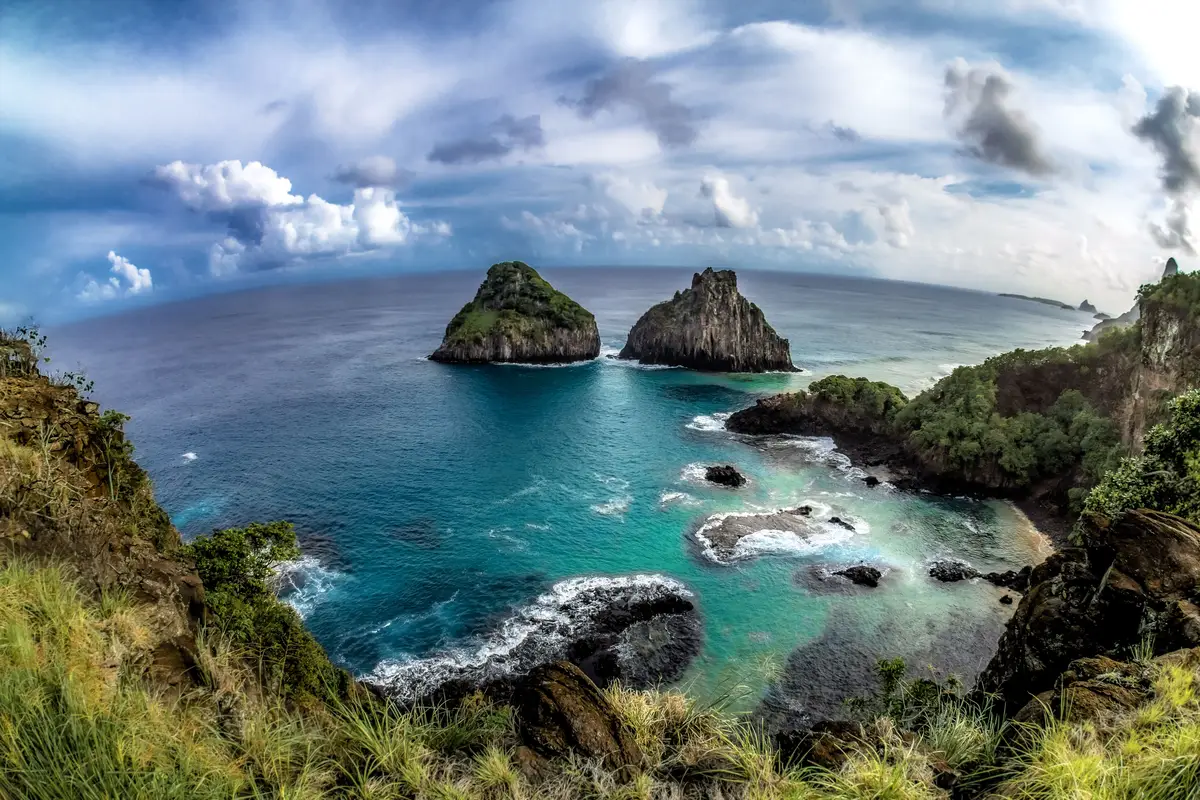
Book months in advance: the supply of beds is limited by the same rules that restrict flights. If you’re after a Brazilian beach destination with more infrastructure and lower prices, coastal spots like Balneário Camboriú play a different role — Noronha pays off with nature, not infrastructure.
Practical Tips
To get around, the island has a bus line that runs the full length of BR-363 and metered taxis; renting a buggy is the go-to for most, but negotiate and book ahead, since the fleet is limited. Bring hiking sneakers for the trails, sunscreen, and more cash than you planned: between mandatory fees, a boat tour, and a discovery dive, a couple can easily rack up over R$ 2,000 before even paying for a restaurant — based on a July 2026 estimate.
Sunscreen is allowed, but the park prohibits entering the natural pools with it applied in some spots, like Atalaia — follow your guide’s instructions. Drones require a permit, feeding animals is an infraction, and don’t stray from marked trails. Cell signal and internet are spotty; download offline maps before you board. If you like mixing beach with big-city energy, check out our guide to Barcelona between architecture and beaches for your next trip.
If freshwater beaches appeal to you more than the open sea, it’s also worth checking out what to do in Alter do Chão, in Pará — another Brazilian destination with clear waters, but river-fed, and a much calmer pace than Noronha.
Before you finalize your itinerary, check out other activities available in your departure region:
Frequently Asked Questions
How many days should I spend in Fernando de Noronha?
Four to five full days are enough to see the main beaches, take a boat tour, and go for a dive. If you want to revisit beaches and tackle every trail, stretch it to 7 days — keeping in mind the TPA (Environmental Preservation Tax) increases per day of stay.
What’s the best time to visit Fernando de Noronha?
From August to November, when the inner sea is calm, it barely rains, and water visibility reaches 50 meters. From December to March, surfing takes center stage; from April to June, prices drop, with quick rain showers.
How much do the Fernando de Noronha fees cost?
As of January 2026 values, the TPA costs R$ 105.79 per day (R$ 672.85 for 7 days), and the Marine National Park entry ticket costs R$ 192 for Brazilians and R$ 384 for foreigners, valid for 10 days. Both can be paid online.
Do I need a car in Fernando de Noronha?
It’s not required. The island has a regular bus line along BR-363, metered taxis, and tours with transportation included. A rented buggy gives you the freedom to chase sunsets and empty beaches, but the fleet is limited — book ahead.
Is Fernando de Noronha good for non-divers?
Yes. The inner-sea beaches have calm waters, surface snorkeling already reveals turtles and rays, and boat tours, trails, and lookout points fill out the itinerary without needing a tank.
Conclusion
Fernando de Noronha demands planning — booking flights early, paying fees online, reserving your guesthouse months ahead — but it returns every real in landscapes you won’t find anywhere else in Brazil. Pick your season based on what you want from the sea, set aside 4 or 5 days, and save Sancho for your first free morning. Here at VoyageVoyage, you’ll find more complete guides to plan your next trip.