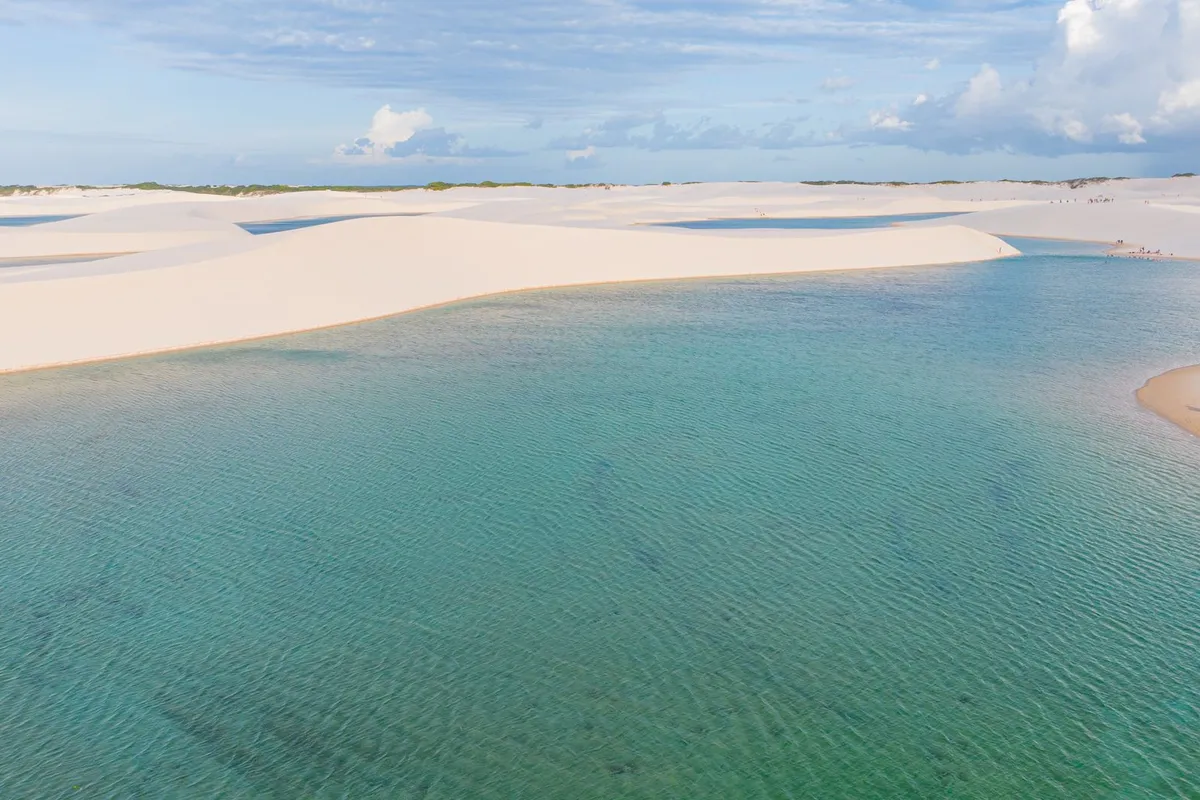
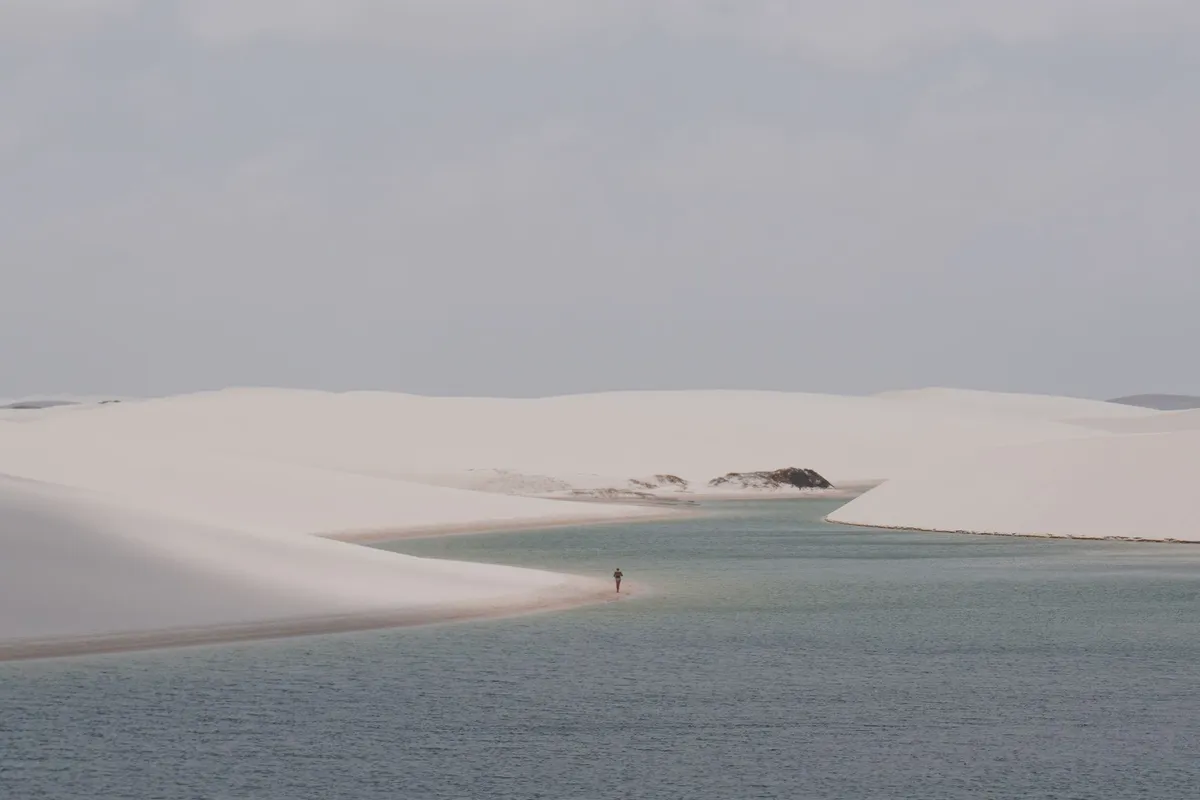
The Lençóis Maranhenses demand a choice before you book your ticket: Barreirinhas, Atins, or Santo Amaro. The most beautiful lagoon isn’t worth a wrong base camp, long transfers, and a trip timed for when the water hasn’t yet filled the dunes.
The Short Answer
For a first visit, choose your base based on your pace: Barreirinhas is practical, Atins combines lagoons and village life, and Santo Amaro is closer to less crowded areas. The lagoons are usually fullest after the rainy season; check current conditions with a local guide.
When to Go to Find the Lagoons
The layout of the lagoons changes with the rains and the heat. There’s no guaranteed picture for every month: follow local sources, take the strong sun seriously, and avoid planning your trip around a single specific lagoon.
Barreirinhas makes transport and services easy. Atins attracts those who want to hike, eat well, and slow down. Santo Amaro is the choice for those who prioritize nearby lagoons and accept simpler logistics. Don’t try to sleep in every base on a short trip: two well-spent nights are worth more than switching hotels.
The trek across the dunes requires water and sun protection. | Photo: Lorena Ribeiro / Pexels
How to Choose Your Tours
4×4 rides, hiking, the Preguiças River, and scenic flights offer different experiences. Start with the lagoons with a certified guide, confirm the travel time, and bring water, a hat, and swimwear. Check conservation and access information at ICMBio.
Frequently Asked Questions
What’s the best base?
Barreirinhas is the most practical; Atins and Santo Amaro suit different paces.
When do the lagoons fill up?
After the rains; conditions change throughout the year and should be confirmed locally.
Do I need a guide?
For lagoons and trails, a local guide improves safety and navigation.
Conclusion
Lençóis Maranhenses is a slow-paced destination: the right base, a local guide, and expectations aligned with the lagoon cycle make more of a difference than an endless list of stops. For another destination where logistics change the experience, also check out our planning guide for Rapa Nui.
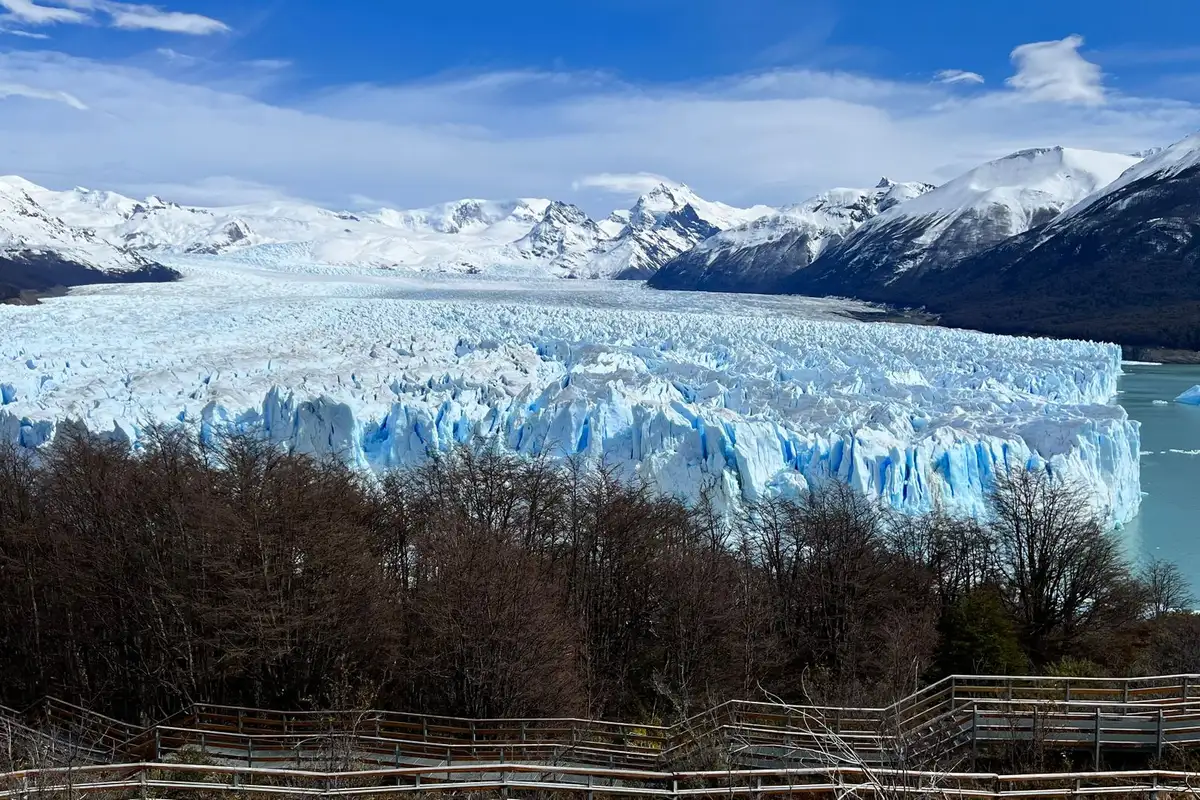
Los Glaciares National Park is so much more than the Perito Moreno viewpoint. To leave Patagonia with an itinerary that actually makes sense, base yourself in El Calafate for the glaciers and set aside separate days for the boat tour, the walkways, and—if time allows—El Chaltén.
The Short Answer
Book at least three nights in El Calafate to explore Los Glaciares National Park. One day for Perito Moreno, another for a boat tour or trekking, and a third as a buffer keeps the weather from dictating your whole trip.
El Calafate Is the Practical Base
El Calafate is where you’ll find hotels, restaurants, and departures to the park’s southern sector. Before choosing a neighborhood and accommodation, check out our guide to where to stay in El Calafate; location matters even more when tours leave early.
The walkways let you observe the glacier’s front from different heights and are the best choice for a first visit. Come prepared for wind, rain, and long walks. For details on access, visit duration, and how to fit the tour into your day, see our article on how to visit Perito Moreno Glacier.
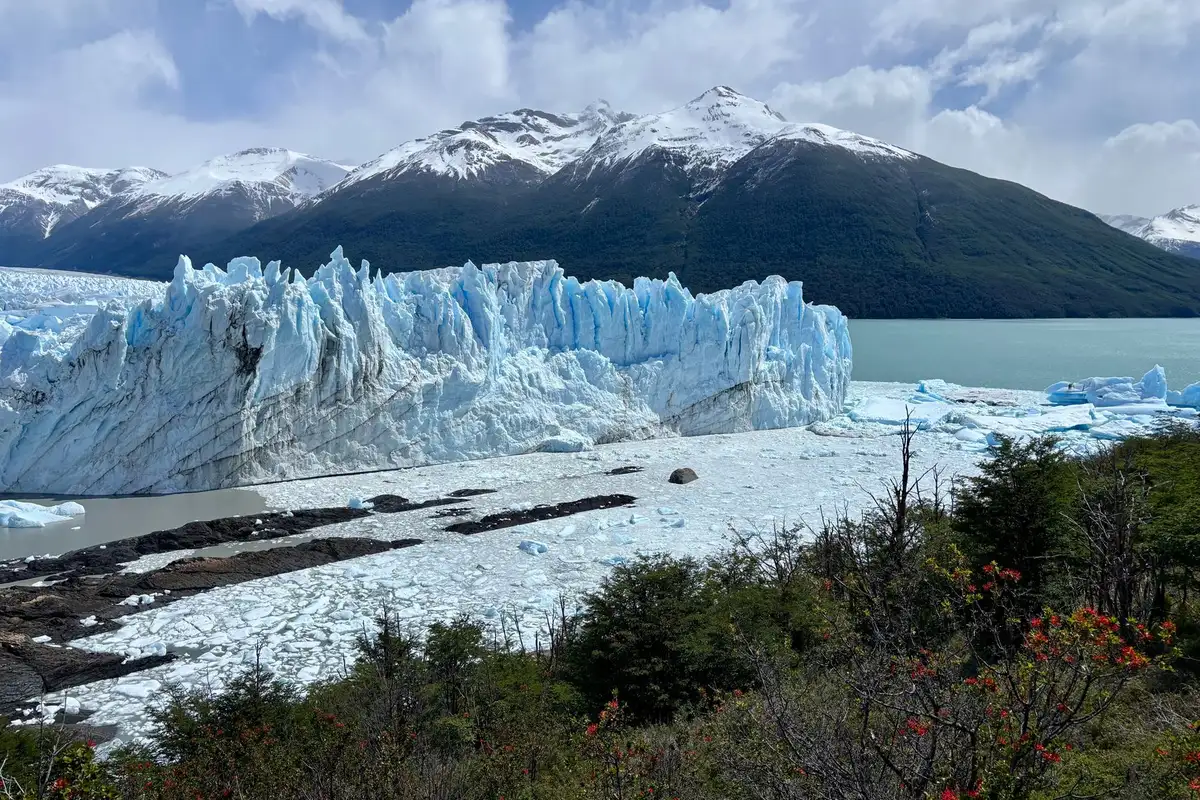
Don’t plan your day around a calving event: it might happen, but the real experience is in the landscape and the silence broken by cracking ice.
The boat tour changes how you perceive the glacier’s scale. | Photo: Chris Flxxx / Pexels
What to Combine in Your Itinerary
With more days, choose between a boat tour on Lake Argentino, ice trekking, and the extension to El Chaltén. Don’t try to cram everything into two days. Patagonia rewards you more when you accept the distances and drive times. For a bigger route, our guide to Torres del Paine on a first visit helps you decide whether it’s worth crossing into Chile.
Three nights in El Calafate let you visit Perito Moreno without rushing and still have room for another excursion.
What’s the best base?
El Calafate is the most practical base for the Perito Moreno sector.
Do I need to book a tour?
Not for the walkways, but tours simplify transportation and activities like boat rides or trekking.
Conclusion
Los Glaciares gets more interesting when Perito Moreno is the beginning, not the final stop. Voyage Voyage recommends spreading out your days and leaving room for the weather.
Florence fits almost entirely within a 20-minute walk, yet it holds Brunelleschi’s Dome, Michelangelo’s David, and the world’s largest collection of Renaissance art. This guide covers what to see, how much time to set aside, and how to buy tickets without wasting half a day in line — with prices updated for July 2026.
Whether you have just a weekend or are planning a full Tuscany itinerary, it’s easy to adapt: the essentials of Florence fit into two full days, and three days leave room to breathe between one gallery and the next.
Quick Answer
Florence needs at least 2 full days for the main attractions — the Duomo, Uffizi, Ponte Vecchio, and Piazzale Michelangelo — and 3 days if you want to include the Accademia (David) and a day trip to Pisa or San Gimignano. The best time to visit is April-May or September-October, when the heat has subsided but the museums don’t close early yet. Book your Duomo and Uffizi tickets in advance: in high season, the line without a reservation stretches past two hours.
How to Get to Florence
Florence Airport (Peretola, code FLR) is 15 minutes from the center by taxi or the Vola in Bus shuttle. Travelers coming from other Italian cities usually prefer the train: Santa Maria Novella, Florence’s central station, receives high-speed Frecciarossa and Italo trains direct from Rome (1h30) and Milan (1h45), plus regional trains from Pisa (1h) and Siena (1h30).
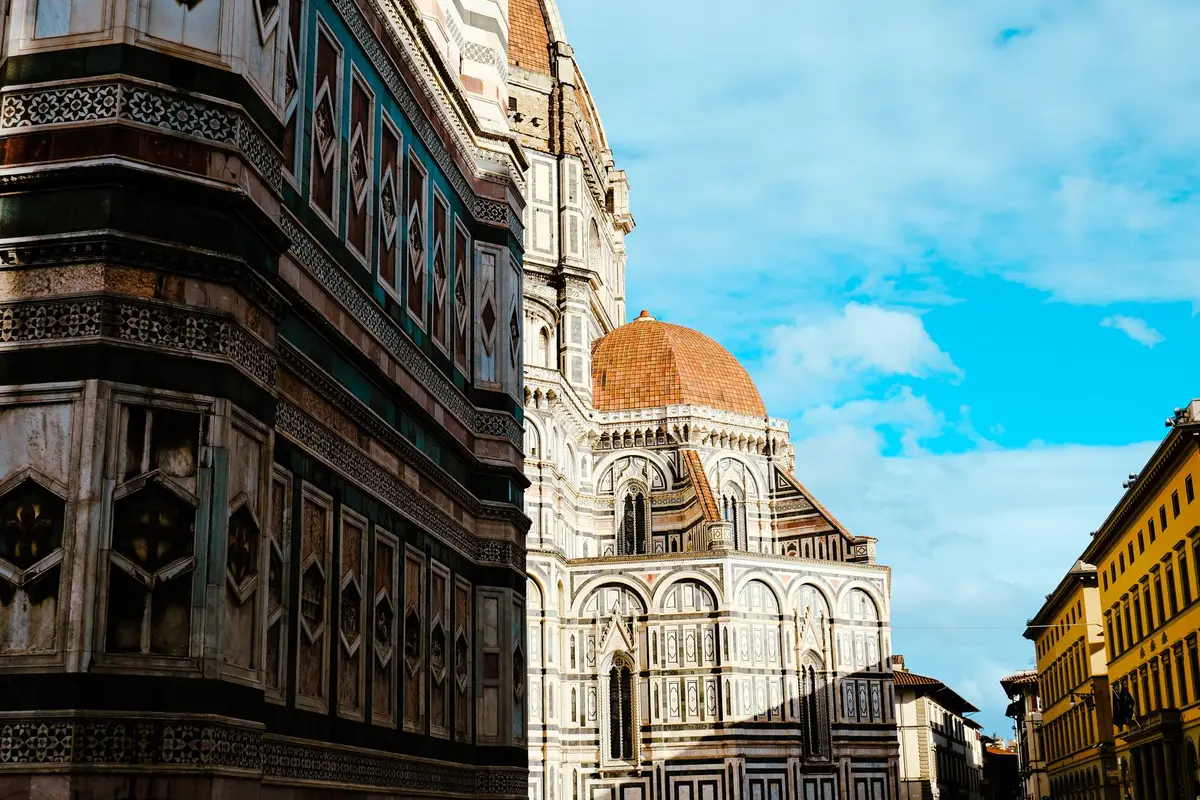
Brunelleschi’s Dome has dominated Florence’s skyline since the 15th century. | Photo: Barkalı / Pexels
By car, avoid the historic center — a large part of it is a ZTL (limited traffic zone), which fines any vehicle without a permit. Leave your car in a peripheral parking lot and continue on foot or by bus. If you’re combining Florence with Rome and Venice on the same trip, you’ll find the ideal route order and train times in our guide to traveling Rome, Florence, and Venice by train.
Best Time to Visit & How Long to Stay
Between May and September, Florence gets crowded: more festivals, more street life, but also longer lines and higher hotel prices. The shoulder season — April and May, then September and October — delivers pleasant weather with far fewer crowds. From November to March, the city empties out and the museums are peaceful; just be prepared for the damp cold.
As for how many days: two days cover the essentials (Duomo, Uffizi, Ponte Vecchio, Piazzale Michelangelo); three days add the Accademia and a slower stroll through the Oltrarno neighborhood; five days or more allow for day trips to Pisa, Siena, or San Gimignano without changing hotels.
What to See in Florence
Duomo — Cathedral of Santa Maria del Fiore
Entry to the cathedral is free, but to see up close what makes the Duomo famous — Brunelleschi’s dome, Giotto’s Campanile, the Baptistery, and the Museum — you’ll need the combined Brunelleschi Pass ticket. Climb the dome early in the morning: it’s 463 steps with no elevator, and the afternoon heat makes the ascent much more tiring.
One of the largest collections of Renaissance art on the planet, featuring works by Botticelli, Da Vinci, and Michelangelo. On the first Sunday of every month, entry is free — but arrive well before opening, because the free line usually wraps around the block. Apart from that day, a timed-entry ticket costs €4 more than the standard one and is worth every cent in time saved.
Ponte Vecchio
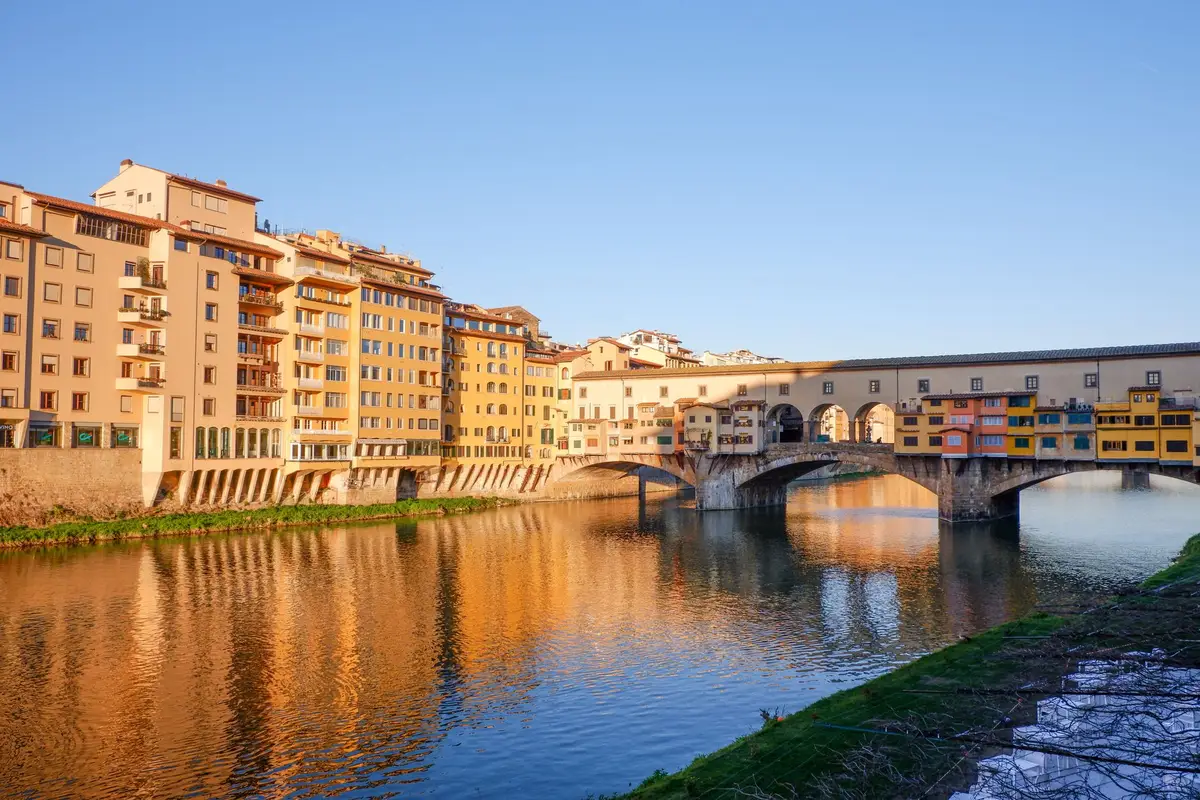
Europe’s most famous medieval bridge crosses the Arno River lined with jewelry shops that have occupied the same spot since the 16th century. There’s no entry fee — cross it in the late afternoon, when the golden light hits the river and the shops are still open.
Ponte Vecchio at sunset, with the Arno reflecting the medieval facades. | Photo: Eva Hamitaj / Pexels
Piazzale Michelangelo
The 15-20 minute walk up from the Oltrarno leads to the city’s best free viewpoint: from there, you can see all of Florence, with the Duomo at the center of the landscape. Go just before sunset — it’s the busiest time, but also the most beautiful.
Galleria dell’Accademia
Here you’ll find Michelangelo’s original David, sculpted between 1501 and 1504. The gallery is small and the visit is quick, but tickets are also in high demand — book a timed entry, especially between June and August.
What to Combine with Florence
The Leaning Tower of Pisa is an hour away by train and can be visited in half a day — check out our complete guide to the Leaning Tower of Pisa to plan your day trip. If you have more time, you can continue to Rome by high-speed train in 1h30; check out our complete Rome guide before deciding on your itinerary. Siena, San Gimignano, and the Chianti region are also classic full-day trips from Florence, ideal for those who want to see rural Tuscany beyond the capital.
For day trips leaving directly from Florence — including Pisa, Siena, and Chianti — it’s worth checking out the options from the Pisa and Leaning Tower excursion, which takes care of transportation and tickets.
Where to Eat
Florence is the home of bistecca alla fiorentina — a generous cut of grilled steak, usually served to share between two people. Also try lampredotto, a tripe sandwich sold at street stalls, cheaper and equally traditional. At the Mercato Centrale, you’ll find producer stalls on the ground floor; upstairs, a food hall with dozens of options for any time of day.
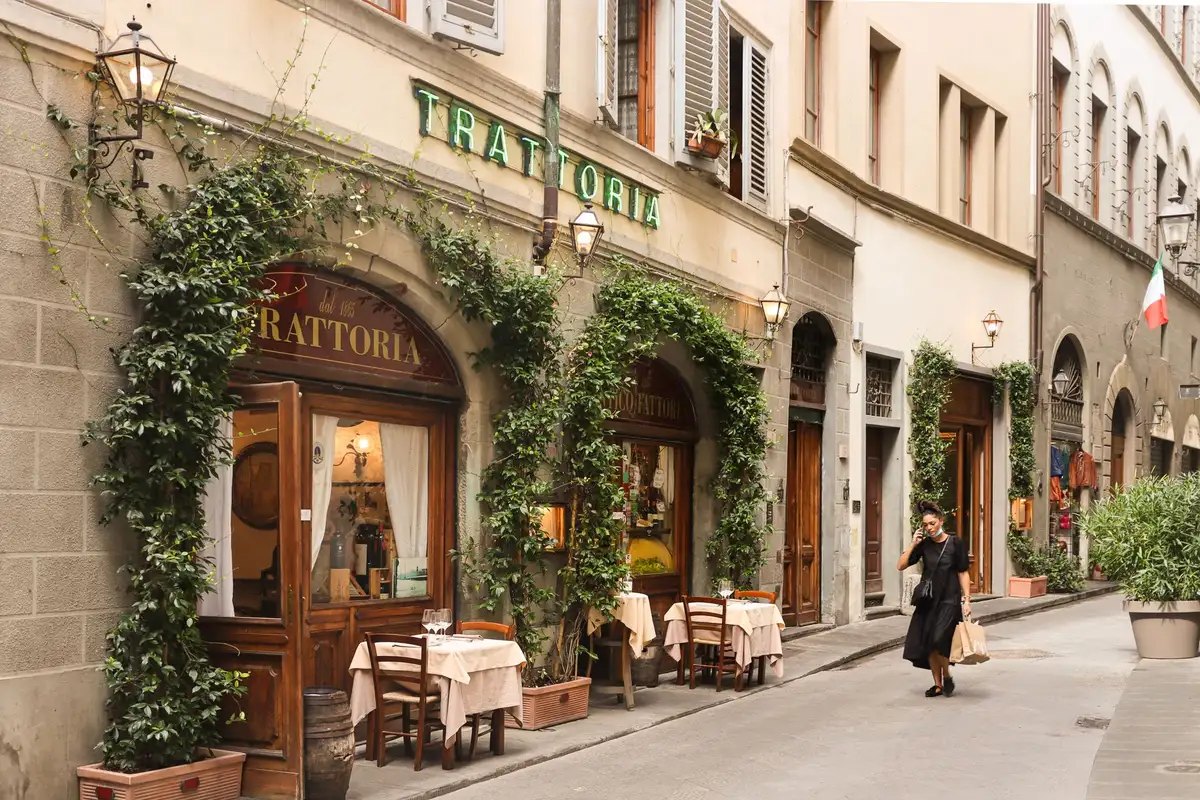
Avoid restaurants with photographed menus and “tourist menus” right in front of the Duomo — prices go up and quality goes down. Walk two or three blocks away from the main tourist spots and prices tend to be fairer.
The historic center (near the Duomo and Piazza della Signoria) puts everything just a few minutes’ walk away, but it costs more and gets crowded with tourists at night. Oltrarno, across the river, is equally close on foot and has a more authentic neighborhood vibe, with slightly lower prices. Santa Maria Novella, around the train station, is practical for those arriving late or leaving early, but it’s less charming.
Practical Tips
Book the Duomo, Uffizi, and Accademia at least a week in advance during high season — in July and August, some time slots sell out days ahead. The combined “Passepartout 5 Days” ticket, which grants access to the Uffizi, Palazzo Pitti, and Giardino di Boboli, costs €38 (July 2026) and is worth it if you plan to visit all three.
The historic center is small and flat — you can do everything on foot, no public transport needed. Bring comfortable shoes: Florence’s cobblestones will punish your feet after a full day of walking.
View from Piazzale Michelangelo, with the Duomo standing out among the terracotta rooftops. | Photo: Shruti Patel / Pexels
Frequently Asked Questions
How many days do I need to see Florence?
Two days cover the essentials — the Duomo, Uffizi, Ponte Vecchio, and Piazzale Michelangelo. Three days give you time for the Accademia and a more relaxed stroll through Oltrarno.
What’s the best time to visit Florence?
April–May and September–October offer the best balance of pleasant weather and fewer crowds. June through August is hotter and busier; from November to March the city is quiet but cold and damp.
Is entry to Florence’s Duomo free?
Yes, entry to the cathedral itself is free. Climbing the dome, visiting Giotto’s Campanile, the Baptistery, and the Duomo Museum requires a paid ticket, sold as a combo.
Do I need to book Uffizi tickets in advance?
It’s highly recommended, especially between June and August. Without a reservation, the line can stretch past two hours; booking a timed entry costs about €4 extra.
Can I visit Florence on a day trip from Rome?
It’s possible, but tight — the high-speed train takes about 1h30 each way, leaving you with only a few hours in the city. Ideally, spend at least one night to make the most of it.
Conclusion
Florence rewards those who arrive with tickets sorted and a relaxed itinerary: the city is small enough to be explored on foot, and dense enough in art and history to justify every hour of queue avoided with a good reservation. For more Italy and Europe itineraries, keep exploring the guides at voyagevoyage.com.br.
Magic Kingdom is the most visited park at Walt Disney World Resort in Orlando, Florida, and the top pick for families traveling with kids for the first time. It’s located at 1180 Seven Seas Dr, Lake Buena Vista, inside the Disney complex, about 30 minutes by car from Orlando International Airport (MCO). A one-day ticket ranges from $149 to $209 depending on the date, and the best time for lower prices and shorter lines is January through February and September. What most Brazilian travelers only discover after booking their flight is that Magic Kingdom is just one of four parks in the complex (check the full list on the Walt Disney World Wikipedia page) — and choosing which ones to visit completely changes your trip budget.
How to get there
From Brazil, direct flights to Orlando (MCO) mainly depart from São Paulo and Rio de Janeiro with airlines like LATAM, American Airlines, and Azul, taking 8 to 9 hours. From other capitals, the most common route is connecting through São Paulo, Miami, or Panama City. Brazilian travelers need a valid U.S. visa (B1/B2) or ESTA to enter the U.S. — always check the current rules on the official website before buying your ticket, as they change frequently.
From MCO airport to Magic Kingdom is about 24 miles (39 km), and the cheapest option is the public bus (routes 300 and 311), which costs $4 but takes nearly 2 hours with transfers. A taxi or rideshare costs between $42 and $45 and takes about 30 minutes. Guests staying at a Disney hotel get complimentary transportation — bus, monorail, or boat, depending on the resort — and don’t need a rental car during their stay. Inside the park, everything is walkable; there’s no internal transportation at Magic Kingdom besides the train that circles the perimeter.
Best time to go & how long to stay
“What’s the cheapest month to go?” January, February (outside of Carnival), and September typically have the lowest ticket prices and emptiest parks since they fall outside American school breaks. November and December, due to the holiday season, are the most expensive and crowded period — Magic Kingdom is the only one of the four parks that pushes past the $200 mark for a one-day ticket during these dates. July is also usually avoided because of Florida’s extreme heat and humidity in the middle of the American summer.
How much time to set aside depends on your travel style: to explore just Magic Kingdom at a relaxed pace, one full day is enough, arriving at opening and staying through the fireworks. To visit all four Disney parks (Magic Kingdom, Epcot, Hollywood Studios, and Animal Kingdom) without rushing, 5 to 7 days is ideal, including at least one rest day by the hotel pool.
What to see at Magic Kingdom
The park is divided into six themed areas around Cinderella Castle, Disney’s most recognizable visual landmark. It’s worth going in with a basic plan in mind, because without one it’s easy to waste half the day walking back and forth.
Cinderella Castle serves as the central reference point inside the park. | Photo: David Guerrero / Pexels
Main Street USA
This is the first area after the entrance, packed with shops and restaurants styled like an early 20th-century American town. It’s best to breeze through in the morning and save shopping for the end of the day, since it gets packed during peak hours.
Fantasyland
This area brings together the most popular attractions for families with young kids, including Cinderella Castle itself, the It’s a Small World ride, and the Peter Pan’s Flight roller coaster — the latter often has a wait of over an hour without a prior reservation through the official app’s virtual queue system.
Tomorrowland
A futuristic-themed area home to Space Mountain, a dark roller coaster that’s one of the most sought-after rides in the entire park. Reserve a time slot for Space Mountain and other high-demand attractions through the official My Disney Experience app as soon as the park opens — virtual queue spots usually sell out in minutes.
Frontierland and Adventureland
These areas feature more traditional attractions like Big Thunder Mountain Railroad (a runaway train roller coaster in the Old West) and the Jungle Cruise boat ride, with a narration full of guide jokes. They’re great options for families with kids of all ages.
Main Street USA welcomes visitors just past the entrance gates. | Photo: Abhishek Navlakha / Pexels
Nighttime fireworks show
Every day at dusk, the park closes with a fireworks show projected onto Cinderella Castle. It’s the most crowded moment of the day — anyone wanting a good spot needs to claim a position on Main Street or in the areas near the castle 45 minutes to an hour in advance.
The fireworks show over the castle closes most park operating days. | Photo: Bryanken / Pexels
What to combine / nearby attractions
Within Walt Disney World Resort itself, there are three more theme parks: Epcot, with country pavilions and tech-focused attractions; Hollywood Studios, with a movie theme and Star Wars attractions; and Animal Kingdom, with a safari and wildlife — the latter is usually the cheapest of the four. Outside the Disney complex, Universal Orlando Resort, with Islands of Adventure and Universal Studios parks, is about 20 minutes by car and another classic destination for anyone traveling to Orlando. A broader guide to the United States, including other cities on the American itinerary, can be found in the Voyage Voyage complete Los Angeles guide, for those putting together a bigger trip across the country.
Where to eat
Inside Magic Kingdom, quick-service counter restaurants cost between $15 and $25 per person, including a burger, fries, and soda. Table-service restaurants, like Be Our Guest Restaurant in Fantasyland, cost significantly more and usually require reservations months in advance through the official app. Bringing snacks from outside is allowed — many families enter with an empty water bottle and refill it at the park’s water fountains to save money. Outside the park, Disney hotels and nearby complexes like Disney Springs have more affordable options and themed restaurants.
A clear day in Orlando makes for great photos and reduces the fatigue of standing in lines for hours. | Photo: Pat Myers / Pexels
Where to stay
Staying at a hotel inside the Disney complex (Disney Resort) guarantees free transportation to all parks, early check-in for attractions, and the ability to buy tickets with exclusive perks — but the nightly rate is usually higher than hotels outside the complex. The International Drive area, about 15 to 20 minutes by car, has more affordable hotels and is close to restaurants and other parks like Universal Orlando. Families who rent a car and prioritize savings also often opt for vacation rental homes in condominiums around Kissimmee, which are generally cheaper than hotels for large groups.
Practical tips
It’s worth saving Magic Kingdom for those traveling with young kids or wanting the most classic Disney experience; those who prefer technology and gastronomy might want to start with Epcot. The most common mistake is trying to visit more than one park in the same day without planning — each park requires a full day to be enjoyed properly, and switching parks mid-day usually leads to fatigue and unnecessary lines. Download the My Disney Experience app before your trip to reserve attraction times and view the park map in real time. As for budget, a 7-day trip for two people, including tickets to 4 parks, basic lodging, and food, typically runs between $3,000 and $5,000, depending on the season and hotel standard — always check current prices on the official Disney ticket website before finalizing your budget.
Frequently asked questions
How much does it cost to go to Magic Kingdom Orlando?
A one-day ticket ranges from $149 to $209 per person in 2026, depending on the chosen date — Disney uses dynamic pricing, higher on holidays and peak season.
What city is Magic Kingdom in?
The park is located in Lake Buena Vista, inside the Walt Disney World Resort complex, in the Orlando metropolitan area, in the state of Florida, United States.
How many Disney parks are there in Orlando?
Four: Magic Kingdom, Epcot, Hollywood Studios, and Animal Kingdom, each with a different theme and attractions.
Which is the most expensive Disney park?
Magic Kingdom is consistently the most expensive of the four parks, with a one-day ticket $10 to $30 higher than the others on the same date. Animal Kingdom is usually the cheapest.
How many days are ideal for visiting Disney in Orlando?
To explore all four parks without rushing, 5 to 7 days is recommended. Those who only want to visit Magic Kingdom can cover the essentials in a single well-planned day.
Conclusion
Magic Kingdom delivers everything from a first family outing to a return visit for those who already know
Pedra do Macaco is the viewpoint perched atop a moderately challenging trail in Maricá, within the Rio de Janeiro Metropolitan Region. It’s become a go-to weekend destination for anyone craving a sweeping view of the Região dos Lagos without spending the whole day on the road. Located in the Pindobas neighborhood, about 50 miles from Rio’s city center, the hike combines a stretch of dense forest with a final climb over exposed rock. In June 2026, the spot made headlines again after a fatal fall during a photo attempt at the top—making it all the more crucial to know, before you lace up your sneakers, exactly where the trail demands extra caution.
What it is and why it’s worth the visit
The trail stretches about 770 feet and leads to a point roughly 800 feet high, offering views of Maricá’s lagoons and the coastline in the distance. It’s short compared to other Rio viewpoints—if you’ve hiked up to Mirante Dona Marta in Rio, you’ll recognize the same kind of quick payoff: little effort, big view. Officially rated as moderate, it features steep climbs and sections near the top that require using a rope for support.
The climb combines dense forest with a final stretch over exposed rock. | Photo: Serg Alesenko / Pexels
It’s precisely that final section—smooth rock, no railing, with a sheer drop at the edges—that concentrates the trail’s risk. The difficulty isn’t the hike itself, but those few feet of exposed rock at the top, where any slip-up comes at a high cost.
Tickets, prices, and hours
Entry is free, and there’s no ticket booth or access control at the trailhead. There’s also no set operating hours—the trail is in an open area, and access depends solely on daylight. Start your climb in the morning: the round trip takes between 40 and 60 minutes total, and you’ll want plenty of buffer to get back down before the sun starts to dip, as the final stretch gets slicker in low light.
How to get there
By car, from downtown Rio or Niterói, the drive takes between 45 minutes and 1 hour 40 minutes, depending on your starting point and traffic on the Amaral Peixoto highway. The most common reference is the highway at around km 21, heading Niterói–Maricá; from there, follow Estrada da Cachoeira to the access road for the trail in Pindobas. There are also bus lines that stop at the Rodoviária Amaral Peixoto, but the final leg to the trailhead is usually easier by car or rideshare.
What to see at the top
The viewpoint delivers a 360-degree panorama: on one side, the mosaic of lagoons that gives the region its name; on the other, the continuous forest descending to the coastal strip. It’s a scene that yields great photos without any risky framing—the view is already wide open from where the rock plateau allows you to stand safely, a few feet back from the edge.
The top offers an open view without needing to get close to the edge. | Photo: Artem Zhukov / Pexels
Trail safety: how to avoid accidents
The June 2026 accident happened when a member of a group climbed onto a rock at the highest part of the trail to pose and, while shifting position to descend facing forward instead of backward, slipped and fell from an estimated height of 500 feet, according to the Military Police. It’s the kind of situation that repeats itself at viewpoints across Brazil: the fall doesn’t happen during the hike, but in the seconds someone steps away from the safe area to get a better angle.
Some rules apply to any trail with exposed rock, and they count double here:
Don’t climb onto loose or protruding rock blocks that extend beyond the path most visitors tread—if you need to balance to get there, that spot wasn’t meant for standing.
Never descend backward while looking at the camera: that’s how you lose track of where your next foothold is.
Edge photos, sitting or standing near the precipice, can wait for a framing a few feet back—the view from there is already wide enough.
Wear trail shoes with grippy soles; flip-flops or smooth-soled sneakers lose traction precisely on the smooth rock at the top.
Avoid hiking on rainy days or right after rain—the rock takes a while to dry and stays slippery even after the rain stops.
Go with a group and let someone outside the group know your expected return time; cell signal at the top is weak.
Respect your own fatigue: balance decisions get worse at the end of the climb, when your legs are already heavy.
Keeping distance from the edge matters more than any photo composition. | Photo: Thomas Balabaud / Pexels
Is it worth it? Quick tips
Yes, especially for those living in Rio or Niterói who want a half-day hike. Bring water, sunscreen, and a cap—most of the climb has little shade. Check the weather forecast before you leave home and, according to the trail’s technical sheet on AllTrails, it’s best to go in a small group with someone who already knows the route.
Frequently asked questions
Is the Pedra do Macaco trail paid?
No. Entry is free, and there’s no access control or ticket booth at the start of the trail.
How long does the Pedra do Macaco trail take?
Between 40 and 60 minutes round trip, considering your hiking pace and a stop at the viewpoint.
Is the Pedra do Macaco trail safe?
The hike itself is moderately difficult, but the final section on exposed rock requires attention: keep your distance from the edge, wear grippy footwear, and avoid climbing onto loose rocks for photos.
Can I bring children on the Pedra do Macaco trail?
Due to the exposure and sections requiring rope support near the top, the trail is more suitable for accompanied teenagers and adults, with extra caution on the final plateau.
Conclusion
Explore the other destination guides here on Voyage Voyage.