Bruges or Ghent day trip from Brussels: choose Ghent if you want to save time on the train and see a medieval city that still buzzes as a university town; choose Bruges if your priority is packing canals, squares, and towers into a compact center. For a single trip out of Brussels, Ghent is usually the more efficient call; Bruges wins when the classic picture-postcard Flanders vibe matters more.
| Quick verdict | Ghent for short time and an urban pace; Bruges for canals and a more photogenic route. |
|---|---|
| Train cost | Ghent: €21.60 round trip (Aug 2026). |
| Train time | Bruges: 1h01 each way; Ghent: 36 min each way (Aug 2026). |
| Getting there | Both departures are direct from Brussels; check the day’s train on the SNCB planner. |
| Limit | Don’t try to combine both cities in one short day: the rides and the walking eat into your time in each historic center. |
Bruges or Ghent: which city is better for a day trip from Brussels?
Ghent is better for a day trip from Brussels when you only have one day and want to cut down on travel time. Bruges is better when your priority is spending hours walking among canals, Markt, Begijnhof, and Belfort, even if it means a longer commute. There’s no tie here: the time you have decides the choice.
The SNCB reports an average of 36 minutes between Brussels and Gent-Sint-Pieters; the Brussels–Bruges route takes 1h01. Both routes have direct connections, but Ghent’s station sits outside the historic core and requires a tram or a long walk. In Bruges, the station isn’t on the central square either; plan on about 20 minutes on foot to Markt.
That detail changes your actual day. Ghent gives you more hours in the city but requires planning your arrival around the Graslei, Korenlei, and Gravensteen area. Bruges offers a more compact center after the initial walk. If you want to avoid transit transfers, you can walk in both cities, as long as you’re okay with uneven pavement and a less rushed pace.
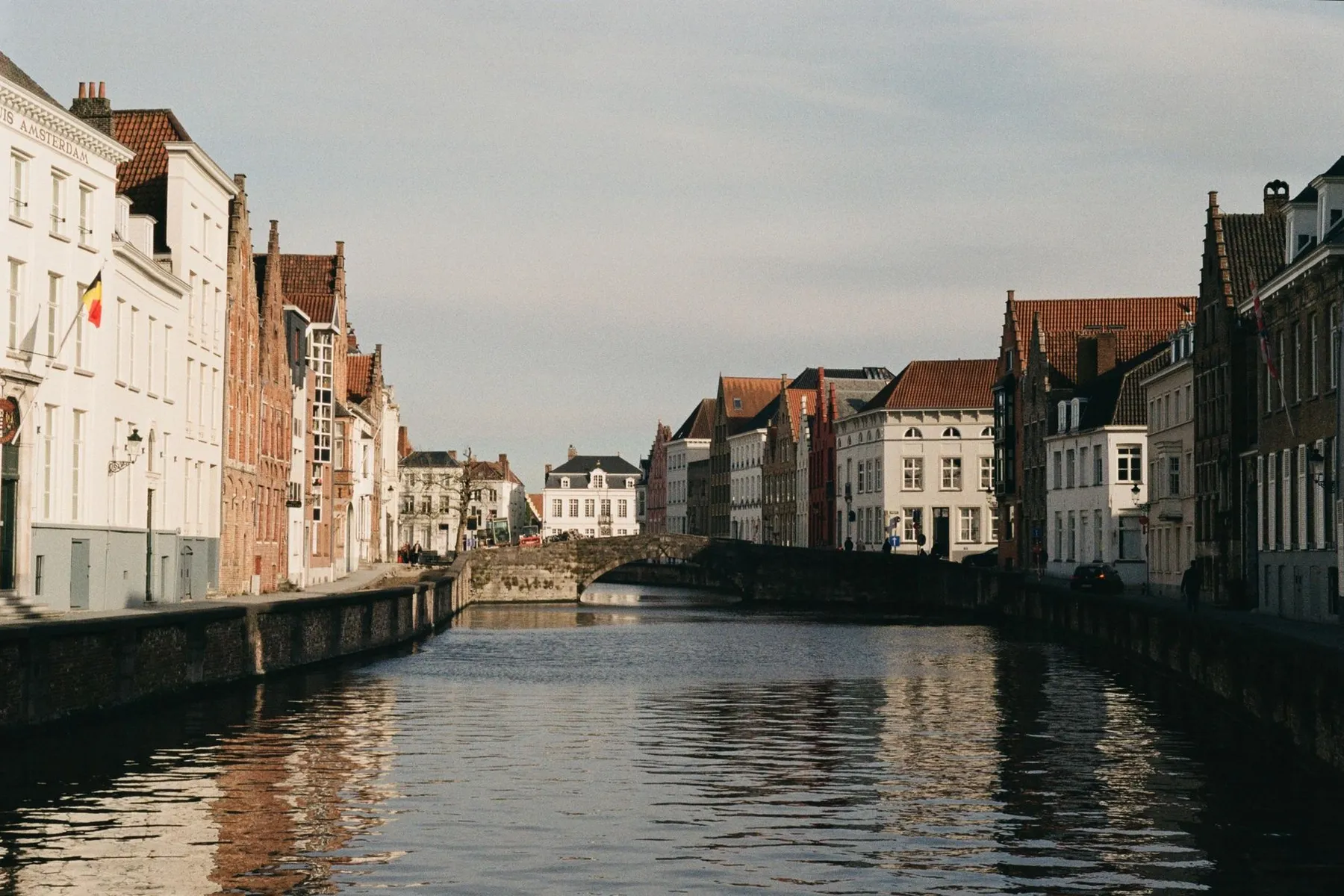
Comparison table: what changes in practice
| Criterion | Bruges | Ghent |
|---|---|---|
| Travel from Brussels | 1h01 each way | 36 min each way |
| Historic center | Smaller, focused on canals, Markt, and Belfort | Larger, with Graslei, the three towers, and Gravensteen |
| Best for | Your first glimpse of Flanders and a walk without a complex plan | Those who want useful time, bars, museums, and local life |
| Recommended pace | Early start and return after late afternoon | A relaxed morning, with room for a museum or castle |
Rule of thumb: if your return train to Brussels leaves before 6 PM, choose Ghent. In Bruges, the round trip eats up just over two hours on the train; in Ghent, about 1h12. That nearly one-hour difference lets you sit by the Graslei, step into Gravensteen, or ride out a passing shower without cutting your last attraction.
How much does a day trip from Brussels to Bruges or Ghent cost?
The base train cost for Bruges is €34 round trip per adult, using the €17 per leg quoted by SNCB (Aug 2026). For Ghent, the math is €21.60 round trip, at €10.80 per leg. Fares and promo products can change; buy or validate your ticket on the SNCB on travel day.
If you add a landmark attraction, Bruges lands around €50 per adult (Aug 2026): €34 for the train + €16 for the Belfort at the adult rate in effect between April 1 and November 2. The climb has 366 steps. Don’t treat it as a light midday break.
In Ghent, train plus Gravensteen adds up to €36.60 per adult (Aug 2026): €21.60 for the train + €15 for the castle’s base ticket. That leaves a €13.40 margin compared to Bruges’ equivalent version. This is a transport-plus-one-attraction comparison, not a closed budget: lunch, tram, and boat tours vary.
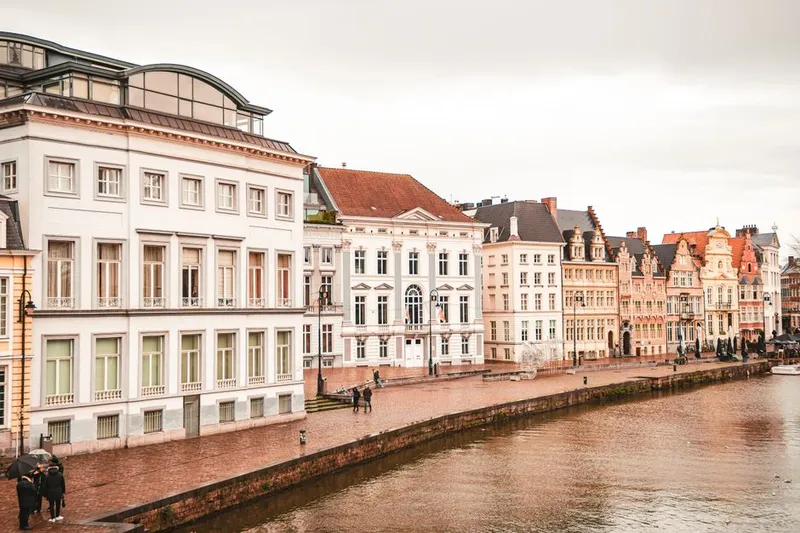
What fits in one day in Bruges and in Ghent?
In Bruges, one day holds Markt, Burg, a canal walk, Begijnhof, and one paid attraction, like the Belfort. In Ghent, you can arrive in the historic center, pass through Sint-Michielsbrug, Graslei, Korenlei, and step into Gravensteen. The difference is that Ghent supports more spontaneous stops; Bruges rewards a tightly planned sequence.
For an immediate visual hit of the medieval city, Bruges works beautifully. Use our one-day Bruges itinerary as a backbone to order your stops. A guided tour with a boat ride can help when you’d rather have context without planning every street: there’s a guided tour of Bruges with a boat ride with a validated activity.
Ghent suits those who love a lived-in city, architecture, and a meal without rushing. Book Gravensteen when it’s a priority: the castle’s official price is €15 for the base adult ticket (Aug 2026), and hours vary. If your Belgium itinerary also heads into the Netherlands, these guides to The Hague and Rotterdam help you plan the next leg without turning Brussels into a base for endless transfers.
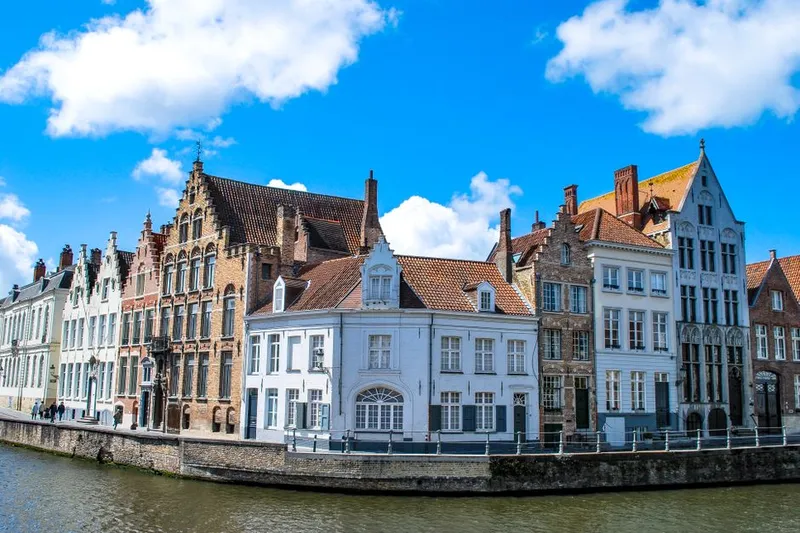
Verdict: choose Ghent for efficiency; Bruges for the scenery
Choose Ghent if you’re leaving Brussels late, you only have one full day, or you want transport to weigh less on the trip. Head out in the morning, get to the historic center, do Gravensteen or take a break at Graslei, and leave a safe buffer for the return. The direct route saves you nearly an hour of sightseeing compared to Bruges.
Choose Bruges if this is your only day in Flanders and you want canals, medieval facades, and a concentrated walking experience. Catch the earliest feasible train, save the Belfort for a time that works with its 366 steps, and don’t try to squeeze Ghent into the same day. The trip works when Bruges is the plan for the day, not a rushed stopover.
Four mistakes that make the comparison unfair
- Logistics mistake: only looking at the train. Gent-Sint-Pieters and Bruges station aren’t on the main square; factor in the urban access to each city center.
- Beware of treating the ticket price as permanent. The prices cited were verified in August 2026; check SNCB before you buy.
- Timing trap: planning Bruges with an early return. The longer commute shrinks your window for canals, museums, and a meal.
- Effort mistake: climbing the Belfry without considering the steps. There are 366 steps; anyone with limited mobility should pick a different visit.
Frequently asked questions
Is Bruges or Ghent better for a first trip to Belgium?
Bruges is better for a first trip to Belgium if you’re after that picture-perfect image of canals and a compact medieval center. Ghent is better if your first trip is short on time and you prefer a livelier city, with a 36-minute train ride from Brussels.
Can you visit Bruges and Ghent in the same day from Brussels?
You can visit Bruges and Ghent in the same day, but it’s not the best call for a typical day trip. The trains are direct, but adding up 1h01 to Bruges, 36 minutes to Ghent, and the local transfers really cuts into your time for walking around and going inside attractions.
Which city has pricier paid attractions: Bruges or Ghent?
In our baseline comparison, Bruges comes out €1 more expensive: the Belfry costs €16 at the adult rate in effect from April 1 to November 2, while Ghent’s Gravensteen costs €15 at the base adult rate, per official channels verified in August 2026.
Is Bruges or Ghent better for travelers short on time?
Ghent is better for travelers short on time because the train from Brussels takes about 36 minutes on average, versus 1h01 to Bruges. Even with the ride between the station and the center, you save nearly an hour of sightseeing over the whole day trip.
The right choice starts with the clock
Ghent handles a tight day better; Bruges delivers more when you can leave early and stay late. First, nail down your real departure time from Brussels, then pick one city to truly enjoy — the rest of the planning gets a whole lot simpler.