 Marcelo Oliveira
The Brazil–Europe repositioning cruise in 2027 happens between March and April, when the season’s ships head back to the Mediterranean. The cheapest option we found is the MSC Divina leaving Santos on 03/14/2027, with 17 days to Barcelona, from R$ 8,613 per person (Oct/2026). Costa Diadema, Costa Serena and Buenavista also make the crossing, but their details are still to be confirmed.
| 2027 departures | Santos 03/14, Salvador 03/17 and Buenos Aires 03/04 (Logitravel); Diadema, Serena and Buenavista to be confirmed |
|---|---|
| Duration | 17 days (MSC Divina) to 25 days (MSC Seaview from Buenos Aires) |
| Ships and lines | MSC Divina, MSC Seaview (MSC); Costa Diadema, Costa Serena (Costa); Buenavista (Corazul) |
| Price | From R$ 8,613 per person, interior cabin (Oct/2026) |
| What’s included | Cabin, buffet and main dining room meals, shows; drinks, internet and service charge extra |
| Documents | Valid passport; Brazilians don’t need a visa for Spain, Portugal, Italy and Morocco for tourism |
| Return | One-way flight from Europe to Brazil, booked separately |
| Cancellation | Varies by fare; check the cruise line’s website before paying |
In this article · 10 topics
- Which ships make the Brazil–Europe crossing in 2027?
- Which port does the cruise leave from and how do I get to the embarkation point?
- How much does it cost and what’s included in the price?
- What cabin types are there and which one is worth it?
- What documents do I need to board?
- What are the sea days and port calls like?
- Is it worth it? Who it’s for and who it isn’t
- What nobody tells you
- Conclusion
- Frequently asked questions
🚢 This article is part of Voyage’s 2026/2027 Cruise Guide: departures, ports, prices and guides to each ship.
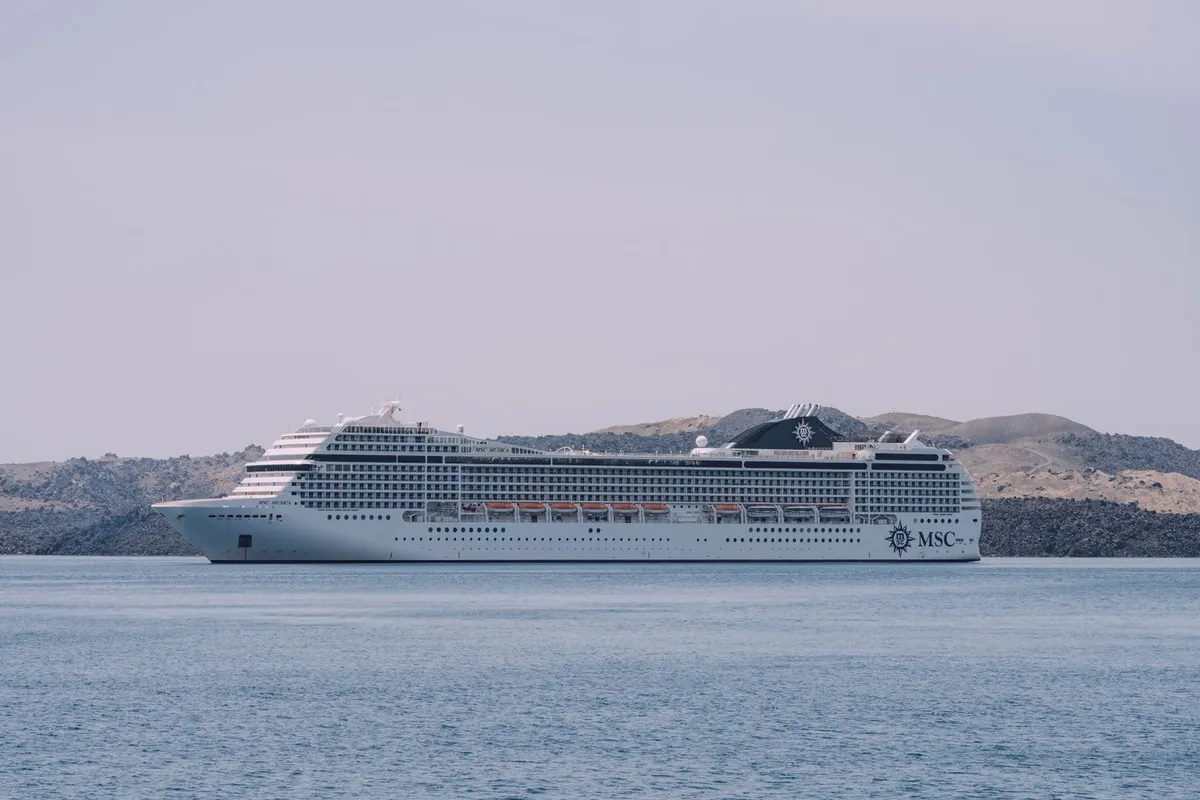
Which ships make the Brazil–Europe crossing in 2027?
Five ships make the journey from Brazil to Europe at the end of the 2026/2027 season: MSC Divina, MSC Seaview, Costa Diadema, Costa Serena and Buenavista, from Spain’s Corazul. Only the three MSC departures were on sale on Logitravel in our 10/12/2026 search; the others depend on the cruise lines’ official announcements.
| Ship | Port and date | Duration | Final destination | From |
|---|---|---|---|---|
| MSC Divina | Santos, 03/14/2027 | 17 days | Barcelona | R$ 8,613 (Oct/2026) |
| MSC Divina | Salvador, 03/17/2027 | 17 days | Barcelona and Italy | R$ 32,503 (Oct/2026) |
| MSC Seaview | Buenos Aires, 03/04/2027 (stop in Maceió) | 25 days | Barcelona | R$ 13,365 (Oct/2026) |
| Costa Diadema | Santos, 04/05/2027 | about 25–26 nights, to be confirmed | Kiel (Germany) | to be confirmed |
| Costa Serena | Rio de Janeiro, late April 2027 (date to be confirmed) | to be confirmed | Savona (Italy) | to be confirmed |
| Buenavista | Recife, 03/01/2027 (to be confirmed) | to be confirmed | Barcelona | to be confirmed |
The MSC Divina leaving from Santos stops in Rio, Salvador and Maceió before crossing the Atlantic to Santa Cruz de Tenerife in the Canary Islands. Then come Casablanca, Málaga, Alicante and disembarkation in Barcelona. The same trip can be booked from Salvador, boarding on 03/17/2027, and continues past Barcelona to Naples.
The MSC Seaview is the longest crossing: it leaves Buenos Aires on 03/04/2027, stops in Maceió and crosses to Mindelo in Cape Verde, then continues to Lisbon, Málaga, Palma de Mallorca and Barcelona over 25 days. For those living in Northeast Brazil, boarding in Maceió shortens the trip; check whether Logitravel sells the segment from there.
Costa Cruises takes the Costa Diadema from Santos to Kiel in northern Germany, departing 04/05/2027, according to the season calendar released by Costa and reported by Cruise Industry News. The published itineraries vary between 25 and 26 nights depending on the embarkation port counted, so treat it as about 25–26 nights, to be confirmed. The same publication also announced that the Costa Serena returns to the Mediterranean with a crossing in late April 2027 to Savona; the Brazilian port and exact date haven’t been confirmed by the line yet. The Buenavista, from Corazul Cruceros, is scheduled to leave Recife for Barcelona on 03/01/2027, with no confirmed sales in Brazil so far.
Partner links (advertising): we may earn a commission, at no extra cost to you. Learn more
The reverse route, from Europe to Brazil in October and November, is in the guide to the Europe–Brazil crossing by ship. April departures and the end of the season are in cruises in April.
Which port does the cruise leave from and how do I get to the embarkation point?
The crossing leaves from Santos (MSC Divina and Costa Diadema), Salvador (MSC Divina), Rio de Janeiro (Costa Serena, to be confirmed) or Recife (Buenavista, to be confirmed). In Santos, boarding is at Concais, the port’s passenger terminal, about 80 km from São Paulo city.
Those coming from another state usually fly to São Paulo and head down the mountains by bus, transfer or car. Since boarding opens in the morning and the ship sails in the late afternoon, sleeping in Santos the night before avoids the risk of missing the ship due to a flight delay or traffic on the Imigrantes highway. The guide cruise leaving from Santos explains parking and schedules; for Salvador, see cruise leaving from Salvador.
On a crossing, the embarkation port also counts as your last city in Brazil: that’s where you clear the country with the Federal Police before boarding. Arrive with your passport in hand, not just your ID card.
How much does it cost and what’s included in the price?
The Brazil–Europe crossing costs from R$ 8,613 per person in an interior cabin on the MSC Divina leaving from Santos (Logitravel, Oct/2026). The MSC Seaview from Buenos Aires starts at R$ 13,365, and the general March 2027 crossing calendar shows prices from R$ 5,654 (Oct/2026), values that change by date and cabin.
The R$ 32,503 price for the MSC Divina leaving from Salvador (Oct/2026) is what Logitravel displayed as “from” for that departure, which continues to Italy; check the cabin category before comparing, because it may reflect a higher cabin or limited availability.
| Item | Included? | Extra cost |
|---|---|---|
| Cabin and buffet and main dining room meals | Yes | — |
| Shows, pools and gym | Yes | — |
| Service charge per night | No | charged on board; confirm the amount with the line |
| Alcoholic drinks and sodas | No, unless a package | daily package or pay as you go |
| Internet | No | onboard package |
| Shore excursions | No | per tour |
| Return flight to Brazil | No | booked separately |
The real total cost of the crossing adds up the cabin, the per-night service charge (over 17 nights it adds up), drinks if you don’t buy a package, excursions in Tenerife, Casablanca and Málaga, getting to the embarkation port and the one-way flight back to Brazil. For a couple, the return flight and onboard expenses can approach the cost of the cabin itself, so do the full math before booking.
For the return, compare one-way tickets from Barcelona, Lisbon or Madrid; Lisbon usually has more direct flights to Brazil. Packages and flight bookings are sold in reais on the airline’s website or through travel agencies.
What cabin types are there and which one is worth it?
The crossing ships have four categories: interior (no window), ocean view (with window), balcony and suite. On a 17- to 25-day trip, the cabin matters more than on a short cruise: it’s where you spend your sea afternoons, so the balcony is the best value for those who can afford the difference.
| Type | Who it’s for | Watch out for |
|---|---|---|
| Interior | those who spend the day out of the cabin and want the lowest price | no natural light for more than two weeks |
| Ocean view | those who want to see the sea without paying for a balcony | fixed window, doesn’t open |
| Balcony | couples and those who want to read or have coffee outdoors | first to sell out |
| Suite | those who want space and extra service | price well above the others |
A cabin midship and on a lower deck rocks less, which helps those prone to seasickness on open Atlantic days. Avoid the bow and very high decks if you’re sensitive to motion.
On a crossing, few cabins are sold more than six months ahead for each category, and the “from” price almost always refers to the interior. Before comparing ships, open the same category for each departure: the difference between interior and balcony can be bigger than the difference between two ships.
What documents do I need to board?
For the Brazil–Europe crossing, the required document is a valid passport, because the ship disembarks outside Mercosur. An ID card won’t do. Brazilians don’t need a visa for tourism in Spain, Portugal, Italy and Morocco; always check the rule for each port-of-call country on the Itamaraty consular portal before traveling.
In Spain, immigration may ask for proof of accommodation, funds and return ticket, which includes the one-way flight you book to return to Brazil. Bring everything printed or on your phone. Minors traveling without both parents need a notarized authorization.
On board, the medical center is charged separately, and so is care at ports in Europe and Africa. On a crossing, consecutive days without a port call make an evacuation expensive.
Tip: onboard medical care is charged, and on a crossing there are consecutive days without a port; insurance with cruise coverage avoids the bill in euros. You can get a travel insurance quote.
What are the sea days and port calls like?
On the MSC Divina route, the days between Maceió and Tenerife are open sea, with no port calls. The ship schedules lectures, shows, classes and pool activities; those who enjoy reading, relaxing and meeting other passengers will love it, while those who need daily excitement may get bored.
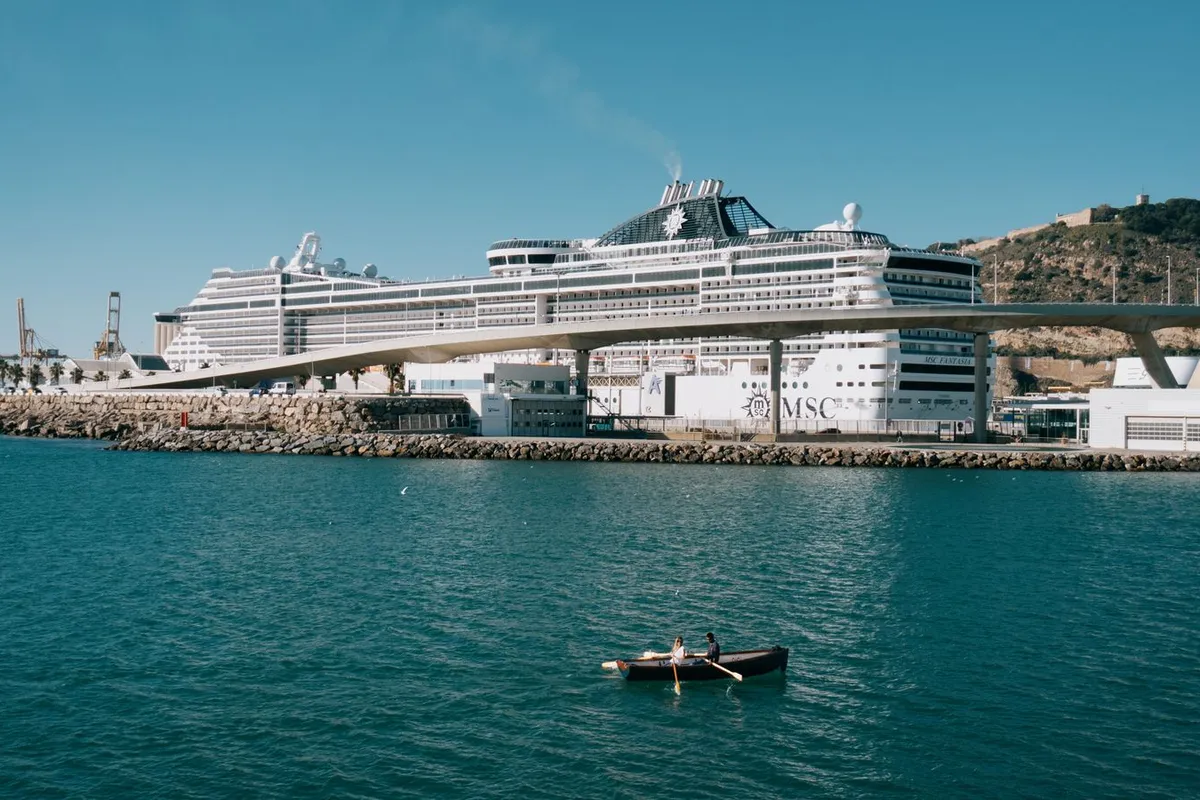
After the Atlantic, the port calls come back to back: Casablanca, Málaga and Alicante on consecutive days before Barcelona. Many people take the chance to add days in Barcelona after disembarking; Voyage has guides to the cities on the route.
At the Casablanca stop, the port is close to the Hassan II Mosque, the city’s main sight; in Málaga, the historic center is reachable on foot or with a short ride from the terminal. In Tenerife, the ship docks in Santa Cruz, from where tours to Mount Teide depart. Book excursions early or arrange your own tours, always respecting the return time to the ship.
During the crossing, the clock changes: the ship moves forward one hour on several consecutive nights until it reaches the European time zone, which is four to five hours ahead of Brasília depending on the season. That helps you arrive without jet lag, one of the real advantages over flying.
Is it worth it? Who it’s for and who it isn’t
It’s worth it for those who have time, want to reach Europe without the rush of a flight and enjoy sea days. It’s not worth it for those who get seasick easily, have only a week of vacation or expect port calls every day.
It’s worth it for retirees and couples with flexibility, for those already going to stay in Europe and needing a one-way trip, and for those who want to see the Canaries and Morocco along the way. It’s not worth it for families with small children who get bored without a beach, or for those who need stable internet to work: the onboard connection is expensive and flaky in the middle of the Atlantic.
Among the departures, the MSC Divina from Santos is the cheapest and shortest; the MSC Seaview, newer and longer, passes through Cape Verde and Lisbon. Those who want to compare with the rest of the calendar can find the other ships in 2026/2027 cruise season and in cruises in March.
What nobody tells you
The service charge is billed per night and, over 17 to 25 nights, becomes a significant amount; it’s usually posted to the cabin account automatically. Boarding time is strict and the ship doesn’t wait: on a crossing, missing the ship means buying a flight to the next port call.
The return flight should be booked with at least a day’s buffer after disembarkation, because docking delays happen. Luggage matters too: the ship doesn’t limit bags like the airline does, but the return flight does, so don’t buy too many souvenirs.
Onboard internet is sold in packages by the day or for the whole trip, and in the middle of the Atlantic the satellite connection gets slow and drops often. Those who need to work or talk to family every day should count on that cost and on periods without signal. At port calls, a European data chip or your carrier’s roaming works better than the ship’s wi-fi.
Another rarely mentioned point: the ship bills in dollars or euros to the cabin account, and the Brazilian credit card applies the IOF international purchase tax on everything consumed on board. Over 17 nights, drinks, internet and the service charge add up to a considerable bill, so track the cabin statement through the line’s app.
Finally, the Costa and Corazul departures may change date or port until official sales open in Brazil. Only book once the line publishes the date, port and price.
Conclusion
To book a Brazil–Europe crossing today, the MSC Divina leaving Santos on 03/14/2027 is the cheapest confirmed option. Add the return flight and the service charge, choose your cabin based on the length of the trip, and keep an eye on confirmation of the Costa and Buenavista departures.
Frequently asked questions
How many days does the crossing from Brazil to Europe take?
From 17 days (MSC Divina, Santos to Barcelona) to 25 days (MSC Seaview, Buenos Aires to Barcelona). The Costa Diadema, from Santos to Kiel, is about 25–26 nights, to be confirmed.
What is the cancellation and refund policy?
It depends on the fare and the line: the closer to departure, the higher the penalty. Read the fare conditions before paying and confirm on the line’s website.
Are there restrictions for children, seniors or pregnant travelers?
Cruise lines restrict boarding for pregnant travelers from a certain week of pregnancy and for babies below a minimum age, which tends to be higher on crossings. Seniors board without restriction. Confirm the line’s rule.
How do I get back from Europe to Brazil after the cruise?
With a one-way flight booked separately, preferably from Barcelona, Lisbon or Madrid, with at least a day’s buffer after disembarkation.