Seoul showcases in just a few blocks a contrast that other Asian capitals take decades to reveal: the curved rooftops of hanoks coexisting with Gangnam’s glass towers, centuries-old tea alleys just one subway stop from the studios producing K-pop for the world. You don’t have to choose between old and new Seoul—you can cross through both in a single day, on foot or by subway, without spending much. This itinerary focuses precisely on that crossing: the neighborhoods that preserve pre-industrial Korea and the ones that reinvented it as a cultural and technological powerhouse.
The neighborhoods that keep old Seoul alive
“Can you feel the Korea of pre-industrialization without leaving the capital?” You can, and the two spots below are why.
Bukchon Hanok Village
Bukchon sits between Gyeongbokgung and Changdeokgung palaces, on a hill where around 900 hanok houses are still lived in by real families—not a reconstruction built for tourists. That detail changes the behavior expected from visitors: since 2024, the Seoul city government restricts tourist visits to the 10 a.m.–5 p.m. window, and anyone wandering the residential streets outside those hours can be fined around 100,000 won (roughly $75 USD in July 2026, subject to exchange rates). The point isn’t to police tourists out of spite—it’s literally to let residents sleep without a phone flash in their window at 10 p.m.
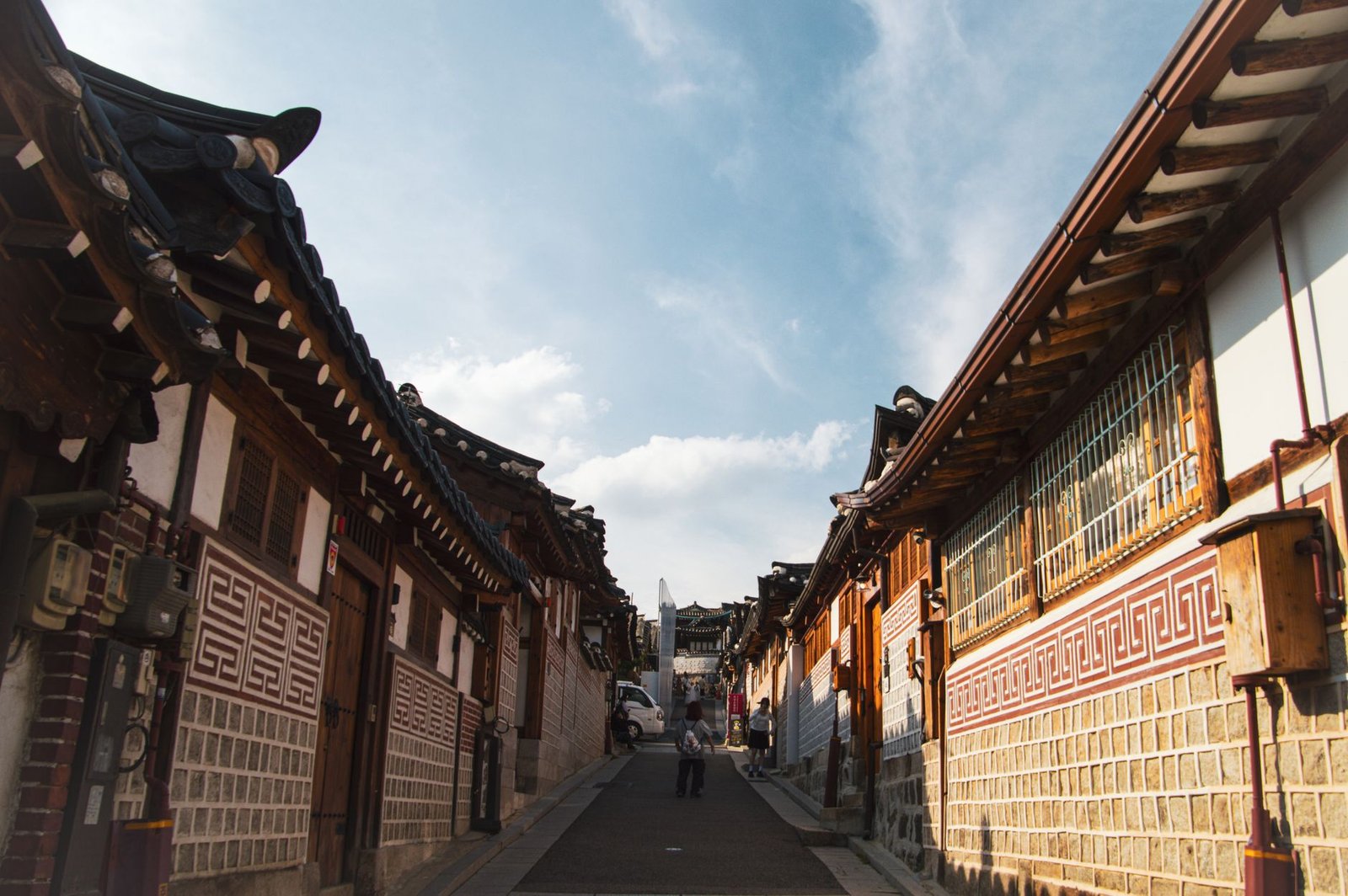
Larger groups have limits too: try to keep it to a maximum of ten people per group and avoid lingering too long in the same alley for photos, since the streets are narrow and serve as passageways for residents. The Bukchon Information Center is open from 9 a.m. to 6 p.m., closed on Sundays, and offers service in English, Chinese, and Japanese—worth stopping by before entering the more residential streets to grab a map of the spots where photography is allowed without issue.
Insadong
A ten-minute walk from Bukchon, Insadong is the neighborhood where tradition became commerce, not housing. The main street (Insadong-gil) is packed with antique shops, hanji paper stores, ceramics, and traditional tea houses set in buildings from decades past. On weekends, the street closes to cars and turns into a pedestrian-only corridor, with vendors selling Korean sweets like yeot and artisans doing live demonstrations.
It’s also the easiest neighborhood to buy a souvenir that isn’t generic: handmade stationery, custom name seals (dojang), and bulk herbal teas. Unlike Myeongdong, in Insadong moderate haggling is accepted in most craft shops, especially outside peak hours.
The neighborhoods that became a showcase of the future
“And on the other side, where’s the Korea that shows up in tech videos?” The answer changes by neighborhood—and by scale.
Gangnam
Gangnam, south of the Han River, is the district PSY’s song made famous outside Korea, but the real neighborhood goes far beyond the chorus. It’s home to tech company headquarters, cutting-edge aesthetic clinics, the COEX convention center, and one of the highest concentrations of entertainment agencies in the country. Gangnam Station, the busiest commercial hub in the area, has designer stores, 24-hour restaurants, and a nightlife that only slows down in the early hours.
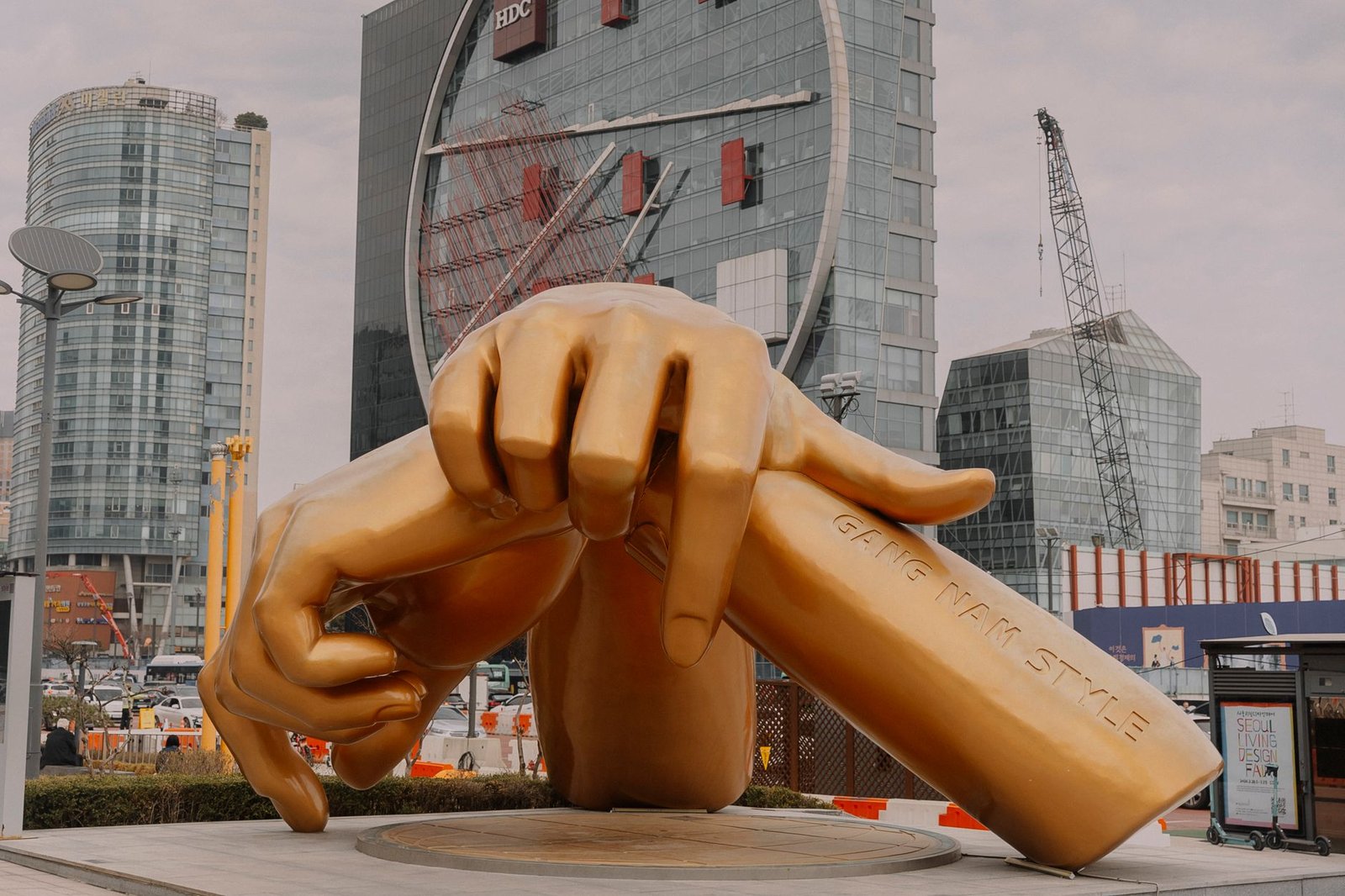
It’s worth walking over to Bongeunsa Buddhist temple, wedged between corporate towers—one of the most direct contrasts in the entire city, since the temple’s roof and the COEX skyscrapers appear in the same photo without needing zoom. At night, the Apgujeong Rodeo Street area shows Gangnam’s priciest side: Korean and international designer stores side by side with plastic surgery clinics, one of the neighborhood’s economic engines.
Dongdaemun Design Plaza (DDP)
Designed by architect Zaha Hadid and opened in 2014, the DDP is a building without a single visible straight line—a rippling metal structure that looks like it landed there. It sits atop the old Dongdaemun baseball stadium, and during construction, traces of Seoul’s original city wall were found, now on display in an archaeological park within the complex itself.
Entry to the outdoor areas and the park is free; access to the Design Museum’s internal exhibitions usually costs between 8,000 and 15,000 won ($6 to $11 USD in July 2026), depending on the current show—always check the official website before going, since the schedule changes frequently. The building is open daily, with hours varying by area between 10 a.m. and 8 p.m.; the Dongdaemun History and Culture Park subway station (lines 2, 4, and 5), exit 1, leads straight out to the plaza.
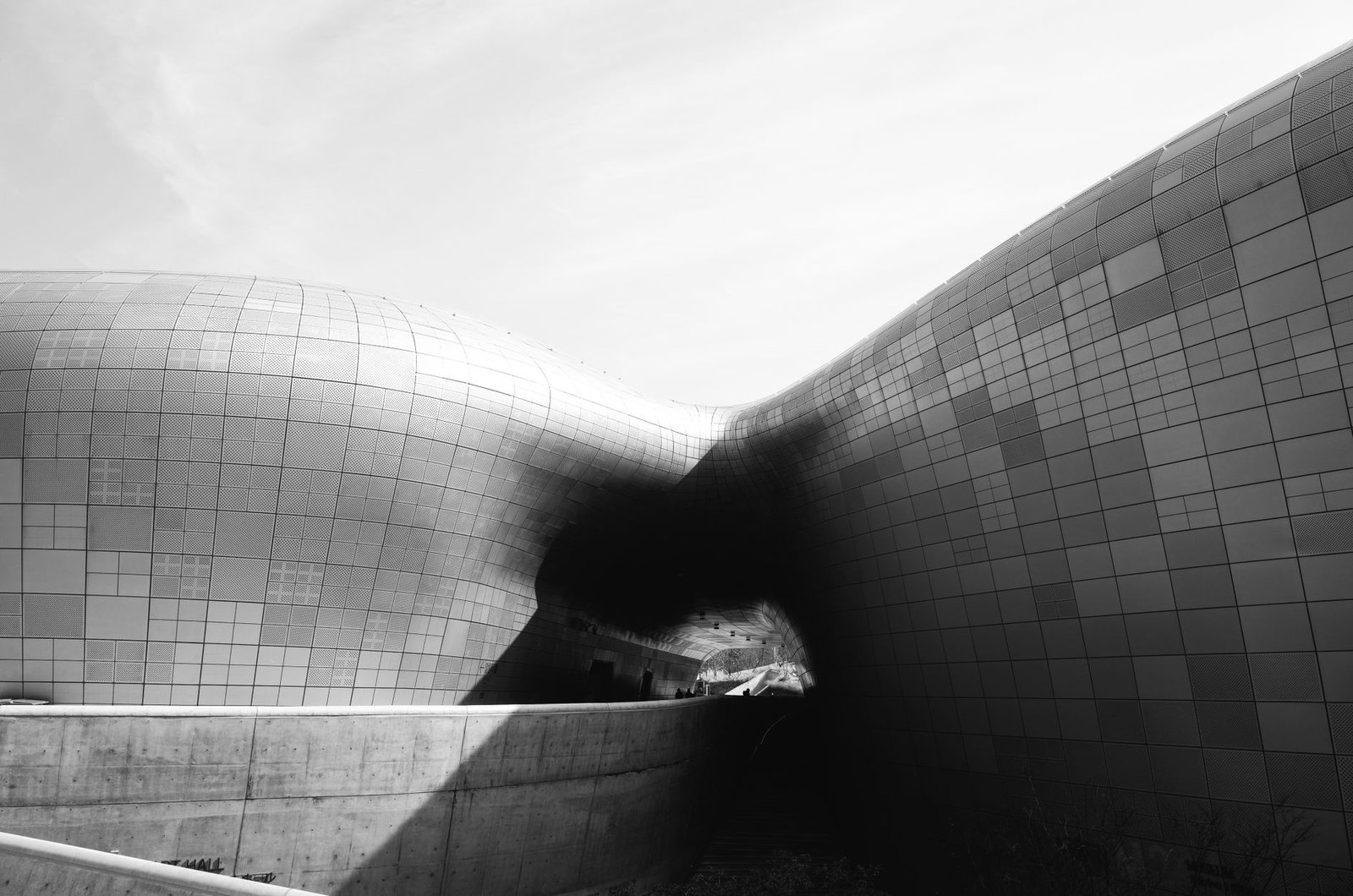
At night, the facade lights up with projections and becomes a meeting point for those leaving the nearby fashion markets—Dongdaemun is also one of Asia’s largest wholesale clothing hubs, with shops running into the early hours.
The contrast side by side: how to see both worlds in one day
“Can you fit tradition and modernity into a single itinerary without rushing?” You can, with the right order. Start early in Bukchon—before 10 a.m., you can still walk the highest part of the hill with fewer people; head down to Insadong late morning, when the shops have opened; have lunch there. In the afternoon, take subway Line 3 to Apgujeong or Gangnam—the ride from Anguk (the station closest to Bukchon/Insadong) to Gangnam Station takes about 35 to 40 minutes, with one transfer.
That commute physically sums up the article’s argument: in half an hour on the train, you leave a neighborhood with noise rules to avoid bothering neighbors and arrive at an intersection with giant LED screens and 30-story glass buildings. If you have time left, the DDP is on Line 2, letting you end the day there at night, when the illuminated facade makes up for any tired legs.
K-pop and pop culture as part of Korea’s modernity
Korean pop culture isn’t an afterthought to tourism in Seoul—it’s part of the city’s urban engineering. Gangnam concentrates the headquarters of record labels and entertainment agencies, and it’s common to see fans waiting outside recording studios or agency buildings hoping for a glimpse of an artist. K-Star Road, a sidewalk with bear statues decorated by K-pop groups, sits right in the Apgujeong/Gangnam area.
Museums and interactive K-pop and K-drama experiences, like augmented reality studios with holograms of idols, tend to be concentrated in Gangnam and Hongdae—don’t expect to find that kind of attraction in Bukchon or Insadong, which deliberately preserve the earlier aesthetic. This geographic split between “where Korea keeps its history” and “where Korea exports its pop culture” is, in practice, the most useful mental map for organizing any itinerary in the city.
For those who want to dive deeper into a complete Seoul itinerary, including palaces, K-ETA, and street food, check out the comprehensive Seoul guide here on Voyage Voyage, which covers the city from end to end.
Practical logistics: getting there, getting around, and what it costs
There are no direct flights from Brazil to Seoul; the most common connections go through Istanbul, Dubai, Doha, or Los Angeles, with total travel times between 26 and 34 hours depending on the layover. Incheon International Airport connects to central Seoul via the AREX (express train, about 45 to 60 minutes to Seoul Station) or by executive bus to major hotels.
Once in the city, the subway is the most reliable way to get around the neighborhoods on this itinerary: grab a T-money card at any convenience store near the stations and top it up as you go—each subway ride typically costs between 1,400 and 1,550 won (about R$ 5 to R$ 6 in July 2026). For travelers coming from Brazil, always double-check the need for a K-ETA (electronic travel authorization) on the official updated rules before buying your ticket, since the requirement and validity change periodically. For more details on the traditional neighborhoods, check out the official tourism site, Visit Seoul.
Frequently Asked Questions
Can you take photos inside the houses in Bukchon Hanok Village?
No. The houses are private residences lived in by real families, and photographing the interior—even with the door open—is considered invasive by residents and discouraged by the Seoul city government.
What’s the difference between visiting Insadong and Bukchon?
Bukchon is a residential neighborhood with time and behavior restrictions out of respect for the people who live there. Insadong is commercial, focused on craft, tea, and antique shops, without those same movement restrictions.
Is Gangnam worth visiting for someone who doesn’t like luxury shopping?
Yes, especially for the architectural contrast between Bongeunsa Temple and the corporate towers around it, plus the nightlife and restaurants, which don’t require a big budget to enjoy.
Does the Dongdaemun Design Plaza charge admission?
The outdoor areas, including the park with ruins of the old city wall, are free. Only the indoor exhibitions at the Design Museum charge admission, with prices varying by show.
Can you see Bukchon, Insadong, and Gangnam in the same day?
Yes, with good time planning: morning in Bukchon and Insadong, afternoon and evening in Gangnam or at the DDP, using the subway to connect the two areas.
Conclusion
What separates Bukchon from Gangnam isn’t just distance on a map—it’s a choice Seoul made to preserve one side of its history while building another in parallel, without blending the two. Walking that line—from curved rooftops to mirrored glass—is the most direct way to understand how the city became what it is today. Explore the other destination guides here on Voyage Voyage.