 Marcelo Oliveira
In February, Salar de Uyuni is in its rainy season: there may be enough water to reflect the sky, but the month doesn’t turn the entire plain into one identical surface, nor does it guarantee the phenomenon on any specific date. The accumulated rain, the wind, and the areas open that day define both the image and the route.
Hotels in Uyunifree cancellation options onlySee hotels ›Booking.com partner (advertising): we may earn a commission at no extra cost to you.
Salar de Uyuni in February falls in the rainy season
The official tourism material Bolivia te espera, published in 2025, places the salt flat’s rainy season between December and April. It’s during this period that a thin layer of water can cover the salt and produce the mirror effect. February, therefore, belongs to the climatic window for the phenomenon. It is not a guaranteed reservation of reflected sky for every day of the month.
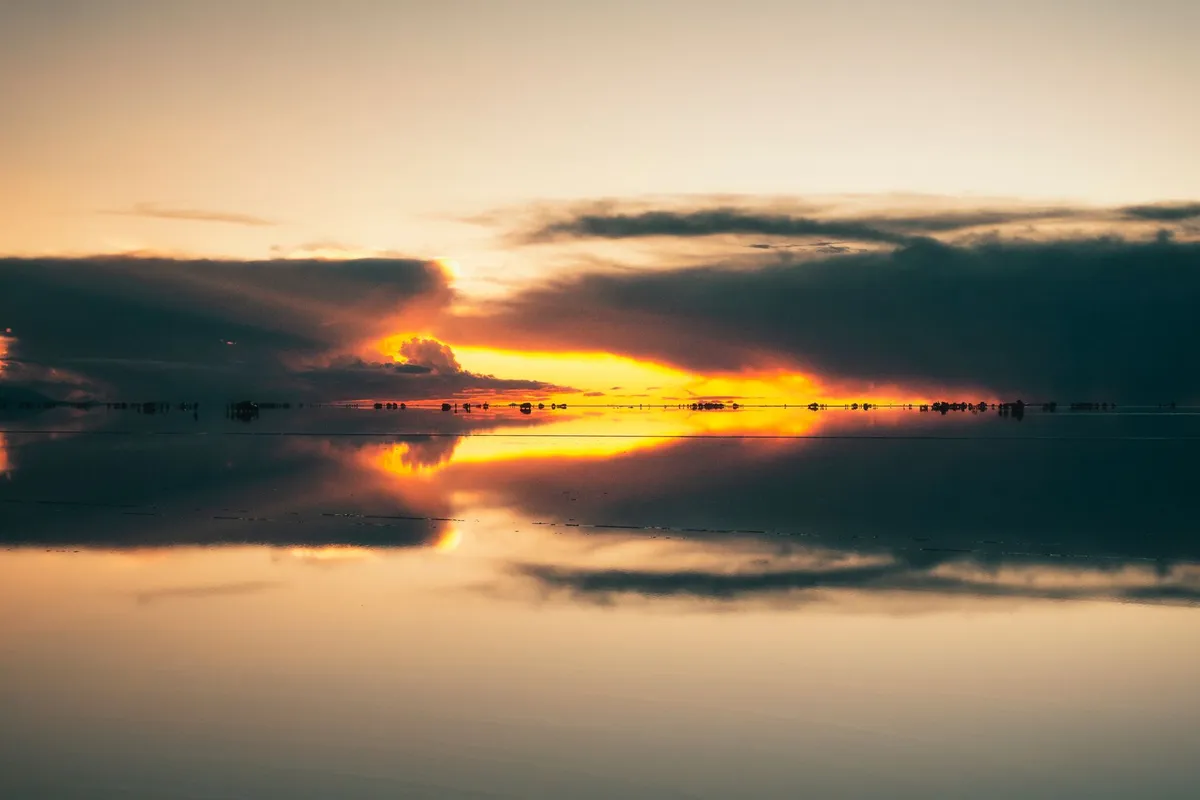
The size of that sheet of water varies. NASA Earth Observatory compared satellite images of the dry crust and the 2022 flood. That summer, abundant rains filled an exceptional stretch of the salt flat and even caused temporary travel restrictions. That episode doesn’t describe every February, but it shows the two possible outcomes of the same water: reflection and changed access.
There’s also no “average February” that can replace the observed conditions. In the February 2023 climate summary, SENAMHI of Bolivia recorded above-normal precipitation at the Potosí Uyuni station. That year’s data doesn’t serve as a forecast for the next one, but it makes the variation between seasons clear.
The water creates the mirror and also redraws the crossing
The salt flat doesn’t work like a single sheet of glass that connects everything at once. Water occupies different sectors and depths across a crust of roughly 10,000 square kilometers. Where the sheet is shallow and the surface stays relatively smooth, continuous reflections appear. Where wind creates ripples, the image fragments. In areas with too much water for a safe passage, the vehicle’s route may change.
That difference separates landscape from reach. The mirror can be visible without every classic spot being accessible. Isla Incahuasi appears among the attractions in the official Bolivian material and in the commercial itinerary of some departures, but its presence in a general description doesn’t confirm operation on a specific rainy date. The day’s itinerary is operational information, not an automatic consequence of the month.
In the dry season, the continuous white crust takes the foreground; in the rainy season, water alters the horizon, circulation, and photography. The article on Salar de Uyuni with mirror or white desert compares these two landscapes without treating one as superior.
What fits into a one-day tour — and what stays variable
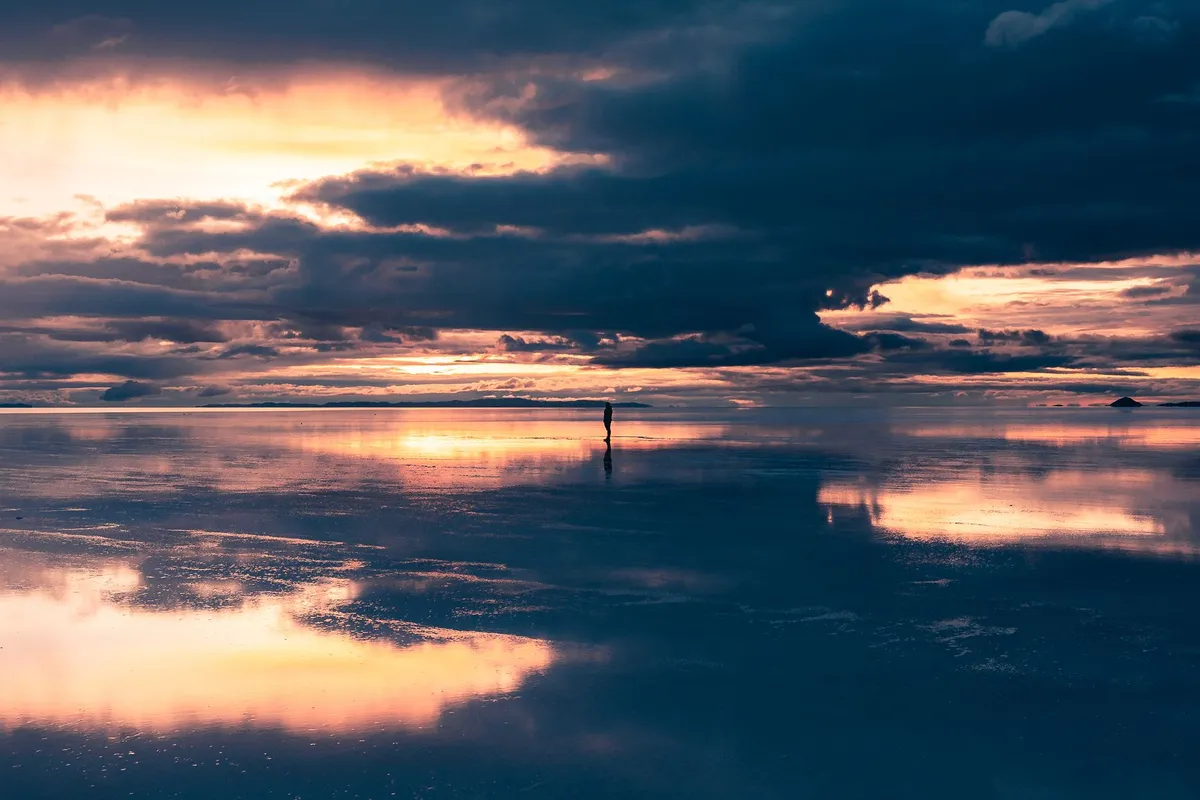
The city of Uyuni serves as the base for departures. In August 2026, the Salar de Uyuni tour advertised hotel pickup, the Train Cemetery, Colchani, entry onto the plain, Isla Incahuasi, and sunset, with return about 9 hours later. Those items describe the published product. Water, access, and local operations can change how it plays out.
The Train Cemetery and Colchani come before the longer crossing over the salt, which helps explain why a tour can still keep part of its itinerary when the interior changes. The passage through flooded sectors and to the island, meanwhile, depends on a local decision. A departure with a fixed date offers a single observed condition. A stay with more than one day available adds scheduling flexibility, without producing rain or guaranteeing a reflection.
The mirror effect also doesn’t require it to be raining during your visit. Water can remain on the crust after precipitation, while wind and clouds change the look of the surface throughout the day. Weather forecasts and the state of the salt flat answer different questions: one describes the atmosphere. The other shows the water already accumulated and the sections in operation.
Water, wind, and light don’t always produce the same photograph
The sharpness of the reflection depends on a surface with few ripples. Open sky increases the contrast between blue and salt. Clouds create shapes in the reflection, while stronger wind turns precise lines into texture. Sunset appears in many itineraries because it changes the color of the scene, not because the mirror only exists at the end of the day.
Salt water and electronic equipment are a sensitive combination. A sealed case for camera and phone reduces contact with splashes, while water-resistant footwear keeps a shallow sector from becoming a luggage problem. Sunglasses and sun protection remain relevant under clouds, since the brightness also comes from the vast white surface.
February within a trip through Bolivia and Atacama
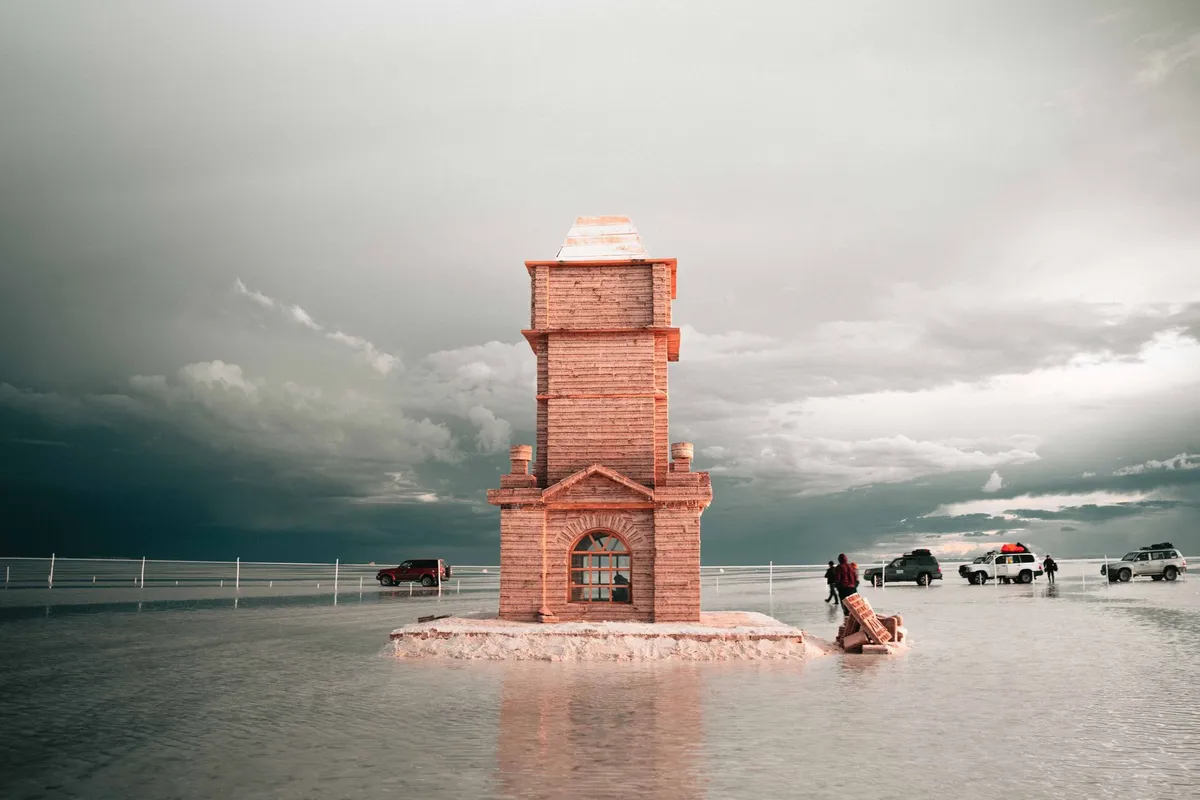
Uyuni usually features in trips that pass through La Paz or cross the border toward Chile. In that case, the salt flat’s variability adds to transport schedules, altitude, and border operations. The four-day Atacama itinerary shows the sequence on the Chilean side, while the guide to Atacama tours by altitude organizes another factor that doesn’t depend on the mirror effect.
So February tells you the season and the possibility of water, but it doesn’t single-handedly determine the landscape or the route. The operator’s most recent confirmation describes the sections in circulation. The weather source explains rain. The condition found on the crust determines which Salar de Uyuni shows up that day.
 HotelAs soon as you have datesCompare neighbourhoods and guest ratings.Booking ›
 ActivitiesBefore you travelBook ahead the ones with limited spots.Civitatis ›
 More activitiesTo compareTickets, day trips and tours with flexible cancellation.GetYourGuide ›