 Marcelo Oliveira
The first and last places in the world to ring in the new year sit at opposite ends of the Pacific: Kiritimati, in Kiribati (UTC+14), is the first inhabited place; UTC−11 marks the last turnover with residents, in Pago Pago and Alofi. After Kiribati come the Chatham Islands, Auckland and independent Samoa. Baker and Howland sit at UTC−12, but they’re uninhabited. With a well-planned flight, you can even repeat the celebration by crossing the International Date Line. If the idea is to catch the first big party of the night, Auckland is the easiest base to reach: you can already book a hotel in Auckland with free cancellation for Dec 30 to Jan 2.
Hotels for New Year’s in AucklandDec 30 to Jan 2 · free cancellation options onlySee hotels ›Booking.com partner (advertising): we may earn a commission, at no extra cost to you.
The order of the New Year’s turnover across the Pacific
| Place | Time zone at the 2026/27 turnover | When it enters the new year |
|---|---|---|
| Kiritimati, Kiribati | UTC+14 | First inhabited place |
| Chatham Islands, New Zealand | UTC+13:45 | 15 minutes later |
| Auckland and Samoa | UTC+13 | One hour after Kiritimati |
| Pago Pago, American Samoa; Alofi, Niue | UTC−11 | Last inhabited places |
| Baker and Howland | UTC−12 | Last time zone; uninhabited islands |
1. Kiritimati, Kiribati: the first inhabited place
The Line Islands, where Kiritimati is located, use UTC+14 and open the world’s turnover sequence. The Kiribati Tourism Authority presents the island as the first place to welcome the New Year and the first to see the sunrise on January 1 (accessed 10/07/2026). Kiribati spans three time zones; the capital Tarawa, for example, is not on the same time as Kiritimati. To plan the trip, start with the official Line Islands guide and confirm connections and lodging: the distance and limited supply call for a route with some slack.
- Join the group →New Year’s 2027 updates on WhatsAppSchedule, attractions and new ticket batches. Leave whenever you want.
Prefer email? Get it by email
2. New Zealand: Chatham gets there before Auckland
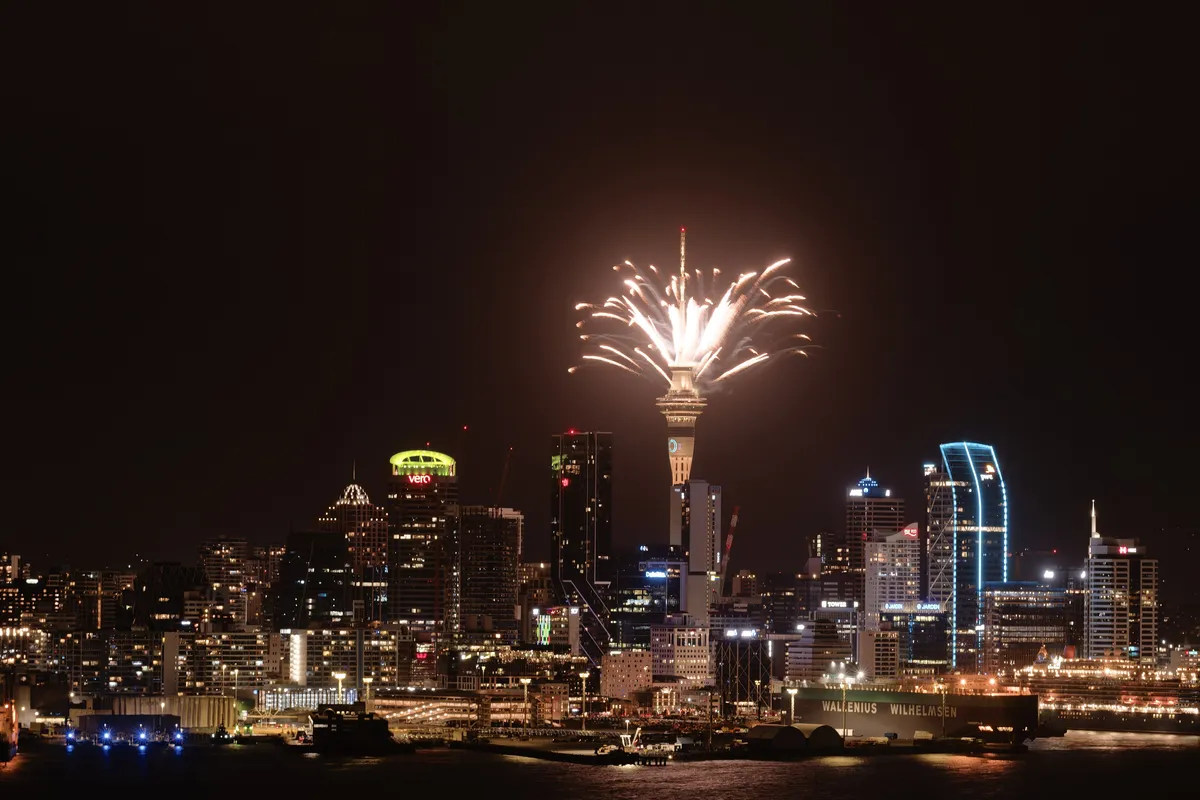
The Chatham Islands, a New Zealand territory, welcome the new year 15 minutes before Auckland: at the 2026/27 turnover, the time zones are UTC+13:45 and UTC+13, respectively. The country’s daylight saving time runs from September 27, 2026 to April 4, 2027; the law sets Chatham 45 minutes ahead of New Zealand standard time (New Zealand government, accessed 10/07/2026). In Auckland, the Sky Tower hosts one of the most famous countdown images. To continue the Pacific route after New Zealand, check out the New Year’s Eve guide to Sydney too.
- Tip: the Sky Tower hosts Auckland’s most famous countdown; staying downtown (CBD) keeps you from depending on transport on the way back. See hotels in downtown Auckland for Dec 30 to Jan 2.
3. Samoa: the route to try for two turnovers
Independent Samoa adopts UTC+13; so at the 2026-to-2027 turnover, Apia and Auckland reach midnight together. Samoa is not the last country to celebrate. The chance to party twice lies in heading from Apia to Pago Pago, in American Samoa (UTC−11): Samoa Airways warns that the crossing crosses the time zone and the passenger arrives on an earlier date. In theory, after midnight in Apia, a flight on January 1 can take you to the 31st in Pago Pago, before the second countdown. Check the Samoa Airways route and schedule (page accessed 10/07/2026); dates, times, seats and entry requirements must be confirmed for the trip.
Pago Pago, in American Samoa, and Alofi, in Niue, use UTC−11, the last time zone with residents, according to the American Samoa time zone and Niue pages (accessed 10/07/2026). Baker and Howland sit another hour behind, at UTC−12; the U.S. Fish and Wildlife Service states that Baker is uninhabited, and its material on the remote Pacific islands notes that Baker and Howland were uninhabited when rediscovered (accessed 10/07/2026).
If you’re planning the trip, search for flights to Auckland, lodging in Auckland and tours in the city. For the international crossing, include travel insurance in your planning; it helps you handle medical costs outside Brazil.
Where to stay to catch the first turnovers
Auckland is the most practical gateway for the Pacific route; flights to Apia leave from there. Kiritimati has limited supply and calls for a route with some slack.

- UTC+13 at the 2026/27 turnover
- Countdown at the Sky Tower
Dec 30 to Jan 2, 2 adults, free cancellation rates only.
Book with Booking- UTC+13, same as Auckland
- Starting point to try for the 2nd turnover in Pago Pago
Dec 30 to Jan 2, 2 adults, free cancellation rates only.
Book with Booking- UTC+14: opens the world sequence
- Limited lodging supply
Dec 30 to Jan 2, 2 adults, free cancellation rates only.
Book with BookingFrequently asked questions
What is the first inhabited place to ring in the new year?
Kiritimati, in the Line Islands of Kiribati, uses UTC+14 and welcomes the New Year before the other inhabited places. The Kiribati Tourism Authority confirms this position (accessed 10/07/2026).
What is the last inhabited place to welcome the New Year?
Pago Pago, in American Samoa, and Alofi, in Niue, use UTC−11, the last time zone with residents, according to Timeanddate (accessed 10/07/2026). Baker and Howland sit at UTC−12 and are uninhabited, according to the U.S. Fish and Wildlife Service (accessed 10/07/2026).
Can you celebrate the New Year twice?
You can try by flying from independent Samoa to American Samoa after the first turnover: Samoa Airways states that the crossing crosses the time zone and arrives on an earlier date (accessed 10/07/2026). Times, flight operations and entry requirements must be confirmed for the trip.
Do New Zealand and Samoa ring in the new year at the same time?
Auckland and independent Samoa are at UTC+13 at the December-to-January turnover: New Zealand’s daylight saving rule and Samoa’s standard time law support this comparison (sources accessed 10/07/2026). The Chatham Islands enter 15 minutes earlier, at UTC+13:45, according to the New Zealand government.