Paris’s covered passages are the prettiest shortcut between the Grands Boulevards, the Palais-Royal, and the streets of the 2nd arrondissement. Beneath their 19th-century glass roofs, you’ll find bookshops, antique dealers, bistros, and mosaic floors—all on a walking route that dodges traffic and works even on a rainy day.
The best route through Paris’s covered passages links Passage des Panoramas, Jouffroy, Verdeau, Galerie Vivienne, and Véro-Dodat in half a day; start near the Grands Boulevards metro and save Galerie Vivienne for last.
Getting to Paris’s covered passages
Almost all the most interesting passages sit on the Right Bank, just a few blocks from the Grands Boulevards. The Grands Boulevards station, on lines 8 and 9, is the most logical gateway to Panoramas, Jouffroy, and Verdeau. For Galerie Vivienne and Passage Véro-Dodat, the Bourse, Palais Royal–Musée du Louvre, and Pyramides stations shorten the walk.
The circuit is almost entirely flat and fits neatly between two appointments in the center. Use the RATP site to check for metro disruptions on the day. Don’t bother hailing a taxi for each gallery: the short distances are part of the experience, and the streets between passages help you get a feel for the neighborhood.
Best time to go and how long to allow
The covered passages work year-round because the glass roofs protect from rain and wind, but they aren’t museums with a single opening time. Shops, cafés, and gates can have their own hours; weekday mornings are usually the quietest time for photos and taking in the details.
Allow three hours for Panoramas, Jouffroy, Verdeau, and Vivienne without long stops. To browse shops, grab a coffee, and add Véro-Dodat, give yourself half a day. Avoid arriving late in the afternoon expecting every door to be open: some galleries close early or limit access outside business hours.
What to see in Paris’s covered passages
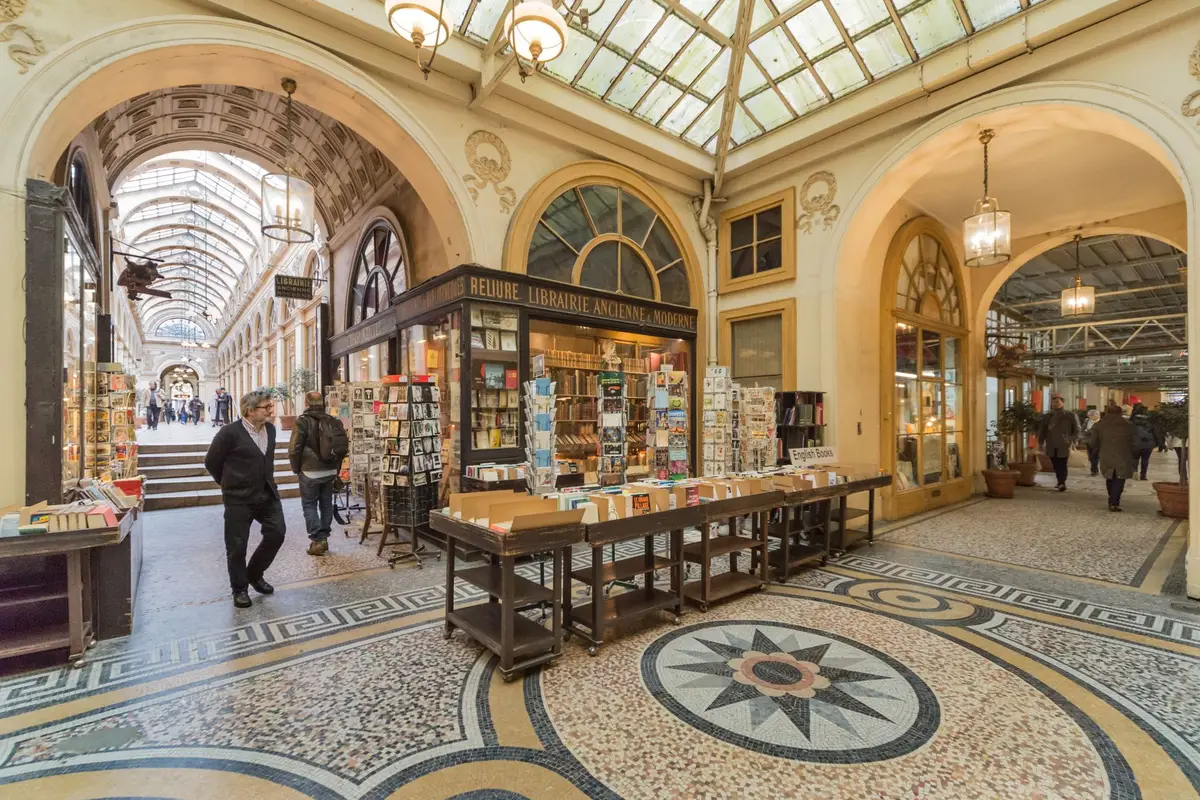
The galleries aren’t just pretty corridors: they were an urban response to commerce and weather before the big department stores. Paris preserves more than twenty passages and galleries of this kind, many near the Grands Boulevards; Paris je t’aime keeps a good overview of the best-known ones.
Passage des Panoramas: where it all began
The Passage des Panoramas, opened in 1799, is one of the oldest and should kick off your route. It has small offshoots, restaurants, and shops that keep it from feeling like a preserved set under a glass dome. Walk slowly and look for the inscriptions, narrow shopfronts, and shifts in light between each stretch.
Don’t treat the place just as a foodie address. The charm lies in realizing the passage cuts through buildings and connects a commercial Paris that predates Haussmann’s renovations. At Panoramas, walk first and pick your table after; that way lunch doesn’t swallow the whole route.
Passage Jouffroy and Passage Verdeau
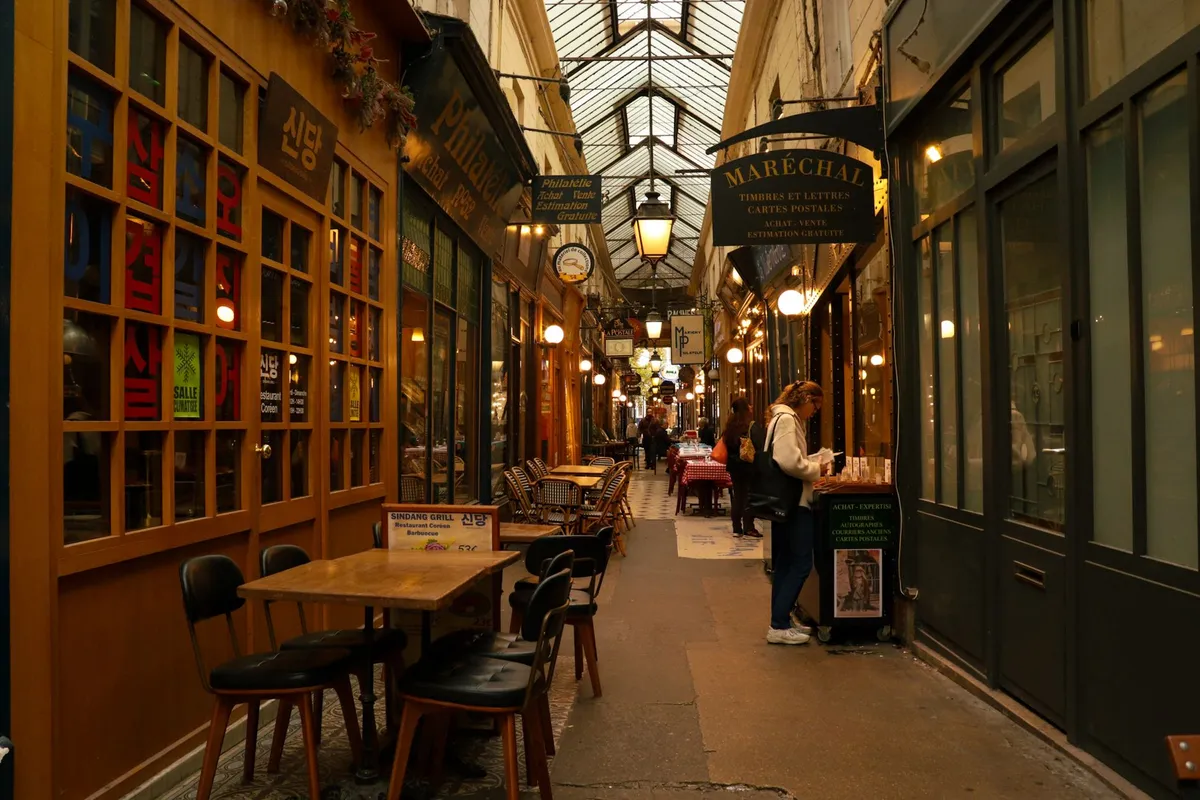
The Passage Jouffroy, opened in 1846, leads to the Musée Grévin and houses the Hôtel Chopin; it’s one of the most photogenic galleries in the group. Just ahead, Passage Verdeau offers antique shops and art galleries in a quieter atmosphere. The two work as a natural sequence and show the variety of uses that has kept these spaces alive.
Galerie Vivienne and Passage Véro-Dodat
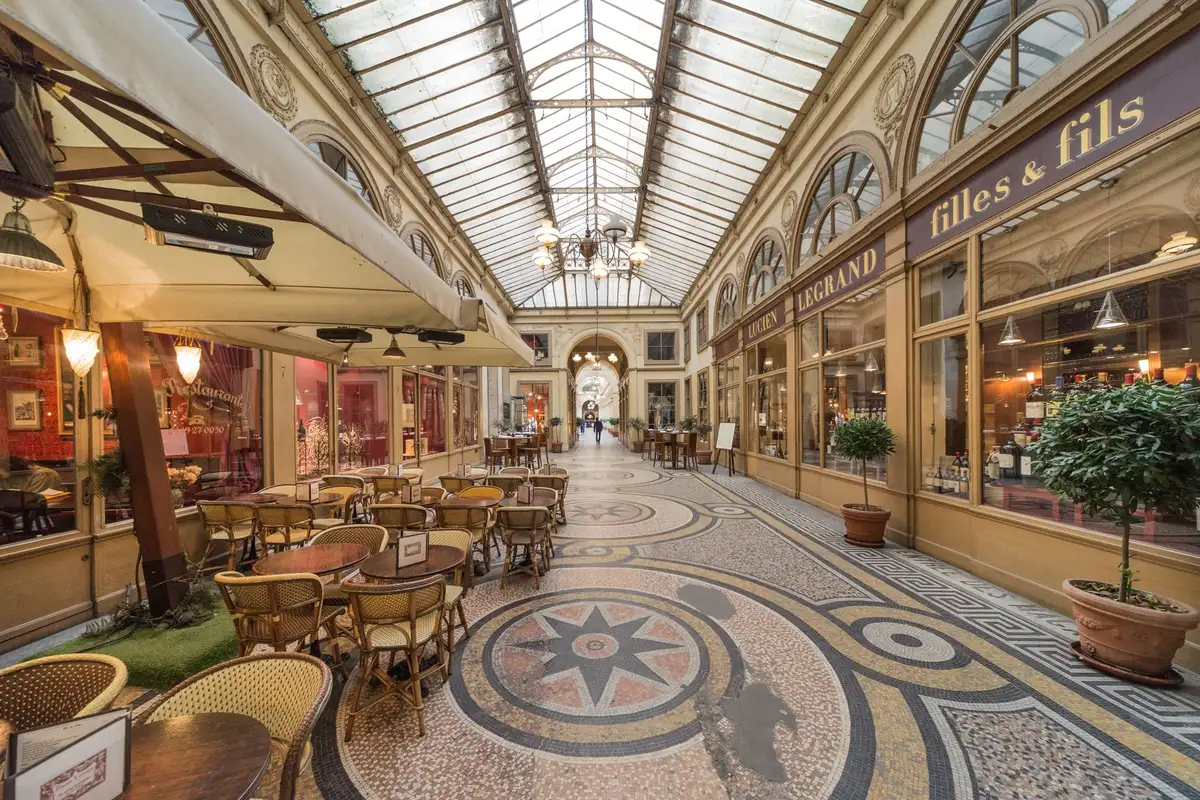
The Galerie Vivienne is the most ornate stop: mosaic floors, a glass ceiling, and more elegant shops. Passage Véro-Dodat, near the Louvre, is smaller and more sober, with a long perspective and geometric flooring. They aren’t copies of each other; that difference is exactly why you should see both.
Take photos without blocking the shops and keep your voice down. These are public places, but they’re also working corridors of commerce. That’s especially true at Vivienne, where the flow of visitors can create the false impression that it’s a tourist set.
Half-day route through Paris’s covered passages
Start at the Passage des Panoramas in the morning, cross through Jouffroy, and continue to Verdeau. Then walk toward Bourse and the Galerie Vivienne; finish at the Palais-Royal or walk on to Passage Véro-Dodat, near the Louvre. This order avoids backtracking and saves the more elaborate galleries for when your eyes are already trained for details.
If you’re short on time, cut Verdeau and Véro-Dodat, not Panoramas and Vivienne. If it rains, the route makes even more sense, but keep in mind the stretches between galleries are still open to the sky. For architecture lovers, notice the floors, light fixtures, iron structures, and how the entrances hide in ordinary facades.
A good rule is to alternate passage, street, and pause: step into a gallery, walk a few blocks, stop for coffee, and return to a new glass roof. The circuit doesn’t need a guide to work, but it does ask for curiosity so it doesn’t turn into just a list of photos.
What to pair with the passages on the same day
The passages fit perfectly into a day of Palais-Royal, the Louvre, and the Grands Boulevards. After Vivienne, the proximity to the Palais-Royal lets you continue through gardens and arcades; Véro-Dodat is a reasonable walk from the Louvre. If you prefer a less monumental Paris, save the museum for another day and stretch your walk through neighborhoods like Belleville.
The Belleville walking route in Paris makes an interesting counterpoint: 19th-century commerce and architecture in the morning; viewpoints and street art in the east by late afternoon. For another off-the-beaten-path walking plan, the Canal Saint-Martin route is also worth a look.
If you’d like an overview before exploring on your own, the guided tour of Paris helps you get your bearings in the central neighborhoods and can be saved for your first day.
Where to eat without turning the route into a window-shopping marathon
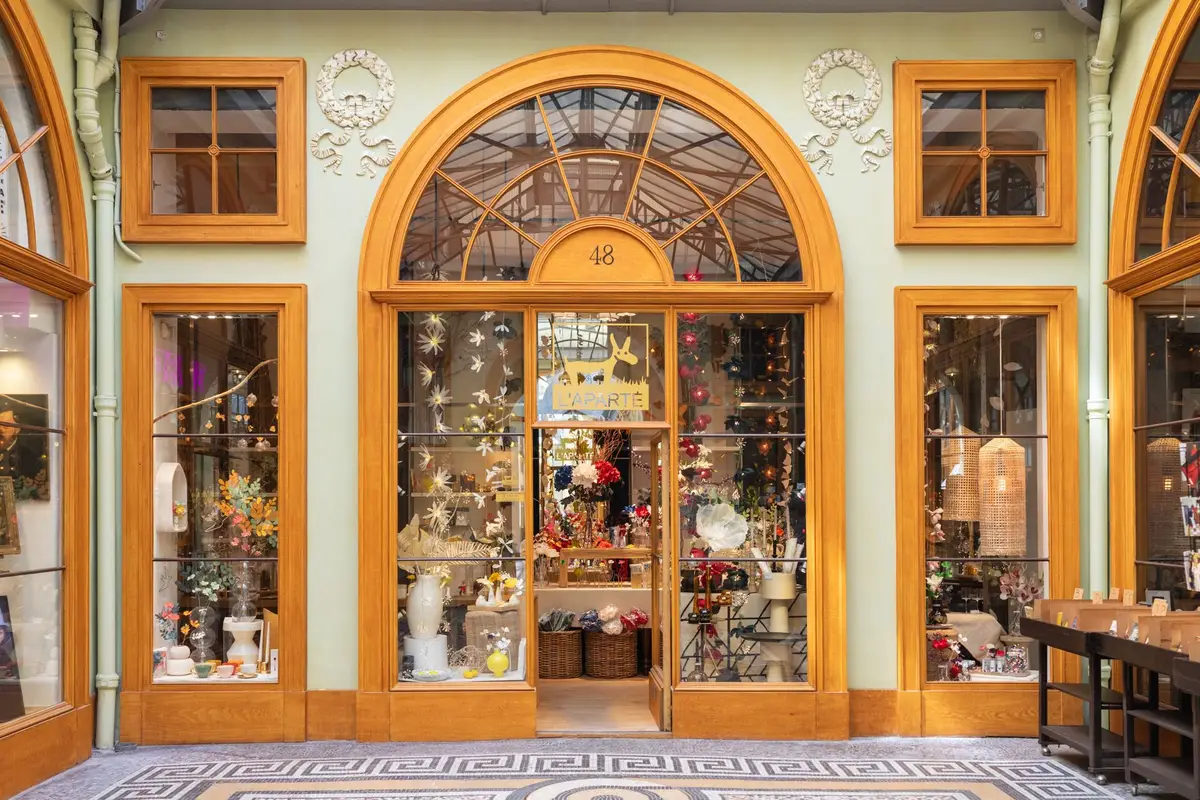
Panoramas and Choiseul have restaurants and quick bites, but prices and quality vary a lot. Pick a stop based on the menu and the hours, not just the gallery’s photogenic appeal. A short meal at Panoramas works well; for dinner, you can step outside the circuit and find a table around the Grands Boulevards.
To save money, grab a coffee and a pastry instead of turning every stop into a shopping spree. Paris’s covered passages pay off most when you buy time for people-watching, not a string of pricey meals. Check menus and make reservations directly with the spot you choose.
Where to stay to explore the galleries
The 2nd arrondissement, Bourse, Opéra, and Palais-Royal are efficient bases for this itinerary. Staying there cuts down on transit time but usually costs more. République and Canal Saint-Martin are solid alternatives with easy metro access and a vibe that’s less shopping-focused.
When comparing hotels, check the walking distance to the nearest station and the noise policy: the boulevard area has plenty of nighttime activity. For a first trip, being near a direct metro line usually beats scoring an address inside a famous passage.
Practical tips for enjoying the passages
There’s no ticket to walk through the galleries, but they aren’t open 24 hours. Respect closed gates, store hours, and private areas. Bring a portable charger if you’ll be using maps a lot, and keep normal awareness of your wallet and phone in stations and crowded streets.
On rainy days, arrive early: plenty of people have the same idea. On sunny days, use the passages as a breather between outdoor stops. The best souvenir from the circuit is usually a detail—a mosaic, an old sign, a window display—that you only notice when you slow down.
Frequently asked questions
What are the most beautiful covered passages in Paris?
The most beautiful covered passages in Paris include Passage des Panoramas, Passage Jouffroy, Passage Verdeau, Galerie Vivienne, and Passage Véro-Dodat. Each has its own scale and character, so it’s worth putting together a circuit rather than picking just one.
Are the covered passages in Paris free?
The covered passages in Paris are free to walk through, but shops, cafés, museums, and restaurants have their own prices and hours. Since the gates can close outside business hours, double-check the schedule before you visit.
How long does the covered passages itinerary take?
The covered passages itinerary in Paris takes three to four hours when it includes Panoramas, Jouffroy, Verdeau, and Galerie Vivienne. With lunch, shopping, and Véro-Dodat, set aside half a day.
Which metro should I take for Passage des Panoramas?
Grands Boulevards station, served by lines 8 and 9, is one of the most convenient for Passage des Panoramas. From there, Jouffroy and Verdeau are just a few minutes’ walk away.
How to take in the galleries without rushing
Before stepping into a passage, stop outside and study the entrance. Many begin almost hidden in boulevard facades; inside, the shift in scale is immediate. That contrast explains why they shaped 19th-century urban life: they offered shelter, commerce, and an alternative route through a city growing fast.
Pay attention to the engraved names, the width of the corridors, and how light filters in from above. Not every shop will be your thing, and that’s fine. The passages work best as lived-in architecture rather than a mall. If one is crowded, move on to the next and circle back later; the circuit has plenty of flexibility for that.
To plan other routes without repeating the center, check out the Paris guides on Voyage Voyage. Spreading attractions across neighborhoods cuts down on transit and leaves room for discoveries that don’t fit on a list.
Conclusion
The covered passages prove that Paris rewards those who trade the obvious avenue for a discreet doorway. Use the itinerary as a framework, keep time for detours, and follow Voyage Voyage to find other paths the city hides in plain sight.