Iran is home to some of the Middle East’s best-preserved historic cities—Isfahan, Shiraz, and Persepolis—but Brazil’s Ministry of Foreign Affairs (Itamaraty) advises against non-essential travel to the country in 2026 due to regional tensions. If you still decide to go, you’ll need to sort out your visa, carry cash (Visa and Mastercard don’t work due to sanctions), and follow a mandatory dress code for women throughout the country.
Before any other planning: check the latest travel advisory from Itamaraty at gov.br/mre and assess the risk carefully—the Brazilian government currently advises against non-essential travel to Iran.
Getting to Iran
There are no direct flights from Brazil to Iran. The most common route involves a connection in Istanbul, Doha, or Dubai to Imam Khomeini International Airport (IKA) in Tehran, the country’s main gateway. Airlines like Turkish Airlines and Qatar Airways operate these connections regularly.
The visa situation for Brazilians is a subject of conflicting information between sources. According to Iran’s Ministry of Foreign Affairs, the visa waiver currently applies only to citizens of a specific group of countries (such as Azerbaijan, Bolivia, Turkey, Syria, Lebanon, Georgia, Armenia, Venezuela, Egypt, Malaysia, and China)—Brazil is not on that list in the most recent official sources. For those who need to apply for a visa, the consular fee is around R$ 270 plus agent fees of about R$ 559, rates current as of July 2026, with a processing time of 10 business days. Before buying any tickets, confirm the current requirement directly with the Iranian Embassy in Brasília.
It’s also worth noting that Brazil is considered by Iranian authorities to be a risk area for yellow fever transmission—you may be asked for your vaccination certificate upon arrival, depending on your recent travel history. Confirm this requirement with the consulate before you fly, as health rules change frequently.
Best time to visit and how long to stay in Iran
The best months to visit Iran are March to May (spring, mild temperatures) and September to November (fall, before the intense cold of winter on the Iranian plateau). Summer (June to August) is extremely hot in cities like Isfahan and Yazd, with daytime temperatures exceeding 40°C.
A 10- to 12-day itinerary lets you cover the classic Iranian tourism circuit: Tehran, Isfahan, Shiraz, Persepolis, and Yazd. Those with less time (6 to 7 days) usually prioritize Tehran, Isfahan, and Shiraz, leaving Yazd and the desert out.
Travelers who include Yazd in their itinerary typically add 1 to 2 nights in the Lut Desert, considered one of the hottest places on Earth in the height of summer—the most sought-after experience is spending a night camping in the dunes, stargazing far from the cities’ light pollution. This extension is usually organized by local agencies in Yazd, with 4×4 transport included.
What to see in Iran
Iran’s historical circuit concentrates its main attractions in three hubs: Isfahan (Safavid architecture), Shiraz and Persepolis (ancient Persian heritage), and Tehran (the capital, with museums and palaces).
Naqsh-e Jahan Square and the mosques of Isfahan
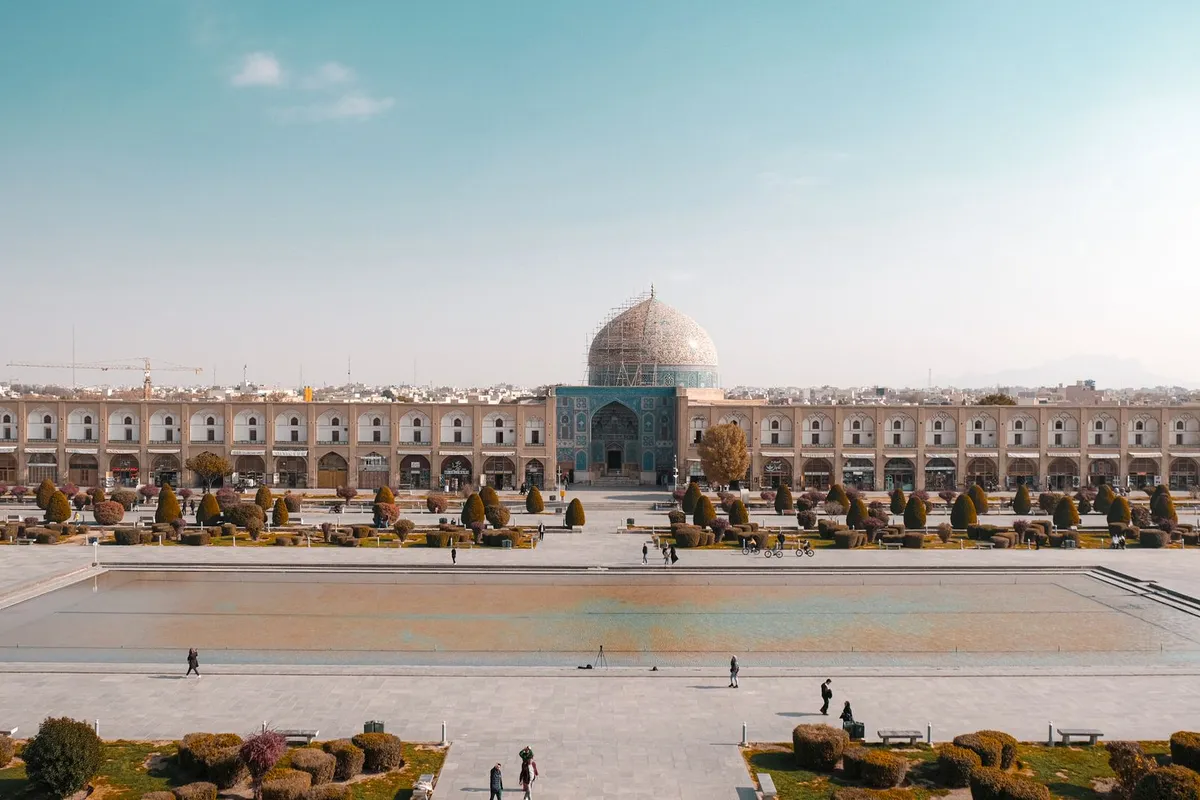
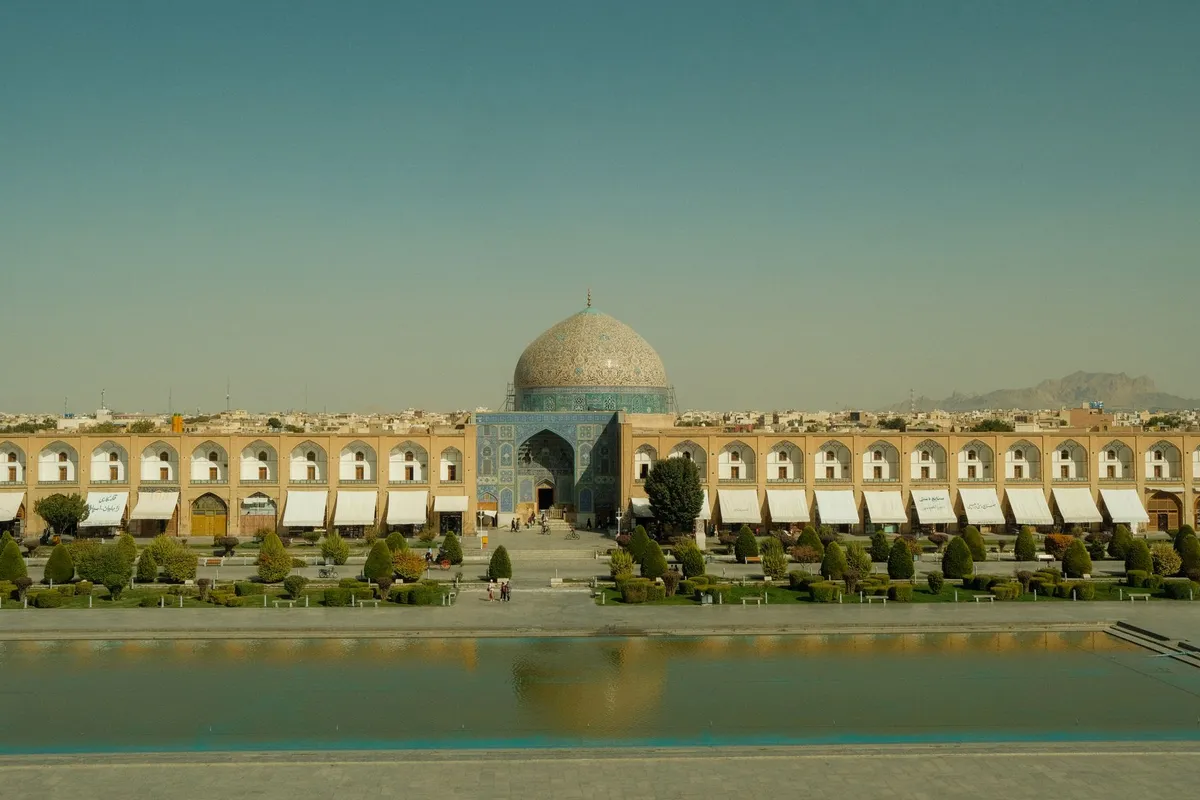
Naqsh-e Jahan Square, built in the early 17th century, is the second-largest square in the world and is surrounded by the Shah Mosque (Masjed-e Shah), the Sheikh Lotfollah Mosque, and the Ali Qapu Palace. It’s been a UNESCO World Heritage Site since 1979 and is the historic heart of Isfahan, considered by many travelers to be Iran’s most beautiful city.
Persepolis, the ancient Persian capital
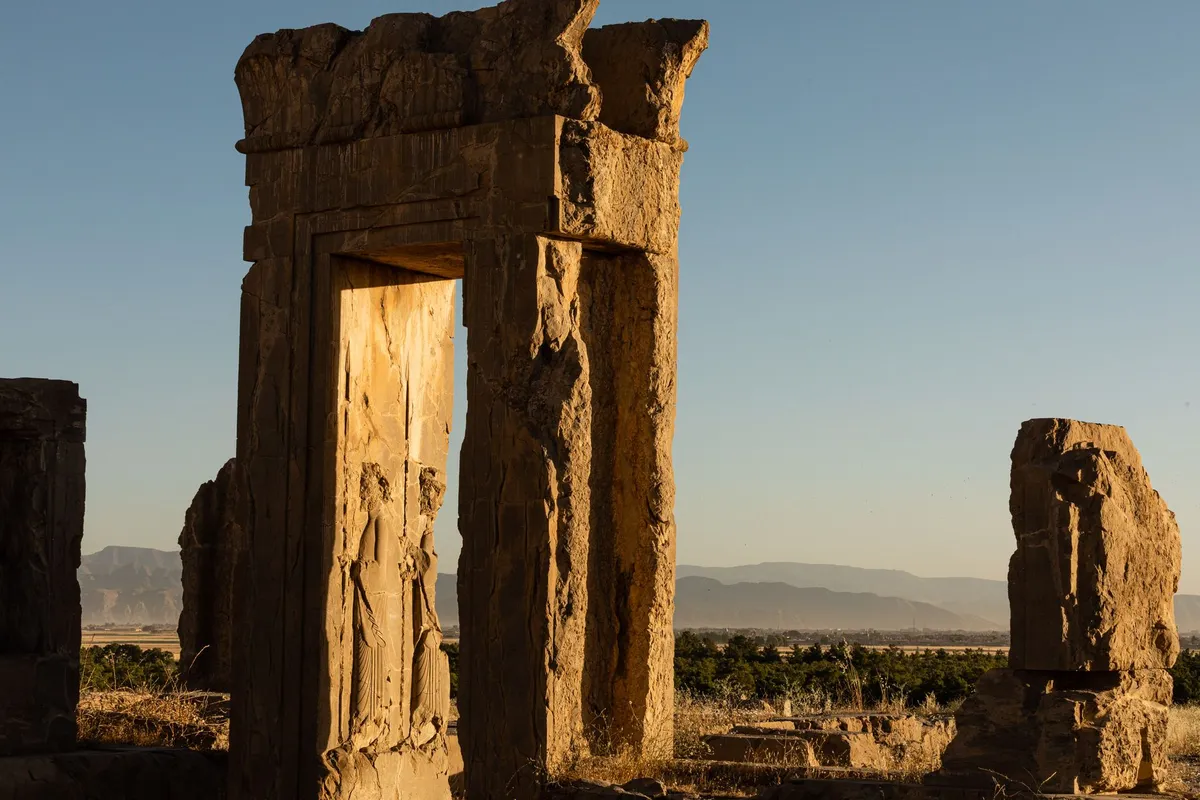
Persepolis was the ceremonial capital of the Achaemenid Empire, founded by Darius I around 518 BC and burned down by Alexander the Great in 330 BC. The ruins—monumental columns, the Gate of All Nations, and stone-carved reliefs—lie about 60 km from Shiraz and have been a UNESCO World Heritage Site since 1979.
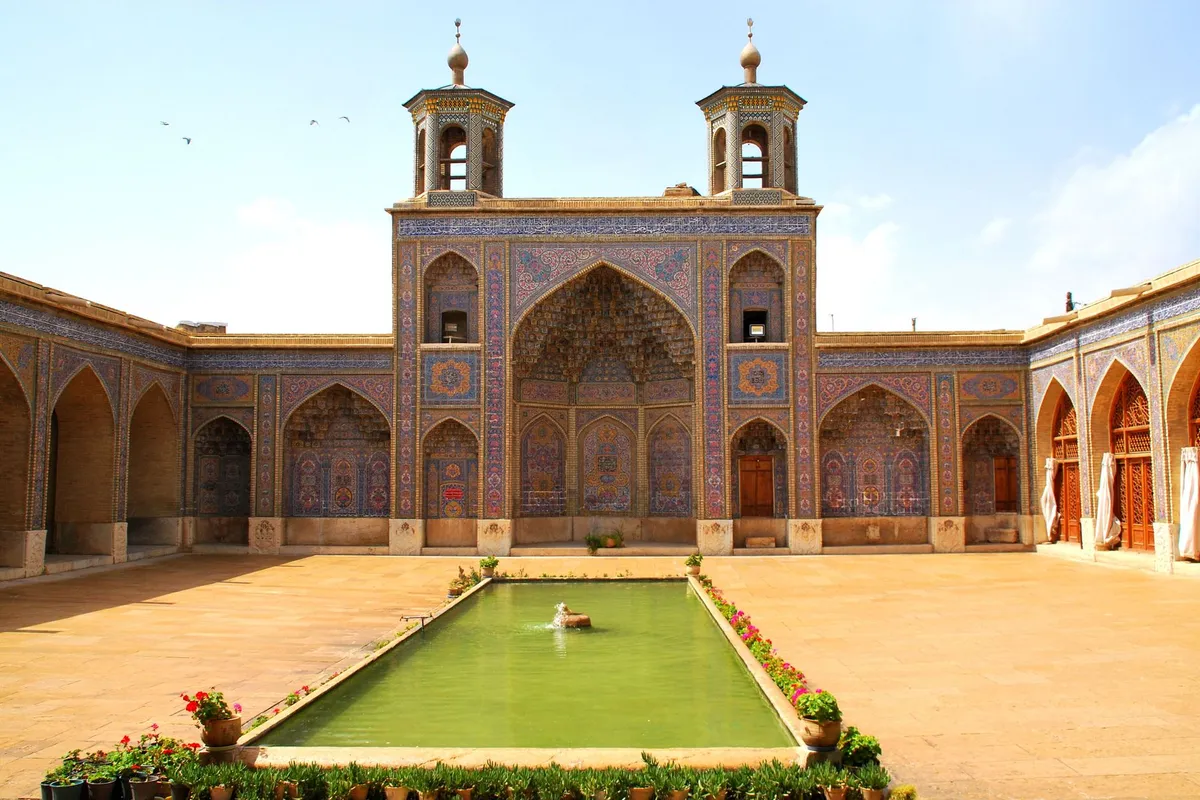
Nasir al-Mulk Mosque (Pink Mosque), Shiraz
Informally known as the Pink Mosque, Nasir al-Mulk was completed in 1888 and is famous for its colorful stained-glass windows that cast a kaleidoscope of light onto the floor during the early morning hours. Arrive right after it opens, around 8 a.m., to see the light effect at its peak—it fades as the sun rises higher.
Tehran: museums, palaces, and the former American Embassy
The capital is home to the National Museum of Iran (with artifacts dating back to the pre-Islamic period), Golestan Palace (the residence of the Qajar shahs, also a UNESCO World Heritage Site), and the complex of the former United States Embassy, now a museum informally known as the “Museum of American Arrogance,” a reference to the 1979–1981 hostage crisis.
Milad Tower, at 435 meters tall, is Tehran’s highest point and has a panoramic observation deck open to the public—a great place to get your bearings on your first afternoon in the city, as Greater Tehran sprawls over a massive area at the foot of the Alborz Mountains. Tehran’s Grand Bazaar, one of the world’s largest covered markets, is where most locals still buy Persian rugs, spices, and gold—worth setting aside half a morning to wander its corridors at a leisurely pace.
What to pair with Iran
Since most flights to Tehran connect through Istanbul, Doha, or Dubai, it’s common to combine Iran with a few days in another Middle Eastern destination on the same trip. If you’re stopping in Istanbul, for example, you can take the chance to explore Istanbul before or after your Iranian leg, as the Turkish city is a natural hub between Europe and Asia. If you prefer a Dubai layover, the Dubai guide here on Voyage Voyage has a ready-made itinerary for 2 to 3 days before heading on to Tehran.
Where to eat in Iran
The most traditional dish is kebab koobideh, seasoned ground meat grilled on a skewer, served with basmati rice and butter (the so-called chelo kabab). Another classic is ghormeh sabzi, a herb stew with red beans and meat, considered by many Iranians to be the country’s unofficial national dish.
Black tea is the ubiquitous drink, served in small glasses and usually accompanied by a sugar cube to hold between your teeth while you sip—a traditional custom instead of sweetening the tea directly. Alcoholic beverages are banned throughout Iran, including for tourists.
Where to stay in Iran
Isfahan has the best selection of historic accommodations, including hotels set in restored traditional houses (khane) with inner courtyards and Persian decor. In Yazd, it’s worth seeking out lodging within the old adobe city, a UNESCO World Heritage Site since 2017, to experience the mud-brick architecture and wind towers (badgir) up close. Tehran has the country’s largest and most modern hotel network, catering to both tourists and business travelers.
Practical Tips for Iran
Visa and Mastercard don’t work in Iran due to international sanctions — bring cash (euros or dollars) to exchange at currency exchange offices, or get a local debit card for tourists, like those offered by fintechs such as Mah Card or DaricPay, with pickup at Imam Khomeini Airport.
Wearing the veil (hijab) is mandatory for women throughout Iran, including tourists — bring scarves to cover your hair and clothes that cover your arms and legs. It’s forbidden to enter the country with drones or professional filming equipment without prior ministerial authorization. Worth repeating: check the official recommendations from the Brazilian Ministry of Foreign Affairs (Itamaraty) before booking your trip, as the security situation in the region changes frequently.
Common Western travel apps like Google Maps, WhatsApp, and Instagram work erratically or get blocked without a VPN set up before you arrive — download and configure your VPN app while still in Brazil, because local app stores have restricted access to these services. For getting around cities, local apps like Snapp (Iran’s equivalent of Uber) work well and are usually the most practical option for tourists.
Frequently Asked Questions
Is it safe to travel to Iran right now?
The Brazilian Ministry of Foreign Affairs (Itamaraty) recommends that Brazilians avoid non-essential travel to Iran in 2026, due to regional tensions that raise the risk above normal levels. The recommendation doesn’t ban travel, but it does indicate elevated risk — check the updated alert on the official Itamaraty website before deciding.
Do Brazilians need a visa for Iran?
According to Iran’s Ministry of Foreign Affairs, the visa waiver applies only to a specific group of nationalities, and Brazil isn’t on that list in the most recent official sources. There’s conflicting information among sources about recent exemptions, so the recommendation is to confirm the requirement directly with the Iranian Embassy in Brasília before buying tickets.
Do credit cards work in Iran?
No. Visa and Mastercard don’t work in Iran due to international sanctions imposed on the country’s banking system. Tourists need to bring cash (euros or dollars) to exchange at currency exchange offices, or arrange a local debit card specifically for foreign visitors.
How many days do you need to see Iran?
A 10 to 12-day itinerary in Iran comfortably covers Tehran, Isfahan, Shiraz, Persepolis, and Yazd. Those with less time — 6 to 7 days — usually prioritize Tehran, Isfahan, and Shiraz, leaving Yazd and the desert off the itinerary.
Conclusion
Iran holds some of the richest historical heritage in the Middle East, but it demands careful planning — from the Itamaraty travel advisory to the logistics of carrying cash. For more itineraries across Asia and the Middle East, keep exploring voyagevoyage.com.br.