 Marcelo Oliveira
The Philippines packs more than 7,600 islands into Southeast Asia, and what draws travelers to this archipelago is the combination of absurdly beautiful beaches, low costs and a population that speaks English — which makes everything easier. El Nido, Cebu, Boracay and Siargao are the names that show up on every list, but the trip demands planning because the internal distances are huge and domestic flights aren’t always direct.
Hotels in Philippinesfree cancellation options onlySee hotels ›Booking.com partner (advertising): we may earn a commission at no extra cost to you.
Brazilians don’t need a visa for the Philippines on stays of up to 30 days. A 15-day trip costs from R$ 8,000 to R$ 12,000 per person with flights, lodging and tours, outside the July holidays (Aug/2026).
| Flight from Brazil | No direct flight — connection via Doha, Dubai, Singapore or Hong Kong. 20–30 h total |
|---|---|
| Visa | Not required for up to 30 days (passport valid for 6+ months) |
| Best time | December to May (dry season). Avoid Jun–Nov (typhoons) |
| Currency | Philippine peso (PHP). 1 USD ≈ 56 PHP (Aug/2026) |
| Daily cost | US$ 40–80/day in backpacker to mid-range style (Aug/2026) |
| Language | Filipino (Tagalog) + English widely spoken |
How do you get to the Philippines from Brazil?
There’s no direct flight from Brazil to the Philippines. The most common routes connect through the Middle East (Qatar Airways via Doha, Emirates via Dubai) or through Asia (Singapore Airlines via Singapore, Cathay Pacific via Hong Kong). Total travel time ranges from 20 to 30 hours depending on the connection, and the entry point is almost always Manila (Ninoy Aquino Airport, MNL).
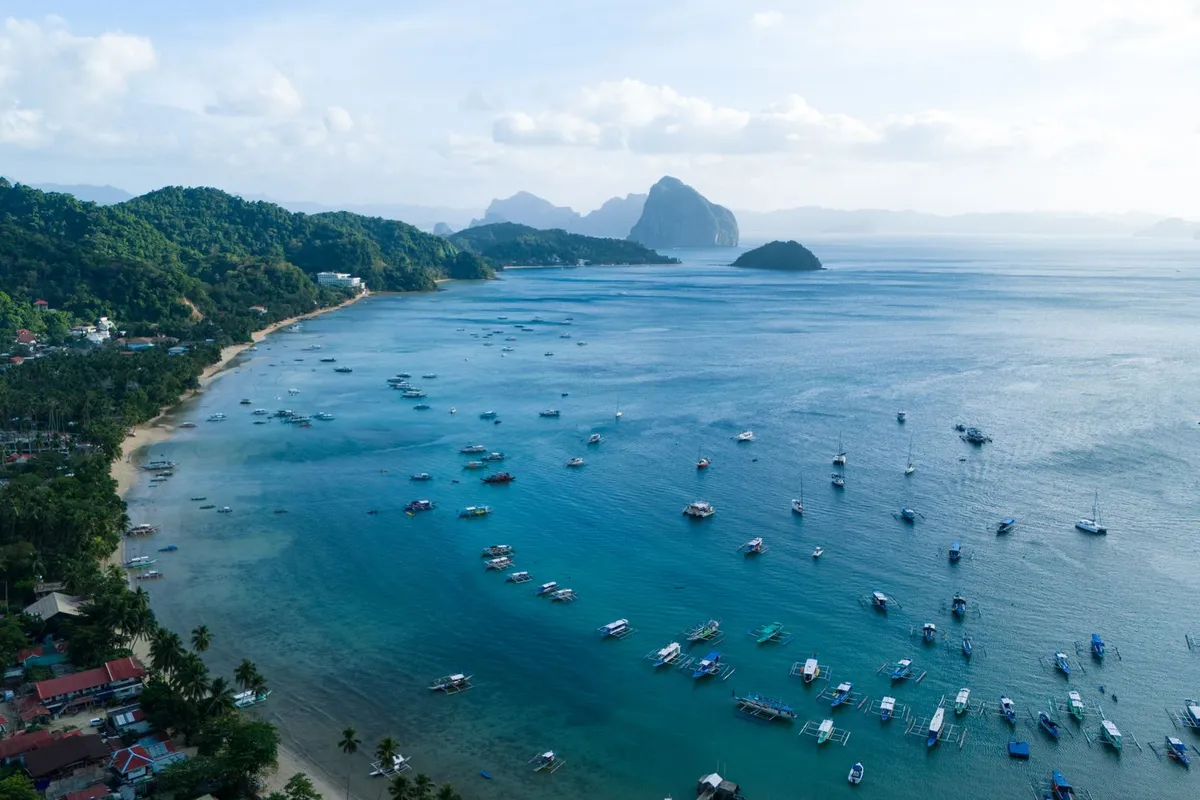
Round-trip tickets run between R$ 4,000 and R$ 7,000 in economy class (Aug/2026), with lower prices between March and May. The trick is to watch for deals from Qatar Airways and Cebu Pacific (a Filipino low-cost carrier with cheap domestic flights to round out your trip). From Manila, domestic flights to Cebu, Puerto Princesa (the gateway to Palawan) or Caticlan (Boracay) cost between US$ 30 and US$ 80 per leg on Cebu Pacific or AirAsia Philippines (Aug/2026).
For those combining the trip with another Asian country, Singapore works as a natural hub — from there, it’s a 3h30 flight to Manila.
When to go to the Philippines: best time and typhoon season
The best time to visit the Philippines is from December to May, the dry season. From January to April, the sea is calmer, diving visibility is at its peak and the chance of heavy rain is low. December is popular because of the holidays, but it’s already dry season and works well.
Avoid June to November if you can: it’s typhoon season. The most destructive typhoons hit between August and October, and they can cancel flights, close islands and make boat tours impossible. If that’s your only available window, Palawan and Mindanao (Siargao) are the least affected regions.
Average temperatures sit between 28 and 34 °C year-round, with high humidity. The sea stays between 27 and 30 °C — snorkeling and diving without a wetsuit.
What to do in the Philippines: the regions worth the trip
The Philippines is too big to try to see everything in one trip. The secret is to pick 2 to 3 regions and connect them with cheap domestic flights. Each region has a different personality — beach, adventure, diving or culture.
Palawan (El Nido + Coron): the star of the Philippines. El Nido has turquoise lagoons ringed by limestone cliffs, island hopping with 4 official tours (A, B, C and D) and beaches you can only reach by boat. Coron, further north, is a diving paradise with Japanese World War II shipwrecks. The beach and lagoon tour in El Nido starts at US$ 7 per person and covers the most photographed stops (Aug/2026).

Cebu + Bohol: Cebu is a flight hub and has waterfalls (Kawasan Falls), canyoning, whale shark diving in Oslob (controversial, but popular) and the sardine run in Moalboal. Bohol, a 2h ferry ride away, has the Chocolate Hills (1,268 rounded mounds), the world’s smallest primate (the tarsier) and quiet beaches. The whale shark watching tour in Oslob leaves from Cebu for around PHP 1,100 per person (about US$ 20, Aug/2026).
Boracay: the most touristy island in the Philippines, with the 4 km White Beach of fine white sand. Full infrastructure, nightlife and water sports. Great for those who want comfort without giving up a paradise beach — but it’s the priciest option and the most crowded.
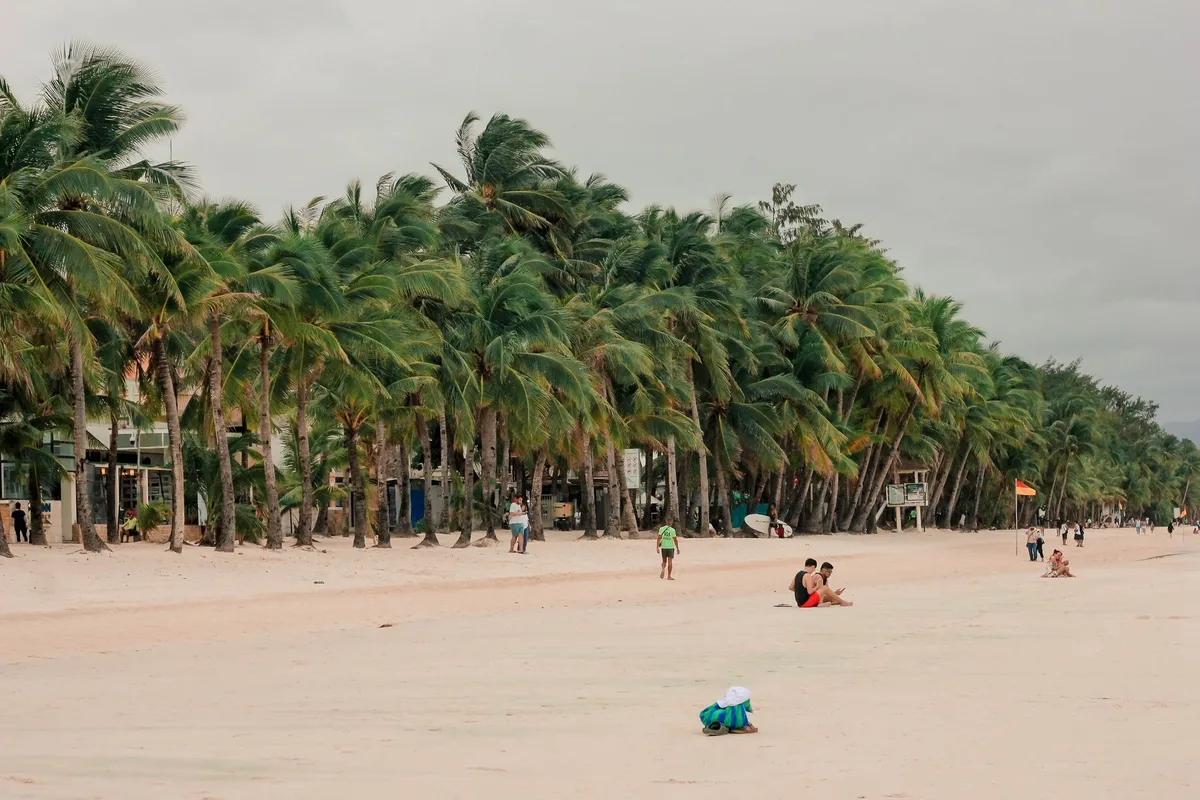
Siargao: the surfing capital of the Philippines, home to the famous Cloud 9 wave. Beyond surfing, there are mangrove lagoons, natural pools and a more alternative vibe — hostels, organic cafés and beach parties. It’s the most remote of the popular options.
 Partner · Civitatissee all activities in Philippines ›
Intramuros Bamboo Bike Tour
Rating 9.8 · 26 reviews on Civitatis
- Manila Guided TourRating 8 · 13 reviews on Civitatisfrom€48.30per personSee ›
- Barbara's Heritage Restaurant Dinner & ShowRating 8.5 · 4 reviews on Civitatisfrom€87.83per personSee ›
- Manila & Tagaytay Ridge Tourfrom€140.53per personSee ›
- Pinatubo Volcano Excursionfrom€78.68per personSee ›
Civitatis prices on 28/09/2026, from, per person. They may change.
How much does it cost to travel to the Philippines?
The Philippines is one of the cheapest destinations in Asia once you’re in the country. The big expense is the international flight — inside the archipelago, everything is affordable. A mid-range budget (a good hostel or simple hotel, local food, tours) runs around US$ 40 to US$ 80 per day per person (Aug/2026).
| Item | Price range |
|---|---|
| Brazil–Manila flight (round trip) | R$ 4,000–7,000 (Aug/2026) |
| Domestic flight (e.g., Manila–El Nido) | US$ 30–80 per leg (Aug/2026) |
| Lodging (hostel/simple hotel) | US$ 10–40/night (Aug/2026) |
| Meal at a local restaurant | US$ 2–6 per meal (Aug/2026) |
| Island hopping (full day) | US$ 7–25 per person (Aug/2026) |
| Scuba diving (1 tank) | US$ 25–50 (Aug/2026) |
Real total cost for 15 days: count on R$ 8,000 to R$ 12,000 per person including the international flight, domestic flights, mid-range lodging, food and tours (Aug/2026). Traveling backpacker-style, you can bring it down to R$ 6,000 to R$ 8,000. Boracay and resorts push the budget up; El Nido and Siargao are easier on the wallet.
Where to stay in the Philippines: bases for building your itinerary
Your choice of base defines the experience. The rule is simple: the more remote, the more beautiful and the cheaper — but the harder to reach. For 15 days, two bases work well; for 10, one is the most realistic.
El Nido (Palawan): the best base for island hopping and lagoons. Lodging ranges from hostels to boutique resorts. The town has tourist infrastructure, but it isn’t luxurious — the charm is rustic. From Manila, it’s a 1h20 flight to El Nido airport (Lio Airport) or 1h to Puerto Princesa + a 5h van ride.
Cebu City: a practical hub for combining Kawasan Falls, Moalboal, Oslob and a ferry to Bohol. More urban, with malls, good restaurants and direct flights from Manila. Ideal for starting or ending the trip in comfort.
Boracay: fly to Caticlan + a 15 min boat ride. A pure beach base, with resort infrastructure. Choose it if you want sand, comfort and nightlife without adventure.
Siargao: fly from Manila or Cebu to Sayak Airport. A base for surfing, mangrove lagoons and a laid-back vibe. Less infrastructure than Boracay, more authentic.
Is the Philippines safe for tourists?
The Philippines is, overall, safe for tourists in the tourist areas of Palawan, Cebu, Boracay and Siargao. Filipinos are famously hospitable, English makes communication easy, and violent crimes against tourists are rare in the regions visitors go to.
The precautions are the same as any Southeast Asian destination: avoid western Mindanao and the Sulu archipelago (active armed conflict), don’t flash valuables, and negotiate tricycle and boat prices before boarding. Manila deserves extra caution at night in certain areas (Tondo, Quiapo).
Travel insurance with coverage for water activities is strongly recommended — the public health system is poor outside Manila and Cebu. The Philippine Department of Tourism keeps updated advisories.
Practical tips and what nobody tells you
1. Domestic flights get canceled without warning. Carriers like Cebu Pacific and AirAsia cancel or reschedule flights frequently, especially outside Manila. Don’t book a domestic flight on the same day as your international flight — leave a buffer day in Manila.
2. Manila traffic is legendary. A 10 km stretch can take 2 to 3 hours. If your domestic flight leaves from another terminal, head out very early. Better yet: sleep near the airport.
3. Internet outside the centers is slow. Buy a local SIM on arrival (Globe or Smart, PHP 300 to 500, Aug/2026) with 4G data, but don’t expect 5G in El Nido. On remote islands, the signal disappears.
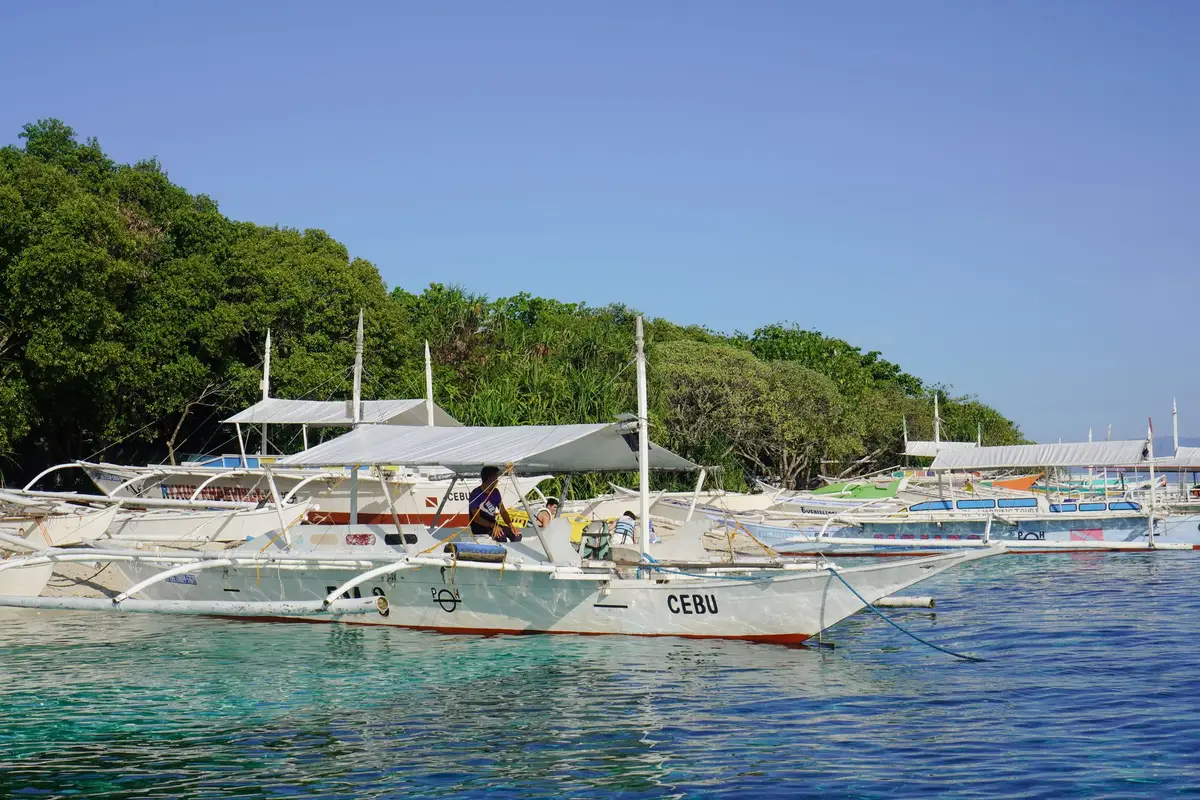
4. Island-hopping tours fill up. In El Nido, tours A and C are the most in demand — book the day before. Big groups (30+ people per boat) are common on cheap tours; private tours cost triple but are worth it for couples or groups.
5. Carry cash in Philippine pesos for anywhere outside Manila and Cebu. Many islands have no ATMs, and cards are only accepted at resorts.
6. Oslob and the whale sharks are controversial. The animals are fed by boatmen to keep them in place, which changes their natural behavior. If that matters to you, Donsol (southern Luzon) offers wild sightings between November and June — with no feeding.
 HotelAs soon as you have datesCompare neighbourhoods and guest ratings.Booking ›
- ActivitiesBefore you travelBook ahead the ones with limited spots.Civitatis ›
Frequently asked questions
Do Brazilians need a visa for the Philippines?
Brazilians don’t need a visa to enter the Philippines on stays of up to 30 days. Your passport must be valid for at least 6 months from the date of entry. At immigration, they often ask for proof of onward travel — keep your return ticket handy. For longer stays, it’s possible to extend for up to 36 months at the Bureau of Immigration.
How many days should you spend in the Philippines?
The ideal is 10 to 15 days in the Philippines, focusing on 2 to 3 regions. With 7 days, pick one region (El Nido or Cebu + Bohol). With 15 days, combine two regions like Palawan + Cebu or El Nido + Boracay. More than 20 days lets you add Siargao or explore Coron at a relaxed pace.
What’s the currency in the Philippines and how do you pay?
The currency in the Philippines is the Philippine peso (PHP). In August 2026, 1 USD equals roughly 56 PHP. Bring dollars to exchange at local money changers (better rates than banks). Visa and Mastercard work in Manila, Cebu and Boracay, but outside the centers it’s cash only. ATMs on smaller islands are scarce — withdraw enough before leaving the big city.
Do I need travel insurance for the Philippines?
Travel insurance isn’t mandatory to enter the Philippines, but it’s strongly recommended. The public health system is poor outside Manila and Cebu, and a medical emergency without insurance can cost thousands of dollars. Choose a plan that covers water activities (snorkeling, diving, island hopping) and medical evacuation — some islands have no hospital.
Conclusion
The Philippines isn’t the easiest destination to reach from Brazil, but what awaits on the other side of the world justifies the 20+ hours of flying: beaches that look photoshopped, island hopping at US$ 7 a day (Aug/2026), shipwreck diving and people who make you feel at home. Pick 2 regions, book domestic flights in advance and carry cash. If your trip includes a stop in Southeast Asia, our Singapore guide helps you plan the connection. If you want to combine it with other Southeast Asian islands, check out the beaches of Nusa Penida in Bali too. Safe travels from Voyage Voyage.