 Marcelo Oliveira
Ha Long Bay is one of those scenes that looks Photoshopped until you see it in person: nearly 2,000 limestone islands rising out of emerald-green water in northern Vietnam. A UNESCO World Heritage Site since 1994, Ha Long sits 170 km from Hanoi and can be done as a day trip or an overnight cruise — and the difference between the two experiences is brutal.
Hotels in Ha Long Bayfree cancellation options onlySee hotels ›Booking.com partner (advertising): we may earn a commission at no extra cost to you.
The 2-day, 1-night cruise is the best value format: prices start at US$105 (~R$580, Aug 2026) per person with cabin, meals, and activities included, and it saves you the exhaustion of 7 hours on the road in a single day.
How to get to Ha Long Bay
All routes start from Hanoi. The bay lies 170 km east of the capital, and the journey takes between 2.5 and 4 hours depending on your mode of transport and traffic on the way out of Hanoi.
Shared transfer (the most common option)
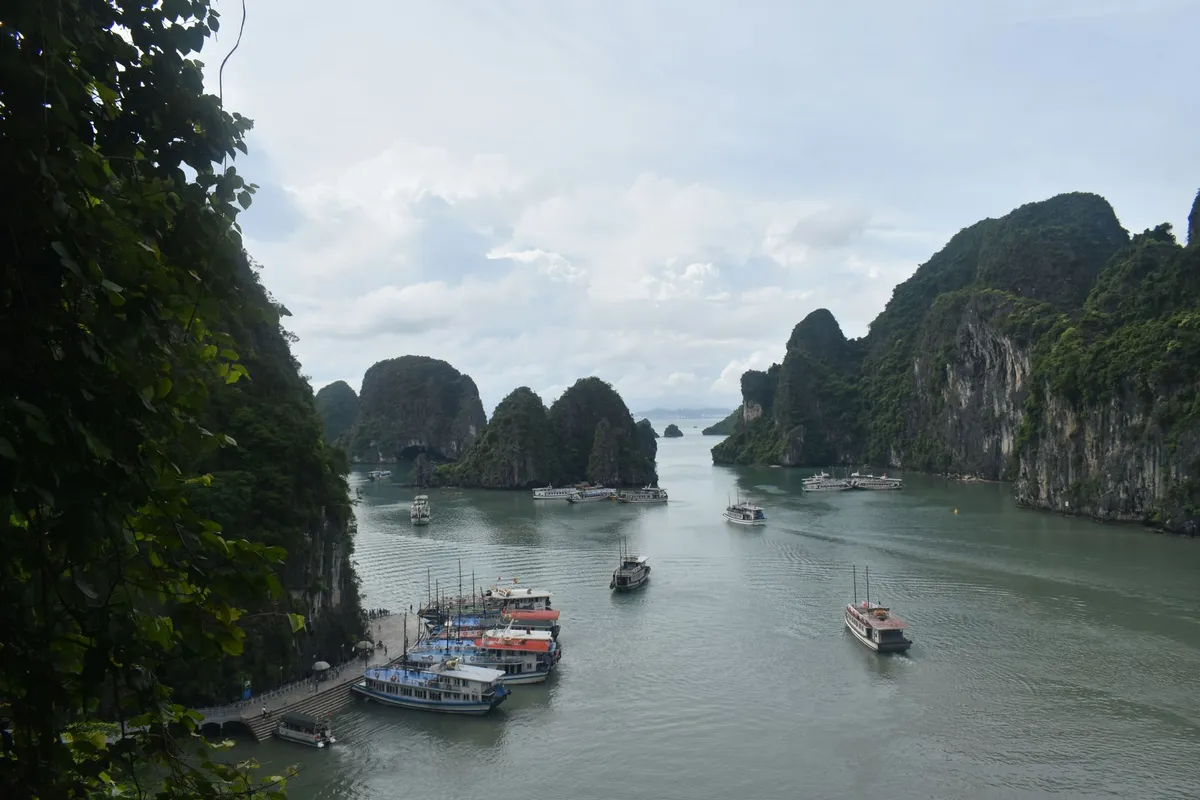
Most cruises include round-trip transfer in the price or offer the service for around US$15–25 (~R$83–138) per person. The van picks you up at your Hanoi hotel between 7:30 and 8 a.m. and reaches Tuan Chau or Bai Chay port around 11:30 a.m.–12 p.m. On the way back, you’re dropped off in Hanoi between 4:30 and 5:30 p.m.
Public bus
Buses from My Dinh Bus Station leave every 30–45 minutes for Ha Long city (Bai Chay), for around VND 120,000 (~R$26, Aug 2026). The trip takes between 3.5 and 4 hours. From there, you’ll need a taxi or Grab to the port (10 minutes, ~VND 50,000).
If you’ve already mapped out your full Vietnam itinerary, you can slot Ha Long in at the start or end of your trip, since Hanoi is usually the country’s gateway in or out.
Best time to go and how long to allow
The ideal window runs from October to April, when rain is less frequent and visibility between the islands improves. From February to April, the weather is mild (18–25°C) and the sea tends to be calm — perfect for kayaking and swimming. From May to September, the heat is intense (30–35°C) and rain showers can cancel activities, but prices drop 20–40%.
Avoid Tết (Lunar New Year, usually in January or February): prices rise by up to 50%, boats fill up, and many services close. The shoulder months — October and March — offer the best balance of weather, price, and crowds.
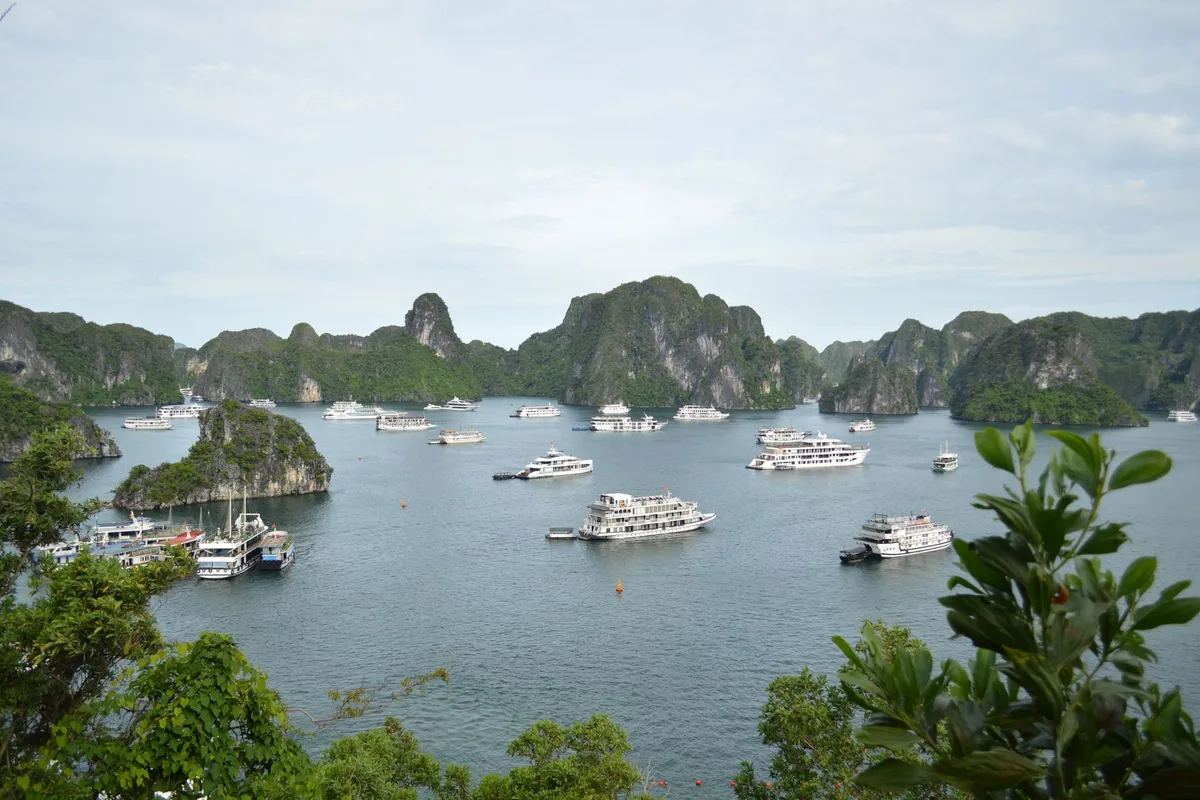
On duration: the day trip (1 day) works, but it means 7+ hours on the road and only 3–4 hours in the bay. The 2-day/1-night cruise is the most popular format — you board at noon, visit caves and kayak in the afternoon, sleep on board, and sail more the next morning before heading back to Hanoi. With 3 days/2 nights, there’s time to explore Cat Ba Island or the neighboring Lan Ha Bay, which is less touristy.
What to see in Ha Long Bay
The bay has more than 1,600 islands and islets, but most cruises focus their itinerary on 4 or 5 stops. These are the highlights that show up on most itineraries.
Sung Sot Cave (Surprise Cave)
The largest and most visited cave in the bay, with stalactites that form surprising shapes when lit up. There are two chambers connected by a corridor — the second opens onto a view of the sea between the rocks. The climb to the entrance has about 100 steps, but it’s worth it. Entry is included in most cruises.
Titop Island
A small island with a white-sand beach and a viewpoint at the top (450 steps). From up there, the panoramic view of the surrounding islands is one of the best in the bay. The climb takes 15–20 minutes, and the beach is swimmable when the sea is calm.
Kayaking between the islands
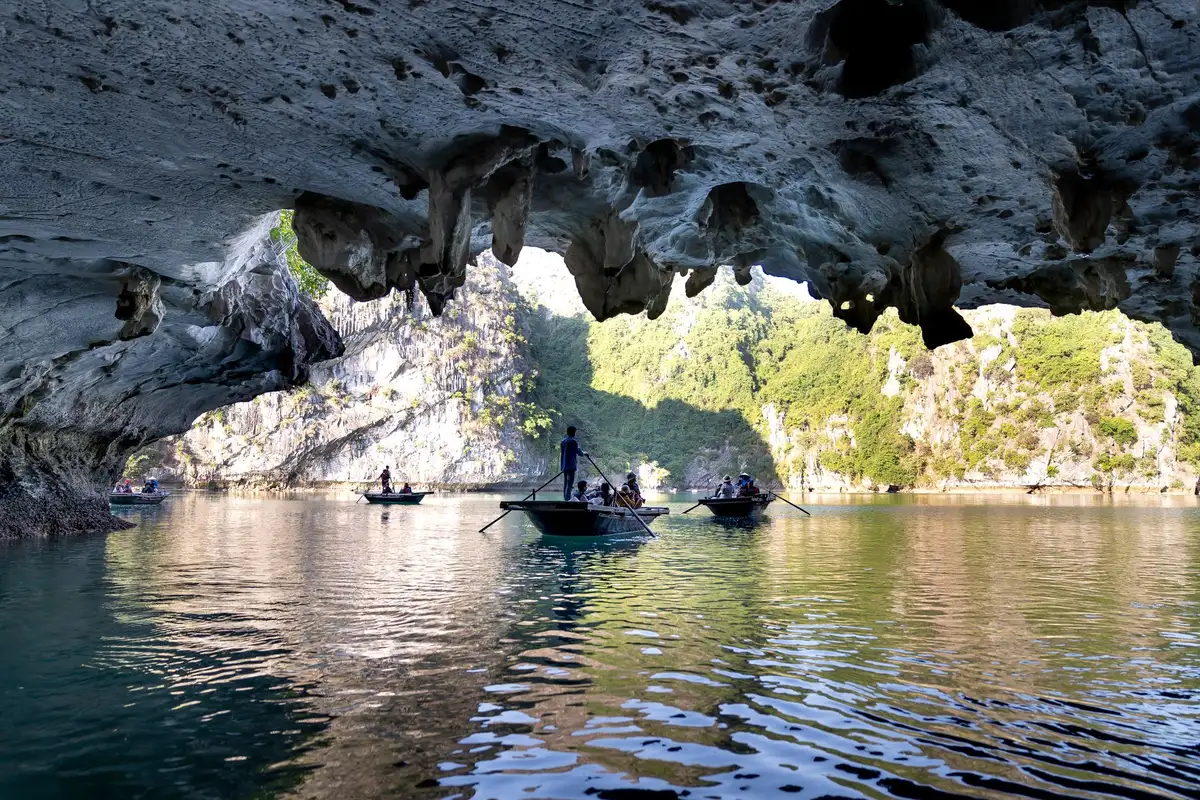
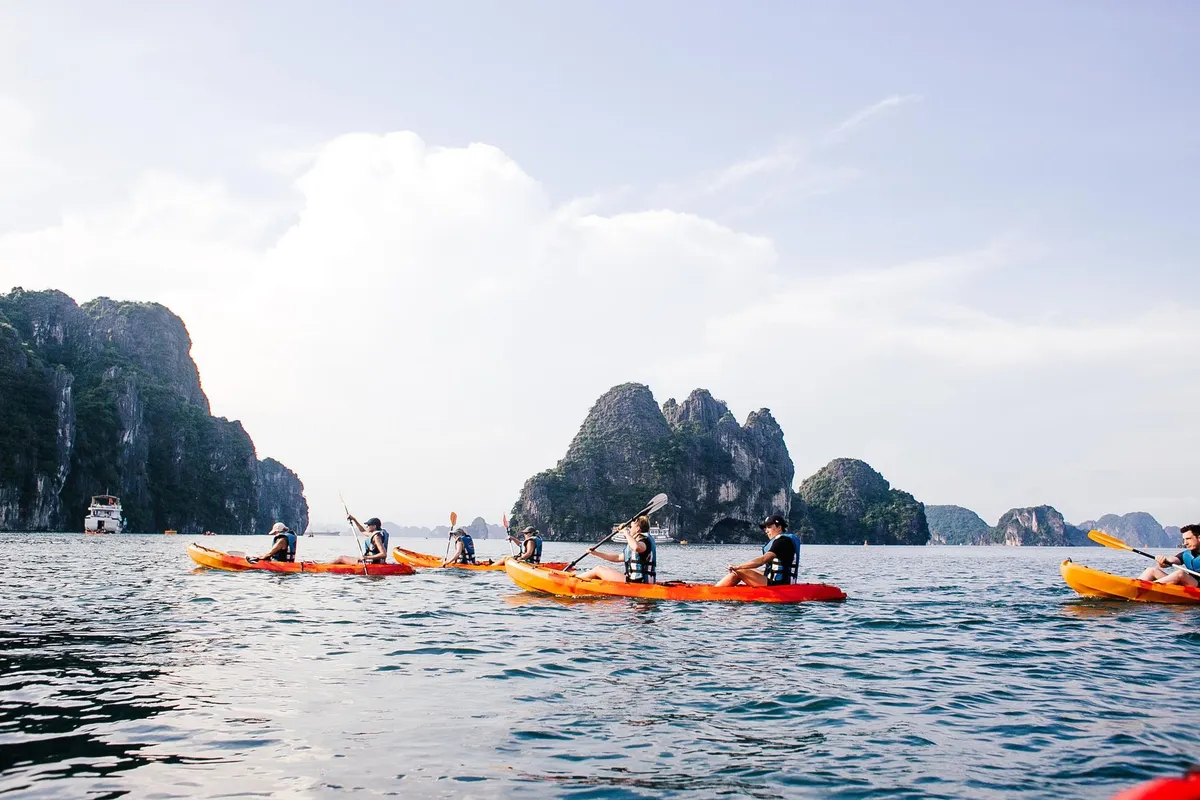
Almost all cruises of 2+ days include a kayaking session (30–60 minutes) between the islands, passing through stone arches and hidden lagoons. The most popular stretch is around Luon Cave, where the kayak enters a limestone tunnel and emerges into a enclosed lagoon. If the cruise offers kayaking and bamboo boat as options, go with the kayak — the slower pace lets you notice details a motorized boat just can’t capture.
Cua Van Floating Village
One of the last floating villages in the bay, where fishing families lived on the water for generations. Today it operates as a museum, but it still preserves the wooden houses and the way of life tied to the sea. Access is by boat and is usually included on longer cruises.
 Partner · Civitatissee all activities in Ha Long Bay ›
- Cao Bang & Ba Be National Park: 3 Day TourRating 9.3 · 8 reviews on Civitatisfrom€218.70per personSee ›
- Ha Long Bay Day TripRating 8.5 · 232 reviews on Civitatisfrom€50.08per personSee ›
- Ninh Binh Day Trip: Hoa Lu & Tam CocRating 8.6 · 68 reviews on Civitatisfrom€32.12per personSee ›
- Guided Tour of HanoiRating 9.6 · 5 reviews on Civitatisfrom€57.96per personSee ›
Civitatis prices on 28/09/2026, from, per person. They may change.
What to combine with Ha Long Bay
Ha Long is the natural complement to Hanoi — most travelers slot the cruise in before or after exploring the capital. The Ha Long Bay Tour from Hanoi is the most practical day-trip option, with transport, lunch, and activities included in the price. For those who want to sleep on the boat, the 2-Day Ha Long Cruise includes a cabin, all meals, and kayaking.
If you’re traveling longer through Southeast Asia, you can pair Vietnam with Bali and its temples in Ubud — direct flights from Hanoi to Bali exist with a stopover in Bangkok or Ho Chi Minh.
Where to eat in Ha Long Bay
On board, all meals are included in the cruise. Mid-range boats serve Vietnamese dishes with fresh seafood — shrimp, squid, grilled fish, and spring rolls are a constant presence. Drinks (beer, wine, cocktails) are charged separately: expect US$3–5 per beer and US$25–60 per bottle of wine.
On land, Ha Long city (Bai Chay) has local restaurants with seafood at prices far below what’s charged on board. A plate of grilled shrimp with rice costs around VND 100,000–200,000 (~R$22–44, Aug 2026). The Ha Long night market, near the port, is a good option for eating cheaply before boarding or on your way back.
Where to stay: cruise vs. hotel
For most travelers, sleeping on the cruise is the full experience — waking up in the middle of the bay, surrounded by limestone islands, is something no hotel on land can replicate. Prices vary widely by category:
Budget cruises (US$105–160/person, 2D1N) have 12–18 m² cabins with private bathrooms and buffet meals. Mid-range options (US$145–250) add a balcony, à la carte meals, and kayaking included — this is the tier with the best value for money. Luxury boats (US$250–450) offer 28–40 m² cabins, tasting menus, spa, and in some cases drinks included.
If you’d rather stay on land, Cat Ba Island has hotels and hostels starting at US$10/night and works as a base for exploring the neighboring Lan Ha Bay, which is less touristy than Ha Long and has a virtually identical landscape. The Bangkok floating market is another water-based destination in the region that pairs well on a Southeast Asia itinerary.
 See hotels in Ha Long Bay on Booking ›
Practical tips
Currency: the Vietnamese dong (VND). In August 2026, US$1 ≈ VND 25,500 and R$1 ≈ VND 4,600. On board, most cruises accept payment in US dollars or dong. Credit cards work on mid-range and higher boats, but bring cash for tips and purchases on land.
Tipping: not mandatory, but expected. The common practice is US$3–5 per person/day for the crew and US$5–10 for the guide, handed over at the end of the cruise in an envelope at the boat’s reception.
Book your cruise 6–8 weeks in advance during high season (October–March). In low season, last-minute bookings (3–7 days out) can get you discounts of up to 50%, according to local operators consulted by Day Trips Vietnam.
Bring a light jacket even in the hot season — the wind on deck at night can catch you off guard. Sunscreen and insect repellent are essential for outdoor activities. Most cruises provide towels, life jackets, and kayaking gear.
Ha Long vs. Lan Ha: Ha Long Bay is the most famous and has more tourism infrastructure. Adjacent Lan Ha Bay offers a similar landscape with fewer boats and prices 10–20% lower — ideal if you’ve already seen Ha Long or prefer more tranquility.
🚢 Planning a cruise? Check out our 2026/2027 Cruise Guide, with ships, ports, prices, and itineraries around the world.
- HotelAs soon as you have datesCompare neighbourhoods and guest ratings.Booking ›
- ActivitiesBefore you travelBook ahead the ones with limited spots.Civitatis ›
FAQ
How much does a Ha Long Bay cruise cost?
A 2-day, 1-night cruise in Ha Long Bay starts at US$105 (~R$580, Aug 2026) per person on budget boats, US$145–250 on mid-range boats, and US$250–450 on luxury boats. The price includes cabin, meals, and activities such as kayaking and cave visits. Drinks are charged separately on most boats.
How many days do I need to visit Ha Long?
The recommended minimum for Ha Long Bay is 2 days and 1 night, which lets you explore the main caves, go kayaking, and sleep on board among the islands. With 3 days and 2 nights, there’s time for Cat Ba Island and Lan Ha Bay. A 1-day trip is possible, but the 7 hours of round-trip driving cuts your time on the water to just 3–4 hours.
What’s the best time to visit Ha Long Bay?
Ha Long Bay has the best visibility and calmest seas between October and April. The months from February to April combine mild temperatures (18–25°C) with clear skies on most days. From May to September, the heat is intense and frequent rain can cancel activities, but prices drop significantly.
Do Brazilians need a visa for Vietnam?
Brazilians need a visa to enter Vietnam. The most practical option is the e-visa, applied for online through the official Vietnamese government website, with a US$25 fee and 90-day validity for single or multiple entry. Processing takes 3 to 5 business days. Your passport must be valid for at least 6 months.
Can you swim in Ha Long Bay?
Most cruises offer a swimming stop at beaches like Titop Island, but the water can be cold depending on the time of year. Between November and March, the water temperature drops to 18–22°C, which discourages swimming. In summer (May–September), the water is warmer, but visibility drops after the rains.
Conclusion
Ha Long Bay is one of those destinations that justifies the long flight — and an overnight cruise turns the visit into something you’ll remember long after you get home. With affordable prices, logistics handled by experienced operators, and a landscape UNESCO recognized more than 30 years ago, Ha Long deserves at least two nights on your itinerary. For more itineraries through Southeast Asia and around the world, keep following Voyage Voyage.