 Marcelo Oliveira
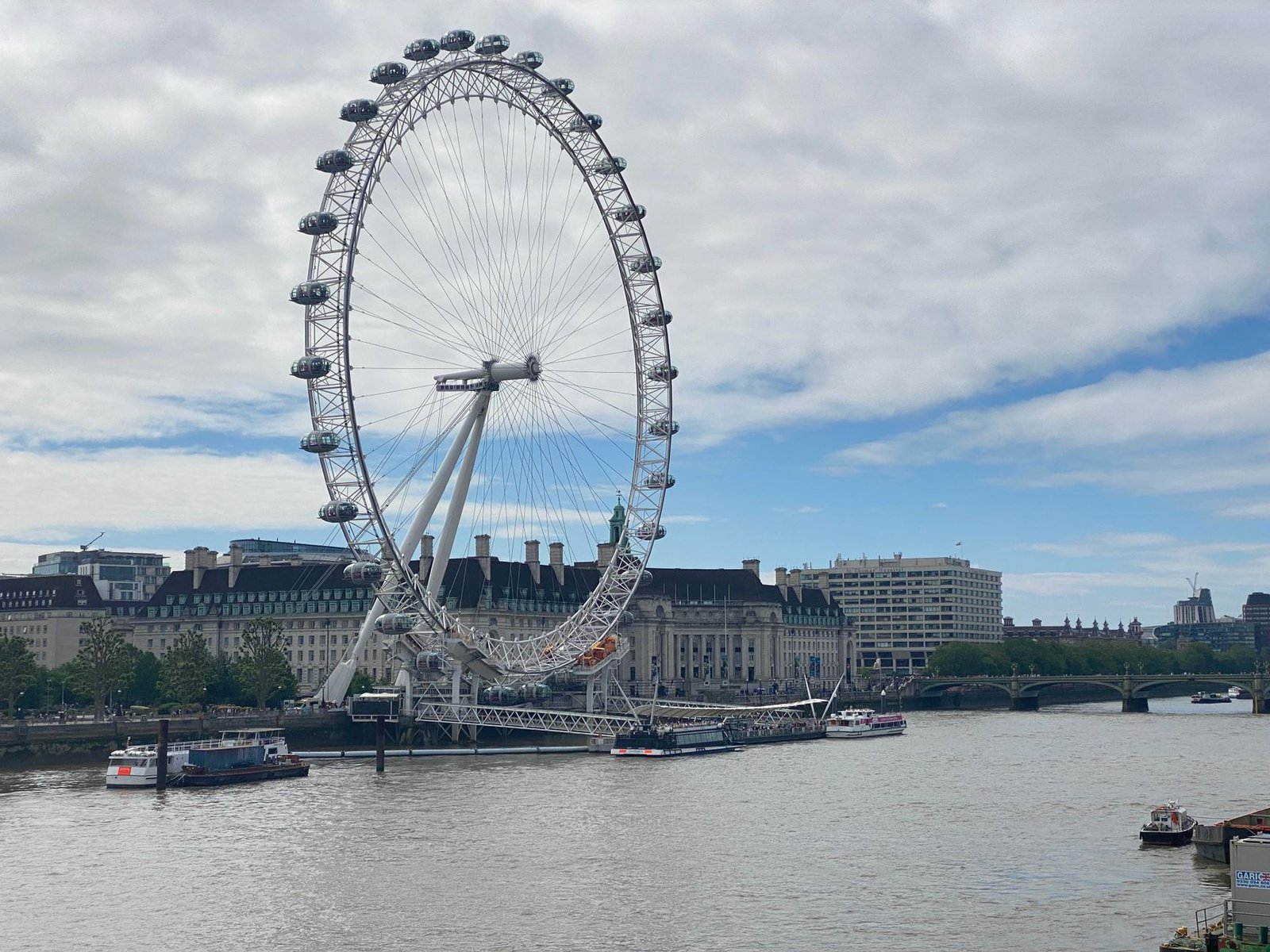
The London Eye is the giant observation wheel on the banks of the River Thames in London, and it’s currently the tallest observation wheel in Europe, standing at 443 feet (135 meters) high. It’s located on the South Bank, on the river’s south side, directly across from the Palace of Westminster and Big Ben, just a short walk from Waterloo Underground station. The best time to visit is in the spring or early fall, when the skies are usually clearer and the queues are shorter than in the summer; a full rotation starts from £33 per adult for standard tickets bought in advance, roughly $42 USD depending on the exchange rate, though prices vary quite a bit depending on the date and time you choose. What few tourists realize from a distance is that the wheel never stops turning — and that completely changes how you need to plan your visit.
Hotels in Londonfree cancellation options onlySee hotels ›Booking.com partner (advertising): we may earn a commission at no extra cost to you.
How to get there
“Can you get to the London Eye without getting lost in subway transfers?” Yes, and it’s simpler than it sounds. From the US, there are no direct flights to London: the most common connections depart from major hubs like New York, Miami, or Los Angeles with a layover in cities like Reykjavik, Dublin, or Amsterdam, totaling between 10 and 14 hours of travel depending on the connection. You’ll land at one of London’s airports — Heathrow, Gatwick, Stansted, or Luton — and from there, the most practical way to reach the city center is by train or subway.
From Heathrow, the Elizabeth Line (formerly Crossrail) takes about 45 minutes to reach central London, with a transfer to Waterloo station, which is just an 8-minute walk from the London Eye. From Gatwick, the Gatwick Express arrives at Victoria station in about 30 minutes, where you can catch the subway (Victoria line) to Waterloo. Once you’re in London, the London Eye is well signposted from Waterloo, Westminster (on the other side of the bridge), and Embankment stations, all just a few minutes’ walk away. An Oyster card or contactless payment with your credit card works across the entire subway and bus system, and it’s much cheaper than buying individual paper tickets.
If you prefer to walk, you can cross Westminster Bridge from Big Ben — it’s about a 10-minute walk with one of the most beautiful views of the city along the way.
Best time to visit and how long to stay
“What’s the best month to go to London?” It depends on what you’re looking for, but generally, May, June, and September offer the most favorable balance of mild weather, longer days, and prices that aren’t yet as inflated as during the peak of summer (July and August). Winter (December to February) has lower airfare, but the days get dark early, around 4 PM, which cuts down on daylight hours for outdoor activities.
For the London Eye ride itself, set aside between 30 minutes and 1 hour, accounting for check-in and the boarding queue, even if you’ve bought your ticket online. The full rotation on the wheel lasts about 30 minutes, as it turns continuously and slowly — making two full rotations per hour — without stopping for boarding and disembarkation, except for passengers with reduced mobility.
As for the question “Is 3 days in London enough?”: to see the main landmarks — London Eye, Big Ben, Buckingham Palace, the British Museum, and one area like Camden or Notting Hill — three days will get the job done at a guided-tour pace without feeling rushed. If you want to explore museums at a leisurely pace, take a day trip to Oxford or Windsor, or simply stroll through the parks without hurrying, you’ll find yourself wishing for two or three more days.
What to see and do at the London Eye
“What does ‘London Eye’ mean?” Literally, “The Eye of London” — a name given because, from above, the wheel acts like an eye observing the entire city in 360 degrees. It was designed by architects David Marks and Julia Barfield as part of London’s millennium celebrations, after they informally won a 1993 competition seeking a new landmark for the city — though no official winner was declared at the time. Construction began in 1998, the structure was assembled horizontally over the Thames and then lifted into a vertical position, and the wheel was symbolically inaugurated on December 31, 1999, by then-Prime Minister Tony Blair, officially opening to the public on March 9, 2000 (more details on the London Eye Wikipedia page).
“Is the London Eye the biggest in the world?” Not anymore. When it opened, it was the tallest Ferris wheel on the planet, a title it held until 2006. Today, it’s the tallest observation wheel in Europe, but it’s been surpassed in height by newer constructions like the High Roller in Las Vegas and the Ain Dubai in the United Arab Emirates. Even so, it remains one of the most recognizable symbols of the United Kingdom, alongside Big Ben and the Tower of London.
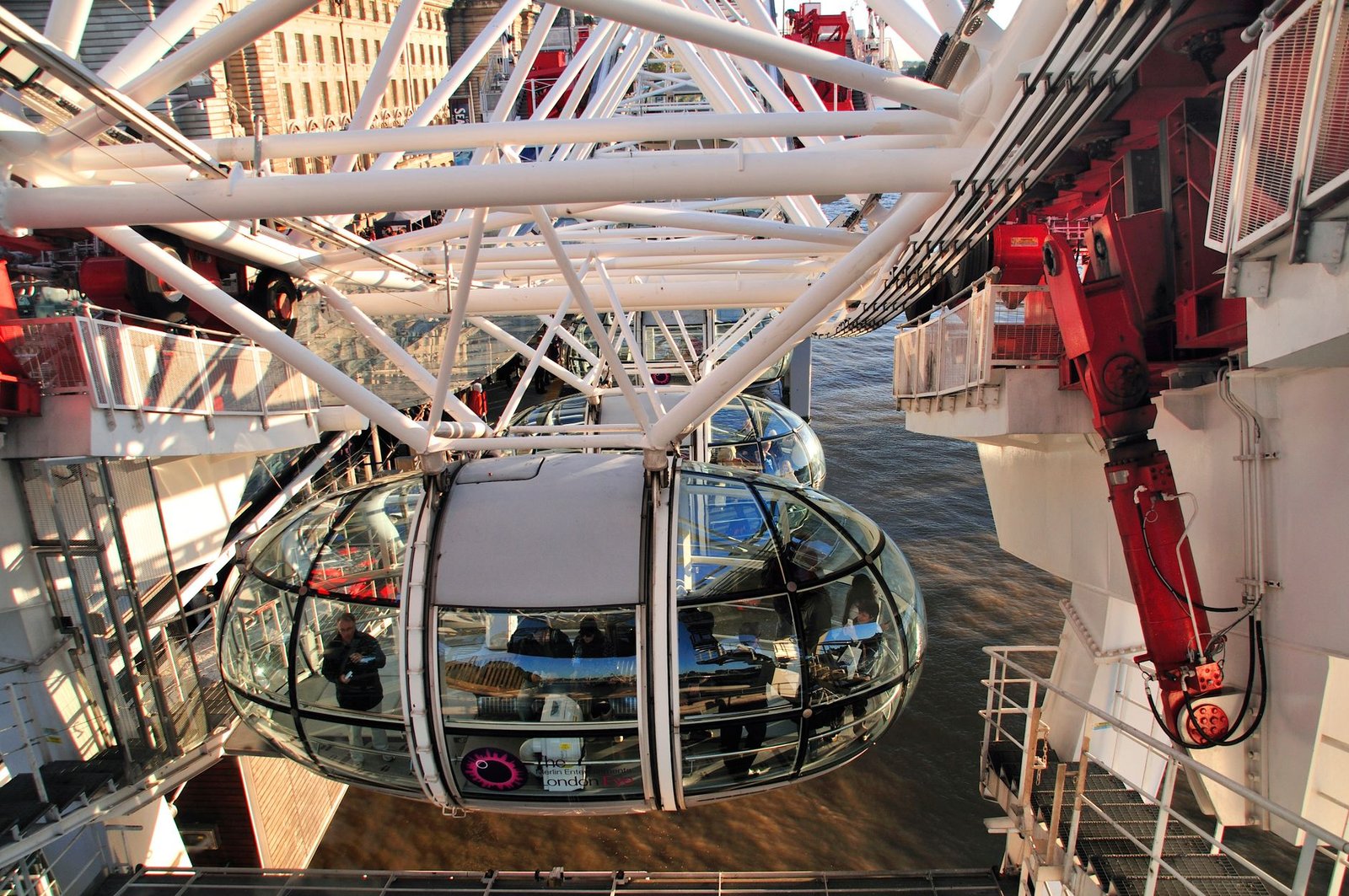
The structure has 32 oval-shaped glass capsules, numbered 1 to 33 (number 13 is skipped, following a common superstition in construction), each with a capacity of up to 25 people. On clear days, the view from the top reaches up to 25 miles (40 km) away, allowing you to see landmarks like Windsor Castle depending on atmospheric conditions. From up there, you can clearly identify the Palace of Westminster, St. Paul’s Cathedral, The Shard, and Hyde Park.
There are ticket options beyond the standard one: the Fast Track, which significantly reduces waiting time in line and costs from around £44; private capsules for small groups; and combo packages with other attractions from the same company, like Madame Tussauds and the SEA LIFE London Aquarium, which are literally right next to the wheel. Up-to-date prices and times can always be checked on the official London Eye website, as they vary by date.
 See activities in London on GetYourGuide ›
What to combine nearby
“Is the London Eye worth it?” For most first-time visitors, yes — it’s a quick and visually striking way to get a first read on the city’s geography, especially if you combine the ride with the neighboring attractions rather than treating it as a standalone experience. The South Bank itself is a bustling pedestrian area, with street bookstalls, food trucks, and constant views of the other side of the river.
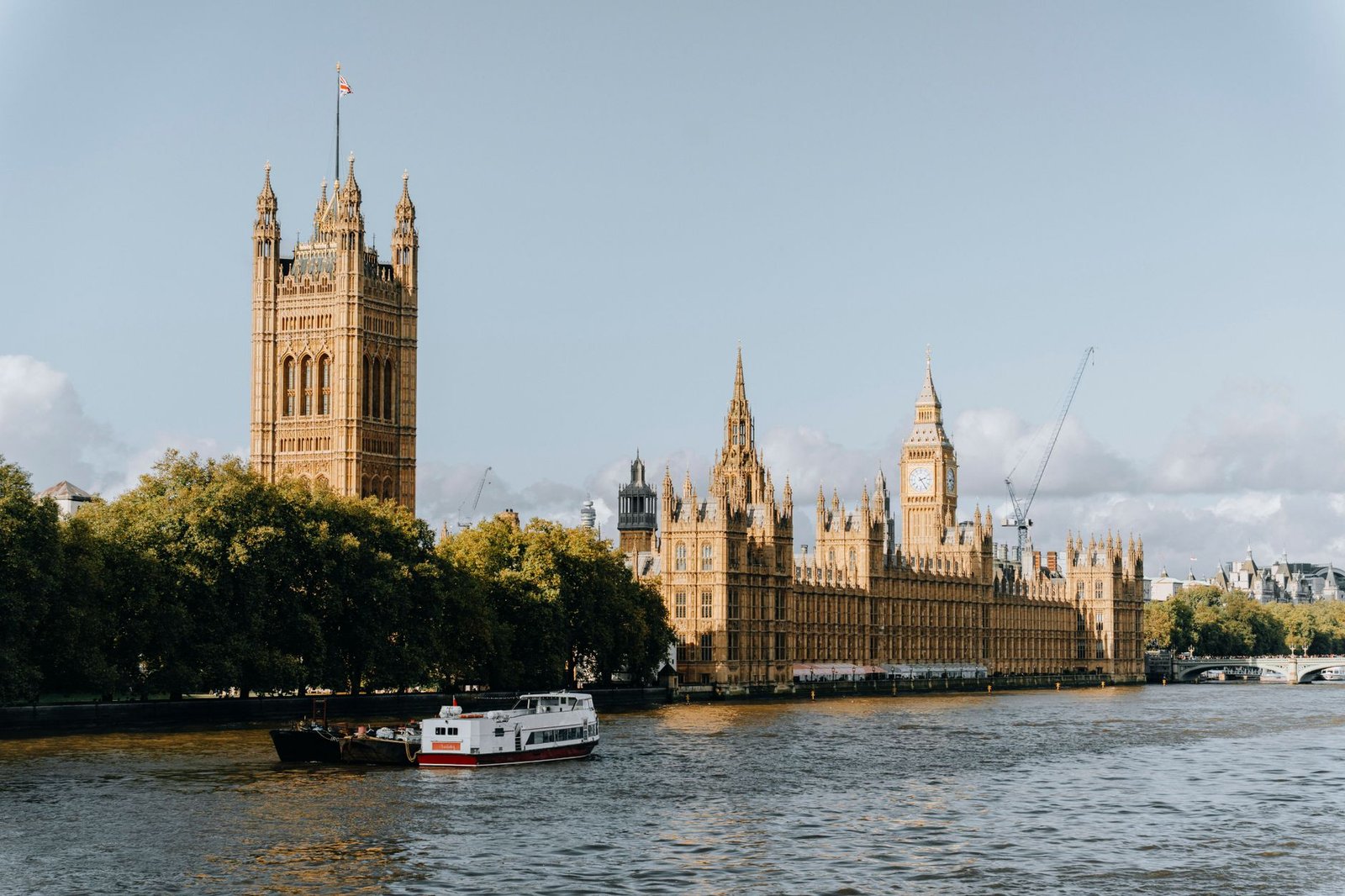
On the other side of Westminster Bridge is Big Ben, which deserves at least an hour of its own — check out the complete guide on how to visit the tower and the British Parliament. Walking for about 20 minutes along the Thames towards the city center, you’ll reach Buckingham Palace, another unmissable London landmark. If you have more time, the British Museum is about 25 minutes away by subway and has free entry.
Also on the South Bank, the Sea Life London Aquarium and Shrek’s Adventure are just a few steps from the giant wheel, great options for those traveling with kids.
Where to eat nearby
The South Bank itself has great street food options at the Southbank Centre Food Market, usually open on weekends, with dishes ranging from Indian curry to artisan burgers for between £8 and £15. For a sit-down meal with a river view, restaurants in the Gabriel’s Wharf or OXO Tower Wharf area offer everything from traditional fish and chips to contemporary British cuisine, with average prices of £15 to £30 per main course.
If you’re looking for something more budget-friendly, you’ll find British pub chains on streets a bit further from the riverbank, with dishes like bangers and mash or pie and mash running around £10 to £14, usually accompanied by a pint of local beer.
Where to stay
If you prioritize being close to the London Eye and Big Ben, look for accommodation on the South Bank itself or in Waterloo — a central neighborhood, well-served by transport, with plenty of international chain hotels in the mid-range price bracket. Those looking to save money tend to stay in areas like Earl’s Court or Paddington, which are further away on foot but well-connected by subway to the center, with daily rates generally lower than in the central tourist areas.
If you prefer a quieter neighborhood at night but still central, consider Bloomsbury, near the British Museum — a residential area with easy walking access to several attractions and less busy than Soho or Covent Garden.
Where to stay in London
| Hotel | Rating | |
|---|---|---|
| Park Plaza London Westminster BridgeSouth Bank / Waterloo · At the end of Westminster Bridge, opposite Big Ben | 8,422.352 reviews | See prices |
| Park Plaza County Hall LondonSouth Bank / Waterloo · Behind the London Eye, within walking distance of Waterloo | 8,612.466 reviews | See prices |
| H10 London WaterlooSouth Bank / Waterloo · Near Lambeth North station, a 10-minute walk from Waterloo | 8,82.681 reviews | See prices |
| citizenM London BanksideSouthwark / London Bridge · Next to Tate Modern; compact, modern room | 8,73.768 reviews | See prices |
| London Bridge HotelSouthwark / London Bridge · Right next to London Bridge station | 9,14.078 reviews | See prices |
| Eurotraveller Hotel Premier Tower BridgeSouthwark / London Bridge · Cheaper option with a high rating near the river | 8,24.089 reviews | See prices |
| Strand PalaceCovent Garden / Strand · Between Covent Garden and the river, a short walk from Embankment | 8,517.948 reviews | See prices |
| The Z Hotel StrandCovent Garden / Strand · Small rooms, central location at a lower price | 8,37.943 reviews | See prices |
| Tavistock HotelBloomsbury / King's Cross · Bloomsbury, near Russell Square (direct Piccadilly line to Heathrow) | 8,213.644 reviews | See prices |
| citizenM London ShoreditchShoreditch · For those who want bars and nightlife in East London | 8,73.313 reviews | See prices |
Booking.com rating on 30/09/2026
Practical tips
“How much do you spend in 1 day in London?” Considering mid-range accommodation, three meals, public transport, and one paid attraction, a realistic budget is between £100 and £180 per person per day — London is among the most expensive cities in Europe for tourism, so it’s worth comparing accommodation prices in advance. Always check the current exchange rate before planning your final budget, as the pound’s value fluctuates.
Is the London Eye free? No — it’s a paid attraction, no exceptions, even on holidays, but buying your ticket in advance on the official website is usually cheaper than paying on the spot, plus it helps you avoid long lines, especially on weekends and UK school holidays.
As for “what’s the best time to go to the London Eye”: early morning, right at opening, and late afternoon near sunset usually have shorter lines and prettier light for photos; lunchtime and early evening on weekends tend to be the busiest. US citizens don’t need a visa for short-term tourism in the UK, but it’s essential to confirm the updated entry rules — such as the Electronic Travel Authorization requirement — directly on the official UK government website before buying your ticket, as these rules change frequently.
A common mistake first-time visitors to London make is underestimating the walking distance between attractions: the distances on the subway map seem larger than they are on foot, and it’s often better to walk between Big Ben, the London Eye, and the South Bank than to take transport for short trips.
 HotelAs soon as you have datesCompare neighbourhoods and guest ratings.See hotels ↑
- More activitiesTo compareTickets, day trips and tours with flexible cancellation.GetYourGuide ›
Frequently asked questions
Where is the London Eye located in London?
It’s on the South Bank, the south bank of the River Thames, opposite the Palace of Westminster and Big Ben, within Jubilee Gardens. The nearest subway stations are Waterloo, Westminster, and Embankment.
Is London in England? Are London and Londres the same thing?
“London” is the English name for the city that in Portuguese is called “Londres” — they are the same city, the capital of the United Kingdom, located in England. The confusion is common because the name just changes from language to language, not the city itself.
What to do at the London Eye besides riding the wheel?
There’s a souvenir shop and a 4D experience space on the ground level, as well as packages that combine the ride with short cruises on the Thames and other nearby attractions, like the aquarium and the Madame Tussauds wax museum.
What to see in London in 1 day?
With just one day, the most efficient itinerary combines Big Ben and the Palace of Westminster in the morning, a walk across to the London Eye, lunch on the South Bank, and in the afternoon, Buckingham Palace or a quick visit to the British Museum, depending on what matters most to you.
How long does the London Eye ride last?
The full rotation on the wheel lasts about 30 minutes, as it turns continuously at a slow speed. Adding in queue and check-in time, set aside 30 minutes to 1 hour total, even with a pre-purchased ticket.
Conclusion
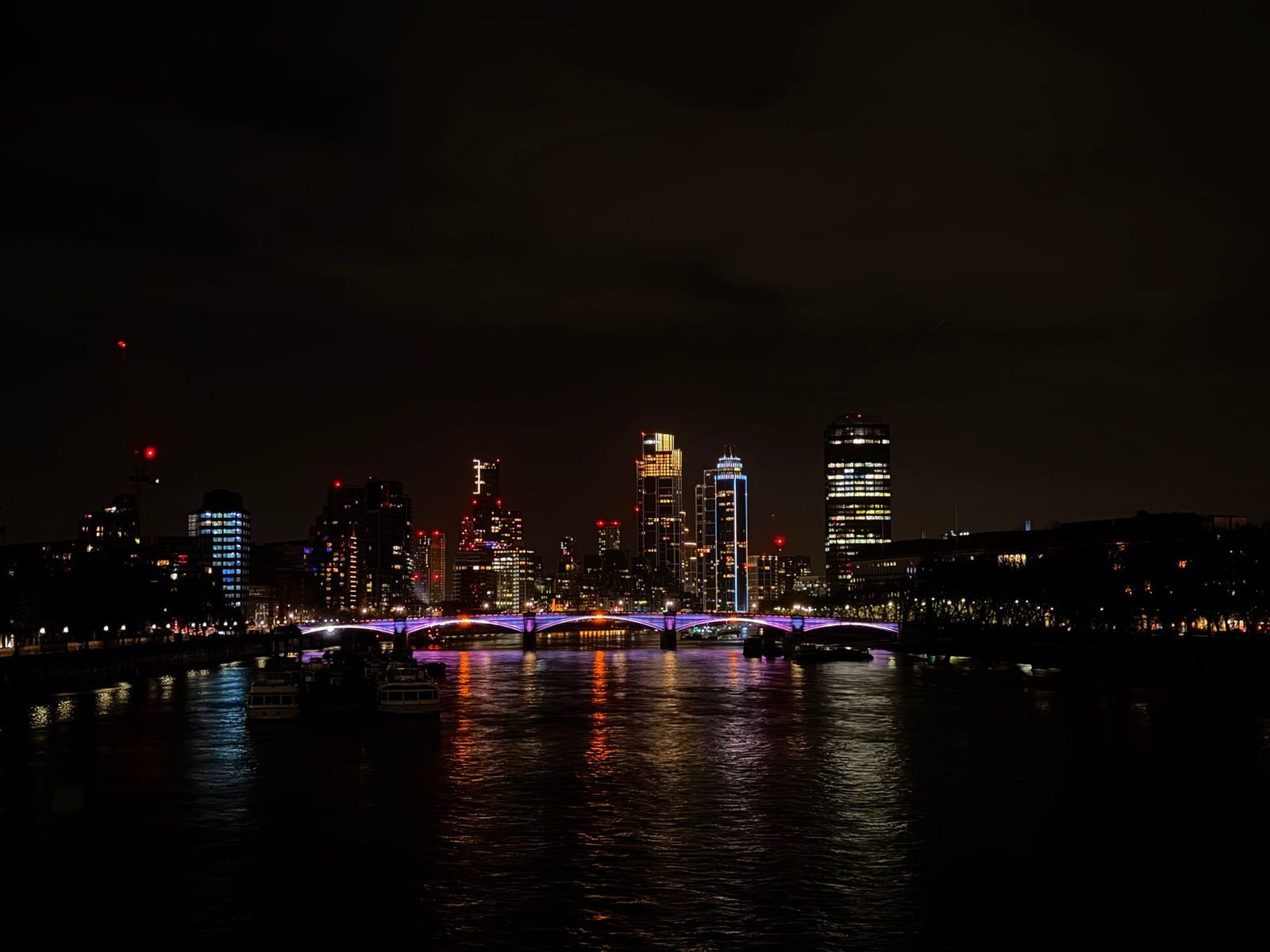
The London Eye works best when understood as part of a walking circuit along the South Bank, not as a standalone destination — the paid ticket, the variable queue, and the 30-minute rotation make more sense when combined with Big Ben, Westminster, and the walk along the Thames. Explore the other destination guides here on Voyage Voyage.